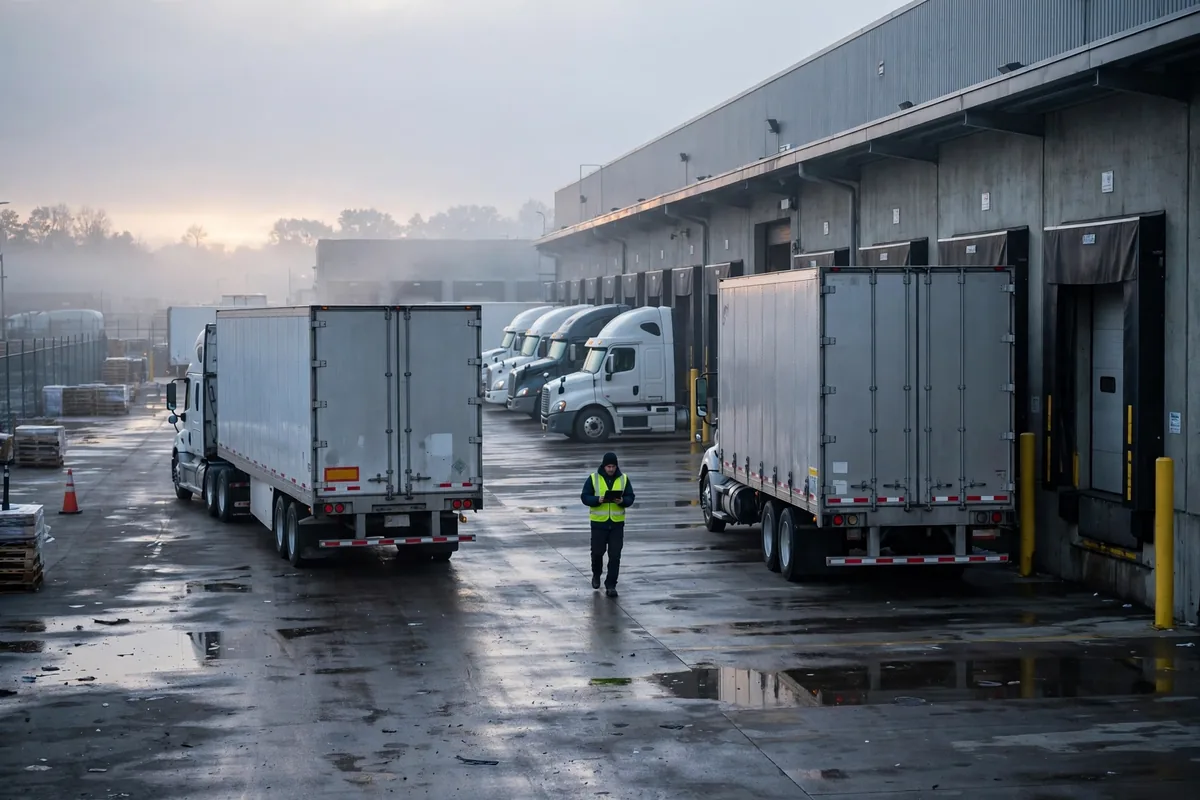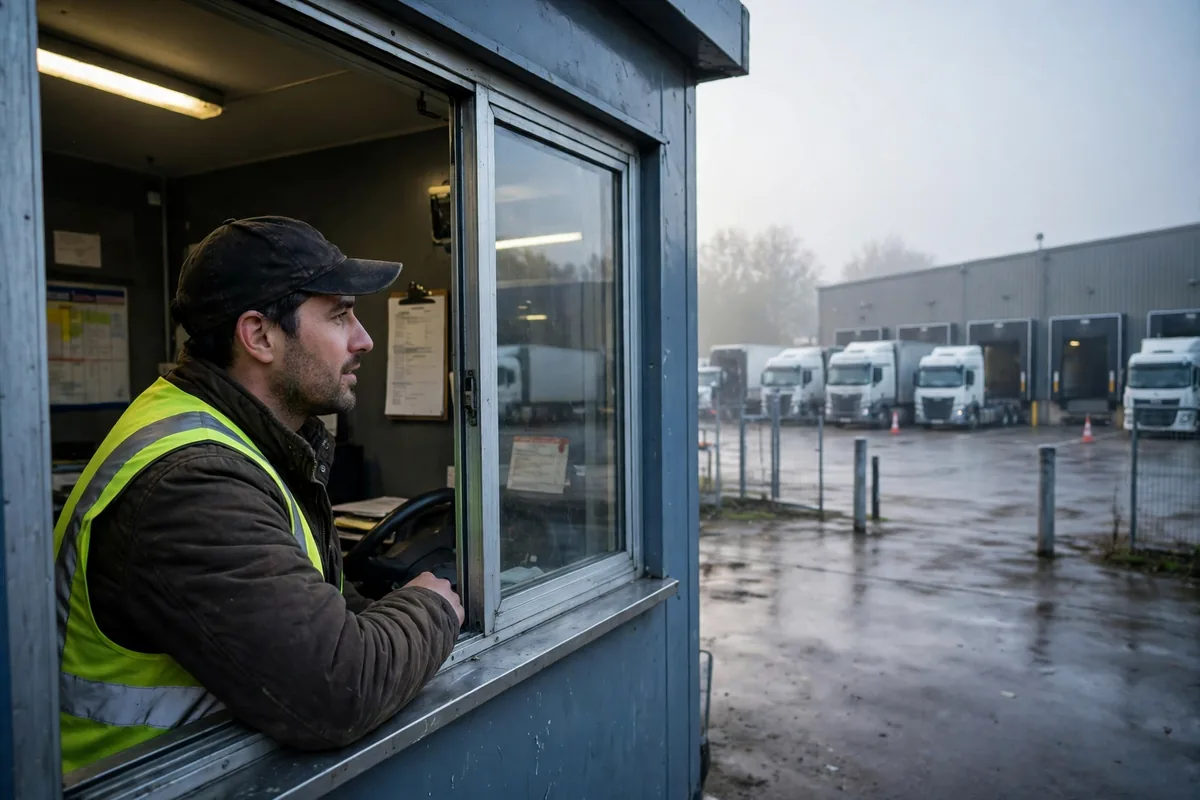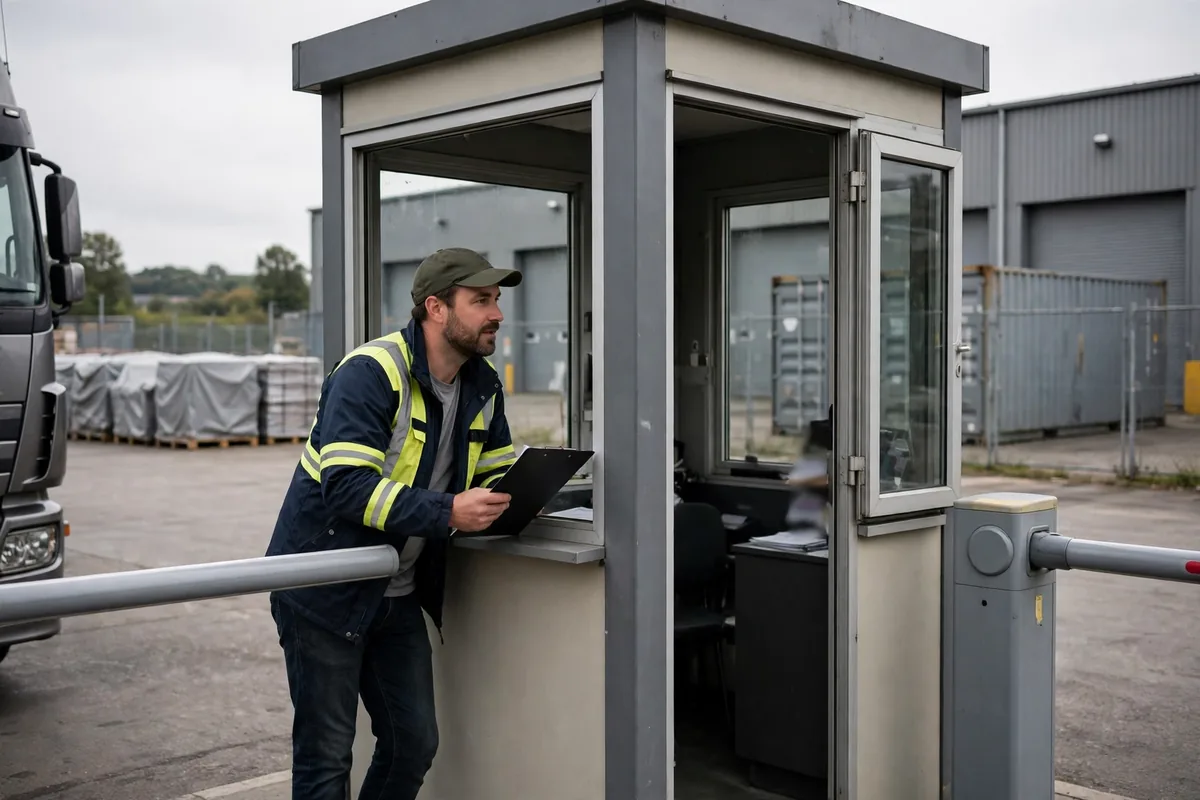
I will tell you straight: after fifteen years behind the wheel, traffic jams never scared me. What scared me was rolling up to a warehouse gate and having nobody able to tell me when I would actually get unloaded. One summer morning I reached a distribution center in Ontario, California at five in the morning. The guard waved me to the curb. I waited until nearly eleven before my number got called. The cab baked like an oven, I could not shut the engine off because I needed the air running, and I could not really sleep either, afraid I would miss the call. That is what driver waiting time looks like when dock appointment scheduling exists only on paper.
What dock appointment scheduling actually fixes, and why drivers wait
Most shippers picture it simple: truck arrives, backs into an open dock, done. Real yards do not work that way. A mid-size distribution center might see dozens of trucks a day across a dozen doors. Which load gets checked first, where the forklifts and crews are, which trailer has paperwork problems — without a system, all of that lives in one dispatcher's head. Without dock appointment scheduling, everybody aims for nine or ten in the morning, the gate backs up, and the whole yard slows down in a loop: the more crowded it gets, the slower unloading goes, and the slower it goes, the longer everyone waits.
Outside Dallas, Texas, I once counted fourteen trucks lined up at a food warehouse at nine in the morning. A young driver who had run overnight from Houston got his door at two in the afternoon. He lost his return trip and slept at a rest stop. His fuel, his night, and his next day's load all came out of his own pocket. The warehouse crew was not lazy either — they skipped lunch and still could not dig out. That is the dead loop a yard management system is meant to break.
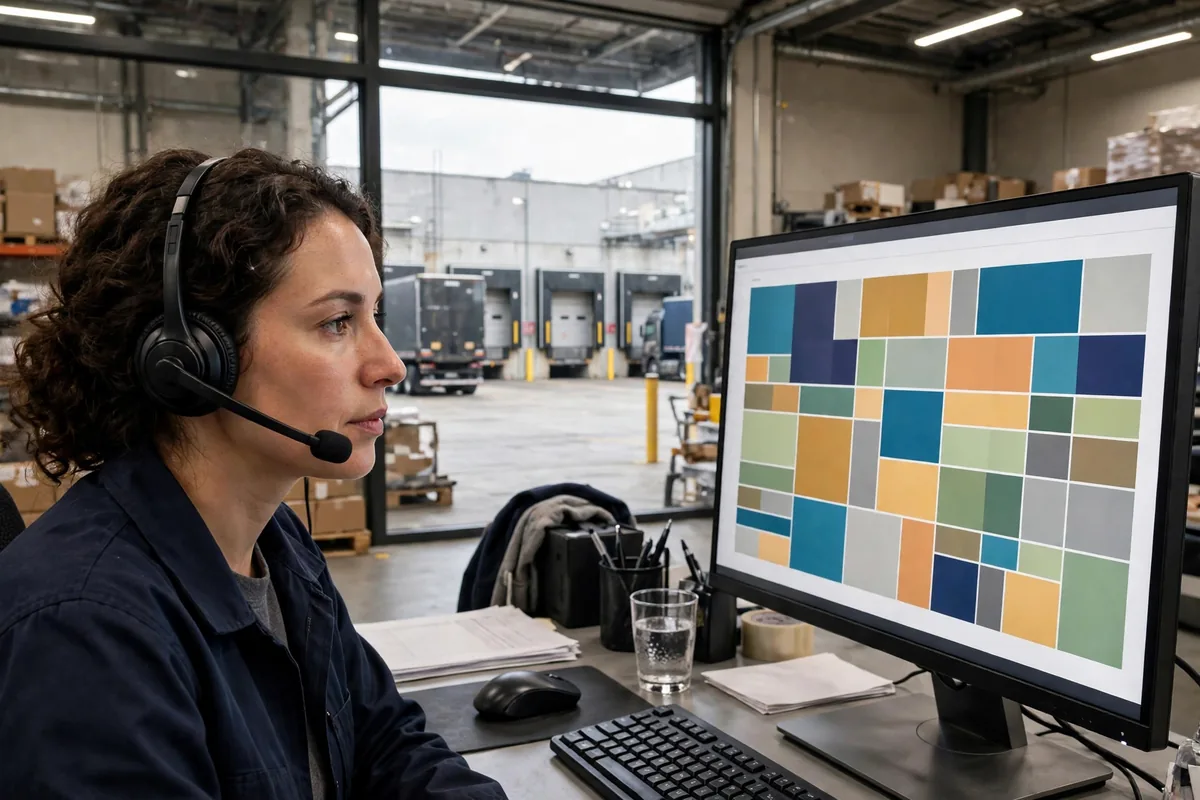
A YMS, in plain words, gives the yard a dispatch brain. It handles three things: when trucks arrive, where they park, and where trailers move next. Appointments slice the day into windows matched to what the dock can truly handle. Gate check-in confirms a truck is physically here, not just expected. Trailer moves inside the yard are directed by the system, so nobody wanders the lot hunting for a container.
The math on driver waiting time nobody can dodge
Waiting is never free. Most carrier contracts allow a free waiting window, commonly around two hours, and charge detention beyond that by the hour — the exact rate and trigger depend on your contract, so check the contract first. Even where no detention is billed, the cost lands somewhere. A driver's legal working day is finite. Burn four hours at a gate and you have burned a short return run, or you have bought a tired driver rushing through the night.
A driver I know runs a fixed lane for a household goods shipper, five trips a week. Before appointments, he averaged over two hours at the gate per trip — more than ten hours a week gone. After that warehouse adopted yms dock appointment scheduling and gave him a regular ten o'clock window, he checks in around nine forty, gets a door, and rolls out before noon. He told me the saved hours add up to one extra short load most weeks, and on the weeks they do not, he gets home for dinner. For the driver that math is time. For the shipper it is capacity that quietly disappears from the rate if waiting becomes normal.
| Measure | First come, first served | Scheduled dock appointments |
|---|---|---|
| Typical gate wait | 2-4 hours, worse at peak | Often within 30-60 minutes |
| Dock use | Feast or famine, peak gridlock | Leveled by time window, crews planned |
| Driver's next move | Cannot commit to a next load | Can plan the return and next pickup |
| When things go wrong | Radios and favors decide | Records show who was late, who held a door |
Those ranges are my road experience across many yards, not a vendor promise. Well-run yards hit them. Poorly run ones do not, which brings me to the honest part.
Where gate check-in and trailer moves usually break down
Buying software does not fix a yard. I have watched good systems fail on three very human problems.
First, nobody respects the appointment. A shipper books ten o'clock but pushes the driver out early, so he arrives at nine and the gate turns him away. Or the freight is not ready and the truck shows at eleven, wrecking the plan for everyone behind it. Appointments need written grace rules: how early is acceptable, how late voids the slot, and who rebooks. Driver, dispatcher, and warehouse all sign up to the same rules, or the system is decoration.
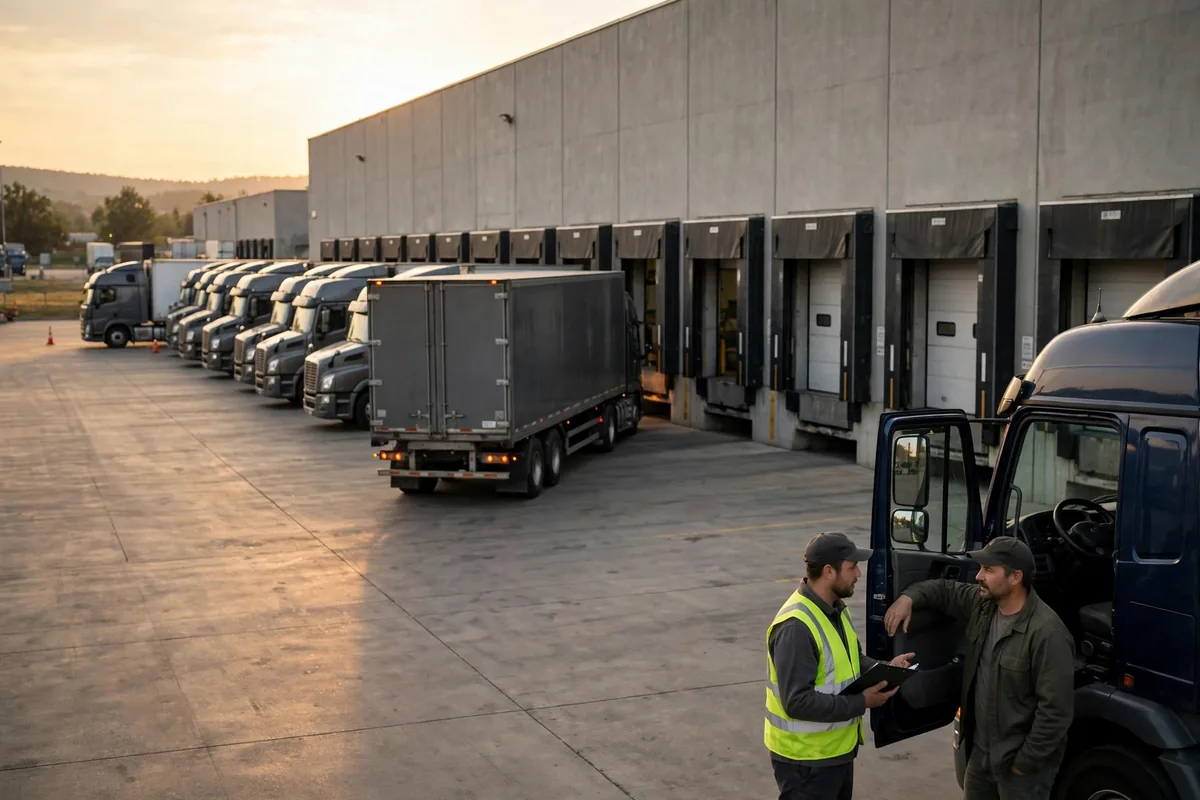
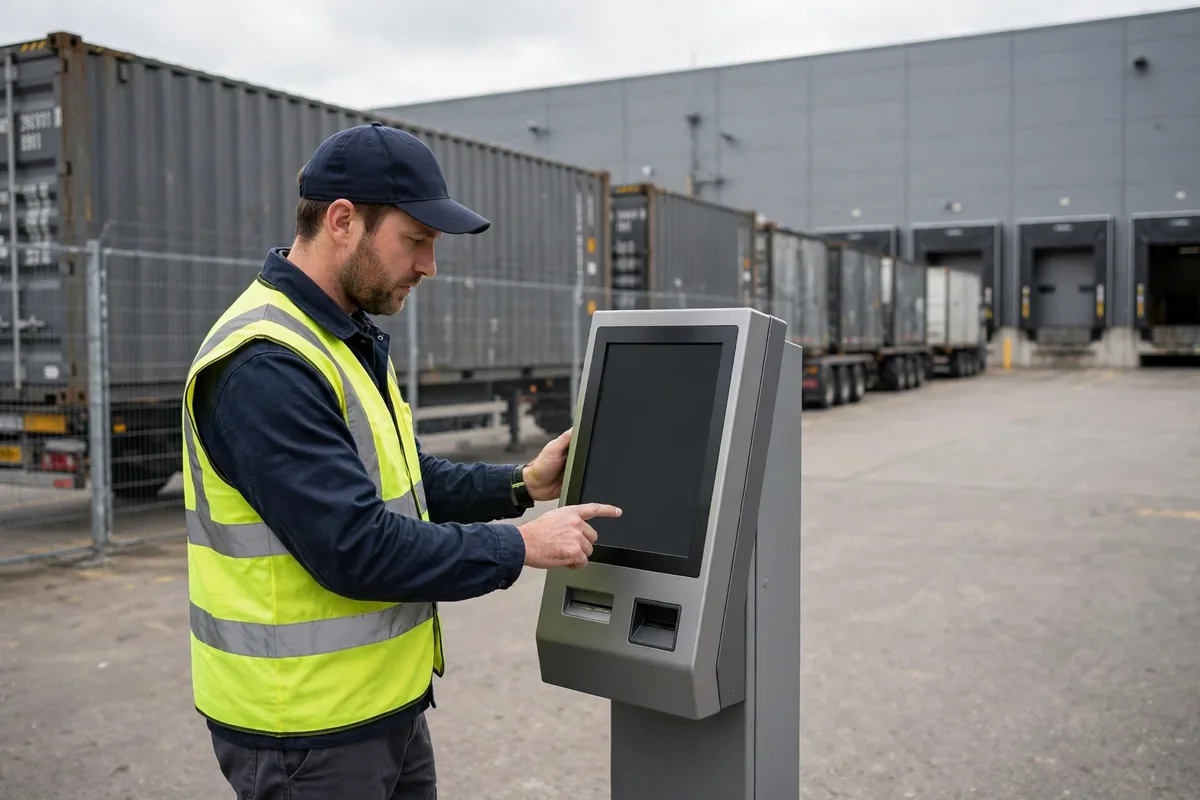
Second, gate check-in gets bypassed. A yard installs a self-service kiosk, but the guard keeps a paper log because it feels faster. Now the system shows an empty yard while trucks stack up outside. Check-in has to be the only key that puts a truck into the dock queue. That is not about making life hard for drivers — once checked in, a driver can wait in the cab for a call instead of walking to the guard shack every twenty minutes.
Third, trailers in the yard belong to nobody. Loaded, empty, waiting, and finished trailers all mixed together, yard drivers circling to find the right box. At a warehouse in New Jersey I saw it done right: numbered parking spots, trailer locations updated in the system, and move instructions that send each trailer to a named door and back to a named spot. Drivers knew their spot before entering. The circling and asking disappeared.
One trade-off shippers rarely hear: strict appointment systems can squeeze out owner-operators. Big carriers have dispatch teams who grab the good windows fast. A one-truck driver checking a phone between stops gets the leftovers, often late afternoon. If a warehouse only trusts the screen, small carriers quietly stop taking those loads, the capacity pool shrinks, and the shipper pays for it in rates. Smart yards hold back a small share of flexible windows for spot and small carriers. That is not charity. That is protecting your own capacity.
Plain advice before you buy or roll out
Keep windows realistic. Thirty-minute slots look precise and collapse the first time traffic adds twenty minutes. Windows of about an hour survive the road better, with longer blocks booked separately for big loads.
Make the wait visible. Drivers do not hate waiting nearly as much as they hate not knowing. A queue position or an honest estimated wait after check-in cuts the temperature in half. My longest wait was six hours, but that warehouse updated me every hour, and I never lost my temper.
Start with one yard and one busy lane. Do not launch everywhere at once with an untested process — drivers will curse it, the warehouse will resent it, and the software will end up as shelf decoration. Prove it where volume is worst: measure average driver waiting time before and after, publish the number, then expand.
The warehouses I respect most are not the ones with the most doors. They are the ones whose word holds: ten o'clock means ten o'clock, half an hour means half an hour. A YMS is not really software to me. It is that promise written into a system, so a driver's day no longer depends on luck, on shouting, or on how well he knows the guard. Old saying from the road: time is the only load nobody pays you to carry. Treat a driver's hours like freight, and the yard will run better for everyone.
By Shifu Zhao, Trucking Veteran (15 yrs)