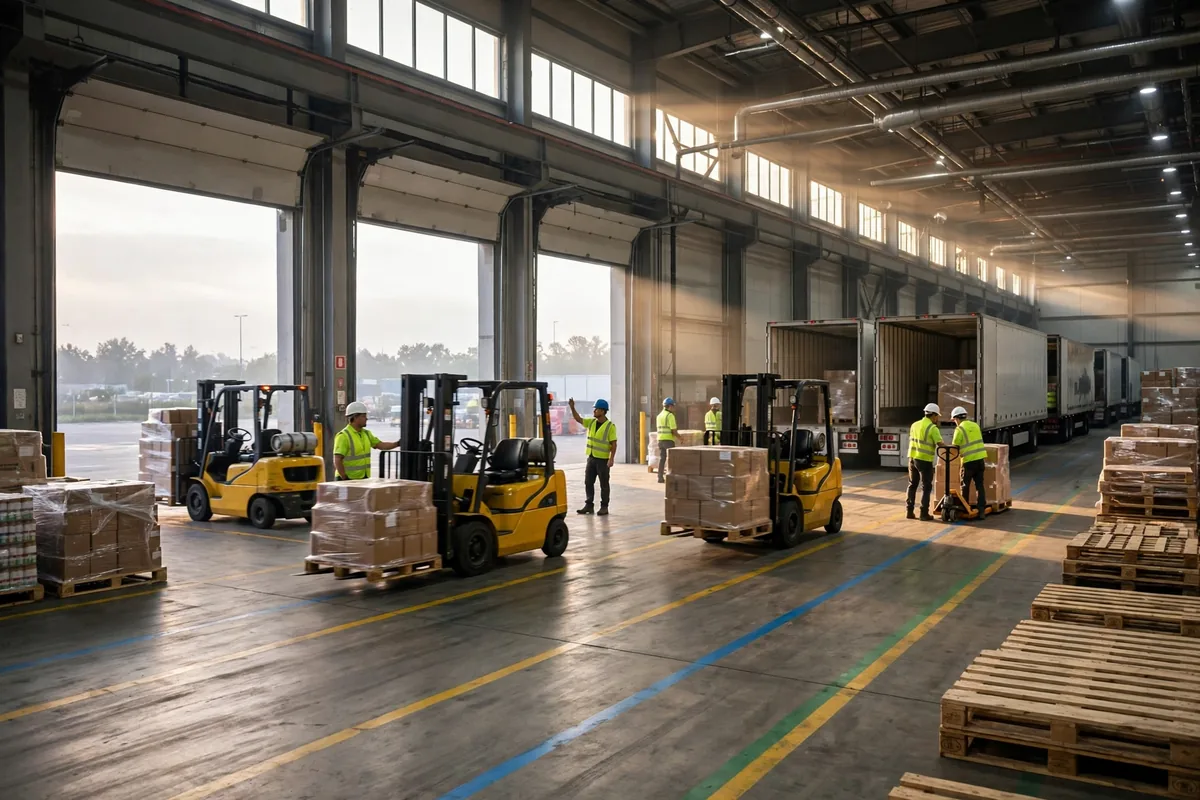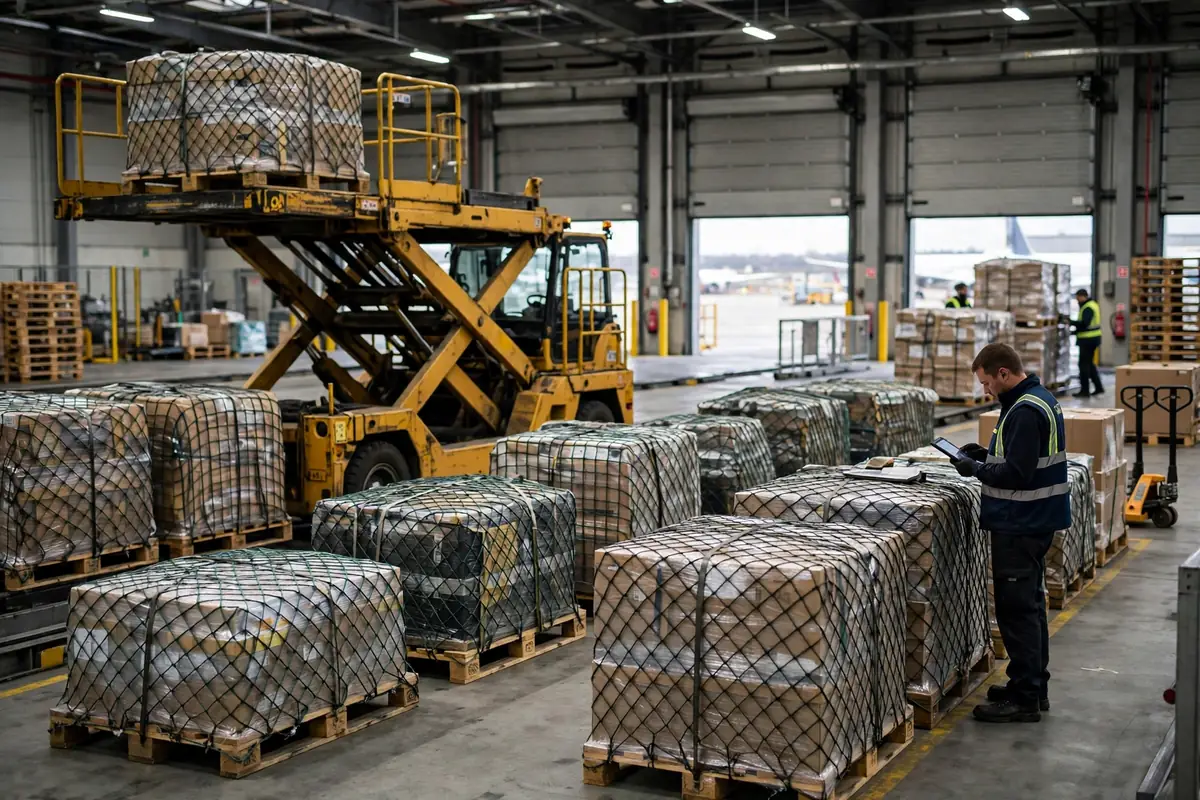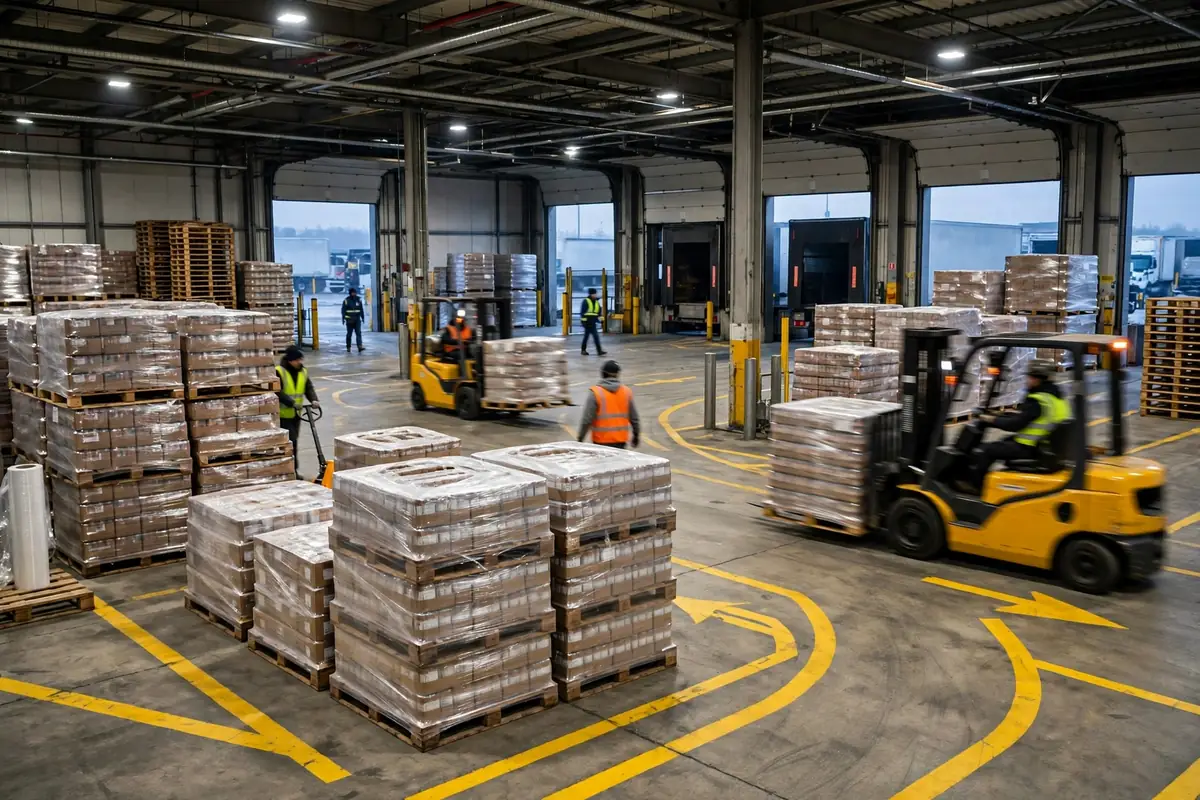
It was 6:40 in the morning, still half dark outside, when the first truck backed up to our dock. My receiving crew pushed pallet jacks toward the staging area at full speed. At the exact same moment, a putaway forklift came out of the racking aisle heading for that same staging area to pick up freight. They met head-on at the entrance. Neither side would give way. The forklift horn kept blasting, a young receiver tried to squeeze past with his pallet jack, and he nearly clipped a stack of cartons over. Honestly, the shift had not even started and tempers were already up. That is what a bad receiving putaway flow looks like. The people were fine. The route was wrong.
Why the Receiving Putaway Flow Always Collides in Staging
When this happens in most warehouses, the first guess is always headcount. Hire two more people. We tried that thinking too, and during peak season we added hands and got more congestion, not less. The real problem was where our staging area sat and what we asked it to do. It was right against the dock, and everything ran through it at once: receiving drop-off, quality checks, exception handling, and putaway pickup. It was the end of one job and the start of another, plus the only place a forklift could turn around. One patch of floor doing three jobs will jam. That is not a staffing issue.
The night I remember most was during a big promotion week a couple of years ago. Around nine in the evening, trucks were still lined up outside, staging was completely full, and pallets had spilled into the travel lane. Putaway could not reach the freight buried in the back. Receiving had nowhere to put the next load coming off the truck. The two team leads ended up arguing in the middle of the aisle about whose freight was in whose space. We did not clear the dock until well after midnight. The morning crew walked in the next day to a floor still covered in unfinished pallets, and you could feel the energy drop. After that night I stopped blaming effort. If the flow is broken, hard work just gets people tired and angry faster.
Receiving and putaway also run on different rhythms, and that matters. Receiving wants speed: unload, check, clear the dock door. Putaway wants sequence: pick freight in an order that matches the storage locations so the forklift is not crisscrossing the building. Force both rhythms through one narrow opening and the fast crew pushes the slow crew while the slow crew blocks the fast crew. Give it a few weeks and a layout problem turns into a people problem. That is how two good teams end up resenting each other.
What We Tried for Our Receiving Putaway Flow
Our first fix was the cheapest one. We taped lines on the floor, receiving on the left, putaway on the right. Within a week the forklift tires had shredded the tape, and nobody followed it anyway. Next we posted a man at the staging entrance to direct traffic. In peak season that was hopeless. He could not keep up, and his job quietly became breaking up arguments.
What finally worked was three changes made together, not one at a time. First, we re-striped the staging area into three lanes. The lane nearest the dock became new arrivals waiting for checks. The middle lane became checked freight ready for putaway. Along the racking side we kept one clear one-way pickup lane. Freight could only move forward through those lanes. No backing up, no dumping a fresh pallet wherever there was a gap.
Second, we split the entry and the exit. Receiving drops freight only through the south end. Putaway picks up only from the north end and loops out in one direction. Forklifts stopped turning around inside staging, which removed half the near misses by itself.
Third, we staggered the clock. The first two hours of the morning shift are the receiving peak, so putaway starts the day on other work: replenishing pick faces, clearing empty pallets, prepping locations. Once the receiving wave passes, putaway comes into staging in one focused wave and clears it lane by lane. Nobody has to guess. It is written into the shift plan.
The first few days were rough. One of our veteran forklift drivers, a man who had run that floor for years, complained the new loop was longer and wasted his time. I did not argue with him. I asked him to time both routes. On the old shortcut through staging he stopped twice and had to reverse once. On the new one-way loop the distance was longer but he never stopped. The longer route was faster on the clock. He looked at the numbers, said nothing, and the next morning he was the one showing a new hire how to run the loop. That taught me something I still use: do not sell a flow change with a speech. Let a stopwatch do the talking.
The Routine We Kept
Here is the routine we still run today, plain and simple. Staging moves in one direction only, first in and first out, oldest freight leaves first. Nobody parks a fresh pallet in front of the pickup lane just because it is convenient. Our leads check that every morning, no exceptions.
Forklift traffic runs on the outer loop. Pedestrian receiving work with pallet jacks stays on the inside. People and forklifts are separated wherever we can manage it. The yellow lines are painted now, not taped, and we left real turning room at the corners. Stripe a lane too tight and drivers will ride the line all day, and you cannot blame them for it.
Peak work is staggered by thirty minutes to an hour. During the receiving surge, putaway stays out of the core staging lanes and works from its own prep list. Exceptions get their own corner. Damaged freight, count mismatches, and anything waiting on a quality decision goes there, never into the normal lanes. One problem pallet parked in the middle of a lane can hold up ten good pallets behind it. We learned that the expensive way, more than once.
I will not dress up the results. With the same freight volume, our morning jams dropped off sharply. Forklifts spend visibly less time sitting and waiting. But the change I value most is not speed. It is that the two crews stopped fighting over space. When receiving gets buried now, idle putaway hands come over and help unload without being asked, because they know their pickup lane will still be clear when they need it. A clear route made cooperation rational. Before, helping the other crew often meant hurting your own numbers.
One Last Word to Fellow Managers
If your receiving and putaway teams are at each other's throats, do not start with blame and do not start with hiring. Pick a busy morning, take a stool, and sit at the edge of your staging area for one full hour. Watch how freight moves, where forklifts turn, and at which exact points people collide. Nine times out of ten the answer is painted, or should be painted, on your floor. Everyone is just too busy looking down at their work to look up at the pattern.
Changing a flow costs very little money. Changing habits is the hard part. The first two weeks will bring complaints, and your leads have to hold the line kindly but firmly until the new route becomes the normal route. Once the route runs smooth, the people run smooth. I have said that in our warehouse for years, and it is not a slogan. It is just what I have watched happen, one morning at a time.
By Chen Feng, Warehouse Operations Manager