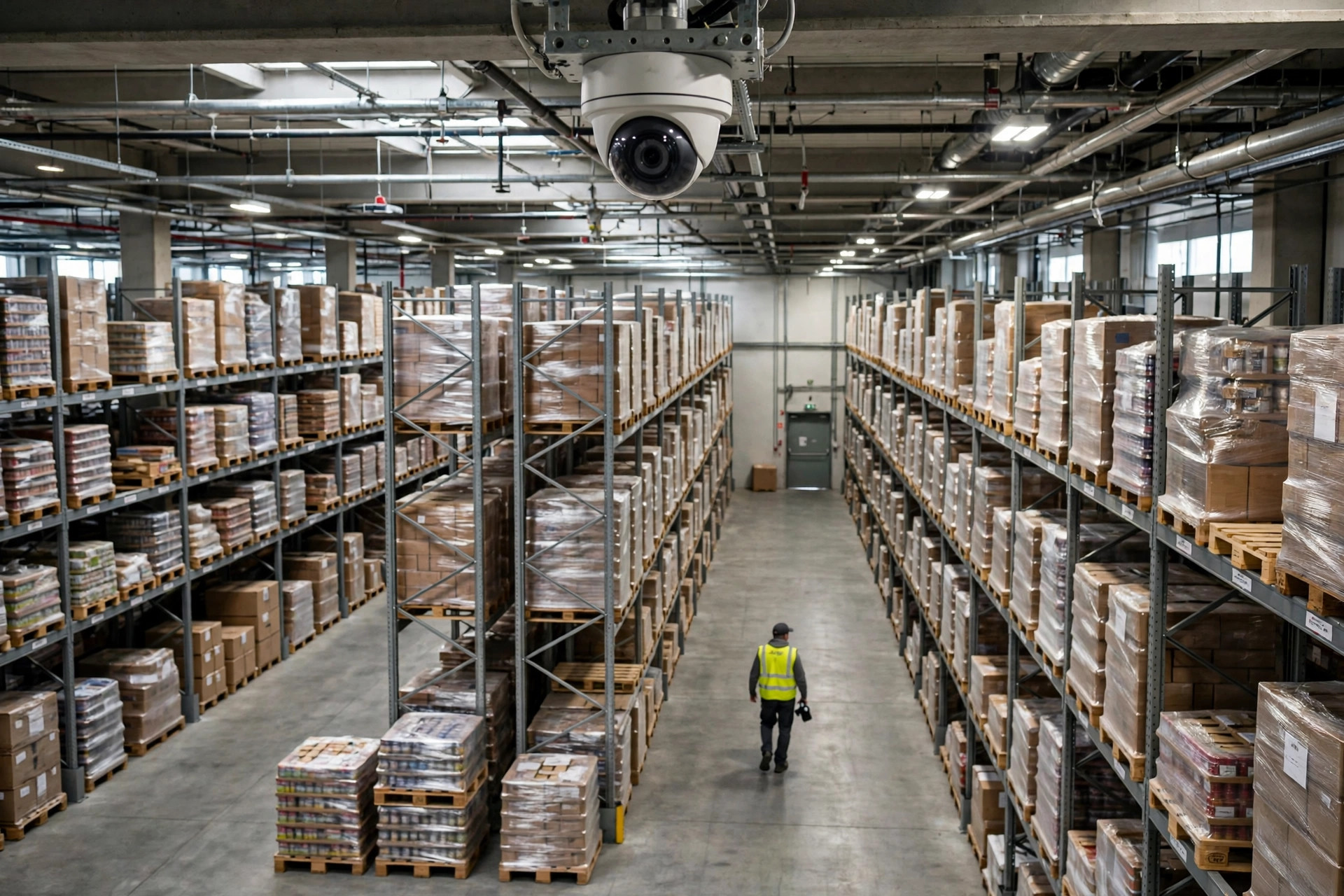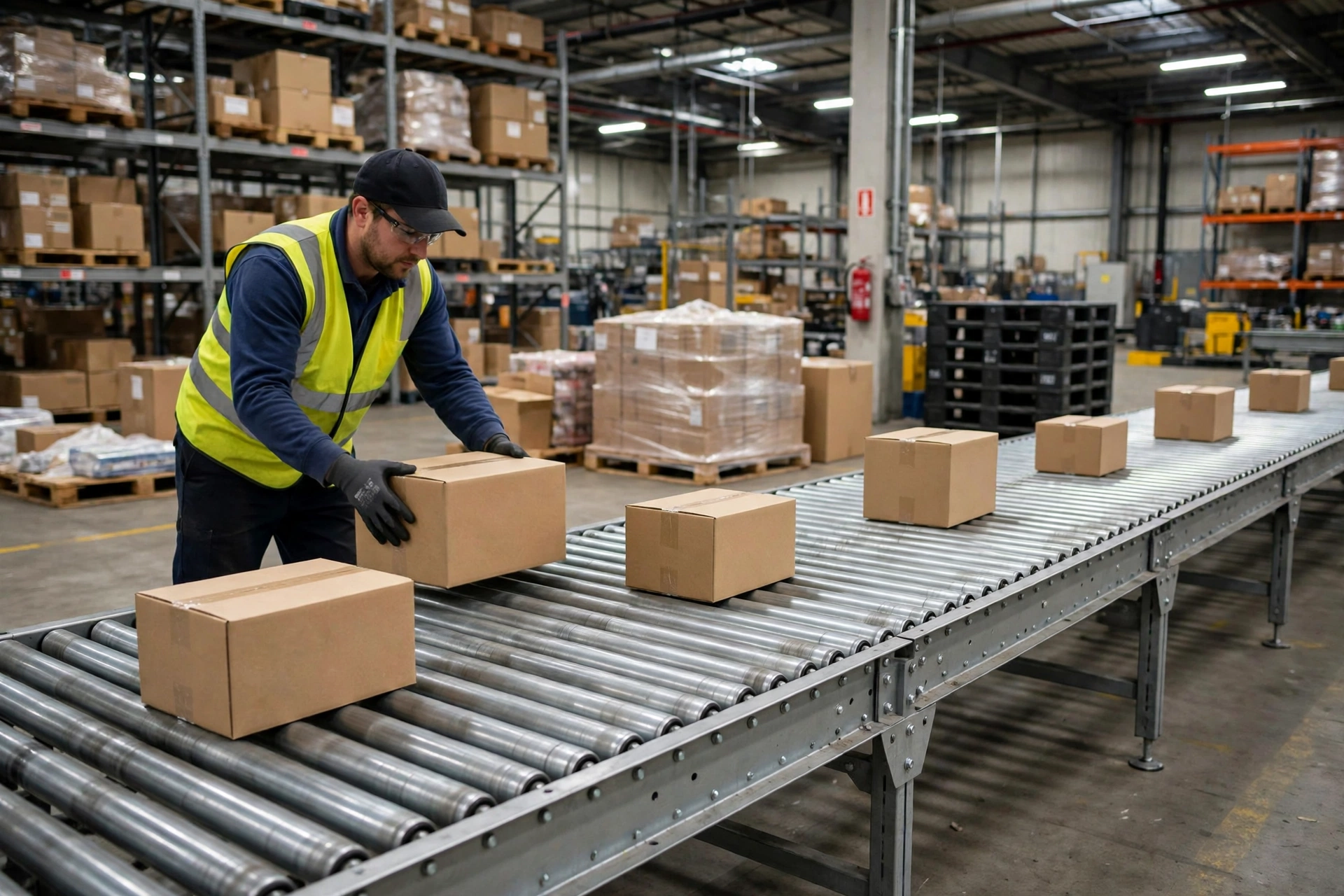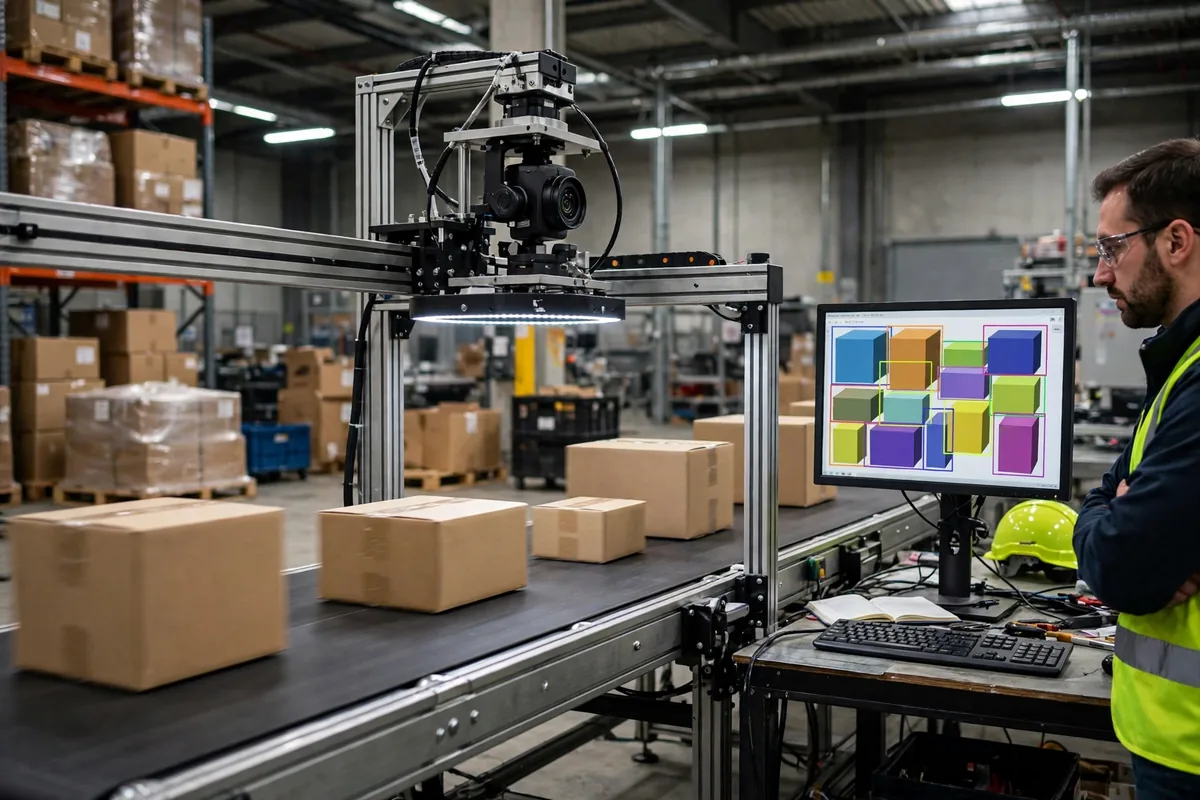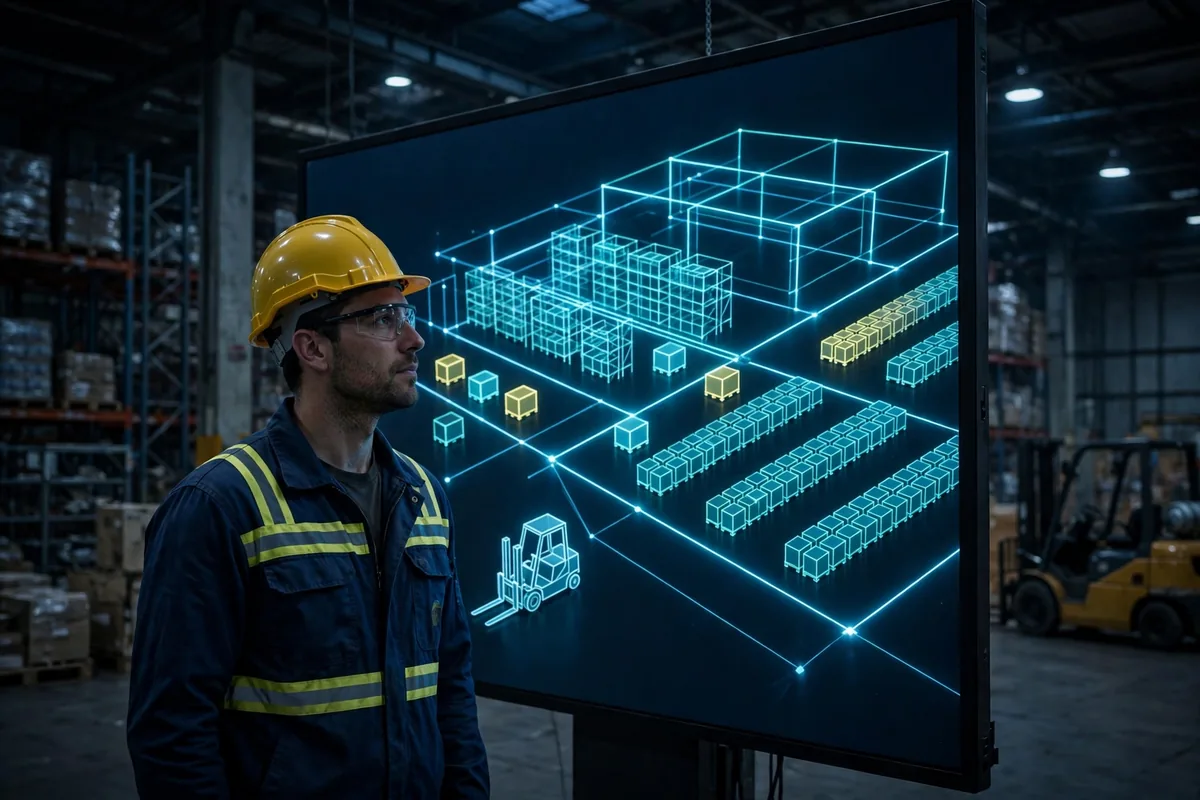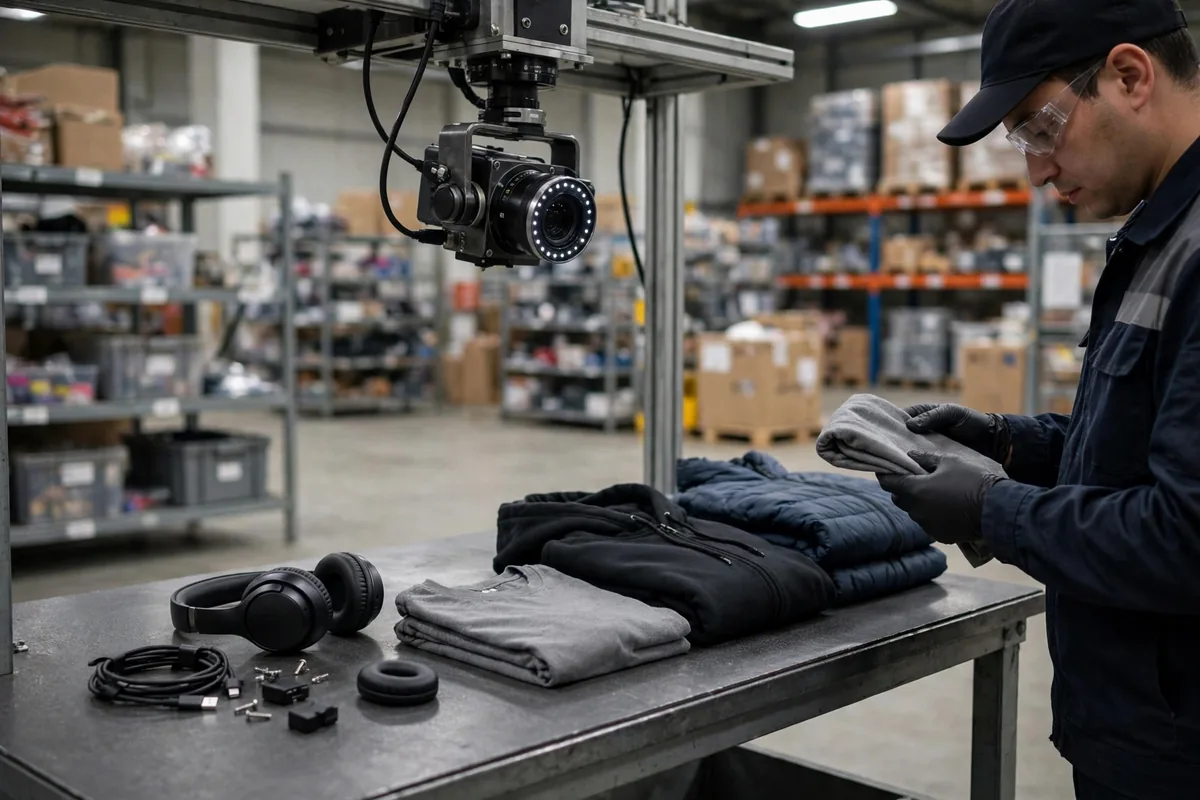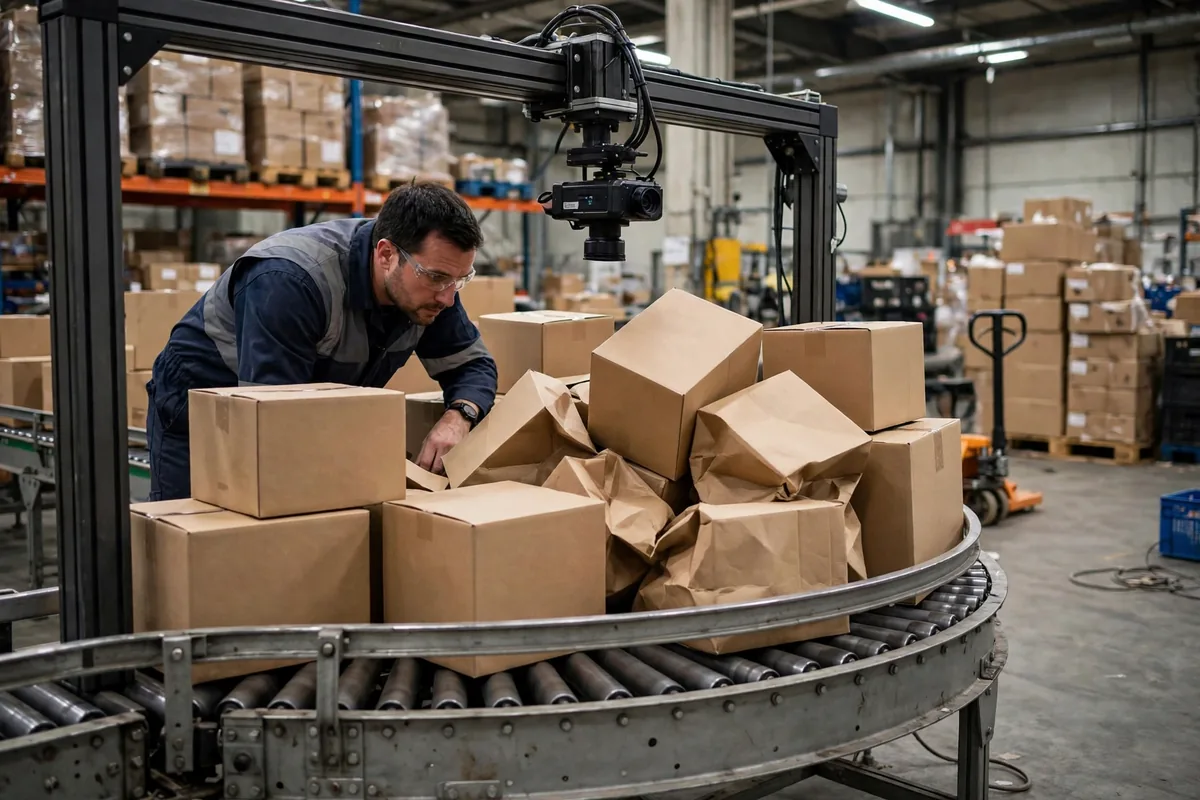
A conveyor jam false alarm usually gets blamed on the algorithm. My experience points the other way: most false alarms have little to do with the algorithm at all. The problem sits in three places — the light, the parcels, and where the camera is mounted. Think of it this way: the camera is not failing to understand, it is failing to see clearly, see fully, or see from the right spot. During my years on integration projects I watched plenty of warehouses spend serious money on vision-based jam detection, only to see the false alarm rate refuse to budge. Eventually the operators switched the alert sound off. That is worse than the false alarms themselves, because when a real jam arrives, nobody is listening either.
Reason One: Light and Glare Drive the Conveyor Jam False Alarm
Start with the principle. A camera judges a jam by watching whether parcels keep moving across consecutive frames. A parcel that sits still longer than the set time triggers an alarm. The logic is sound. The trouble is the quality of the pictures feeding it. When the light changes, the picture changes, and the system's sense of "moving" versus "still" changes with it.
Warehouse light is harder to manage than most people expect. Overhead lamps shining straight onto black shrink wrap turn whole patches of the frame white, and parcel edges vanish. Lightweight polybags are worse: the bag wrinkles and flexes, glare spots wander across the surface, and the software can read a moving glare spot as a moving parcel, or a still parcel as a moving one. Then there is the afternoon sun coming through the dock doors at a slant, bright on one stretch of belt and dark on the next, shadows drifting with the clouds. The system reads that drift as something crawling along the belt.
Picture a real outbound line, as a scenario: it runs clean all morning, then false alarms start piling up after two in the afternoon. Nobody touched the algorithm, the parcel mix did not change, only the angle of the sun did. Pulling a shade curtain across the dock door cut the false alarms by more than half on the spot. It is like taking a photo into the sun — the lens can be excellent and the picture still washes out. The fix is in the light, not the lens.
Field tuning follows a fairly fixed playbook: switch to diffuse lighting and keep point sources off the belt surface, add polarizing filters where glare is bad, lock camera exposure and white balance so they stop hunting up and down, and fit a shade hood above the camera where the layout allows. One item gets missed constantly: the lamps themselves. As tubes age, brightness fades a little every week, the picture gets a little darker, and the false alarm rate creeps up. Plenty of sites only discover the lamps were the problem after months of blaming the software.
Reason Two: Parcel Mix Moves the Conveyor Jam False Alarm Rate
The second cause lives in the parcels. An e-commerce warehouse never sees the same mix twice: tidy cartons in the morning, soft collapsing polybags in the afternoon, oversized and odd-shaped items on top during peak. A model trained on one parcel type goes blind when the mix shifts. Cartons have clean edges the software can track; polybags sag, fold, and pile onto each other, so two bags pressed together can read as one large parcel, or as a jam.
Take a hypothetical example: a site handling 20,000 parcels a day sees fewer than 10 false alarms daily in a normal week. Peak season arrives, polybags jump from thirty percent of the mix to sixty, and false alarms climb past 60 a day. Same parcels, same algorithm, only the mix changed. The numbers are illustrative, but the direction is real: the false alarm rate follows the parcel mix, not the software version number.
There is no shortcut here, only the slow way. Training samples have to cover the full parcel range — cartons, polybags, irregular items, reflective film packs, all of them. Thresholds should be set per parcel type instead of one threshold ruling everything. After go-live, keep collecting false alarm samples and retrain weekly. Many projects fail at acceptance testing: the test runs on the neatest cartons in the building, so the false alarm rate looks great, and peak season exposes everything. Test with the hardest parcels you have. If it fails that test, do not sign off.
Camera Placement: Where the Conveyor Jam False Alarm Is Born
The third cause is mounting position. Where the camera sits decides what it can see. Mounted too low, its view covers only a short stretch of belt, and parcels bunching up hide each other — whether the ones behind are moving becomes invisible. Mounted too high, parcels shrink to dots and fine movement stops registering. Mounted right above a bend, the natural speed change of parcels turning gets misread as a stop.
It is like a traffic camera at an intersection: shift the angle a little and a blind spot appears. There is also a quieter trap. When the camera bracket is bolted to the conveyor frame, belt vibration travels straight into the mount and the picture shakes. The shake is too small for a human eye to notice, but the algorithm can read vibration as parcel movement, or the vibration can bury a genuine stop. The fix is a bracket standing on its own feet, not sharing the conveyor frame, and a lens wiped on schedule — dust films the picture over, and false alarms rise with it.
There is a selection line worth drawing. A photoelectric sensor watches a single point: blocked means jam, clear means fine. It is simple and reliable, but it cannot tell a real jam from a fake one. A vision system watches a whole stretch of belt and can tell a hesitating parcel from a genuinely stuck one — at the cost of sensitivity to light, parcel variation, and mounting mistakes. On a line with uniform parcels and stable light, sensors plus a time delay are enough, and buying vision is spending money for nothing. On a high-volume sortation line with a messy parcel mix, vision earns its keep. Draw that line wrong and the false alarm rate never comes down, no matter how much you spend.
False Alarm or Missed Jam: Do the Downtime Math First
False alarms and missed jams sit on opposite ends of a seesaw. Loosen the threshold and every small hesitation alarms; tighten it and the system waits too long to confirm, letting a small jam grow into a real pile-up. Tuning is not about driving false alarms to zero. It is about working out which side costs more.
Trade publications have reported the numbers: unplanned downtime in a large sortation facility runs $6,000 to $20,000 per hour in direct cost. The same reporting notes that false jams repeat thousands of times a day across facilities worldwide. With those figures on the table, the math is straightforward. In a hypothetical example, a line throwing 40 false alarms a day, at 3 minutes each to stop, check, and reset, loses 120 minutes a day in fits and starts. At the low end of $6,000 an hour, those 2 hours equal $12,000 of capacity spinning in place. On the other side, one missed jam lets parcels pile up behind each other: half an hour to clear at best, and a torn belt or a damaged sorter if it goes badly.
| Situation | Cost per event | How often | Typical outcome | | False alarm | A few minutes to stop and check | Dozens of times a day, sometimes over a hundred | Alert fatigue — operators start ignoring alarms | | Missed jam | Half an hour to clear, plus possible equipment damage | Rare, but one is enough | Parcels piled up, equipment at risk |
So here is a workable decision framework: the acceptable ceiling for false alarms is set by average handling time per false alarm multiplied by false alarms per day — that product is the daily tax you pay for false alarms. The ceiling for missed jams is set by the clearance cost of one real blockage plus the equipment risk. Convert both sides into lost minutes and fix whichever side is bigger. One more piece of field practice: run any new system in shadow mode for two weeks first, recording without alarming, and set thresholds from those two weeks of data instead of guessing a number. After that, re-check the thresholds every time the parcel mix changes substantially, and do not let them quietly expire in the background.
Is the money worth it? Look at one number: the downtime minutes you pay for false alarms every day. If that number is falling, the vision system is earning its keep. If it is not moving, the problem is probably not the algorithm — it is the light, the parcels, or where the camera is mounted. Check those three first, then talk about swapping models or adding compute.
By Da Liu, Automation Engineer