Bottom line first: warehouse AI inspection patrol camera systems work, but do not roll them out warehouse-wide the way vendors pitch them. Start with two or three cameras and two or three detection points, run a two-week pilot, and expand only when missed detections and false alarms both clear the bar. The pilot acceptance checklist is at the end of this article. Read the conclusion now, then read the rest.
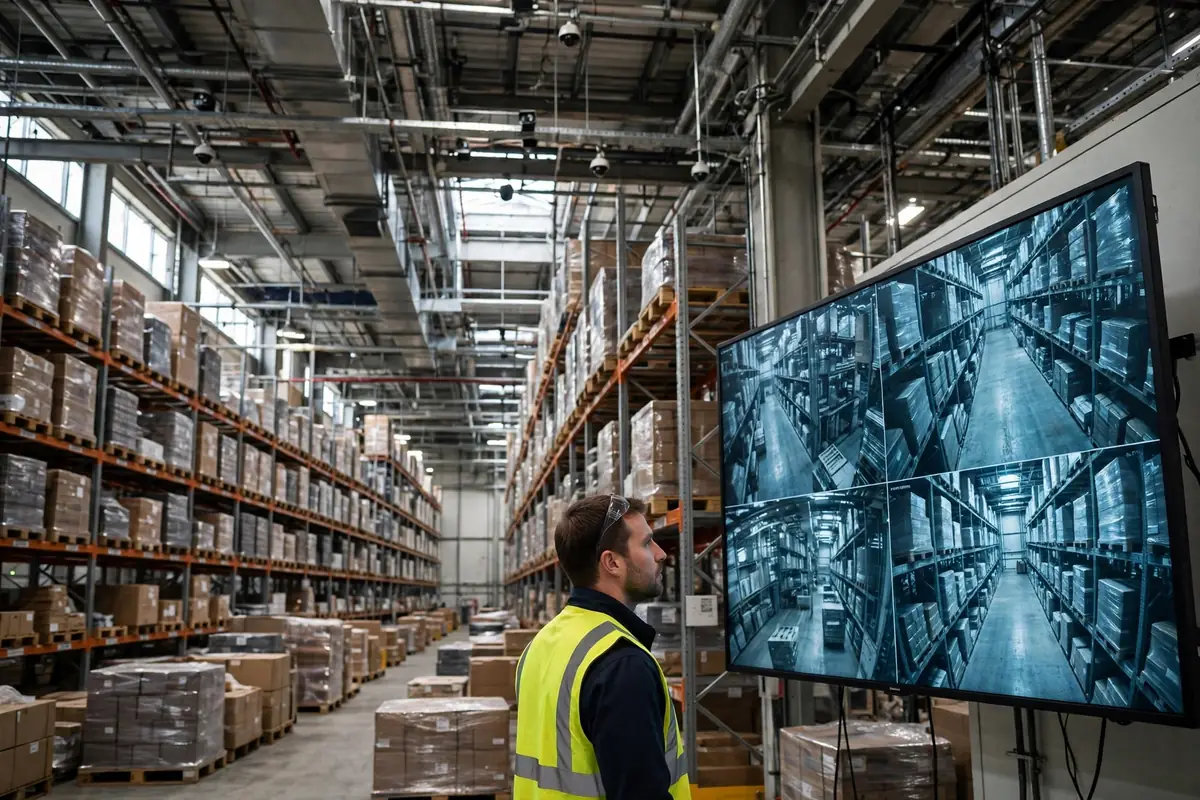
In my years of WMS implementations, the math on manual patrols never added up. The problem is not that people are careless. It is frequency. A shift patrols twice a day, so an aisle blocked at 10 a.m. is not found until the 2 p.m. round, and forklifts spend four hours detouring around it. AI cameras fix exactly that: they watch the same spot 24 hours a day, and a blocked aisle or an occupied fire exit gets recorded within minutes. The failure mode is the same frequency in reverse: a system that reports 200 alerts per shift gets muted by day three, and nobody looks at it again.
What Warehouse AI Inspection Patrol Camera Systems Actually Watch: Four Points, Kept Separate
I have seen this pit three times, and every time the project died the same way: all cameras connected on day one, every detection switched on, the duty group flooded in the first week, and nobody paying attention by the second. The fix is to separate four detection points, each solving exactly one problem.
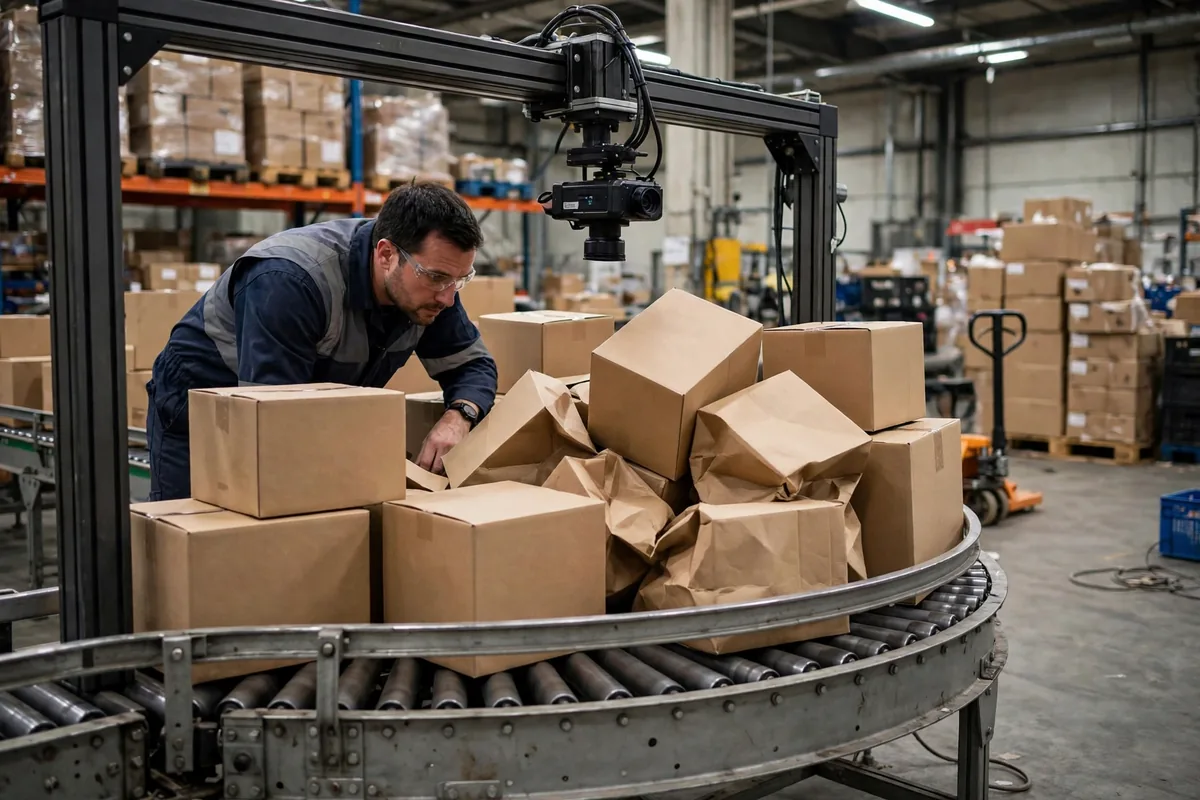
The first point is blocked aisles. The AI draws a monitoring zone over a main aisle or forklift lane and raises an alert when an object stays inside it past a set dwell time. The critical parameter is that dwell time: a forklift stopping for two minutes to unload is normal work, while a pallet sitting in the aisle untouched for 20 minutes is a blockage. Get the dwell time wrong and false alarms double overnight.
The second point is fire exits and emergency routes. This is where AI inspection earns its keep, because manual checks miss it most often: nobody walks through a fire exit on a normal day, so a blocked one goes unnoticed. The detection logic compares the live frame against an empty baseline image and alerts when a foreign object appears and stays past the set time. One hard rule belongs in the acceptance criteria: AI smoke and flame alerts supplement a certified fire alarm system and never replace it. Do not let a vendor blur that line.
The third point is racking anomalies: uprights struck by forklifts, deformed beams, goods overhanging the rack face. A racking strike deserves its own detection, because the damage is often invisible and nobody reports it — it surfaces at the next scheduled inspection, if then. When the AI catches a strike, the clip and location go straight into the racking inspection process while the sequence of events is still known.
The fourth point is temperature and humidity anomaly locations. In cold storage and climate-controlled rooms, a temperature probe only reports its own spot. A camera sees what the probe cannot: a cold-store door left open, condensation spreading across the floor, abnormal frosting. Here the AI is not replacing sensors. It is adding visual evidence the sensors cannot provide.
Four points, four detection logics. Do not merge them into one "AI inspection" feature, or at acceptance time nobody will be able to say what was actually tested.
The AI Inspection Missed-Detection and False-Alarm Ledger: Two Weeks, Three Numbers
On ROI, no hype. Missed detections and false alarms are two sides of the same coin: loosen the threshold and misses fall while false alarms rise; tighten it and the reverse happens. The pilot exists to find the balance your warehouse can live with.
A hypothetical worked example makes the money concrete. Assume a 20,000-square-meter warehouse where manual patrols run twice a day, two people per round, 1.5 hours each, at an assumed $25 per hour. That is roughly 2 people × 1.5 hours × 2 rounds × $25 × 22 days — about $3,300 a month. The AI side costs whatever the vendor quotes for reusing existing cameras plus an edge compute box and a software subscription; substitute the real quote and rerun the math. But saving patrol wages is not the selling point. The real return sits elsewhere: one blocked fire exit caught in time is one compliance penalty or one accident avoided, a figure that never fits in an ROI table and is still the reason to fund the project.
During the two-week pilot, track only three numbers. The first is the false-alarm rate: the share of alerts a human confirms as real problems. Below half in week one is normal; after tuning zones, dwell times, and cooldowns, week two should be clearly better. A detection point that cannot be tuned quiet gets switched off — do not keep it running out of stubbornness. The second is misses: of the problems the manual patrol finds during the pilot, how many did the AI fail to report? Record misses per point. A missed aisle blockage and a missed fire exit are not the same severity. The third is response time: from AI alert to someone on site, on average. If response time does not come down, the alerts never entered the duty workflow, and the system is a recorder with a fancier name.
Here is the counterintuitive judgment: a miss is more dangerous than a false alarm, but false alarms kill the system faster than misses do. A miss is one risk. A false alarm is the death of trust — once the duty team mutes the alert group, the miss rate becomes 100% overnight. Many projects die in week two, and the cause of death is not the model. It is credibility. So the first pilot acceptance criterion should be that false alarms fall to a level the duty team will keep reading, not that detection rates hit some heroic number.
Go-Live Night Checklist: Seven Items, Do Not Launch Missing One
The go-live night checklist is the part of every project I refuse to skip. For AI inspection, these seven items must all be done before switch-on.
First, a detection-point list and a blind-spot map. Draw every camera's monitoring zone, mark the blind spots, and write down who owns the risk inside each blind spot. In a project without a blind-spot map, a miss is discovered with no idea where it was missed.
Second, zones and thresholds set per point, not globally. Aisle dwell time, fire-exit sensitivity, and racking detection items each get their own settings. One global threshold for the whole warehouse is how you get flooded.
Third, alert severity and routing. A blocked fire exit is high severity and goes straight to the duty supervisor. A minor aisle blockage is low severity and goes to a log with a scheduled summary. A high-severity alert must reach a human, and if nobody picks it up, it must escalate. Alerts must never stop in a group nobody reads.
Fourth, cooldown periods. Repeat alerts from the same spot need a suppression interval, or one forklift parked in an aisle generates 40 alerts an hour. I have seen this pit three times, and every time it blew up the alert group on day one.
Fifth, shift scheduling. Detection rules must differ between staffed hours and the empty night shift: intrusion detection can run at night and must be off — or restricted to prohibited zones — during the day. Rules that ignore shifts drown in normal daytime activity on day one.
Sixth, an evidence chain. Every alert must carry a snapshot, camera ID, and timestamp, and the resolution must be written back. Without that, a review cannot tell who misjudged what or which parameter to tune.
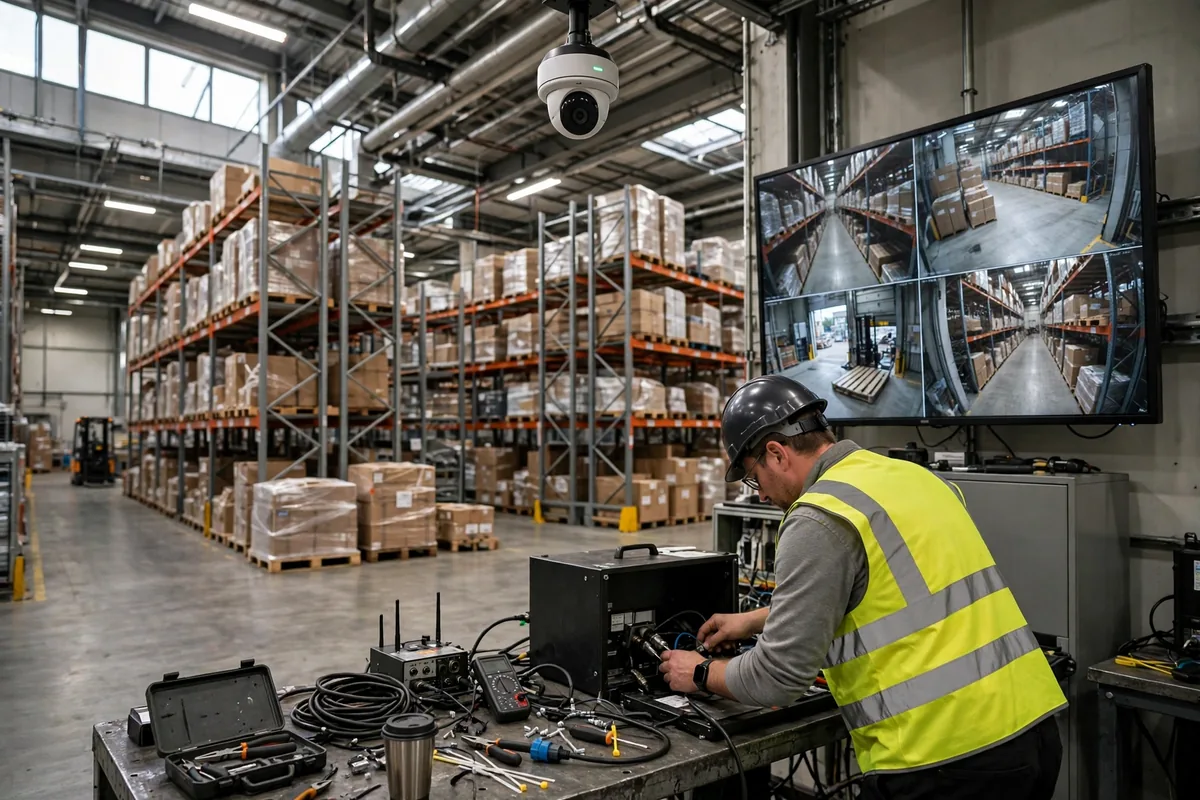
Seventh, an exit plan. If the pilot fails, what switches off, which cameras return to plain recording, and how long the data is kept? Write it down before the pilot starts, so the team can test without fear.
One last reminder: AI inspection does not replace the human patrol. It replaces the "standing and watching" part of the patrol. That is what a warehouse AI inspection patrol camera deployment is for — the patrol officer's eyes, not the patrol officer. Get that framing right and the project is already halfway to success. Get it wrong and you have bought an expensive recorder.
By Lin Xiao, WMS Implementation Consultant