AI camera pallet counting sounds like a toy built for big companies with money to burn. My warehouse is 3,000 square meters, my team is small, and on count day everybody stays late. When a vendor told me a camera on the ceiling could count a whole pallet in seconds, my first thought was not excitement. It was: prove it, and prove it on the kind of messy pallets I actually have.
A quick honesty note before we go further. Every accuracy number in this piece that comes from a vendor is labeled as a vendor claim, drawn from publicly available vendor material on visual inventory. None of it is a measurement from my own warehouse. The two cases below use hypothetical example numbers for pallet counts, labor hours, and costs. They are not my real books.
How to Test AI Camera Pallet Counting Without Fooling Yourself
A fair test starts with an answer the camera never sees. Count a pallet by hand first, box by box, photograph it, and write that number down. That is the ground truth. Then let the camera count the same pallet on its own. Where the two disagree, walk over and look: did the camera miss a box, or did the human miscount? Comparing speed alone tells you nothing about accuracy.
Vendor-published benchmarks give three reference points, and the gap between them matters more than any single number. For neat, uniform pallets, vendors claim counting accuracy of about 99% or higher. For multi-layer pallets where the system has to count boxes rather than pallets, vendors claim about 97%. For shelf scenes with occlusion, vendors claim about 94%. Same system, different scene, a spread of five points. So the first question to ask any vendor is not what the accuracy is, but what scene that number was measured in.
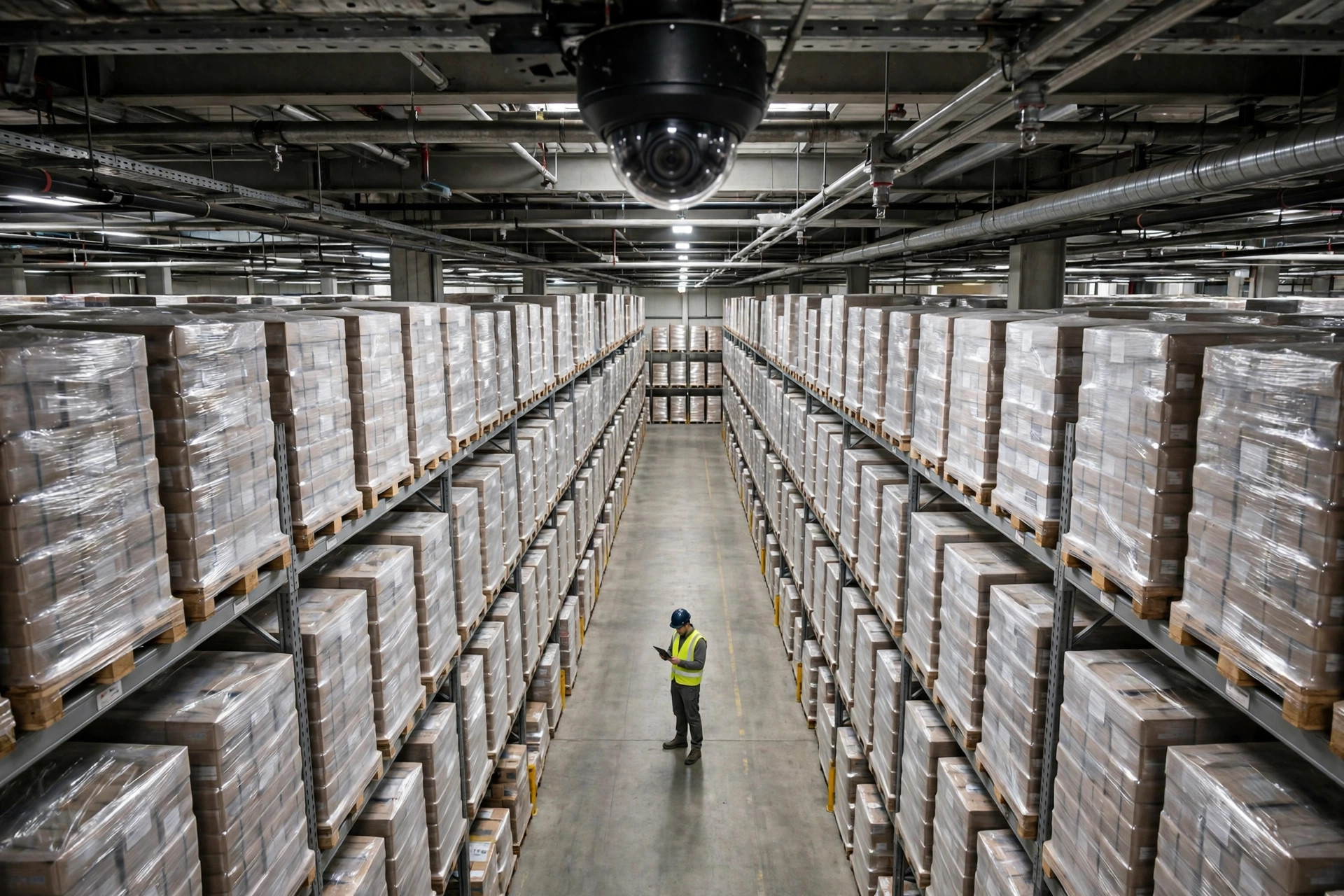
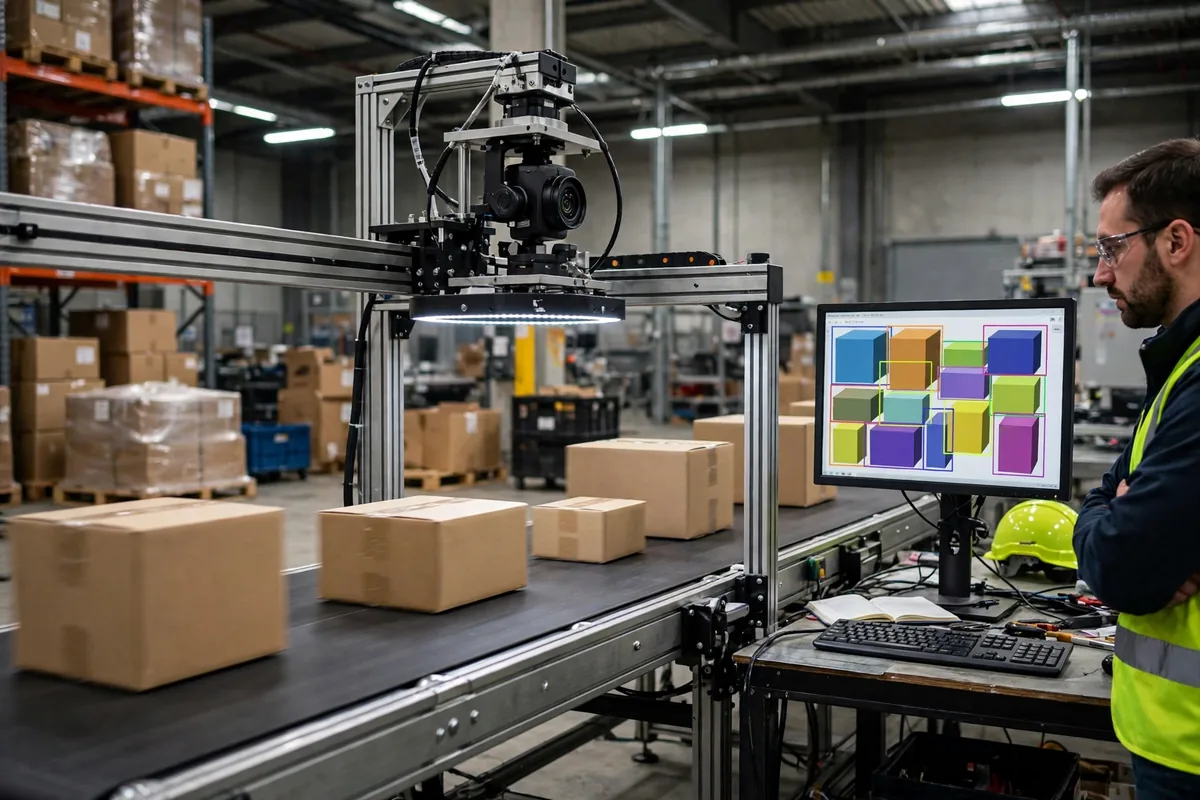
Vendors suggest a ceiling mount height of about 12 to 16 feet. Mount too low and the camera sees only half a pallet; mount too high and the gaps between boxes blur. Edge inference hardware such as NVIDIA Jetson can run the model locally, so the video does not all have to travel to the cloud.
A Hypothetical Neat-Pallet Test: Good Numbers, Wrong Conclusion
Picture a Tuesday afternoon in October 2026, in Zone A of a small warehouse. The freight is one size of carton, stacked neatly, 48 cartons to a pallet, 20 pallets, 960 cartons in total. Two people count it by hand in about 50 minutes. A ceiling camera scans the same row, and the vendor claim for this kind of neat scene is about 99% or higher, which works out to fewer than 10 cartons wrong out of 960.
Neat, uniform freight is already fast to count by hand, because every box looks the same and every layer lines up. The camera saves under an hour and charges you for hardware, installation, and setup in return. For a small operation, spending real money to speed up the easiest count in the building is a strange priority. The neat scene is useful as a ceiling, a best case. It is not a picture of a normal Tuesday.
Where AI Camera Pallet Counting Breaks Down
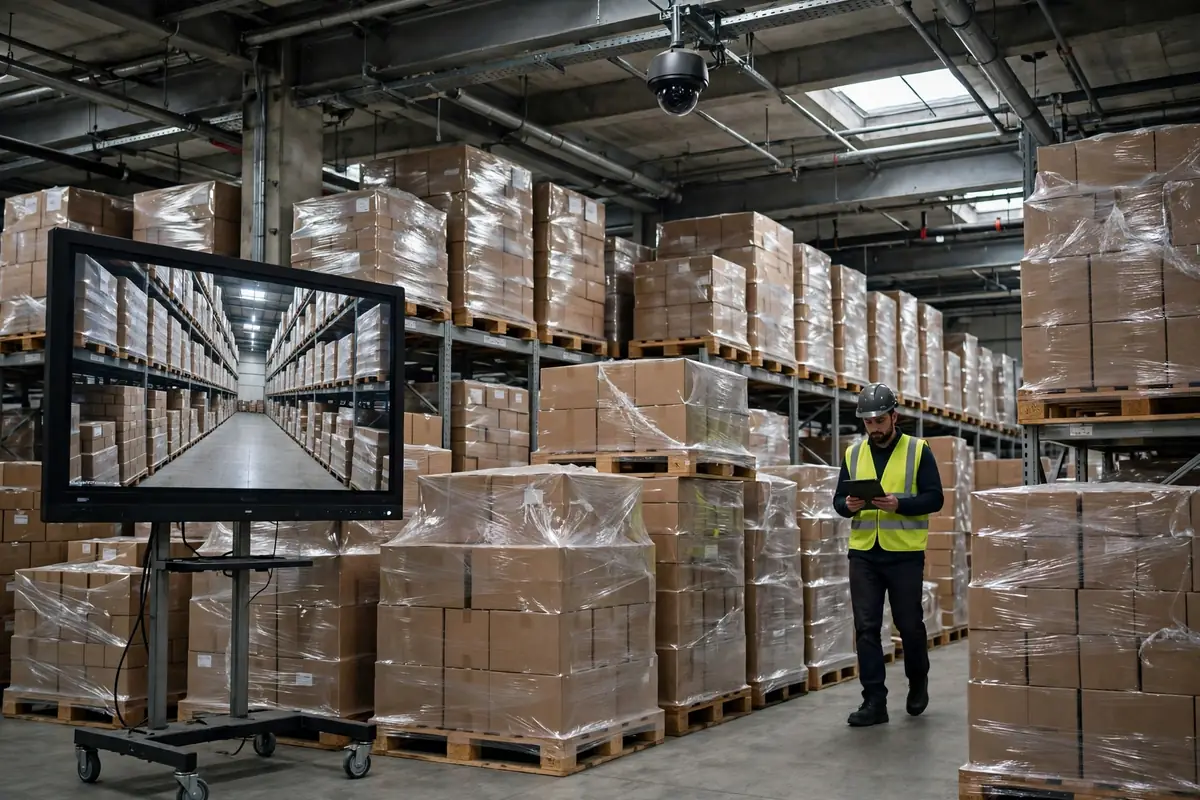
The second hypothetical example resembles my warehouse more closely. It is a month-end count in early November 2026, in Zone B, on mixed shelving. Three kinds of cartons look almost identical from a distance. Every pallet is wrapped in stretch film, and the overhead lights throw glare across the plastic. Vendor-published material puts common manual counting error at about 1 to 4%, and the vendor claim for occluded shelf scenes is about 94%, which means roughly 6 cartons wrong in every 100.
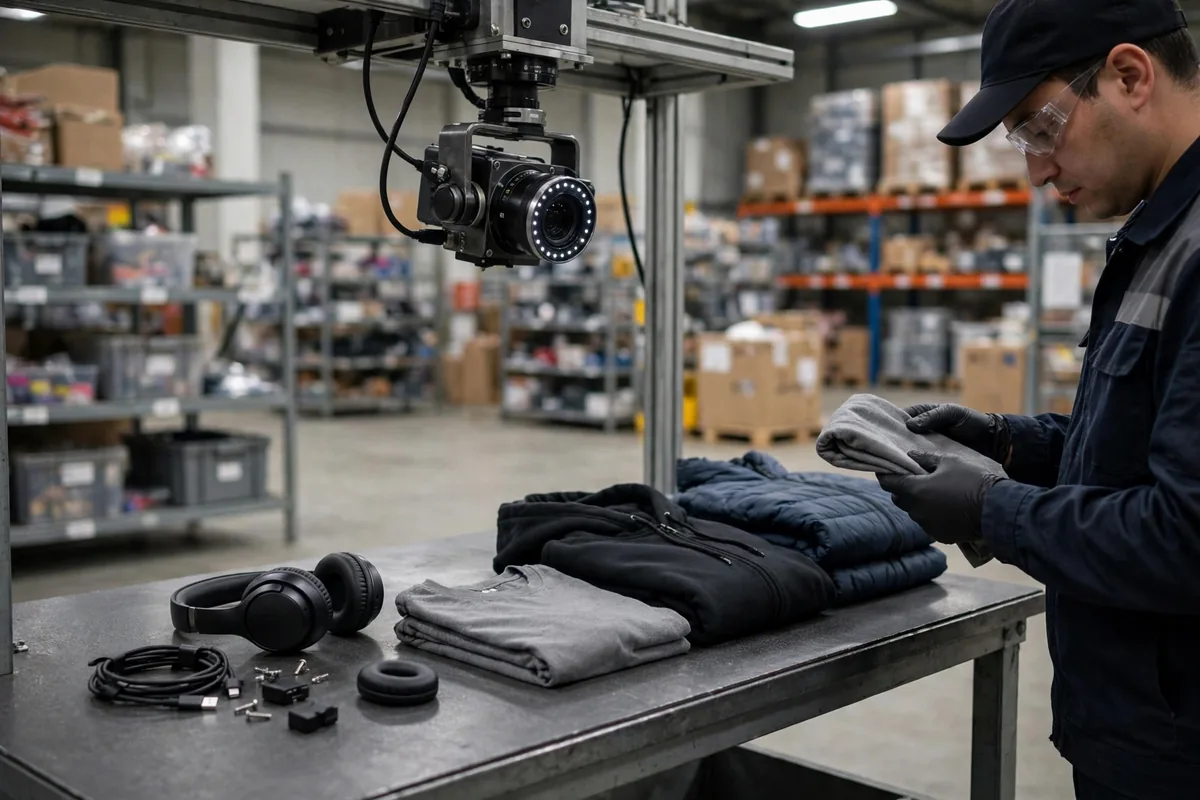
Glare turns the edge between two boxes into a smear, so the system cannot tell where one carton ends and the next begins. Similar packaging is worse: two different SKUs differ by one small label that a ceiling camera cannot read, so the box count can be right while the item identification is wrong. Then there is depth. When cartons are stacked front to back, the rear rows hide behind the front rows, and the system has to estimate what it cannot see.
So the honest summary is that visual counting is not afraid of volume. It is afraid of mess. Neat freight is easy for people and machines alike. Messy freight is slow for people but they can pick a box up and look at it, while a camera can only look at the surface. Expecting one set of cameras to solve every count in the building is asking the tool to be something it is not.
Counting the Money: Manual, Camera, or a Mix
Accuracy without money is a hobby, not a decision. The table below compares the options using hypothetical example figures. It is a way to think, not a price list, and none of the hours or costs in it should be treated as a quote.
| Approach | Best suited for | Accuracy framing | What it feels like in a small warehouse | | Manual counting | Mixed freight, many SKUs, cartons you need to handle | Vendor-published material puts common manual error at about 1 to 4% | Slow, but a mistake is visible on the spot | | AI camera pallet counting | Neat, uniform, high-volume freight | Vendors claim about 99% or higher for neat scenes, about 94% for occluded scenes | Fast, but you only learn where it was wrong after the fact | | Mixed approach | Neat freight on camera, messy freight by hand | Score each scene separately, never blend them into one average | Money goes where it helps, and risk stays separated |
To work out ROI, do not only count the labor hours saved. A camera system also costs installation, calibration, re-tuning when packaging changes, and adjustment when the lighting changes. Those are ongoing costs, not a one-time bill. I am not giving a payback period in months here, because I have no verified figures for equipment or implementation costs. The small-warehouse way to run the math is simpler: count how many counts you do per month, how many people each one takes, and how many hours it runs, then ask the vendor to price neat freight and occluded freight separately. A single blended accuracy number will mislead you. Separate numbers will not.
The Counterintuitive Part: The Most Accurate Scene Is the Least Worth Buying
Most people assume the higher the accuracy, the better the purchase. I have come to the opposite view. The neat scene carries the best vendor claim, about 99% or higher, and it is also the scene where the camera adds the least value, because people already count that freight quickly and accurately. The scene that causes real pain in a small warehouse is the occluded one: mixed cartons, similar packaging, glare on film, slow manual counts with real error. Yet that is exactly where the vendor claim drops to about 94%, which is not good enough to hand the count over and walk away.
That is the central trade-off. The freight that does not need the camera is where the camera shines, and the freight that needs it is where the camera is weakest. The fix is not to wait for a perfect model. It is to split the freight. Let the camera do a first pass on neat, high-volume pallets, and have a person spot-check the result. Keep messy, high-value, and mixed-SKU freight on manual counts, with the camera acting only as a record. Machines and people each doing the job they are good at beats forcing a choice between them.
If you run a warehouse like mine, three rules will keep you out of trouble. First, never accept a single accuracy number. Make the vendor give you separate numbers for neat, multi-layer, and occluded scenes, in writing. Second, pilot on your neatest freight first, and remember the pilot result describes that freight only, not the whole building. Third, put the exclusions in the contract: what happens when glare or occlusion causes a miss, and who pays for the recount. If that part is vague, do not sign yet.
Small warehouses have their own way of surviving, and counting is no exception. A camera can save effort, but only if you know which pallets it counts well and what the whole thing costs over a year. A 99% claim is a good headline. It is a poor reason to spend money.
By Xiao Ma, Small Warehouse Owner