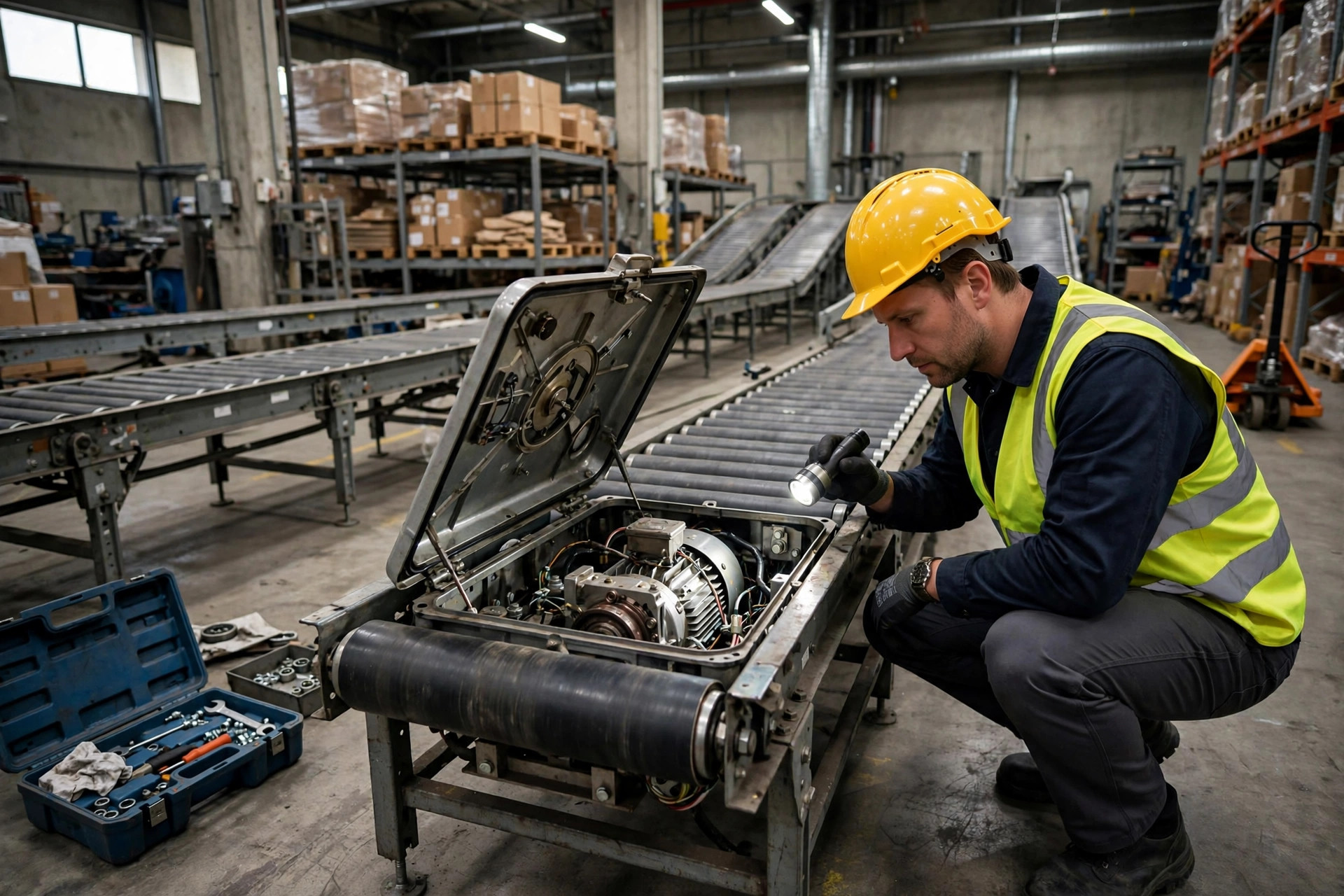
"How often does conveyor belt cleaning need to happen?" I've been asked this more times than I can count. My answer is always the same: tell me what kind of warehouse you run first.
It's like asking how often a car needs servicing — would you give a taxi and a family sedan the same schedule? Get the principle right and the frequency answers itself.
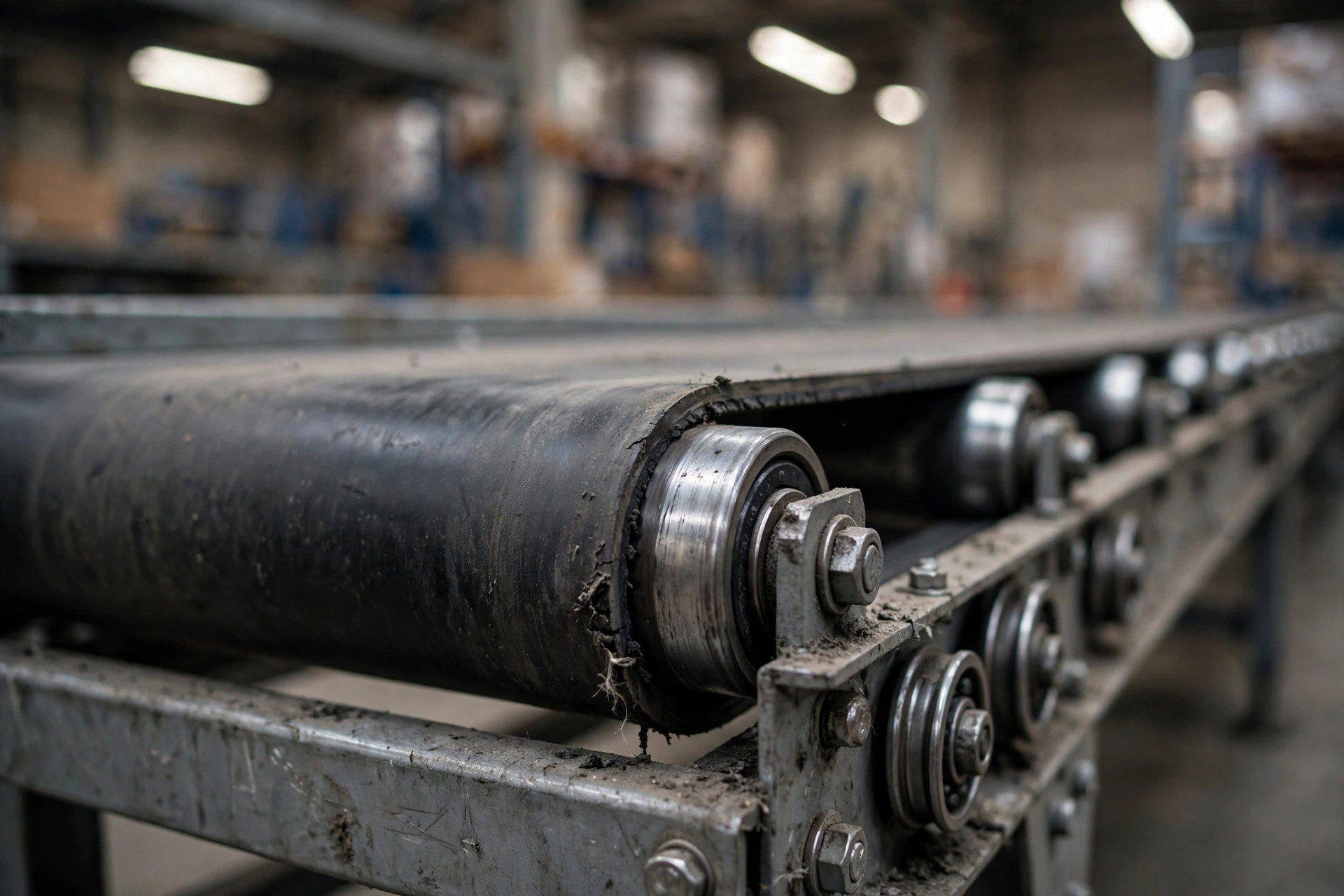
Here's the principle. When a belt gets dirty, dust, debris, and oil build up on the contact surfaces between the belt, the idlers, and the rollers. Friction ends up higher on one side than the other, and the belt drifts sideways — that's mistracking. Add oil or moisture and the belt slips against the drive pulley. Mistracking chews up the belt edge, slippage kills your throughput, then sensors start misreading and motors overload. The whole chain of failures traces back to one thing: a dirty belt. Put bluntly, conveyor belt cleaning isn't just a hygiene issue — it's where mistracking and slippage are born. It's a reliability problem.
Food Plants: Conveyor Belt Cleaning Is a Every-Shift Ritual
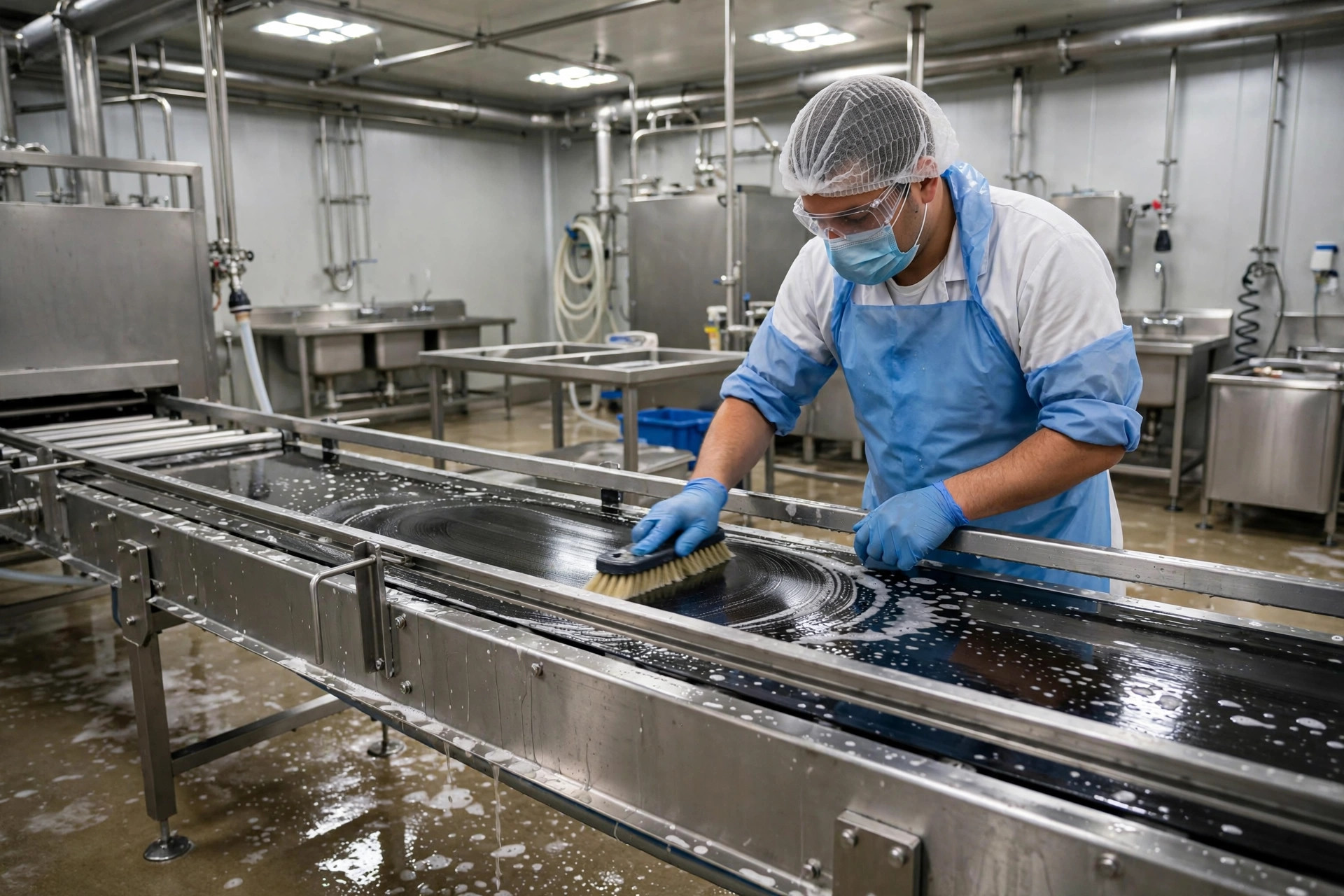
2023, a meat processing plant in Shandong. Stainless steel conveyor lines. Every production day ended with a high-pressure hot-water washdown plus disinfection, with two dry wipe-downs mid-shift. That's standard practice in food — grease and meat residue left overnight become a bacteria farm, and you won't pass compliance (always follow the official sanitation regulations for your jurisdiction).
One night shift skipped the final washdown to clock out early. Next morning at startup, the belt slipped, a photo-eye sensor misread, and the whole line sat dead for 40 minutes. Worse, a batch of products got misaligned date codes and had to be reworked. After that, the plant wrote "cleaning confirmed" into the shift handover sheet: no signature, no startup.
Regular Warehouses: Four Months Without Cleaning Costs You a New Belt
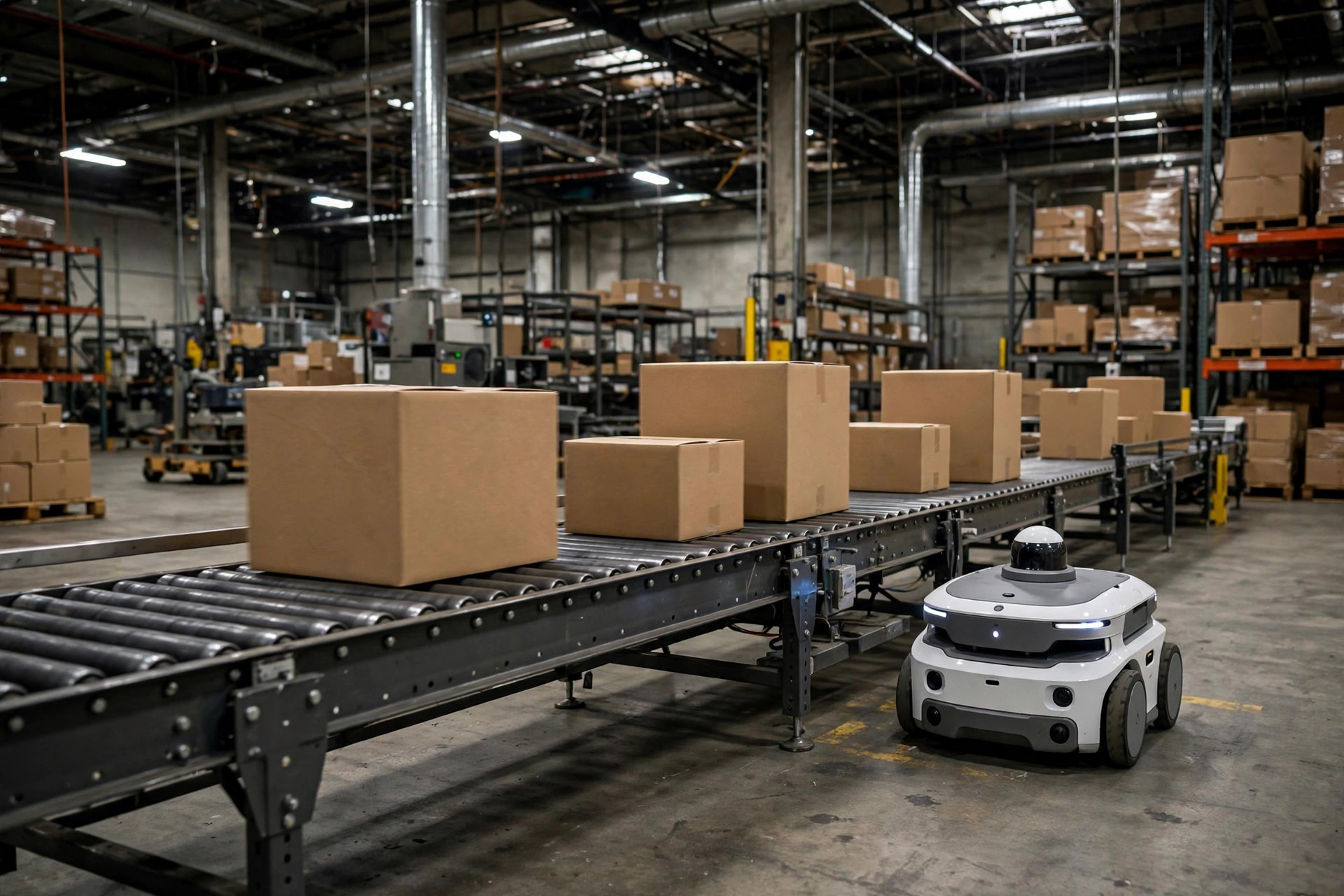
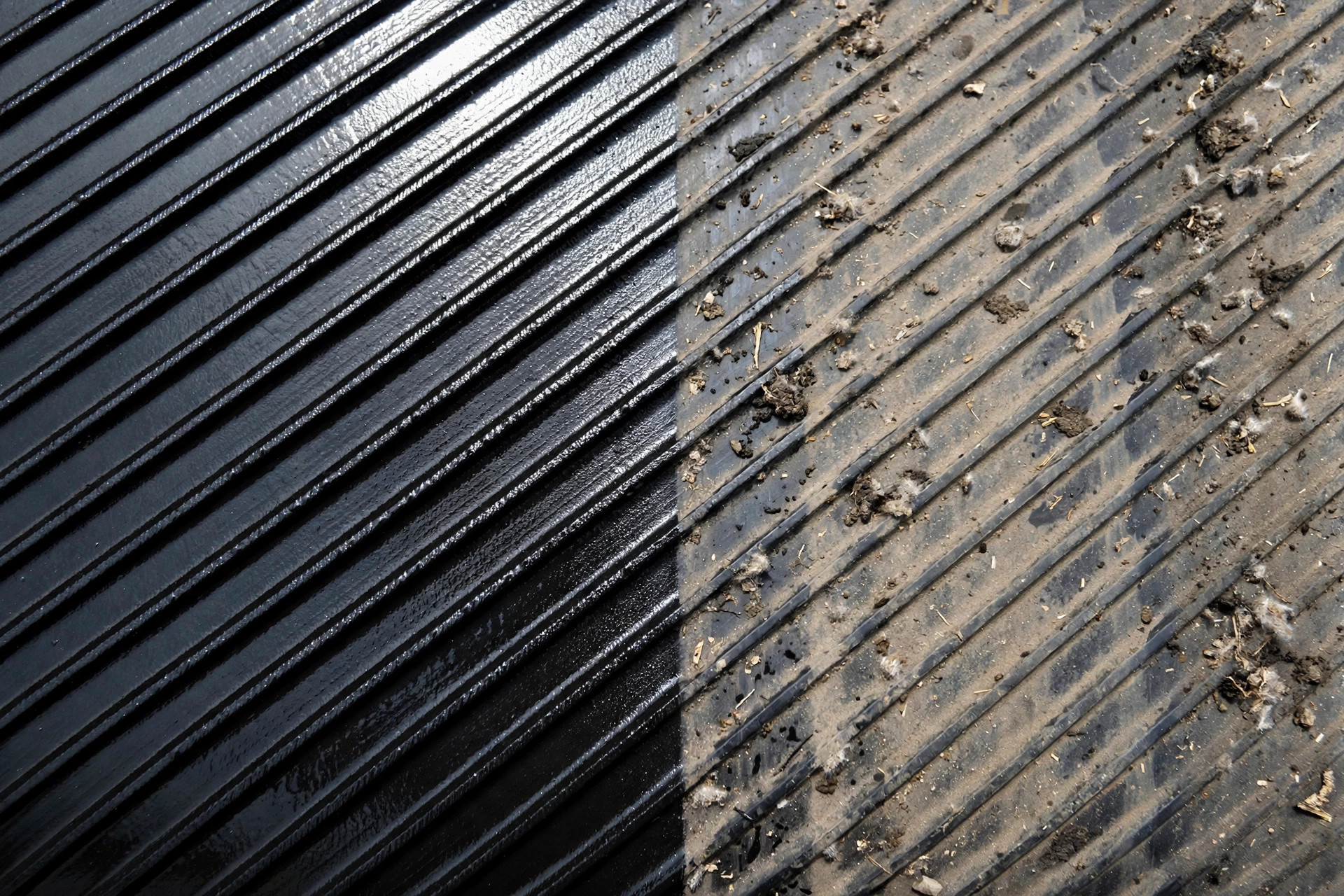
2022, an e-commerce warehouse in eastern China, solid daily volume. The conveyor belt hadn't had a proper cleaning in four months. Dust, tape scraps, and paper fibers packed onto the idlers and the belt's inner surface. Idlers seized, the belt started mistracking, and the frame chewed a frayed edge into it.
By the time anyone noticed, it was too late: the belt edge had cracked, and the only fix was a full replacement. Forty meters of belt, parts plus labor, tens of thousands — and the line down for most of a day. I ran the numbers with their warehouse manager: two people, half a day a month for a thorough cleaning, costs less over a year than a fraction of one belt replacement. Skip the cleaning budget and the equipment will spend it for you — with interest.
The Biggest Cleaning Trap: Cleaned but Not Really Cleaned
The most wasteful failure I've seen: the belt surface scrubbed spotless, and it still mistracks. Why? Because the dirt isn't on the surface — it's on the idlers and pulleys. Idlers caked with dust stop turning, the belt's inner face polishes itself against them, and you get what I call "cleaned but not really cleaned." I've seen it in more than one facility.
Then there's the pressure washer used wrong: aimed straight at the bearing housings, water gets into the bearings, and three months later they're growling. One bearing replacement costs more than a year of belt cleaning. Lock out and tag out before any washdown — non-negotiable — and after wet cleaning, dry what needs drying and protect what needs protecting. Don't wreck other components while cleaning the belt.
Conveyor Belt Cleaning Frequency: The Industry Table
There's no universal answer, but there is a tiered standard. Find your row:
| Industry | Recommended frequency | Notes |
|---|---|---|
| Food / pharma / fresh | Every shift | Compliance-driven; follow official regulations |
| E-commerce / parcel sortation | One deep clean monthly, dry wipe weekly | Dust and tape debris are the main enemy |
| General manufacturing / auto parts | Quarterly | Watch for oil contamination |
| Building materials / heavy goods | Monthly inspection, clean as needed | Heavy dust; seized idlers are the classic failure |
Treat this as the floor, not the ceiling. When peak season doubles your volume and the dust visibly thickens, raise the frequency — don't worship the table.
Choosing a Cleaning Method: Don't Pay for Fake Needs
Dry wipe, wet wash, high-pressure water, automatic belt cleaners (brush plus scraper plus spray bar) — how do you choose? Two questions: what is your contaminant, and how long is your maintenance window?
Dry wiping handles dust fine and costs the least. Oil needs wet washing or high-pressure water. Automatic cleaners sound beautiful, but let me pour some cold water on that: they only make sense on lines with a single contaminant type and fixed shifts. In a small warehouse with five different kinds of grime, an auto-cleaner is decoration — the brush gets tangled solid in two weeks. That's a textbook fake need. Get your manual cleaning frequency right first, then talk about automating it. Don't reverse the order.
And one more word on fake needs. I've seen operations spend serious money on an imported automatic cleaner, installed on a mixed line that runs cartons today, woven bags tomorrow, oily auto parts the day after. The brush tangled in two weeks; within a year the unit was a monument and cleaning was manual again. Automatic cleaning is a fine thing — but only for lines with one contaminant and fixed shifts. Before buying, ask yourself one question: how many kinds of grime do I actually have?
The Math: Cleaning Cost vs. One Hour of Downtime
One hour of a dead sortation line costs how many orders of throughput? Multiply by your own per-order value and the number speaks for itself. In every warehouse I've seen, one hour of downtime costs enough to pay for cleaning every belt in the building three times over.
So the conclusion is simple: whether conveyor belt cleaning is worth the money comes down to one number — what one hour of your downtime costs. The bigger that number, the higher your cleaning frequency should go. Food plants washing daily aren't being fussy; they've done the math. Regular warehouses cleaning monthly aren't being lazy; it's enough.
One more calculation for you: a 40-meter belt replacement, parts plus labor, runs into the tens of thousands. How many deep cleanings does that buy? At one a month, it covers years. Once you've run that number, you stop seeing cleaning frequency as a cost — it's insurance.
By Da Liu, Automation Engineer