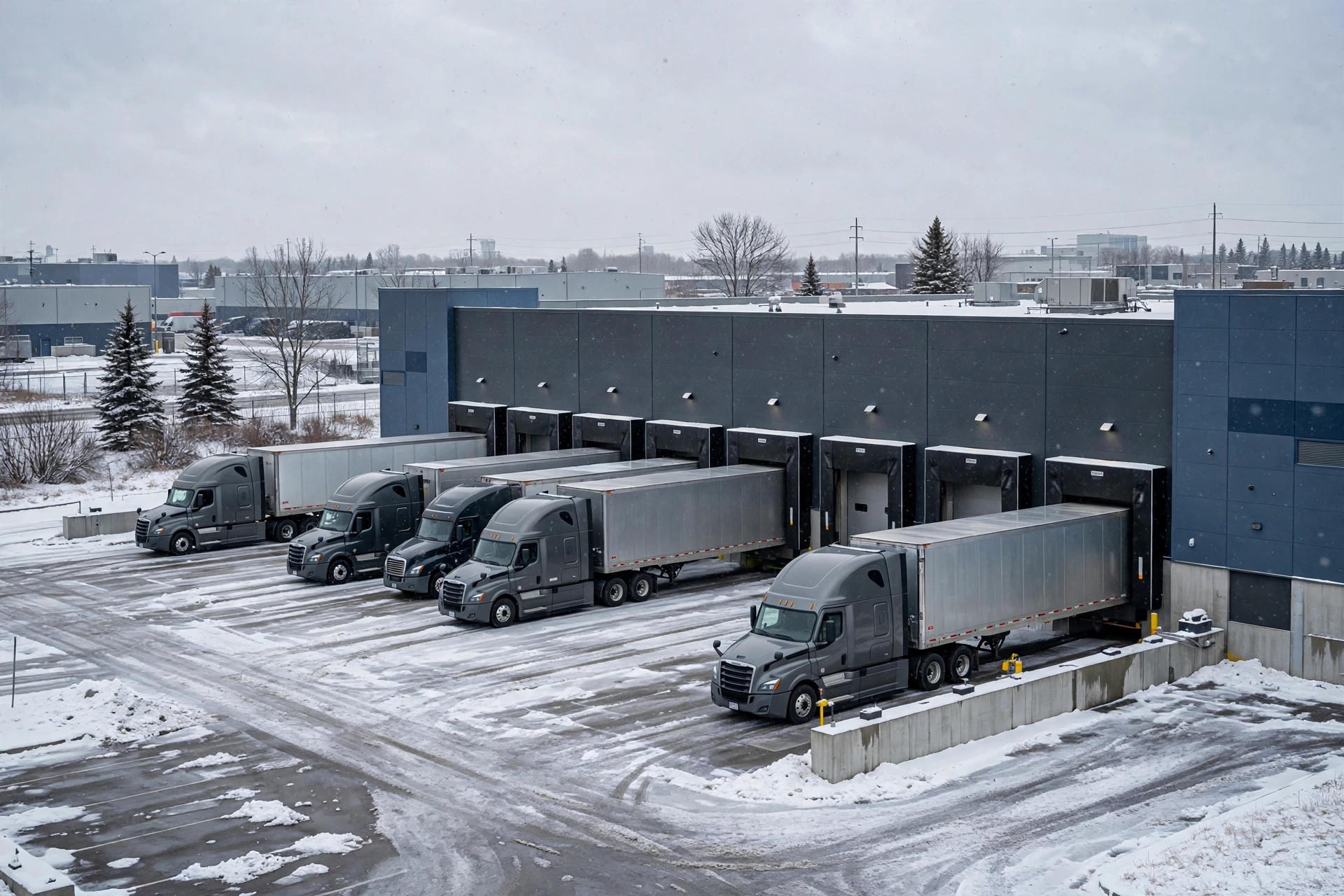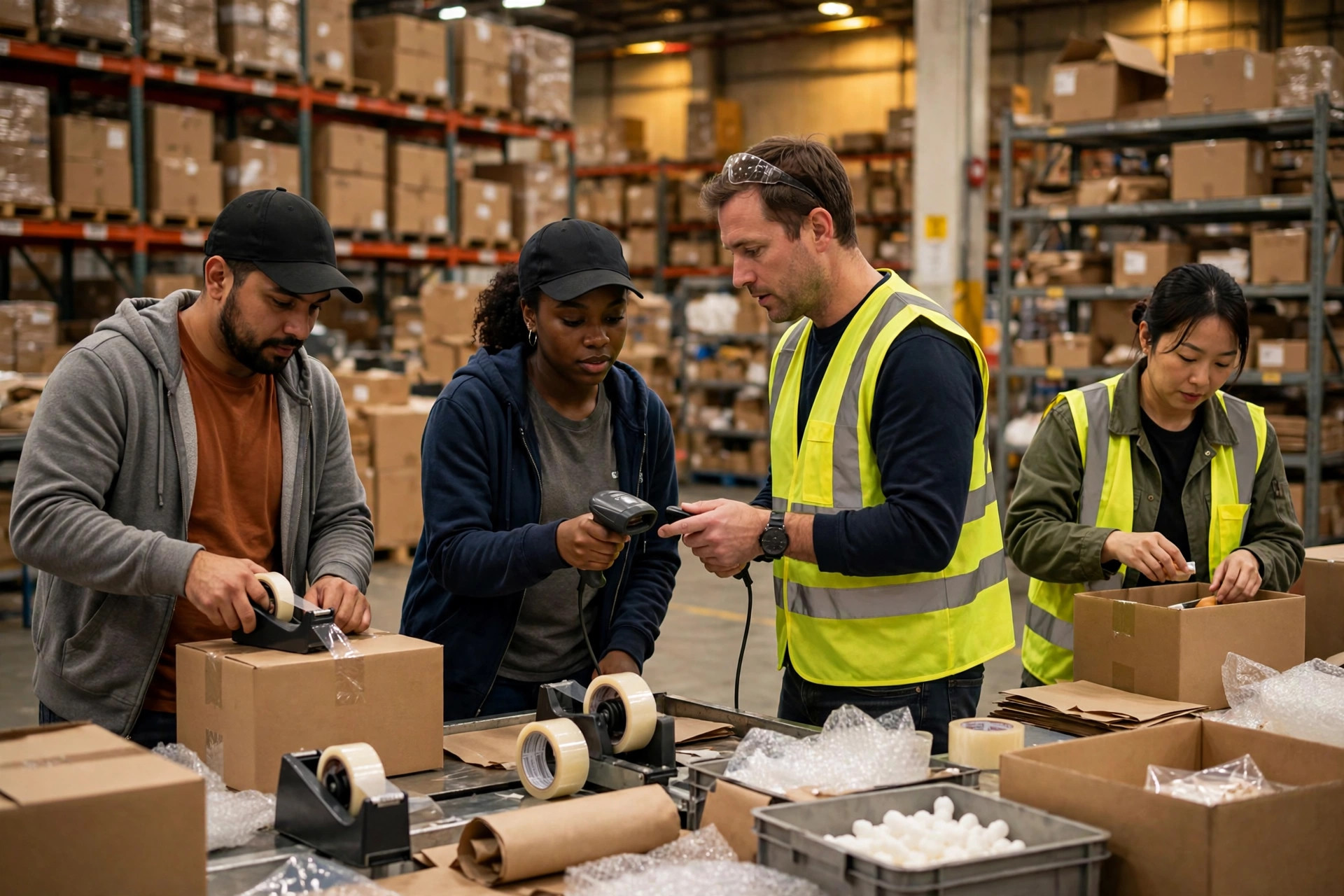
We have a client — a home goods e-commerce seller — who opened an overseas warehouse in Fontana, California in 2024. Sixty thousand square feet, staffed entirely with veteran employees transferred from China. It ran beautifully. Then last year they doubled the space to 120,000 square feet ahead of peak season, order volume doubled, and they ran out of hands.
The owner's first instinct was to transfer more people from China. Then he priced out visas, housing, and relocation packages, and the math fell apart. So they decided to hire locally.
That's when they hit their first wall.
Fontana sits in one of the densest warehouse corridors in the country. Right down the road is an Amazon fulfillment center paying a dollar-fifty more per hour — with free lunch. Our client posted what seemed like a "slightly below market" hourly rate back home. Three weeks of recruiting brought in 11 people. A month later, only 3 were still showing up. During the two worst weeks of peak season, half the packing line was temp labor, and the mispick rate tripled. Returns and customer complaints buried them.
That client eventually became our 3PL customer — they outsourced the warehouse to us, and insisted on adding a labor clause to the contract. Here's everything that deal taught me about US overseas warehouse hiring.
In US Overseas Warehouse Hiring, the Hard Part Isn't Hiring — It's Keeping People
Here's some inside baseball from the 3PL side: annual turnover for frontline warehouse roles in the US is brutally high. Most operators we work with privately estimate that fewer than half of their line workers make it to the one-year mark. The work is tiring, repetitive, and unglamorous. Local hires last two months and jump at the first slightly better offer.
So the real battleground in US overseas warehouse hiring isn't the job board — it's the 90-day retention rate. Clients who obsess over "how many people did we hire" invariably collapse the week before peak. Clients who put "90-day retention" in their KPIs are the ones who sleep through peak season.
And here's the counterintuitive take that makes most clients flinch at first: paying two dollars more per hour can cut turnover in half — and the total bill goes down.
Let me walk you through the math. Say a packing role pays $18 an hour. You hire 20 people, and 10 quit within a month. Every departure means recruiting and retraining — figure two weeks of training at 60% of a veteran's productivity, plus extra mispicks and damages. All in, each quit costs you at least half a month's wages in hidden expense, not counting management time.
Now pay $20 instead. Same 20 people, only 4 quit that month. On paper the hourly rate is 11% higher. In reality total labor cost drops, because the three hidden taxes — recruiting, training, and errors — get slashed. One of our clients in Dallas did exactly this: raised the rate from $17.50 to $19.50, and within three months monthly turnover fell from around 40% to under 20%. Their peak-season mispick rate actually came in lower than the off-season.
The exact numbers vary by state and metro — minimum wage and overtime rules change, so always check the current official policy. But the logic holds everywhere: in a US warehouse, cutting hourly pay is the most expensive way to save money.
Three Staffing Models for US Overseas Warehouse Hiring
Overseas warehouses in the US generally pick one of three models. Here's the honest comparison on cost and management burden:
| All-local team | Expat managers + local crew | Staffing agency temps | |
|---|---|---|---|
| Hourly cost | Medium (local market rate) | High (expat packages + housing) | Looks low, but add 30–50% agency markup |
| Hiring speed | Slow (2–4 weeks) | Slowest (visa timelines) | Fastest (on-site in 48 hours) |
| Management difficulty | High (culture gap) | Medium (language + culture gap) | Low (agency handles attendance) |
| Stability | Medium (depends on pay) | High (expats don't quit easily) | Rock bottom (temps walk anytime) |
| Best for | Long-term, large self-run DCs | New sites building a team from scratch | Seasonal surge coverage |
Our Fontana client ended up with a hybrid: all-local hires for core management (warehouse manager, shift leads), direct local hires for operations, plus a staffing agency contract locking in 30 temp slots two months before peak. Only one operations director stayed on from China, owning process and systems. Two years in, his verdict: you have to grow your own backbone; you can rent the muscle.
One more piece of intel only the 3PL side knows: many 3PLs quote you an "all-in" rate with labor costed at temp-agency prices, and the margin hides in the spread between temp and full-time cost. When you negotiate, always ask what labor structure sits inside the quote.
Culture Fit: Harder Than the Language Barrier
Getting people in the door is only halftime. The most underestimated part of US overseas warehouse hiring is the cultural grinding-in period.
True story. A client sent over a warehouse manager from Shenzhen — genuinely excellent, ran a 200-person DC back home. His first week in the US, he gathered everyone for a five-minute morning huddle: yesterday's problems, today's targets, the way he'd always done it. By day three, a local employee had filed a complaint with HR about being "publicly humiliated." In American workplace culture, calling people out in front of the group reads as bullying — and it can turn into a real labor dispute fast.
Then there's overtime culture. Back home it's "peak season, everyone stay two extra hours." In the US, you ask first, you pay overtime exactly as the law requires, and you schedule it in advance — no same-day surprises. OSHA safety training is a hard line: forklift certification, PPE, clear emergency exits. Get any of it wrong and the fines eat your margin for breakfast. Always verify the current official regulations — but the principle is simple: in a US warehouse, compliance isn't a cost. It's the ticket to play.
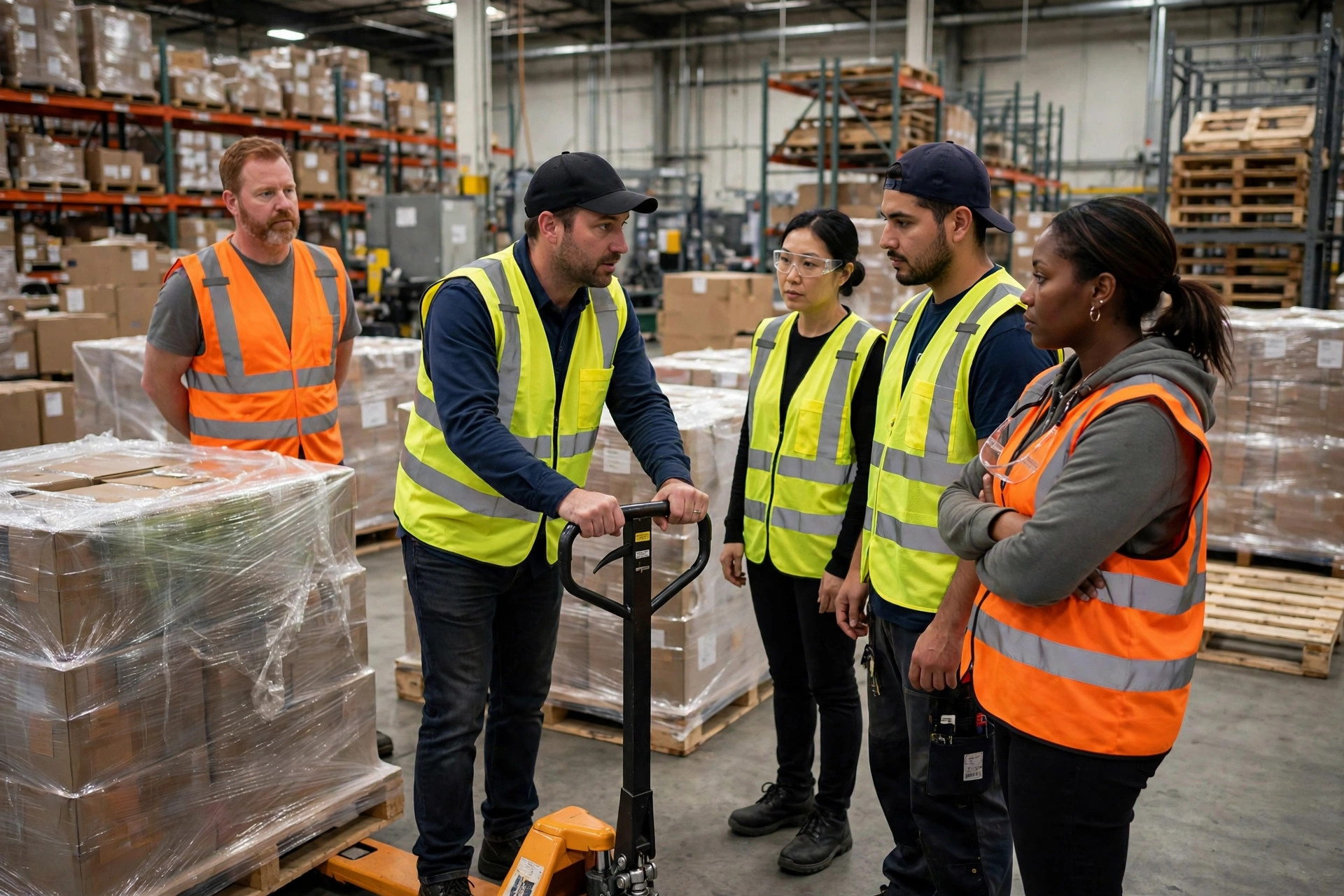
What actually works for the culture gap? Three things we've seen move the needle:
First, make every SOP visual. Don't rely on verbal instructions. Post illustrated work instructions at every station, in English, with pictures. Accents get in the way; pictures don't.
Second, hire a "culture translator." Find a bilingual supervisor who understands Chinese management habits and has survived American workplaces, and let them translate. "We must get the mispick rate down this month" becomes "hit the team target and pizza's on me Friday." Night-and-day difference.
Third, don't train once. Plenty of warehouses do a half-day onboarding — safety briefing, then onto the floor. We push clients toward three stages: day one for safety and culture, week two shadowing a veteran, and a refresher at the one-month mark. That refresher changes retention noticeably — employees feel like the company actually invested in them.
Next Time You Negotiate a Contract, Ask These Three Questions
If you're outsourcing to a 3PL, ask these three before you sign. The answers will tell you whether you'll sleep through peak season:
"How do you cover the peak-season labor gap, and how far ahead do you lock people in?" A solid 3PL will tell you: framework agreements with two or more staffing agencies, signed 8–12 weeks out, locking price and headcount. Anyone who mumbles "we'll hire when we get there" will fail you in November.
"Is the labor in your quote costed as full-time or temp — and what's your turnover target?" This one is a lie detector. Get the labor structure on the table and you'll see whether the quote has air in it — whether you're being charged full-time prices for temp-agency service.
"If your staffing problems cause mispicks or delays, how is compensation written into the contract?" Don't accept "we'll do our best." A confident 3PL puts SLAs in writing: service credits when the mispick rate breaches the threshold, capped compensation for peak-season delays. If they dare to write it down, they can actually deliver it.
Labor in a US overseas warehouse isn't a back-office issue — it's strategy. Who you hire and how you manage them sets your fulfillment cost and your customer experience directly. Next time you negotiate, don't just haggle over the per-order rate. Ask three questions about people. Those three questions are worth a full year of service fees.
By Susan, 3PL Sales Director