
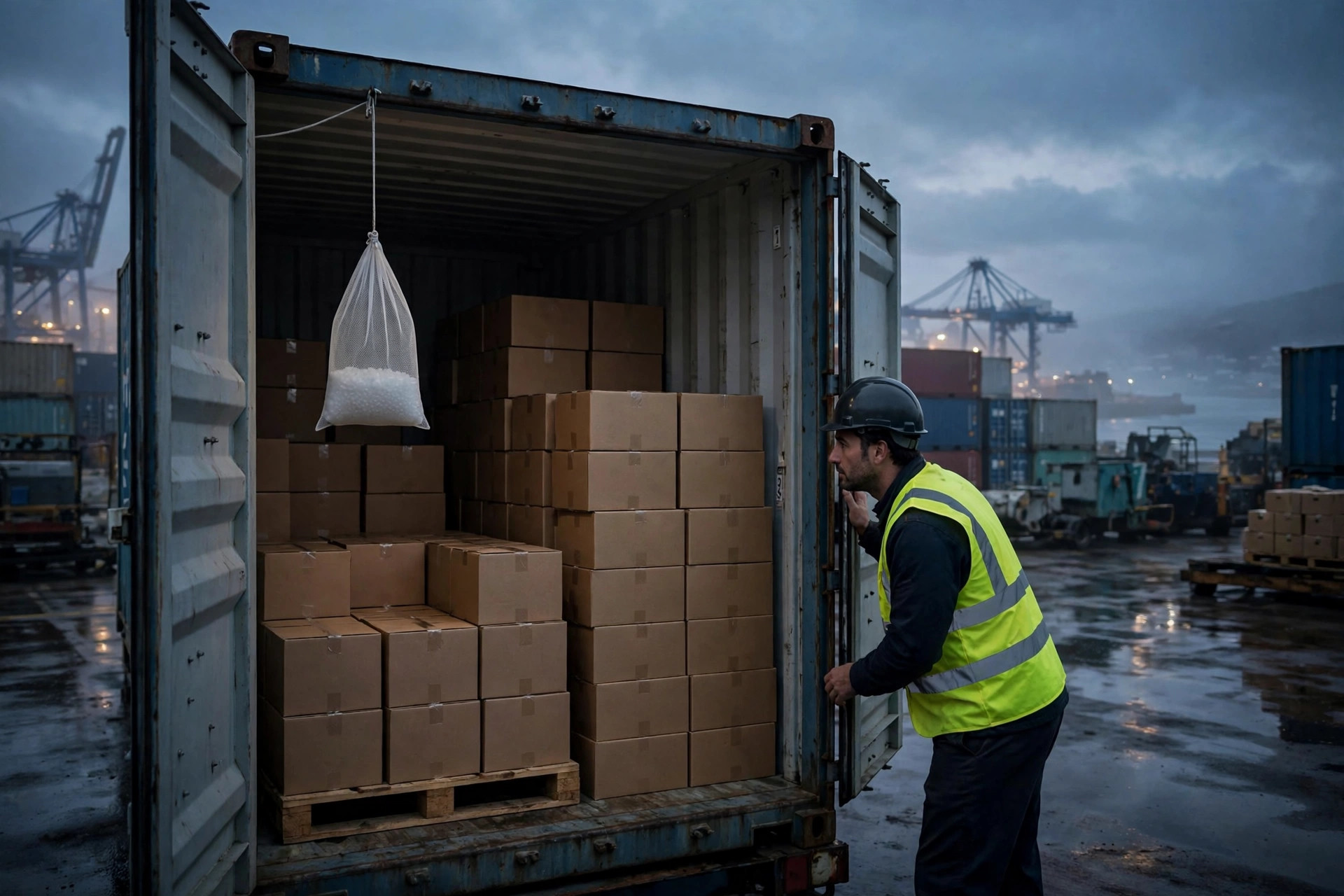
Container rain is the moisture problem most importers misdiagnose: the container never leaked, but the cargo still arrived wet.
We had a client who sells home goods. In September 2024, he shipped a container from Ningbo to Los Angeles. When the box arrived and the doors swung open, the top layers of cartons were soft, the corners spotted with mold, and some of the fabric items inside felt damp to the touch. His first instinct was to blame the ocean carrier. The container had to be leaking. Except it wasn't. The doors were fine, the seal was intact, the roof had no holes, and the floor showed no sign of standing water. No water got in, yet the cargo got soaked.
That is container rain. The container did not leak. It rained on itself.
What container rain really is
The mechanism is simple: temperature swings plus humidity. A container spends weeks at sea. The sun bakes the roof all day, then the temperature drops at night. Moisture in the air inside the box condenses on the ceiling and side walls, builds into droplets, and eventually drips down onto whatever sits on top of the load. The cargo itself and the wooden pallets underneath add their own moisture to the mix.
Here is where most shippers go wrong at the very start. They see wet cartons and assume the box leaked. Leakage and condensation are two different problems, and they lead to two completely different claims. A leaking container points at the carrier. Condensation often gets filed under "the shipper's packaging was not good enough," and the insurer may not pay a cent. Get the diagnosis wrong and everything after it is wasted effort.
And here is the counterintuitive part: a container that never took on water can still drench your cargo. Plenty of shippers obsess over whether the box leaks, checking the floor and the door gaskets, and never once ask about the day-night temperature swing on that lane, or the season the cargo sails in. Condensation from temperature swings is the main cause of moisture damage at sea. Actual leaks are the minority.
Two clients, two endings
The home goods client lost that round because he had done nothing to prepare. The factory loaded the container. Somebody tossed in a few desiccant bags by feel, right in the middle of the cargo stack. There was basically no moisture-proof packing. When the cargo arrived wet in Los Angeles, he wanted to file a claim and had nothing to file it with: no loading photos, no record of where the desiccant went, not even a clear written note of when the damage was discovered. He ended up absorbing most of the loss himself. He was furious, and I understood why, but the contract had never spelled out how this bill was supposed to be split.
Our other client sells small appliances. In early 2025, he shipped the same lane, Shenzhen to Long Beach. He had watched his peers get burned, and he did it differently. Before loading, his team inspected the box: roof, door gaskets, floor, one by one, and rejected any container with damage. Desiccant went in per the product instructions, hung high near the ceiling and around the cargo, not buried in the middle of the stack. Pallet loads got moisture-barrier liners, film wrapped all the way down, and separation from the floor. Same lane, same season. The cargo arrived dry.
The difference between the two shipments was not luck. It was half an hour of work on loading day.
Three things that actually stop container rain
There is no single trick here. Three layers have to work together, and skipping any one of them can undo the other two.
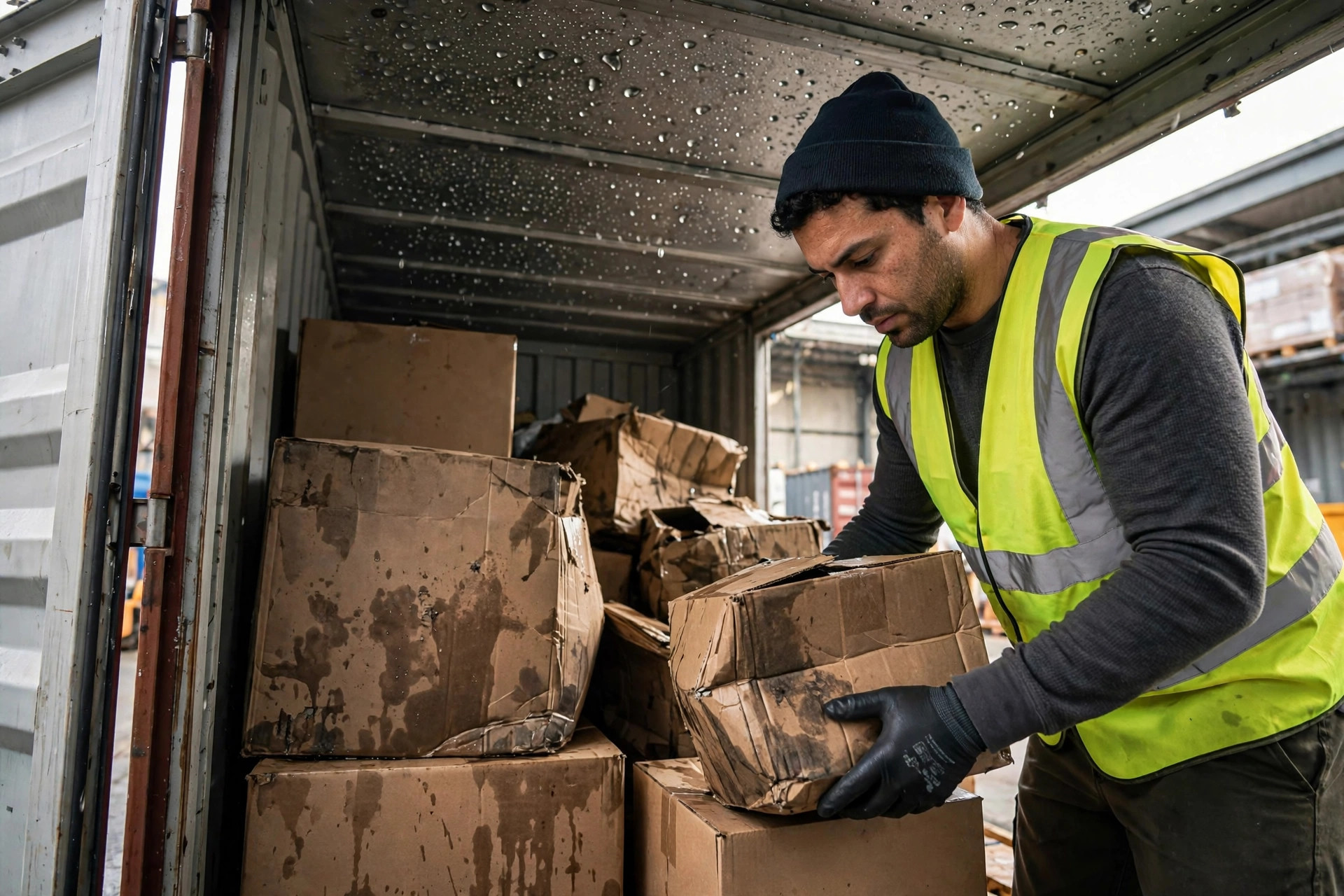
First, inspect the container before loading. Look for rusted-through spots and patch marks on the roof, aging door gaskets, a damp floor, or stains and smells left by the previous load. A sick container will defeat the best desiccant money can buy. Take photos with timestamps when you inspect. Those photos are your leverage if a claim ever comes up.
Second, desiccant. Let me kill a common myth: more is not better. Overdoing it just burns money, and bags placed in the wrong spot absorb air in the middle of the stack while droplets keep falling from the ceiling. Placement matters more than quantity. Hang bags high, near the ceiling, and around the cargo. As for how many to use, follow the product instructions and your own testing. When a supplier says "one bag per container," ask him: on which lane, in which season, for what cargo, and verified how?
Third, moisture-proof packing. Liners, pallet film, and separation between cargo and floor are the last wall between the water and your goods. Plenty of people wrap the top and forget the bottom, and moisture comes up from underneath anyway. Wrap the film all the way down. Seal the liner openings properly instead of leaving them as decoration.
How do the three investments compare? This table lays it out:
| Investment | Cost level | What it covers | Common pitfall |
|---|---|---|---|
| Pre-loading inspection | Low | Keeps a damaged box out | Rushed, no photos taken |
| Desiccant | Medium | Pulls moisture out of the air | Quantity by gut feel, random placement |
| Moisture-proof packing | Medium | Keeps water off the goods | Top wrapped, bottom ignored |
Notice the pattern: inspection is the cheapest layer, and it is the one most often skipped. Desiccant and packing are not expensive either. What is expensive is the damaged cargo and the finger-pointing afterward.
When it happens, who pays
If it does happen, do not start arguing. Start documenting. Photograph everything as the doors open: the first view of the load, the top of the stack, close-ups of the wet cartons, the droplets on the ceiling. Photograph the desiccant placement and what is left of it. Notify the relevant parties in writing within the time limit your contract sets. A phone call does not count.
How liability splits depends on the facts, and there is no one-size-fits-all answer. A damaged box that let water in points toward the carrier. Inadequate packaging points back at the shipper. If you bought cargo insurance, the policy wording and your evidence decide the outcome. In practice, the most common scene is three parties blaming each other, and the one with the complete evidence chain wins the argument. Loading photos, inspection records, desiccant placement records, and opening photos — with those four in hand, you negotiate from strength.
Next time you negotiate a contract, ask these three questions
After years on the vendor side, I have learned that most clients lose on moisture damage in the contract, not in the technology. Next time you negotiate a contract, ask these three questions:
First, who does the pre-loading inspection, to what standard, and do they keep photos? Second, who supplies the desiccant, to what standard, and who keeps the placement records? Third, if moisture damage is found on opening, how many hours do we have to notify, how do we preserve evidence, and how is liability split?
Get all three answered, and get them in writing. The next time container rain hits, you will not be the one standing there with nothing to say.
By Susan, 3PL Sales Director







