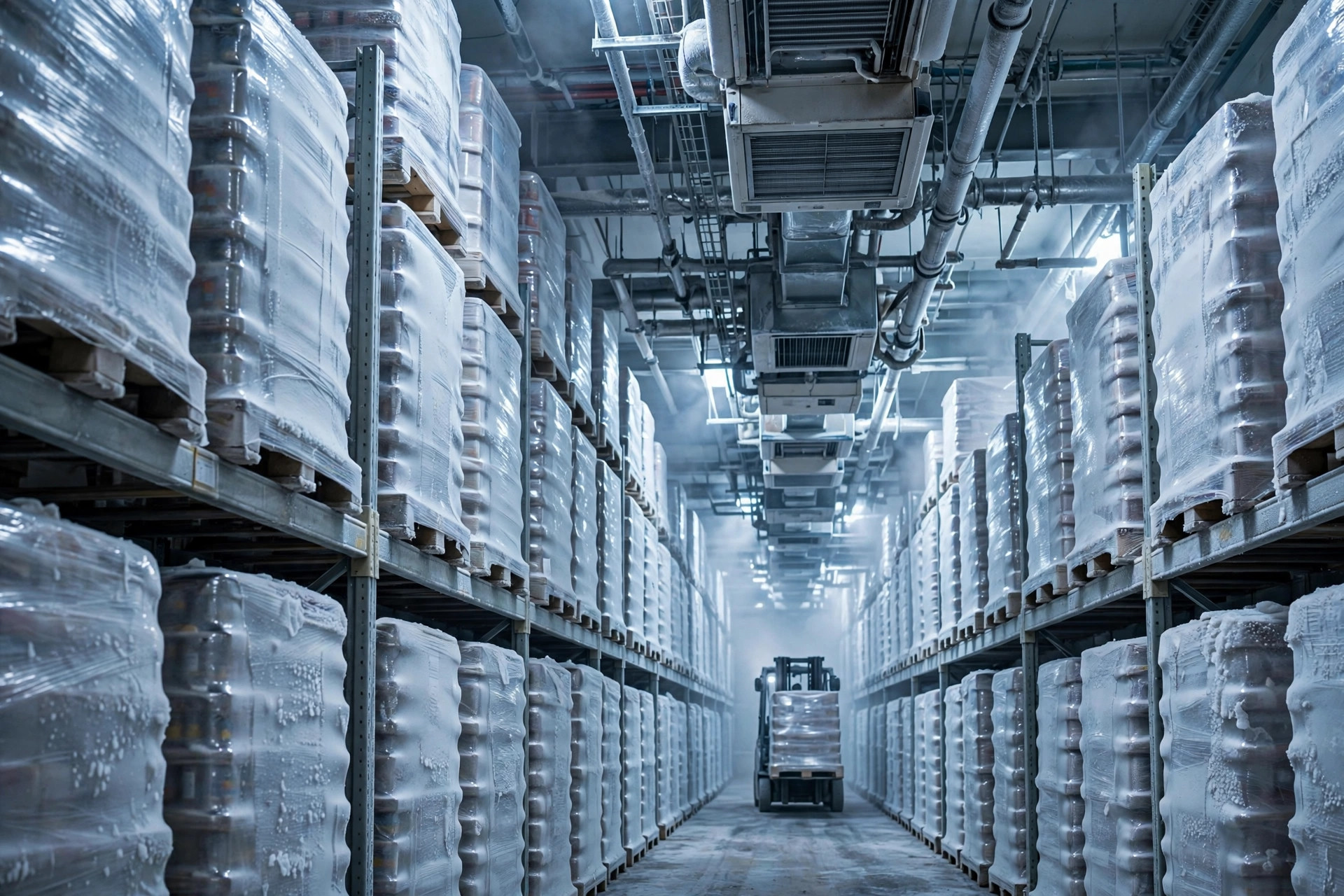
4:10 in the morning. My phone buzzes three times on the nightstand. Another text from the refrigeration room: Freezer Zone B is running warm—minus 16. Let me be straight with you — after more than a decade running warehouses, it's temperature control and the power bill that keep me up at night. Last week a frozen-seafood customer asked me: "Chen, what does cold storage warehouse cost per pallet actually run? What's one pallet a month?" So today I'm going to lay it all out — the prices, the logic, and the traps.
Cold Storage Warehouse Cost Per Pallet, by Temperature Band: Know Your Zone First
Some groundwork. The 2025 warehousing costs survey by WarehousingAndFulfillment — they poll 600-plus 3PLs across the US and Canada every year — puts average dry pallet storage at $20.17 per pallet per month. Cold storage runs higher — industry rule of thumb is roughly 2 to 3 times dry storage, because refrigeration eats power around the clock. So don't take a dry warehouse quote and slap it on a freezer. It won't fit.
Cold storage pricing breaks into three bands, and colder always means more expensive:
| Band | Temperature range | Typical US 3PL range (experience-based) |
|---|---|---|
| Chilled | 0–8°C (32–46°F) | $25–$40 per pallet/month |
| Frozen | Around -18°C (0°F) | $35–$60 per pallet/month |
| Deep freeze | Below -30°C (-20°F) | $60–$100+ per pallet/month |
The US Pharmacopeia defines cold (refrigerated) storage as not exceeding 46°F, and fresh produce and dairy typically run 36–39°F. Frozen food's standard is 0°F (-18°C). Deep freeze — that's below -20°F, mostly pharma and research product. The temperature band is the starting line of any quote. Get the zone wrong, and everything after it is wrong.
The ranges above are what I've seen on actual quote sheets over the years — the US market, roughly 2024 to 2025. Always confirm against your local 3PL's latest pricing. But here's a real anchor you can check me against: a 2023 public bid document for off-site freezer storage in the Midwest showed a refrigerated-storage company bidding $38 per pallet (storage plus handling), $33 per pallet per month on re-bill, and $12 per pallet for unloading. That lands squarely inside the $35–60 frozen band. The numbers hold.
Now the counterintuitive part, up front: the 3PL with the lowest per-pallet rate usually gives you the highest total bill. A New York 3PL published a worked example: same 107-pallet inventory profile, three bids. Bidder A had the lowest storage rate ($18/pallet) but a $4,500 monthly minimum plus separate handling charges — highest total bill of the three. Bidder B at $20/pallet came out cheapest overall. When you price cold storage warehouse cost per pallet, always compare "what do I pay per month, all in." Never compare the headline rate alone.
The 8 Factors That Actually Drive Cold Storage Pallet Pricing
Same temperature band — why does one 3PL quote $35 and another $55? It comes down to these eight.
1. The temperature band itself. Five degrees colder means a meaningfully bigger compressor load. Minus 18 and minus 25 are not in the same universe on power. Any quote that says "cold storage" without a temperature range goes straight in the trash.
2. Electricity. Cold warehouses are power hogs. Industrial electricity rates vary a lot by state, so ask the hard question: is power baked into the rate, or is there a fuel-style surcharge clause? If rates spike, does it land on you?
3. Turnover. Every time the dock door opens, cold air walks out. High-turnover product — dozens of pallets in and out daily — means handling and temperature loss dominate, and the storage rate is almost a side note. Slow-moving product sitting three months? A $5 difference in the monthly rate is thousands of dollars a month.
4. Contract length. Long contracts beat short ones. Always. A one-year deal versus a three-month deal can price in completely different worlds. And watch this: the 2025 survey found nearly half of 3PLs (48.6%) now charge long-term storage fees — an extra $5 to $10 per pallet per month on slow movers. Product that doesn't move still burns money.
5. Pallet specs. A standard 48×40 pallet is one price. Over-height or double-stacked pallets take cube, and some 3PLs convert to cubic pricing. Get your pallet dimensions and stack height on the table before you talk numbers.
6. Seasonal premiums. Frozen-product season from Thanksgiving to Christmas, ice-cream season in summer — cold space gets scarce and short-term storage carries a premium. Want it cheap? Lock space in the off-season.
7. Location. Cold storage near big metros and ports costs more; inland costs less. But cheap warehouse plus expensive linehaul isn't necessarily cheaper — run the math with transportation together.
8. Compliance and insurance. Food means FDA registration and FSMA compliance. An SQF-certified facility quotes higher, but when a temperature excursion happens, the liability terms are written down. A cheap warehouse that can't produce temperature logs will cost you more than one lost load.
How We Do It in Our Warehouse: Two Lessons the Hard Way
First story. Early 2024, an ice cream customer came to our Inland Empire site and asked straight up: "What's your chilled rate per pallet?" Our sales rep quoted the chilled band. Problem: his ice cream needed storage below -10°F. That's a freezer job, not a cooler job. We nearly signed before our warehouse supervisor asked one question: "What storage temperature does your product label say?" That one question fixed the zone, we re-quoted, and the customer stayed — because a couple of the other warehouses he'd asked had quoted him the cheap chilled rate, and he'd have found out the zone was wrong only after his product was already on their dock.
Since then, our warehouse has one rule: the temperature band and range go on line one of every quote. A quote without a temperature doesn't leave the building. Take that rule with you: when you price cold storage warehouse cost per pallet, match the zone first, then the price.
Second story. Six weeks before Thanksgiving last year, a frozen-seafood customer needed 200 pallets for three months. Short term, peak season, 200 pallets — three strikes, zero negotiating leverage. He signed at a big premium over what our year-round customers pay, because Thanksgiving freight doesn't wait. Flip it around: if you have a peak season every year, go lock next year's peak space right now, in the off-season. It's a different conversation entirely.
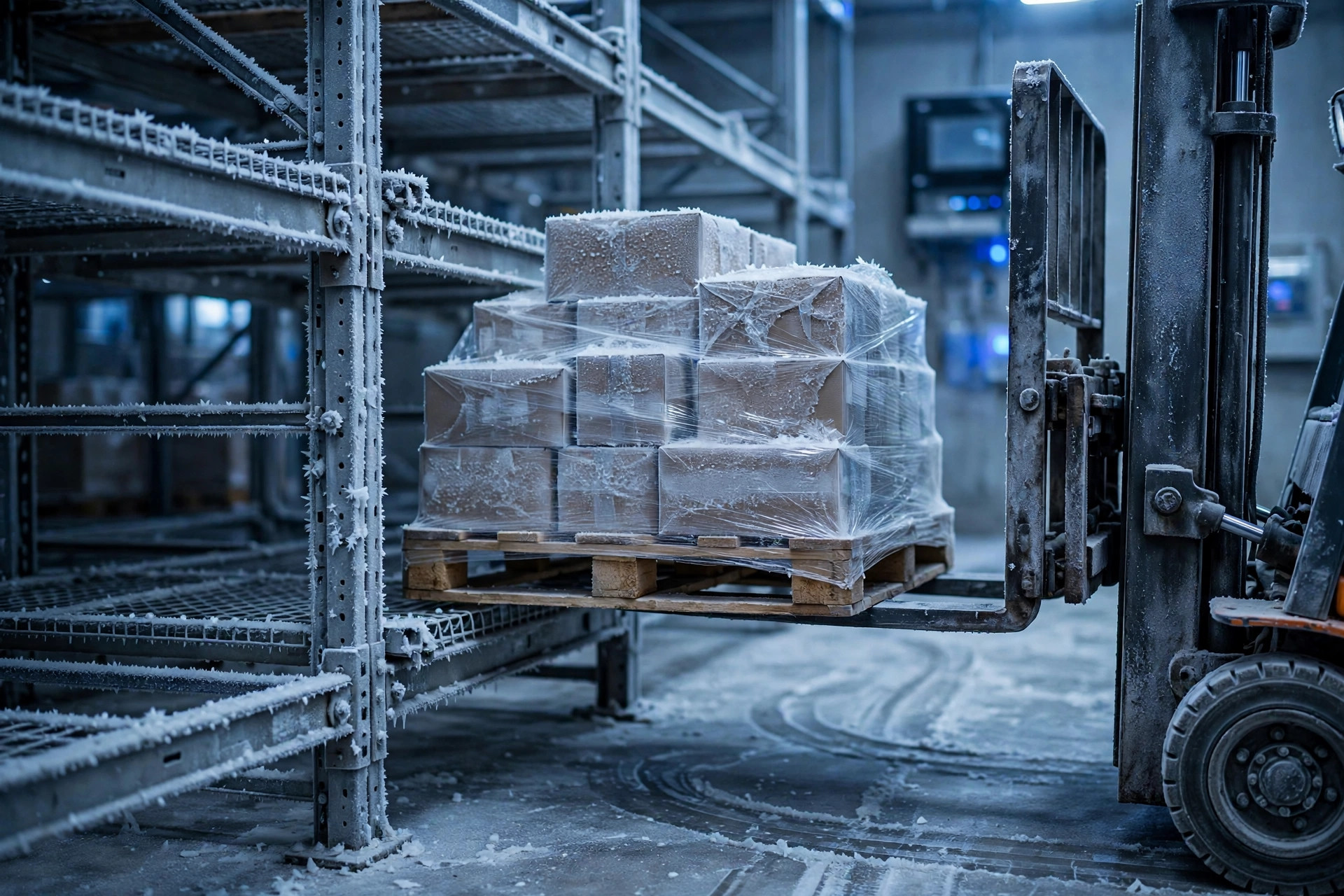
Build or Outsource? My Decision Framework
Owners ask me this all the time: "Chen, wouldn't it be cheaper to build our own cold storage?" My answer is always the same: run three numbers first.
First, construction cost. Building cold storage costs roughly 2 to 3 times what a dry warehouse costs, and rents often run twice as high — that's the industry's number, not mine. Compressor systems, insulated panels, backup generators — none of it is cheap.
Second, utilization. How many of the 12 months is your freezer actually full? If it's full for four peak months and half-empty for eight, the power meter keeps spinning and depreciation keeps ticking, and your cost per pallet ends up way above outsourcing.
Third, people. Do you have anyone who understands refrigeration? A cold warehouse isn't a dry warehouse with an air conditioner. Compressors, ammonia systems, temperature alarms — when something goes wrong, it goes wrong fast. A refrigeration team costs real money every year.
Our framework is simple. We only consider building when all four check out: year-round utilization can hold above 70 percent; the product line is stable with limited SKU churn; there's capital to carry a five-to-eight-year payback; and there's someone who knows refrigeration to run it. Miss one, and you stick with a 3PL. Outsourcing's biggest advantage is flexibility: rent more in peak, less in the off-season — worth real money for volatile inventory.
One last reminder for fellow operators. Before you sign a cold storage contract, get these four things on paper: the temperature band and range in the contract, not just the word "cold storage"; how they count pallets — daily average or peak count, because the difference is big; the monthly minimum and any long-term storage fees; and the temperature-excursion liability terms — how many minutes out of spec counts as an incident, who pays, and how.
There's no standard answer for cold storage warehouse cost per pallet. There's only the right answer for your operation. Match the zone, do the total math, and get the contract tight. The rest is just doing the work. Peak season's coming again — lock your space early, and don't be the guy calling around six weeks before Thanksgiving. You know what that price looks like.
By Chen Feng, Warehouse Operations Manager