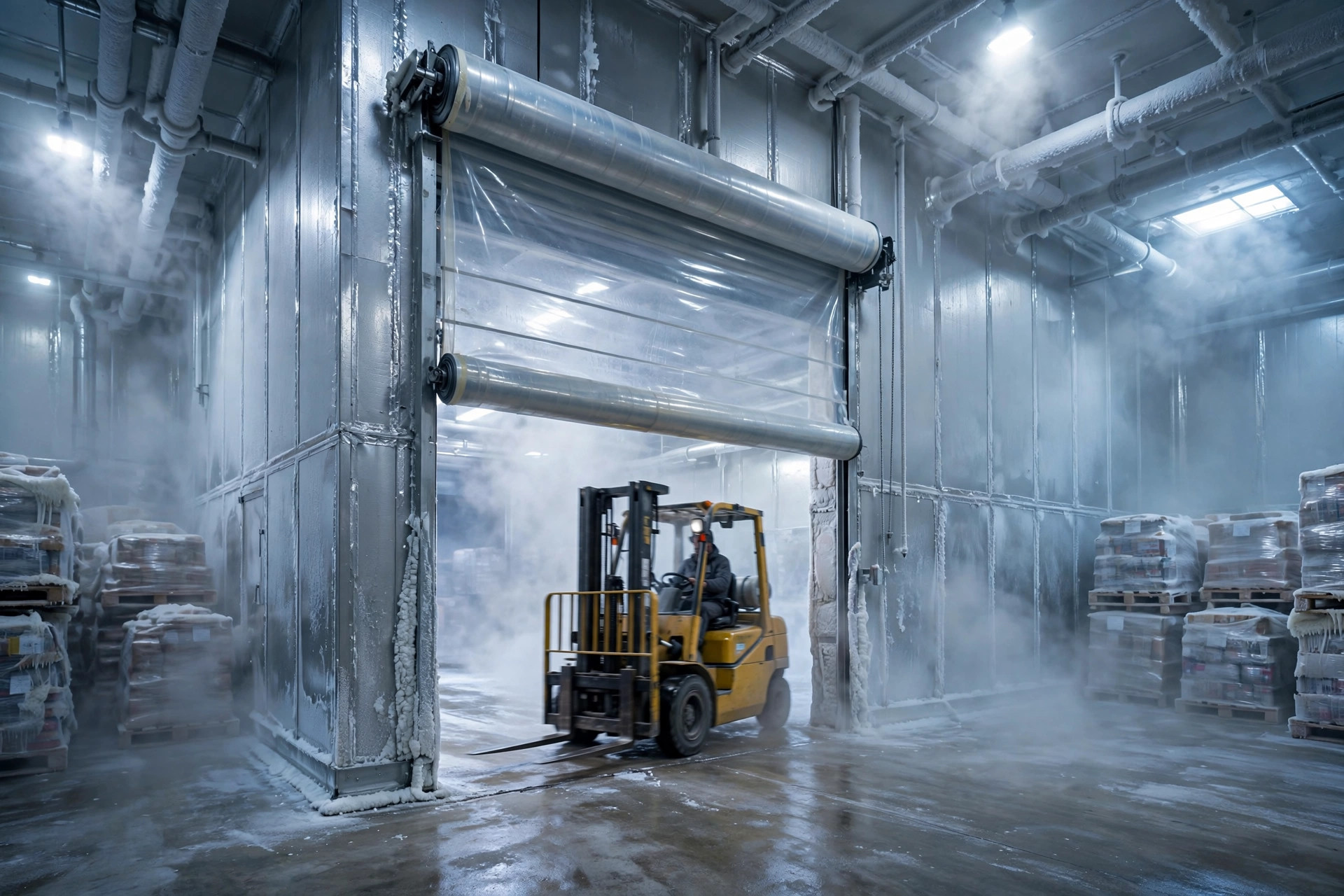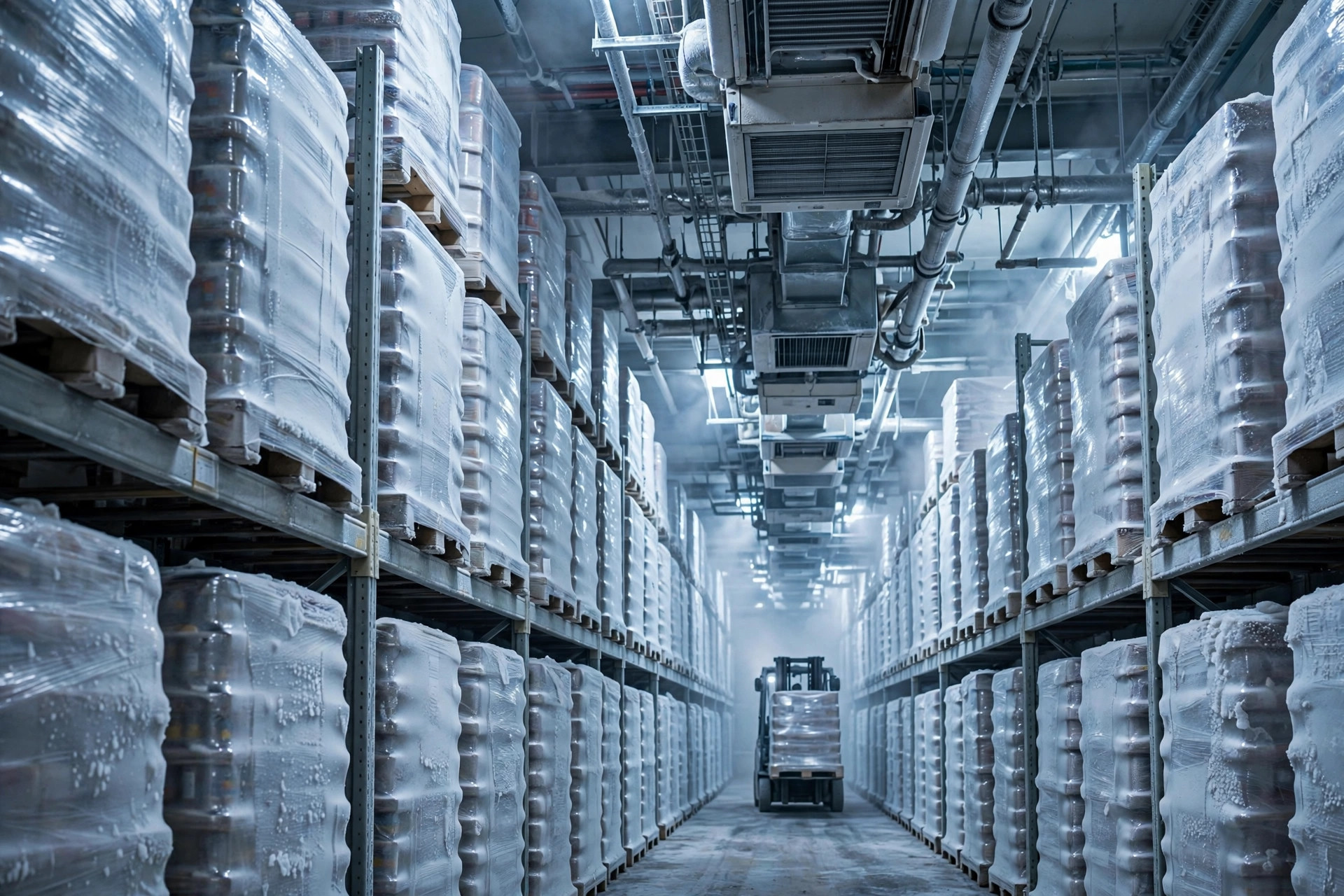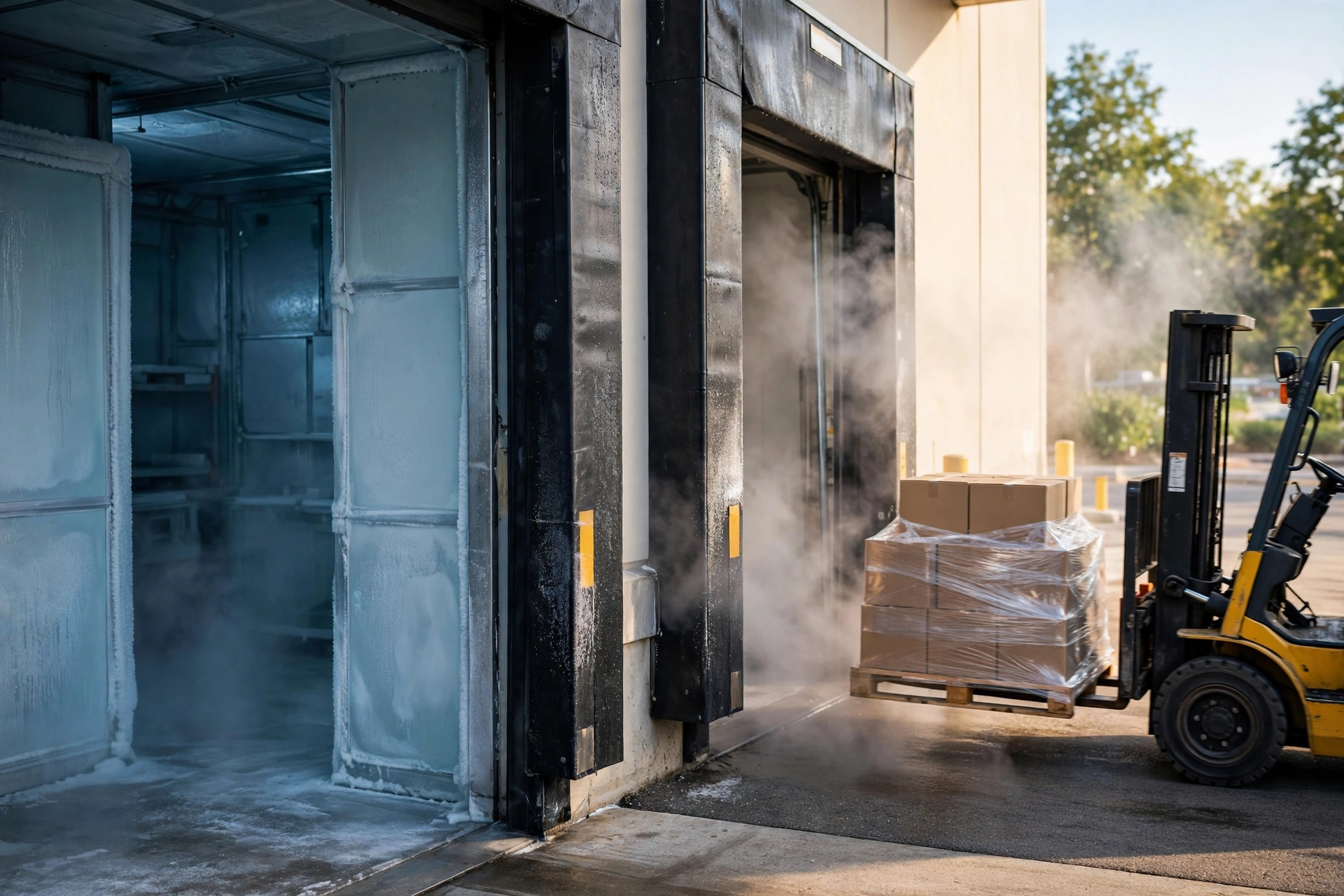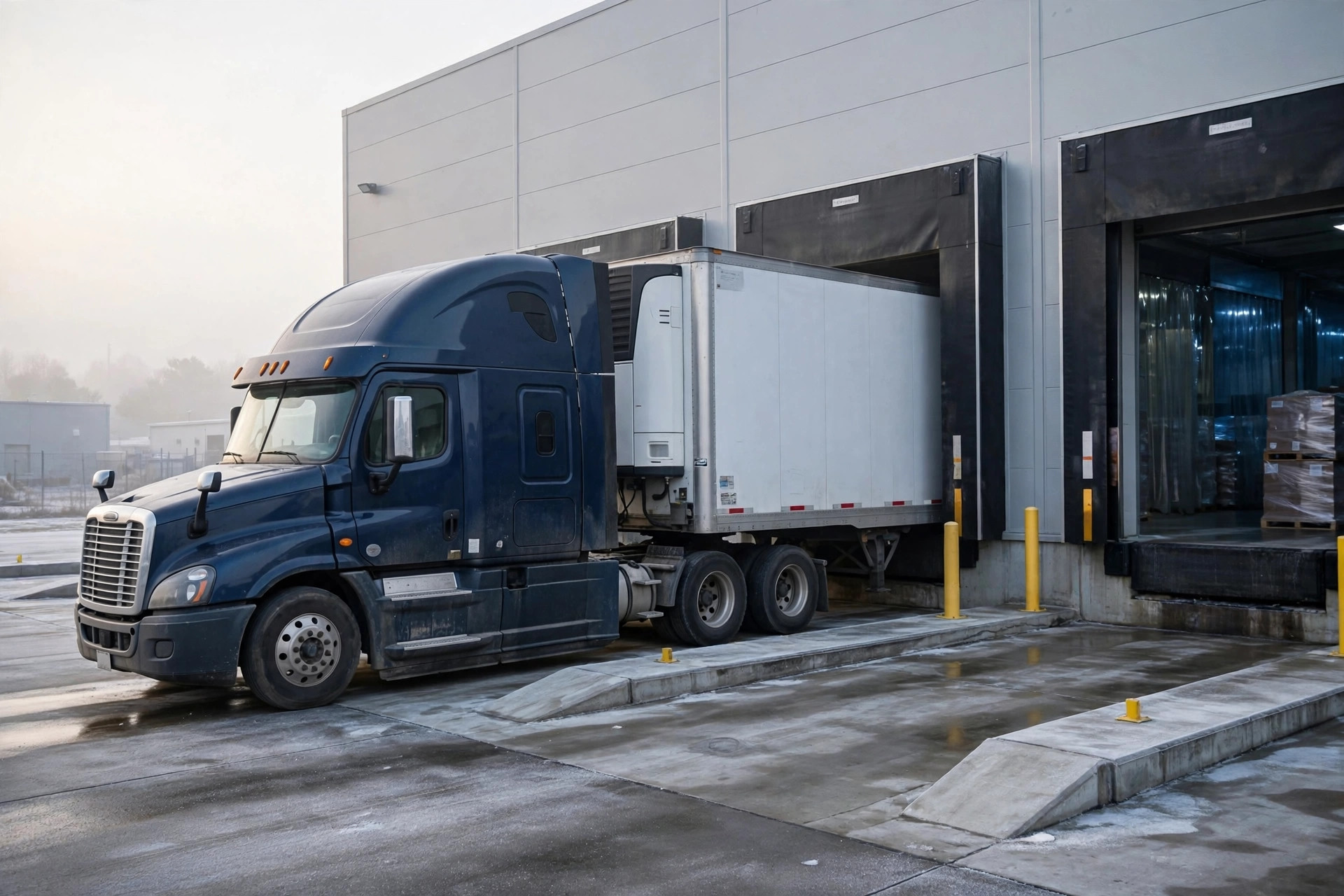
I'll say it out loud — the big guys back their reefers straight into an enclosed, air-conditioned dock where the temperature curve stays flat. Us? Our reefer parks at an open-air dock. Door opens, hot air rushes in, cold air rushes out, and it's just the driver and our warehouse lead — one guarding the truck door, one guarding the dock door, holding the temperature handoff together with pure manpower.
Reefer docking cost us two years of tuition. We took cold-chain spoilage from "visible to the naked eye" down to "basically invisible" — without spending a cent on a cold dock shelter. Every trick below was paid for in real spoiled product. If you run a small warehouse like ours, steal all of it.
Before Arrival: Pre-Cool and Seal Check
1. Pre-Cool the Dock Before the Truck Arrives
Big warehouses have appointment systems. We don't have a system. We have a WeChat group. The driver shouts "40 minutes out" in the group, and pre-cooling starts:
Roll-up doors on the staging area get shut, and an hour ahead we aim two big industrial fans at the dock — don't laugh, moving air beats stagnant hot air. The killer move in summer: push the pallets we'll need into the staging area early so they "acclimatize."
Last August, a yogurt shipment from Dongguan — the driver sat in traffic for two hours and box temperature was already drifting. We hadn't pre-cooled the dock. It was 38°C outside, product sat on the dock 20 extra minutes, and a full pallet arrived at the customer bloated. That one claim cost us tens of thousands of yuan. Since then, pre-cooling is iron law: truck not in position, doors stay shut.
2. Check the Dock Seal: Every Gap Is a Temperature Black Hole
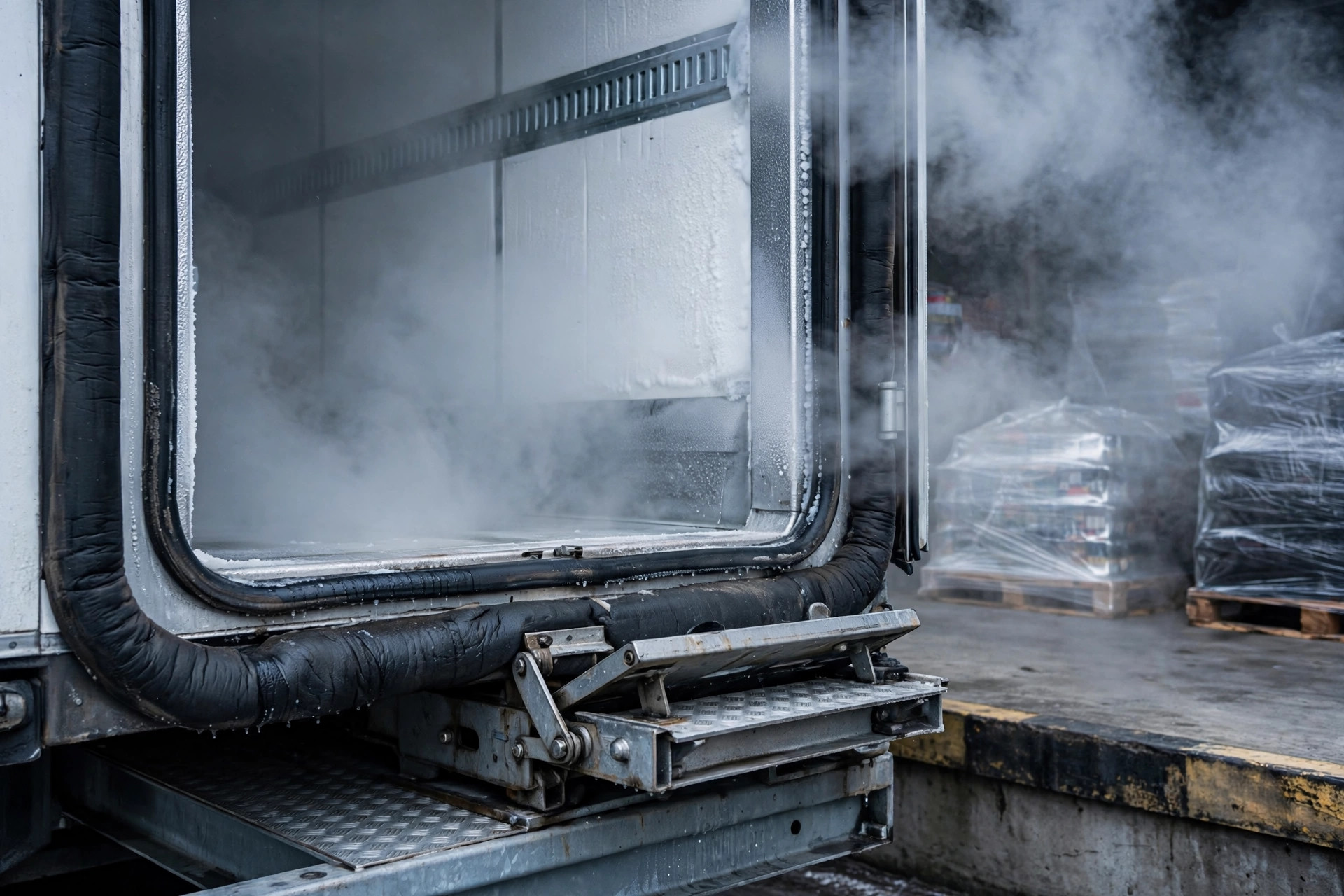
Dock seals — big warehouses replace them on schedule. Us? Honestly, we didn't even know what the thing was called, until a QA inspector swept an infrared thermometer across the seam where the seal met the trailer and found it nearly 10 degrees warmer than inside the box.
Our hillbilly fix: before the truck backs in, the warehouse lead walks the trailer tail with a flashlight, checking the seal's four corners for sagging or cracks. Sagging? Shim it on the spot with spare foam strips — one roll costs a few dozen yuan and lasts half a year.
Here's the counterintuitive take: most people think reefer docking is about whether the truck's refrigeration unit is strong enough. For a small warehouse like ours, it's about the gaps — the seal gap, the open-door gap, the people-walking-in-and-out gap. Temperature handoff isn't won with equipment. It's won with fewer open doors and faster transfers.
During Transfer: Clear It in 30 Minutes, Mind the Door Sequence
3. The 30-Minute Blitz: Our Redneck Unloading Roster
Big warehouses run WMS waves. We run a human roster — one A4 sheet taped to the dock wall. Before the reefer arrives, three crews are in position:
- Unload crew: moves freight off the truck, no scanning, no counting
- Scan crew: scans the second freight hits the ground, pushes it straight to staging
- Inbound crew: catches freight at the cold room door, full pallets go straight in
Target: a 40-footer cleared in 30 minutes, a small truck in 15. Blow the target? The team lead buys milk tea for the whole crew — laugh all you want, it works better than fines.
Do the math: every extra hour a reefer sits at the dock burns diesel, and every extra hour product sits in the temperature danger zone compounds the risk. We measured it — at noon in summer, the temperature at an open trailer door climbs several degrees in 10 minutes. Thirty minutes isn't a KPI, it's a survival line. Freight waiting on people is fine; people waiting on freight is fine; freight waiting on people in ambient temperature is not.
The Evidence Chain: Photos and a Pre-Drawn Line
4. Temperature Records: Data Handoff Plus Photo Evidence
We used to do "verbal handoff." Driver says "held 2 to 4 degrees the whole way," we say "cool, unload." Something goes wrong, everyone points fingers.
Now the process: before the doors open, three photos — the onboard temperature logger display, the inside of the trailer, the surface of the product. Driver signs confirming arrival temperature; we sign confirming receiving temperature. The driver exports the logger data into the WeChat group, filename tagged with plate number and date.
This past March, a batch of frozen dumplings arrived thawed at the customer's warehouse, and they filed a claim. We pulled the photos and logger data: -18°C on arrival, both signatures on the handoff sheet, -17°C at dispatch — complete evidence chain. Turned out the customer's own cold room defrost cycle had the door open. Without those three photos, we'd have had no defense.
When a small warehouse ends up in a shouting match, you don't win with lawyers. You win with your phone's photo album.
5. Exceptions: Reject or Accept? Draw the Line in Advance
Arrival temperature is out of spec. Reject or accept? Reject, and the driver deadheads while the customer stocks out. Accept, and whose wallet eats the spoilage?
Our decision line — posted on the wall, memorized by everyone:
- Within 2 degrees over: accept with concession — isolate the batch, ship within 24 hours, photograph everything, driver signs the exception note
- 2 to 5 degrees over: concession-accept only with the customer's written confirmation (a WeChat message counts) — risk transfers to the customer
- Over 5 degrees: straight reject, no negotiation
We bought this line with two spoilage claims. One shipment ran 3-plus degrees over, we went soft and accepted it, thinking "it'll probably be fine." The customer ran a restaurant chain; their food safety audit flagged the temperature record and rejected the entire batch. After that we understood: going soft on the line is going hard on your own wallet.
6. Door Sequence: Truck Door First or Dock Door First?
A detail inside the details, but we've genuinely been burned here. The correct answer: unload done, close the truck door first, then the dock door, then the cold room door last.
Why? Truck door closed means the trailer — your "cold source" — is sealed, the driver can kill the engine and leave. Dock door closed keeps the staging area's cold air from leaking. Cold room door last, because the inbound crew might still be stacking inside. Reverse it and the truck sits there with doors open bleeding cold air — 10 extra minutes of diesel and spoilage risk, all on your tab.
Seasonal Playbooks, Payoff, and Three Suggestions
7. Summer Playbook vs. Winter Playbook
Summer (where we are, that's May through October): double the pre-cool time, compress the 30-minute blitz to 25. The nuclear option: no reefer appointments between noon and 2 PM — if one must come, add a crew and clear it in 20 minutes. We hand out iced water and cold towels, and now drivers cooperate better at our dock than anywhere else.
Winter: don't assume winter is safe. Winter's problem is thermal shock — 5°C outside, -18°C in the box. Our play: "pre-temper" the staging area to around 10°C and get freight to its final spot in one move — no shuffling around the dock.
The Payoff: From "Visible to the Naked Eye" to "Basically Invisible"
When we first took on cold-chain business back in 2023, spoilage ran around 3% — I'll keep it fuzzy, audit methodologies differ, but "a claim form every month" was real. After landing all seven practices, last year brought exactly two cold-chain claims, both upstream transit issues with a complete evidence chain — we paid nothing.
No cold dock shelter built. No new equipment bought. Total investment: one roll of foam strip, a few laminated cards, and an endless supply of milk tea.
Three Suggestions for Fellow Small Warehouses
First, don't start by dreaming about a climate-controlled dock shelter. Ask yourself: have you squeezed the process dry? We priced it — even the most basic shelter runs into the hundreds of thousands of yuan. We small warehouses can't burn that kind of money. Nail the 30-minute blitz, the seal check, and the photo documentation, and 80% of your problems disappear.
Second, turn drivers into teammates, not opponents. Hand them a bottle of water, unload fast so they make their next run — a driver who cooperates with you makes half your temperature handoff easy.
Third, get every hillbilly method "on the wall." A4 paper, laminated card, whatever — a process that isn't written down and posted might as well not exist.
Reefer docking, at the end of the day, isn't about whose shelter is bigger. It's about whose gaps are fewer, whose hands are faster, whose evidence is stronger. Tighten the process, and you can run cold chain without a shelter and keep spoilage low. I'll say it with my chest out, because every one of those claim forms once landed on my desk.
By Xiao Ma, Small Warehouse Owner