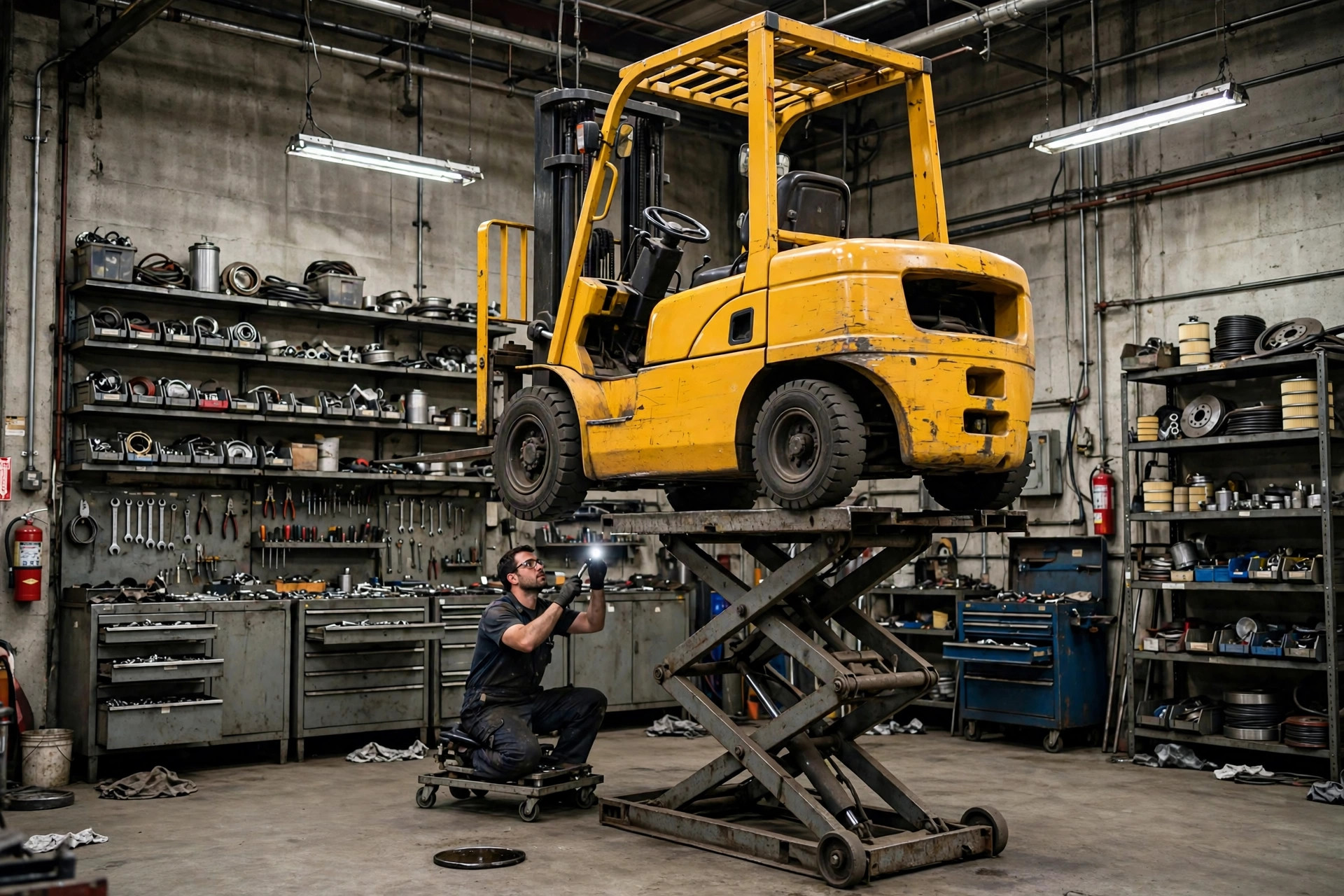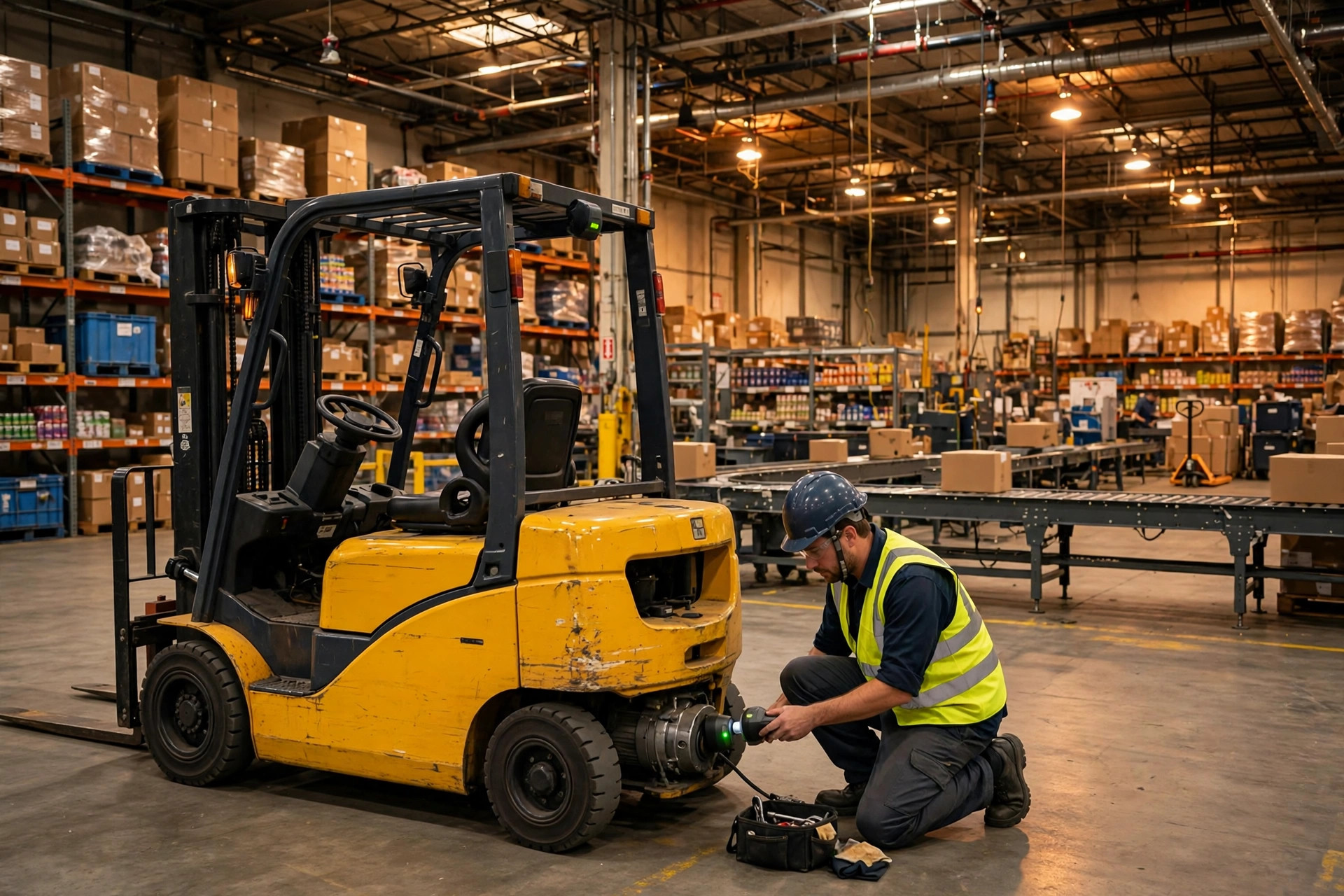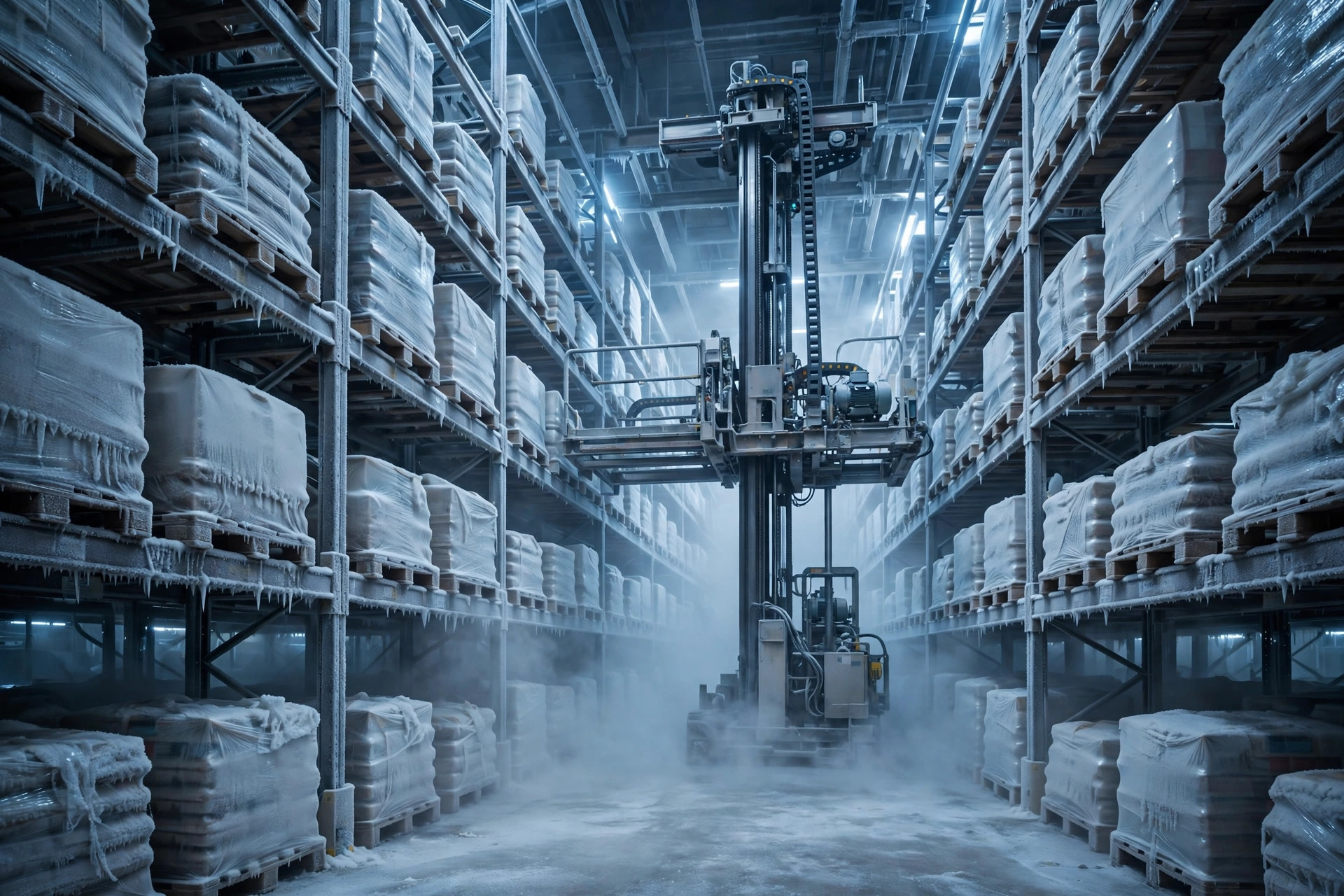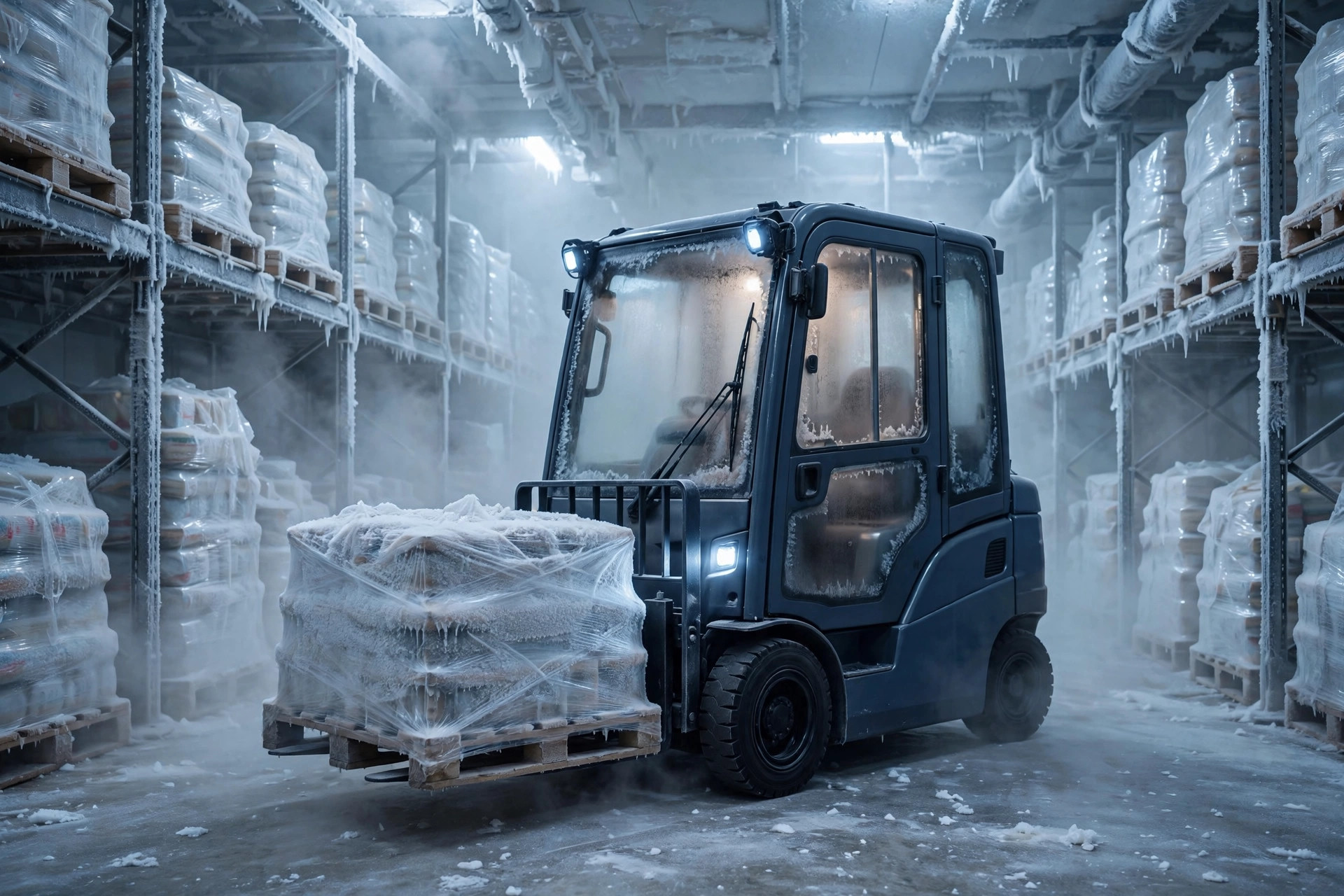
A forklift for cold storage and a regular forklift are not the same machine — I've watched more money die on forklifts than on any other warehouse equipment, and the dumbest death I ever saw was a truck that wasn't broken, just in the wrong climate. In 2023, a 3PL cold chain operator in Zhengzhou ran two standard 2.5-ton electrics straight into a -25°C freezer. Three months in: heavy steering, slow lift, the display blacking out. Six months in: a fried motor controller. The boss asked: but the trucks are new? The trucks are fine, I said. The application is wrong. Here's what the cold actually destroys, when a freezer-spec truck is mandatory, the lithium-versus-lead-acid math, and five maintenance traps that bleed you dry.
What the cold actually kills: the physics first
A freezer isn't a "colder warehouse" — for a forklift it's a different operating environment, like taking a family sedan to high altitude. It still drives, until everything fails at once. Cold attacks five things:
1. The battery. Lead-acid and lithium both hate the cold, but in different ways. Lead-acid fears freezing: the electrolyte's freezing point tracks the state of charge. Fully charged, it freezes somewhere below -57°C — a deep freezer is no problem. Run it flat and the freezing point climbs toward -10°C — a -25°C freezer will genuinely freeze and crack the battery, plates and casing together. Lithium fears charging: charging below 0°C causes lithium plating. That's a hard rule — every sub-freezing charge damages the cells. So a standard lithium truck (no battery heating) can work in the freezer all day, but must never charge in the freezer — remember that for the cost math below. Heated low-temp lithium packs exist — pricey, but they solve it.
2. Hydraulic oil. Standard ISO 46 oil at -25°C pours like honey out of a fridge. Slow lift, heavy steering, and a pump straining against sludge — run it long enough and the pump quits first. It's the same as flooring a cold engine on a winter morning without warming up.
3. Steel and seals. Ordinary structural steel loses impact toughness at -25°C, and a mast that takes daily hits from pallets is exactly where cracks start. Standard rubber seals go hard and shrink in the cold — most hydraulic leaks in freezers start not with bad oil, but with seals that gave up first.
4. Condensation — the sneaky one. Drive from -25°C out to a +20°C dock and airborne moisture condenses on the ice-cold metal, wicking into connectors and the controller box. Corrosion doesn't bill you the same day — it collects six months later: intermittent faults, black screen today and fine tomorrow, the kind of problem that drives technicians insane.
In 2024, a fresh-food e-commerce site in Shanghai learned this the hard way. Drivers parked the trucks outside the freezer overnight, then drove them back in each morning coated in condensation. Six months later the harness connectors were green with copper corrosion. Three repair visits before anyone found the root cause, a week of downtime, and two SLA penalties paid to customers. The truck was fine. The process was broken.
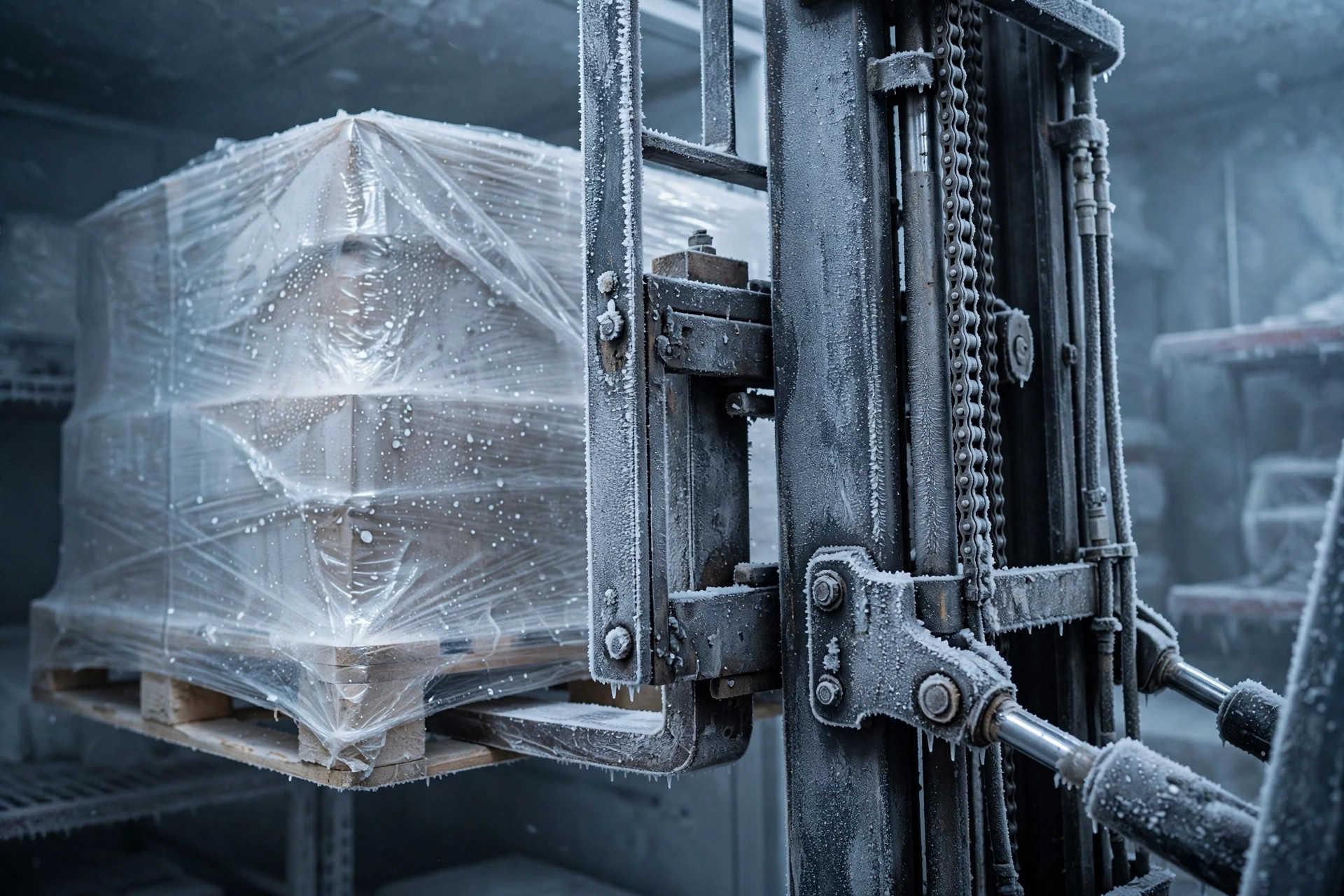
The selection line: when a freezer forklift is mandatory
A forklift for cold storage versus a standard truck, side by side:
| Item | Standard truck | Freezer-spec truck |
|---|---|---|
| Battery system | Standard compartment | Heated/insulated battery box, or lithium with battery heating management; anti-freeze maintenance routine for lead-acid |
| Hydraulic oil | Standard ISO 46 | Low-temperature hydraulic oil, rated to -30°C per the oil spec sheet |
| Seals & wiring | Standard rubber seals, standard connectors | Cold-rated seals, sealed connectors / potted controllers |
| Mast steel | Standard structural steel | Cold-tough steel, reinforced critical welds |
| Cab | None | Optional heated cab / hot-air blower |
| Tires | Standard | Cold-rated tires, deeper anti-slip tread |
| Corrosion protection | Standard paint | Condensation corrosion protection, reinforced underbody coating |
My three boundary lines:
- More than 4 hours a day of continuous work below -18°C → buy the freezer spec. No debate. The steel and the seals are not where you save money.
- Only occasional freezer runs (under an hour a day), mostly ambient work → standard truck + low-temp hydraulic oil + disciplined in/out management. That combination is the cheapest correct answer.
- Deep freeze below -25°C → freezer spec, fully loaded — heated cab, battery heating, all of it. Pennies saved in a deep freezer always come back as dollars spent.
Lithium vs lead-acid: the freezer math
The most-asked question in cold storage — let's do the math.
Lithium's pitch: no watering, fast charging, opportunity charging. Its one fatal flaw: a standard lithium pack cannot charge below 0°C. Your freezer is -22°C: the lithium truck works happily inside, but when it's low, someone must drive it out — to a charging zone outside the freezer or a heated charging room. The cost of that warm room is the number most buyers never put in the spreadsheet when pricing a forklift for cold storage.
Lead-acid's pitch: handles cold discharge fine (keep it fully charged and the electrolyte won't freeze), and costs less. The price: watering, 8-hour full charges, ventilated charging rooms, a spare battery set to rotate, and dedicated maintenance labor.
Run the numbers for a -22°C freezer on two shifts with four trucks. Lithium: pricier trucks, but no watering labor and faster charging. Lead-acid: cheaper trucks, but spare batteries plus a maintenance tech add up over a year. My rule: single shift, few trucks, light duty → lead-acid can win. Two shifts, high intensity → lithium plus a heated charging area. Counterintuitive bit: in a freezer, the priciest part of a lithium battery is often not the battery — it's the warm room you build for it. Price the charging area before comparing truck prices.
Cold storage forklift maintenance: buying right is only the start
The right truck maintained wrong is still money burned. Five traps:
Trap 1: in/out discipline. After a truck leaves the freezer, don't park it sweating on a damp dock — keep it inside, or wipe it down and let it dry fully before it goes back in. The worst habit is going in and out half-wet: an open invitation to condensation corrosion.
Trap 2: charging discipline. Standard lithium charges only above 0°C, no exceptions. Lead-acid left discharged overnight is asking to freeze — top it up before end of shift. Remember the freezing-point table: the lower the charge, the faster the crack.
Trap 3: hydraulic oil. Match the oil to the temperature rating on the spec sheet; don't make standard oil survive a deep winter. Cold accelerates oil aging, so don't stretch the change interval either.
Trap 4: connector checkups. Open the controller box every quarter and look: green copper corrosion, white crystalline powder. Those are the early warnings of condensation damage. Catch it early and it's a spray of contact cleaner plus resealing; catch it late and it's a whole new harness.
Trap 5: tire pressure. Pressure drops fast in the cold — check weekly. Underinflated tires on slick freezer floors cost more in safety than any oil change saves.
Calling out the gimmicks
Two "freezer options" I have no respect for.
Heated seats. The driver's backside is warm; the battery is still freezing. A heated cab only earns its money in a -25°C deep freeze with drivers on 4-hour continuous shifts — in most -18°C freezers, where drivers hop on and off in winter jackets, that money belongs in battery heating and sealed wiring. Which quits first — the driver's back or the battery? And no, a heated seat doesn't turn a standard truck into a forklift for cold storage.
Fancy smart displays. Get the big three right first — battery, hydraulics, seals — then talk smart. Pretty dashboard data just live-streams the failure when the controller box is already corroding green.
And one genuinely counterintuitive truth: the most expensive part of a freezer forklift isn't the truck — it's managing the temperature difference. You'll spend five figures on a freezer package but balk at a dehumidifier costing a few hundred for the charging area — then pay more in corrosion repairs than the package cost. The cheapest real trick: cut down the number of freezer trips. Put a buffer staging zone at the door — ambient trucks handle the dock, freezer trucks stay inside. Good division of labor sometimes beats an expensive truck.
So is the money worth it? It comes down to one number: over a year, do the repair bills and downtime you avoid — from condensation corrosion and cold-degraded batteries — cover the freezer package premium? If the math works, buy it. If it doesn't, fix the process. Don't fight the temperature; fight the ledger.
By Da Liu, Automation Engineer