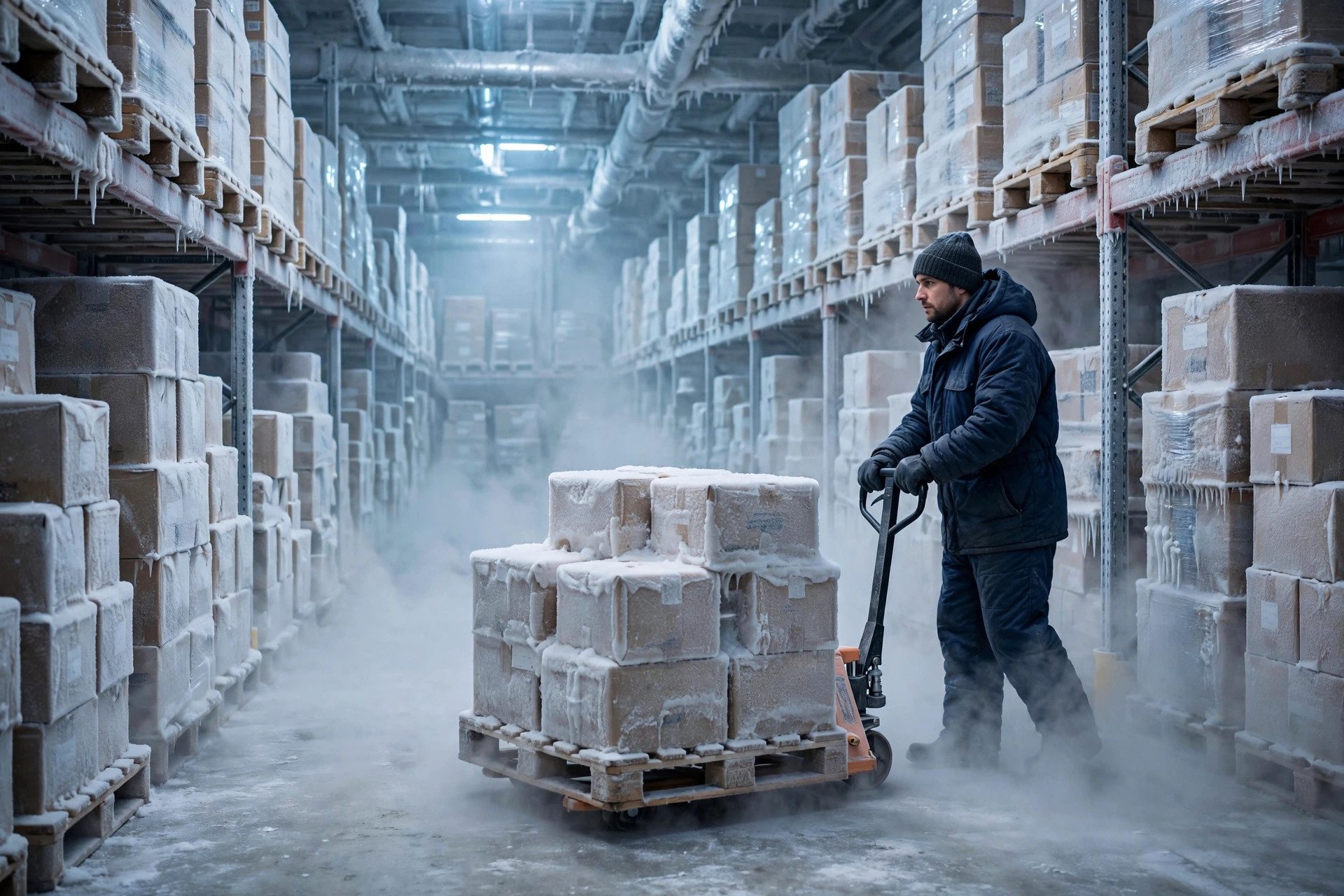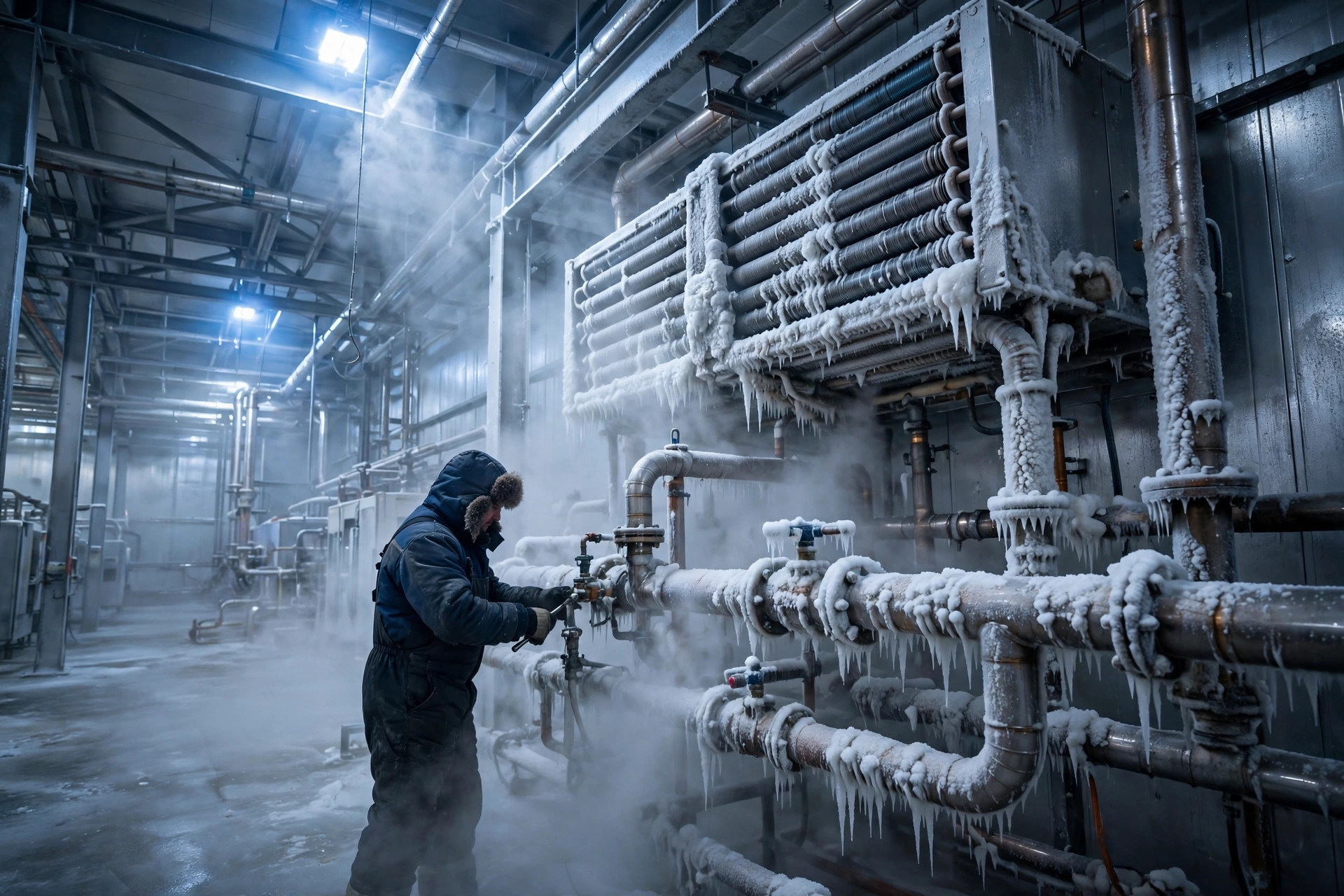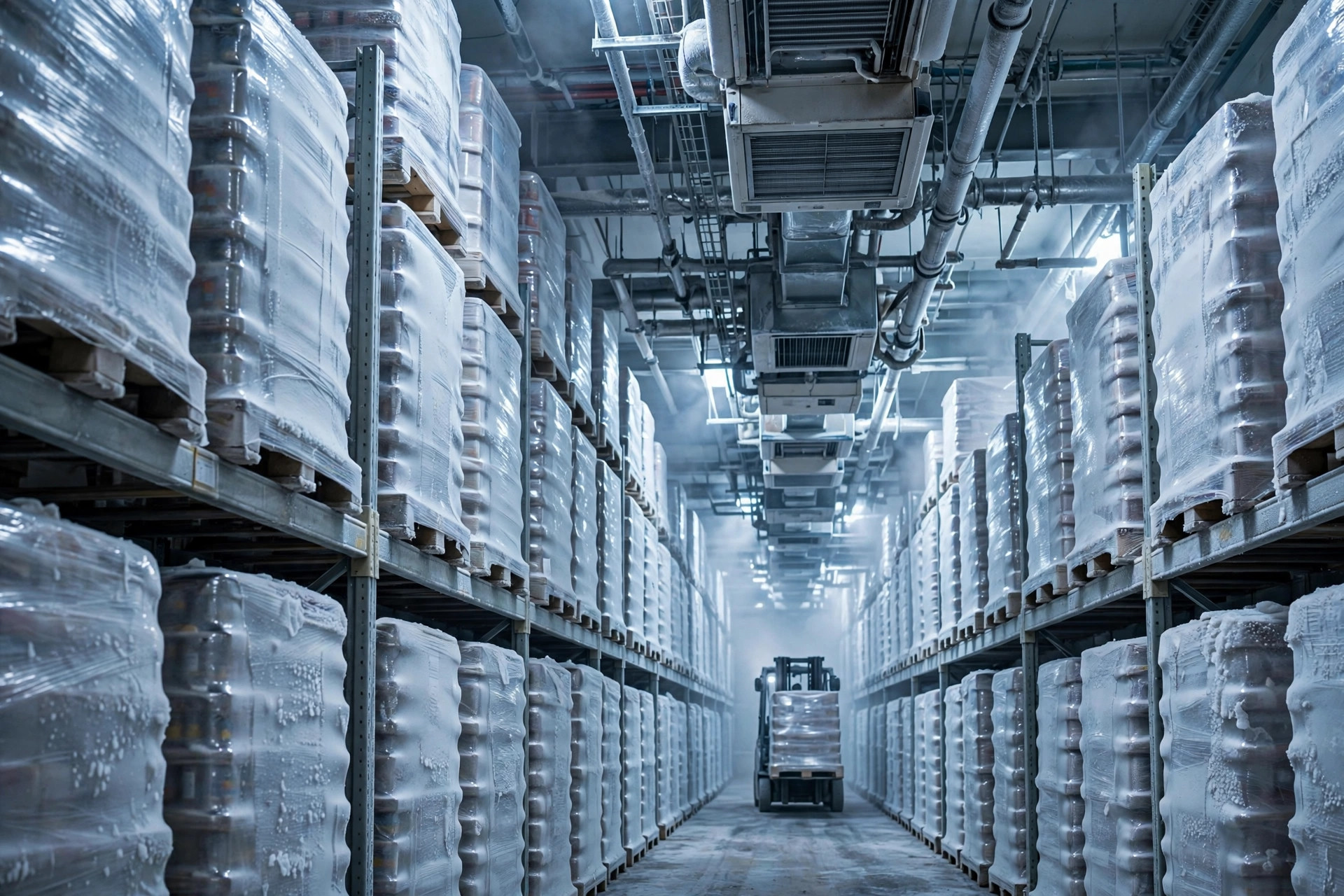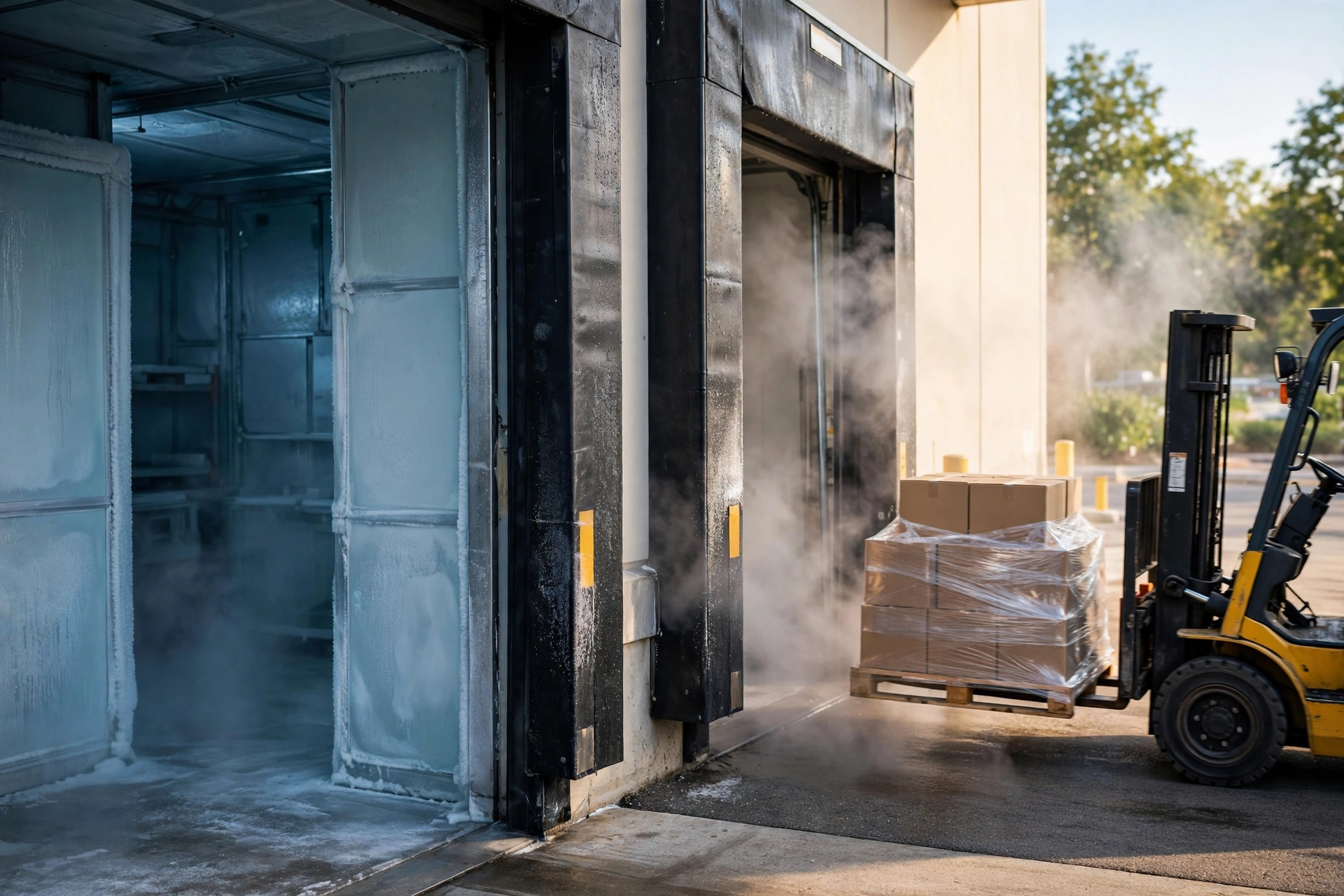
It was 6:20 on a July morning, and the doorway of Dock 2 at our warehouse was wrapped in fog.
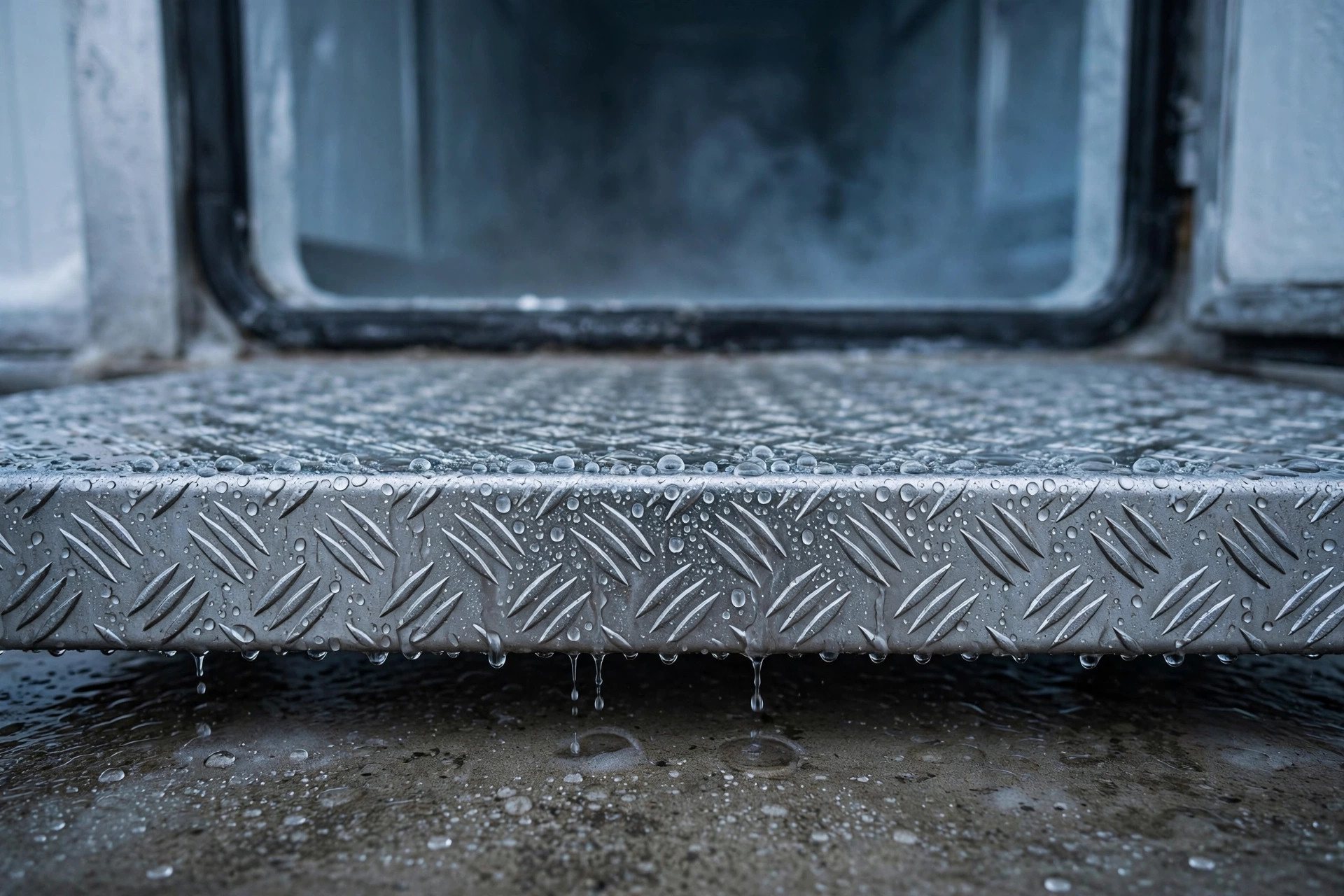
The rainy season had just ended. Outside it was 34, 35 degrees, humid as a steam room. Inside the frozen storage it was minus 18. A reefer backed into the dock, the roller door rolled up, forklifts started moving in and out — and within ten minutes the concrete floor at the doorway was soaking wet.
Lao Li, our twelve-year forklift veteran, took a sharp turn at the doorway and two cartons of frozen chicken legs slid off the pallet. The cartons didn't break, but they were beaded with water and soft to the touch. That shipment was headed to a chain restaurant customer. When they received it and squeezed the outer cartons, they rejected half the load on the spot. I'll be honest with you — standing at that dock door that morning, looking at the water on the floor, I had one question: where is all this water coming from?
That's how the problem surfaced. Anyone who's worked a cold warehouse knows: condensation is the kind of thing that punishes you hardest when you ignore it.
Where the water comes from
The physics is simple: cold air meets warm air, and the moisture in the air turns to water. The freezer sits at minus 18; outside the dock it's in the mid-30s, with nothing but a roller door between them. The door opens, warm air rushes in, and the moment it hits cold product and cold concrete, beads of water form.
Three spots get hit worst: the dock floor, product just pulled from the freezer (especially corrugated cartons), and the metal door frame and leveler. There's a rhythm to it too: worst in the early morning and on night shift, worst in the rainy season and the dog days of summer. We have a rough-and-ready test at our warehouse now: go look at the dock doorway at 6 a.m. — if the floor's wet, your temperature boundary isn't under control.
Tuition we've paid
We've been fighting this for the better part of two years. Let me tell you two true stories.
In the summer of 2023, a friend who runs a frozen-food wholesale warehouse down south — bigger than ours, moving a hundred tons a day — shipped out a load of frozen chicken wings. When the customer opened it up, the bottoms of the cartons were all damp, a few had gone soft and collapsed under the stack. The claim dragged on for nearly two months. They paid up and lost the customer anyway. The post-mortem came down to one thing: that load went out at the hottest part of the day, the roller door stayed open the better part of an hour, warm air poured in, and the product sat at the doorway beading up with water. He told me: "We used to think condensation was no big deal — so the cartons get a little damp. Now we know: once a carton gets damp, it loses its strength, and three layers high is enough to crush it."
Our own lesson was a different one. Last winter condensation was light, but one night shift the dock floor had a thin film of water on it, and Xiao Wang — Lao Li's apprentice — was pulling a hand pallet jack through the doorway when it skidded. He was fine, the load tipped, and it nearly caught his foot. After that it became a hard rule: hot season and rainy season, somebody mops the night-shift dock floor every half hour, no exceptions. The crew grumbled at first; two weeks in, it was habit.
Equipment we've tried
First, industrial dehumidifiers at the doorway. They helped — the air at the door got noticeably drier. But they eat electricity, and when the temperature gap is extreme they lose efficiency. We ran two for three months, then pulled them out — power plus maintenance was adding up to a small damage claim. Verdict: fine for a small dock; at a big freezer door, a drop in the bucket.
Second, an air curtain over the roller door. We're still using this one, and it's the most direct fix — door opens, curtain blows down, warm air stays out. But with forklifts constantly moving through, the curtain gets "torn" for a moment each pass, and it's loud — the crew complained until we got them earplugs. And an air curtain blows room-temperature air: it blocks the heat, not all the moisture. Call it "much better," not "solved."
Third, a buffer room — the ideal solution. Put a 0–4°C transition zone between the dock and the freezer. Product comes out of the freezer, rests in the buffer for a while, then loads out. The temperature drops in steps instead of all at once, and condensation drops with it. But the price tag is brutal: construction plus refrigeration starts in the hundreds of thousands, and we lease our building — the landlord may not even allow it. So we went with the poor man's version: insulated strip curtains plus a high-speed roller door. A few thousand for the curtains, the door cycles fast, less warm air per opening. Crude, but it works.
What we do now — the fixed routine
Iron rules at our warehouse now. Feel free to copy them.
First, a "no parking" line at the doorway. Product pulled from the freezer doesn't get to sit at the dock door. Forklifts go straight in and straight out — no waiting at the door for the load to "fill up." Every extra minute product spends at the temperature boundary is another layer of water beads.
Second, flip the outbound sequence. We used to pull everything out and stack it at the door, then load when the truck arrived. Now: truck arrives, door opens, then we start pulling. Waiting a few extra minutes is nothing — product in the freezer is dry, and if it goes straight from freezer to trailer, the water never gets a chance to form.
Third, give carton product a "transition": frozen cartons rest in the 0–4°C chilled area before loading. The gap drops from nearly fifty degrees to twenty or thirty, and condensation drops with it. Learned that from an old-timer. Crude, but sound.
Fourth, somebody mops the dock on nights and early mornings — every half hour in the hot season — with anti-slip mats at the doorway. One slip-and-fall injury, with medical bills and lost time, costs more than a year of mops.
Fifth, ground rules with the drivers: the door doesn't open until the truck is in position; the door closes the moment a load is done. Open the door once, and only once — that's the iron rule. We've got a sign at the door now: "Check the truck's here before you open."
Running the numbers
Our cost guy Lao Zhou ran the numbers:
| Option | Upfront cost | Running cost | Effect | Catch | | Dehumidifiers | Tens of thousands for two units | Power bill adds up | Helps, but limited | Loses efficiency when the gap is extreme | | Air curtain | A few thousand to ten thousand per unit | A few hundred a month in power | Most direct fix | Loud; can't block all moisture | | Strip curtains + high-speed door | A few thousand to ten thousand-plus | Almost nothing | Crude but works | Depends on people — leave the door open too long and it's useless | | Build a buffer room | Hundreds of thousands and up | Refrigeration power, ongoing | Best | Too expensive; leased buildings may not allow it |
To be straight with you: one rejected load can cost tens of thousands in claims, plus a month or two of arguing, plus losing the customer — which you can't put a number on. Against that, an air curtain and some strip curtains are pocket change.
The counterintuitive part
A lot of people think condensation means "not cold enough" and dream of chilling the dock too, solving it once and for all. We ran that math: the power bill is astronomical, and workers in winter jackets move slower and quit faster. Others think "colder is better inside." Wrong — condensation is exactly what happens when "too cold" slams into "too hot." The bigger the gap, the worse the beading.
So here's my conclusion, one sentence: fighting condensation is 70% management and 30% equipment. Open the door less, park product at the boundary for less time, keep eyes on it — that beats any machine. Equipment is your safety net, not your workforce.
If you run a cold warehouse, do one thing: tomorrow at 6 a.m., go look at your dock doorway floor. If it's wet, your temperature boundary isn't under control. Fix it now — don't wait for a rejected load or a hurt coworker to teach you the lesson.
By Chen Feng, Warehouse Operations Manager