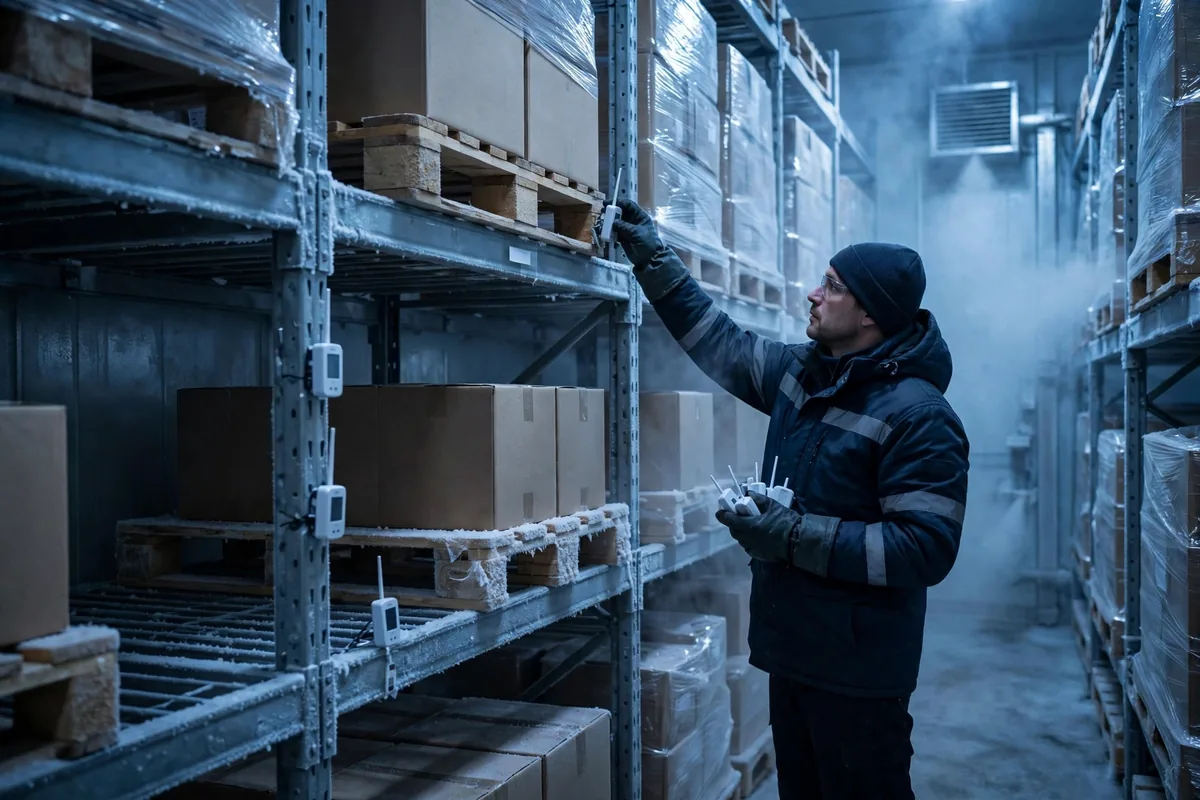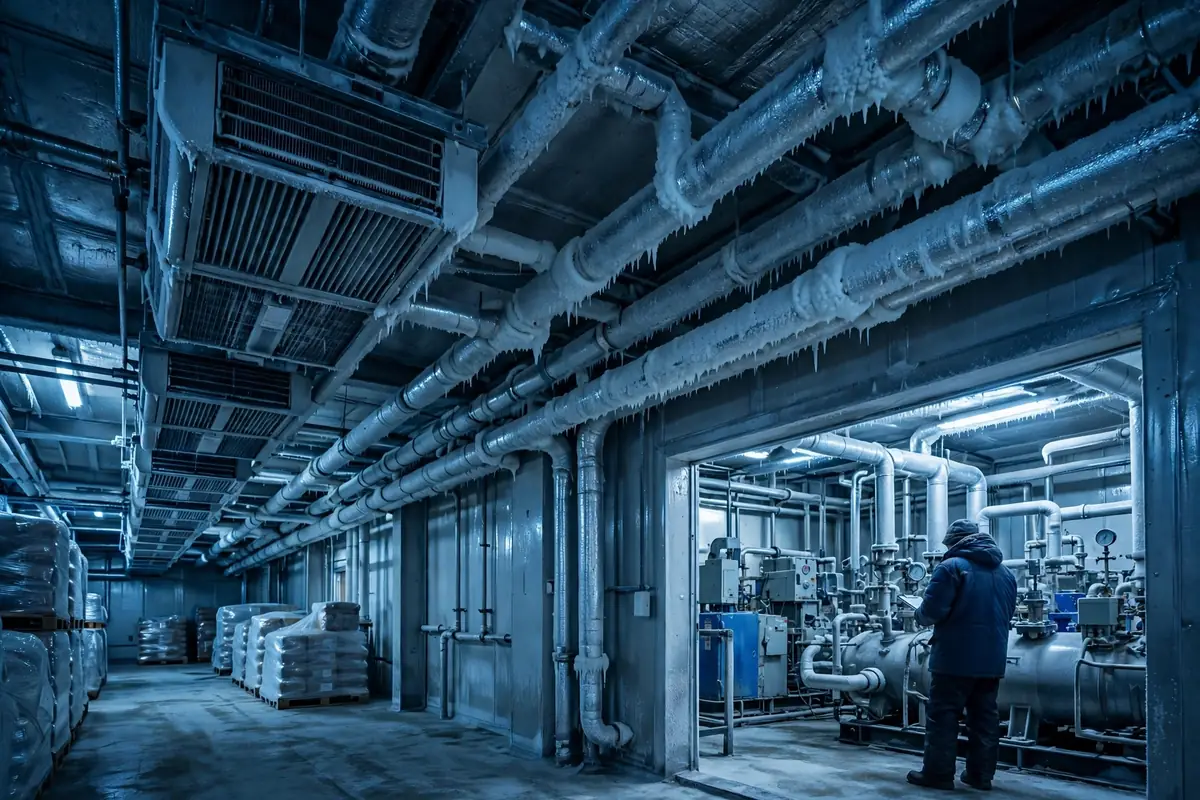
Start with the bill, because everything else is opinion. In July 2024, I reviewed twelve months of meter data for a 6,000-square-metre frozen store held at minus 18 degrees in Weifang, Shandong. The building had not grown, throughput had not jumped, yet the power bill had climbed well ahead of volume. The owner wanted a new compressor. I told him to hold the order for two weeks while we matched meter readings against dock activity and defrost logs. The machine was fine. The doors and the defrost clock were not. That is where cold storage electricity cost refrigeration savings always starts: not with new equipment, but with finding out who is actually spending the power.
Where cold storage power actually goes
A cold store bill breaks into five parts, and there is no mysterious sixth. Compressors come first. They move heat out of the box, and they work harder the lower the room temperature and the higher the condensing temperature. Evaporator fans come second. Each fan looks small on a nameplate, but a store runs many of them for many hours, and small loads multiplied by long hours stop being small. Lighting and auxiliary loads come third: dock lights, forklift charging, offices and monitoring. Defrost comes fourth, and electric defrost is the most honest waste in the building, because you pay to cool the room and then pay again to heat the coil back up. The fifth part has no meter of its own: infiltration through dock and room doors. Every minute a door stands open, the compressors are refrigerating the yard as well as the store, and you can only see that cost indirectly, in longer run hours.
Do not copy anyone else's percentages onto your building. As a rough industry magnitude, compressors commonly account for more than half of the total, fans for roughly one to two tenths, and defrost plus door losses together for another one to two tenths, with lighting and auxiliaries taking the rest. Treat those as an estimating frame, not a promise. Your split will differ by temperature, climate and operating pattern. If you do not have sub-metering, measure for one full week with clamp meters before you approve any project.
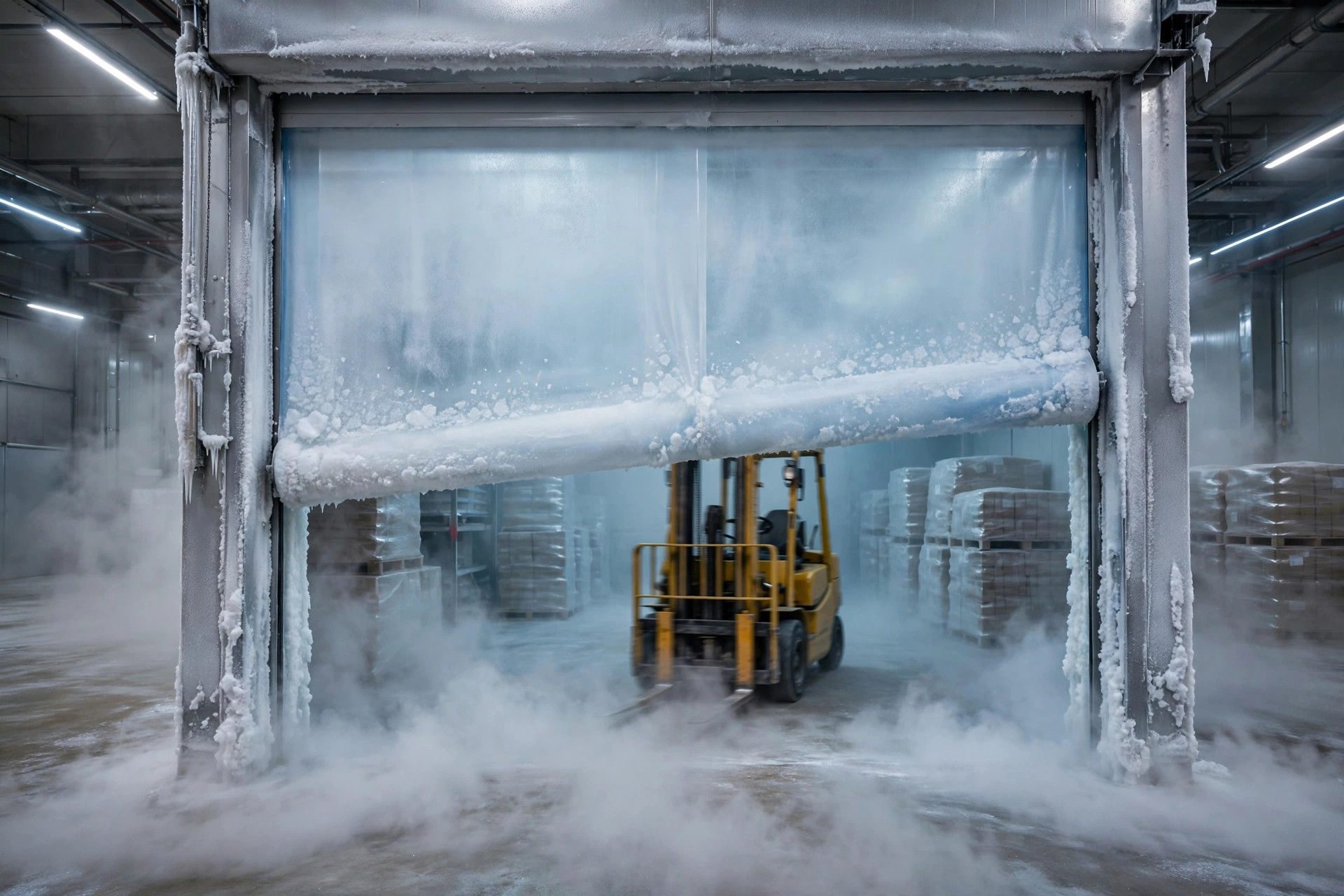
Weifang made the point cleanly. Compressor efficiency tested close to expectation. The failure was at the dock. Of four loading bays, two rapid doors spent peak hours half open, forklift traffic was constant, and torn strip curtains had been left unreplaced for months. During the two hottest weeks, the plant barely stopped. The cheapest fix in that building was not a compressor. It was door discipline and a few thousand spent on curtains and seals. The money was wasted, but not on the tariff. It was wasted on a door nobody owned.
Cutting electricity cost in the right order
Rank the levers by payback, not by how impressive they sound in a sales deck. My order rarely changes: doors first, defrost second, condensing control third, and only then drives and thermal storage.
Doors, curtains, air curtains and dock seals come first because an open door costs you three times. You lose cold air, you gain moisture, and that moisture becomes frost, which then forces more defrosts. Replacing damaged curtains, interlocking rapid doors properly and fitting dock seals is the lowest capital item on this list and usually the fastest to pay back. Here is the uncomfortable trade-off most operators miss: they will approve a major compressor replacement while refusing a minor door repair, then run a larger machine to fight warm air leaking through the same hole. That is not an energy programme. That is a bigger machine serving a leak.
Defrost control comes second because it is mostly patience, not hardware. Too many stores still run fixed-clock defrosts set at commissioning, several times a day whether frost exists or not. In November 2023, I looked at a 3,000-square-metre chilled store in Suzhou, Jiangsu, holding zero to four degrees. The team moved from timed defrost to demand-based control, terminating each defrost on temperature once the coil was clear instead of running the full timer. Defrost frequency fell noticeably, and room temperature became steadier, not worse.
Third is floating condensing temperature. On a cool night, there is no reason to hold condensing pressure at a summer setting. Let it float down with ambient conditions and compressor lift falls with it, and power follows. The spend is mainly controls work and sensor calibration, but it must be set up by someone who understands refrigeration. Push it too far and stability suffers, and the repair bill will eat several years of savings in one visit.
When refrigeration upgrades do not pay
The last two levers are where real capital sits, so they need real arithmetic.
Variable-speed drives, on compressors or fans, save money when load varies. When a store runs near full load around the clock, there is little left to save, and you still carry drive losses and maintenance. Ask the vendor to model savings on your load profile, not on a laboratory best case, and divide annual saving into total installed cost. If the payback runs beyond half the remaining life of the equipment, reject it. In March 2024, a 2,000-square-metre store in Langfang, Hebei, fitted drives across the plant after a persuasive pitch. Three months of bills later, the reduction was marginal. The load profile had been flat, day and night, all along. The same money spent on dock sealing and defrost control would have paid back far sooner. Sequence matters more than technology.
Night-time thermal storage with time-of-use pricing is the cleverest idea on this list, and therefore the one to distrust most. Pre-cooling at night only works if the local peak-to-off-peak price spread is wide enough and the building and product hold the cold until the peak passes. I will not quote any specific tariff here, and neither should you in your own model: always use the latest rate published by your local grid operator, because one wrong rate invalidates the whole calculation. Remember also that pulling the room colder at night costs extra energy by itself. If the price spread does not cover that extra energy plus the product risk from wider temperature swings, the clever option loses money quietly every single day.
The table below is a worked assumption, not a forecast. Assume a 5,000-square-metre frozen store at minus 18 degrees, five-year-old plant, medium throughput, about ten dock hours a day, ageing door curtains, and annual consumption indexed to 100 units. Insert your own local tariff separately to convert units into money.
| Lever | Capital level | Indicative annual saving, share of bill (industry estimate) | Payback judgement |
|---|---|---|---|
| Curtains, rapid doors and seals | Low | Roughly 3%-6% | Usually first, do it first |
| Demand-based defrost control | Very low | Roughly 2%-5% | Minimal hardware, do it early |
| Floating condensing temperature | Low to medium | Roughly 3%-7% | Needs competent commissioning |
| Variable-speed drives | Medium to high | Roughly 4%-10%, only with variable load | Recalculate on your own load curve |
| Night storage and tariff arbitrage | Medium | Depends entirely on price spread, can be negative | Skip it if the spread is thin |
Use the table one way only: replace the capital column with real quotations, replace the saving column with measured data or numbers a vendor will guarantee in writing, apply your actual tariff, and compute payback in months. The moment an estimate is dressed up as a measurement, the table is worthless. Real cold storage electricity cost refrigeration savings is this unglamorous process repeated line by line.
So here is the calculable conclusion. First, get one week of sub-metered data and establish your five-part split. Second, rank the five levers by payback months and fund only those that clear your hurdle. Third, implement one lever at a time and reconcile a full month of meter data after each, because bundling changes makes savings impossible to attribute. Done properly, cold storage electricity cost refrigeration savings is not a product you buy. It is an order of operations. Pull your meter data this week, fill in the table, and the shortest payback row is the job to schedule next month.
By Lao Zhou, Logistics Cost Analyst