Start with the money, because that is where this decision actually lives. reefer container pre trip inspection warehouse work costs a small, fixed, budgetable amount per box. Skipping it costs nothing on the day — and exposes the full value of a loaded container, plus claim handling, plus a customer relationship, if the box was never fit to travel. Put those two numbers side by side and the argument is over before it starts. This is not a quality slogan. It is arithmetic.
Who pays is the argument I hear most often at the yard gate. The working rule is simpler than the arguments suggest: the party that arranges the inspection at its stage of the chain pays first, and the final split follows the contract. A check done at the depot or yard stage normally sits with whoever arranged the pickup. A higher standard demanded by the cargo owner is the cargo owner's to negotiate and fund. If the box itself proves defective and has to be swapped or rechecked, that cost and responsibility need to be recorded on the spot, not quietly absorbed by the warehouse. Exact splits vary, so follow the current contract and the carrier's latest terms; what matters here is that the bill and the evidence are settled before the box is loaded, not after a claim lands.
Reefer Container Checks Start With Who Pays
Use an illustrative example to see the shape of the total cost, not as a price list. In this illustrative example, assume one pre-trip inspection carries a modest fixed cost covering labour, equipment time, and documentation. Assume a loaded reefer's cargo value runs to several hundred times that inspection cost. Then add what a temperature claim actually brings with it: survey fees, disposal, expedited replacement freight, and weeks of claim correspondence. Even at a low failure probability, the expected cost of skipping clears the cost of checking very quickly. That is the whole TCO logic in one paragraph: a certain small expense against an uncertain large one with a long tail.
| Line item | Inspect first | Skip the check |
|---|---|---|
| Cost on the day | One fixed inspection fee (illustrative example: small) | Zero |
| When defects surface | Before loading, while a swap is still cheap | After loading or at destination, when options are gone |
| Evidence position | Inspection and setpoint records on file | Little to prove due care after the fact |
| Worst case | A delay measured in hours | A cargo claim at cargo-value scale (illustrative example) |
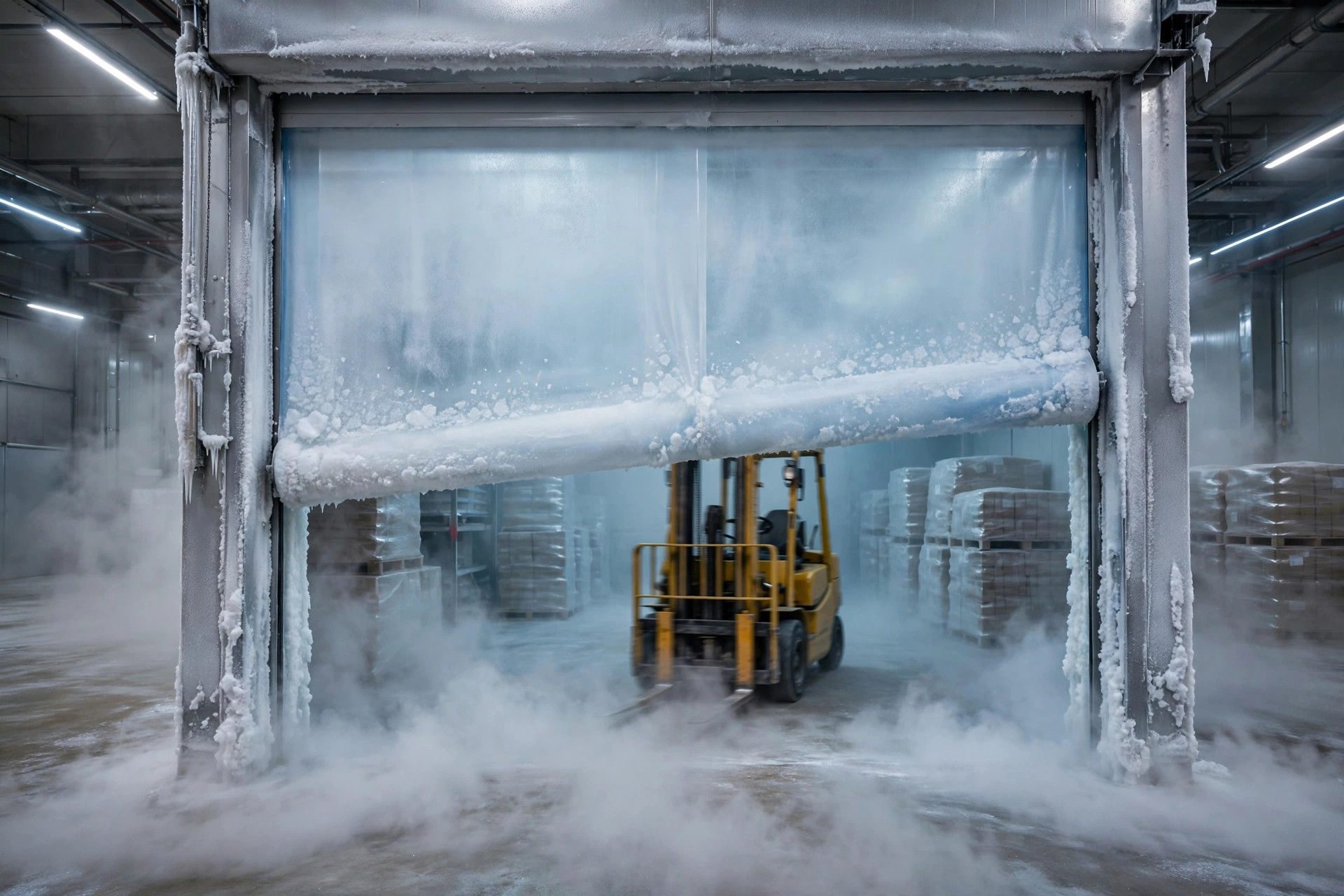
Illustrative example one: a cold-chain warehouse near the Port of Rotterdam, in summer, loading frozen food. The pre-trip check found the box still set to a temperature left over from its previous trip, nowhere near what the order required. The team swapped the box and lost half a day. Had nobody checked, the load would have sailed at the wrong setpoint and the discovery would have happened at destination — at which point the discussion is no longer about half a day, but about whether the cargo can be sold at all and who pays for it. Half a day against a full load: I do not need a spreadsheet to call that one.
Illustrative example two: another shipper in the same region skipped the check to protect a sailing. An aged door gasket went unnoticed, temperatures drifted during the voyage, and the receiver rejected the load and filed a claim. The parties then spent weeks arguing over records, and the shipper could produce no evidence of the box's condition at loading. Whatever that lesson cost, it cost more than an inspection — and part of the price arrived a year later, in a tougher contract renewal.
Pre-Trip Inspection: What Gets Checked
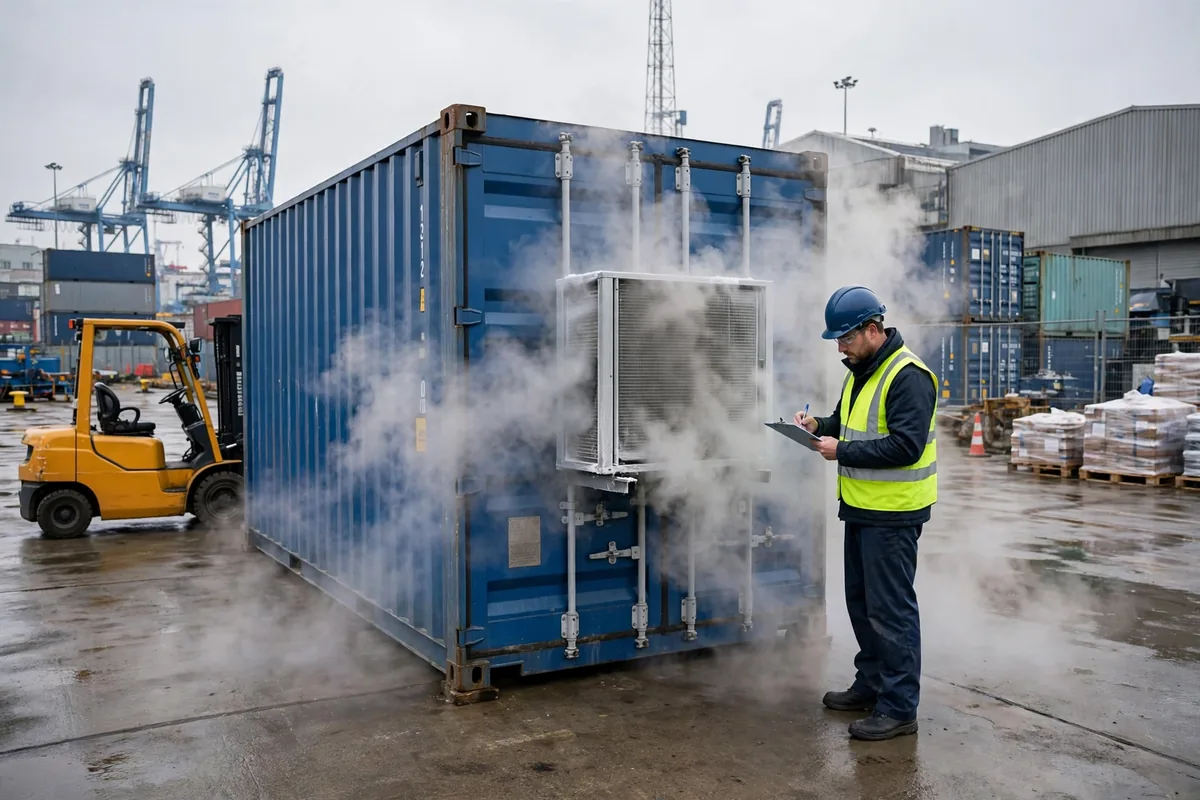
Four checks carry almost all of the value, and every one of them needs a record, not a memory.
Check the setpoint against the order, digit by digit, including whether the figure is in Celsius or Fahrenheit. A unit error makes the rest of the work worthless. Have a second person verify it, and have both sign the record.
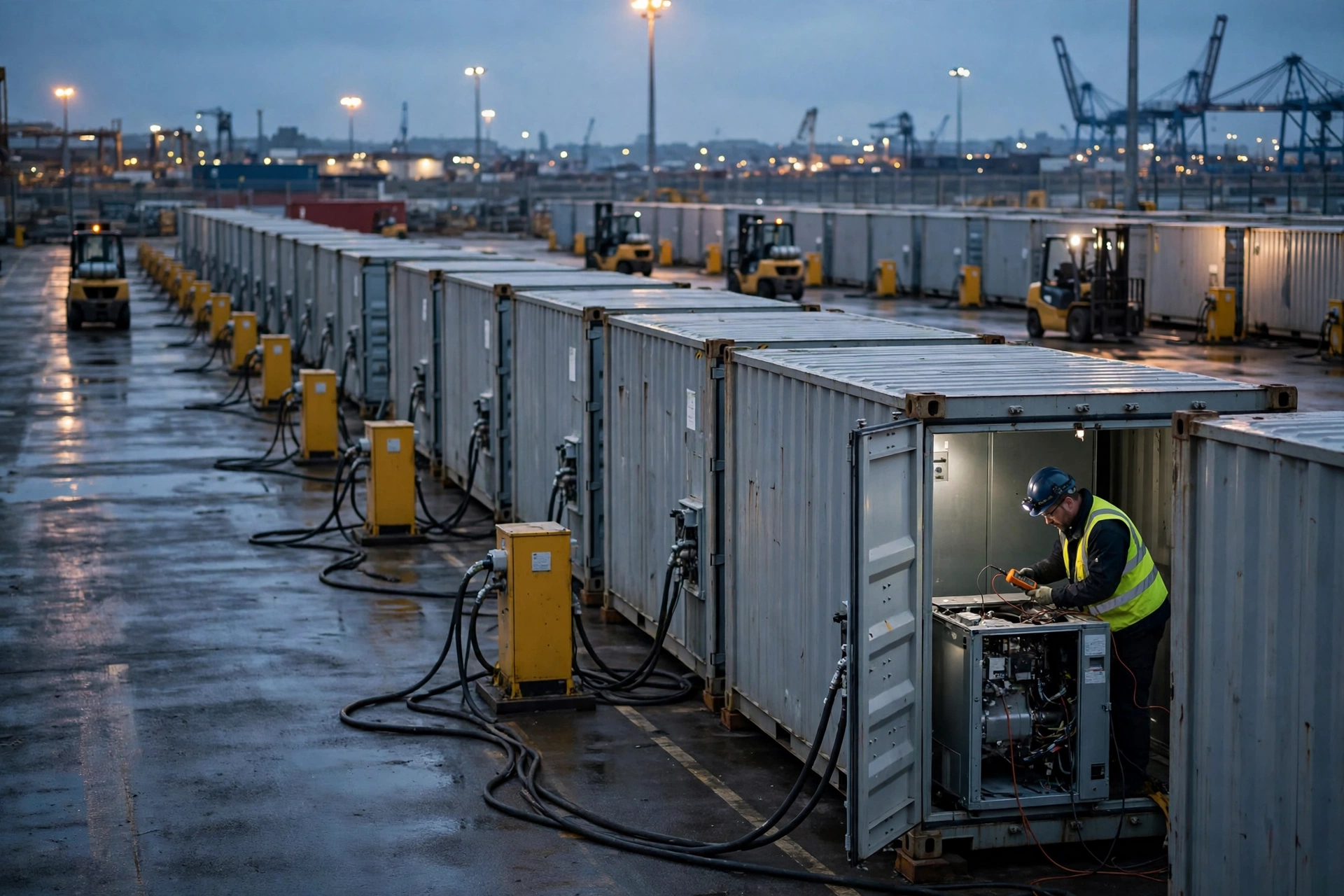
Run the unit. The refrigeration machinery has to actually start, pull the temperature toward the set range, and hold it there. A panel light is not a test. Where the box travels with its own genset, check fuel and starting as well; on the road, that genset is the power supply, and a sound box with an empty or dead genset is still a failed box.
Inspect the box itself: door seals, walls, drain holes, and floor. A cracked gasket leaks cold air for the entire voyage. A blocked drain traps defrost water where cargo sits. These are ten-minute findings at the yard and full reloads if they surface after stuffing.
Pull the record and check cleanliness. Review the previous trip's temperature history for unexplained excursions, and clear any odour or residue before loading. Food cargo is unforgiving on this point, and one taint complaint can cost more than the load in front of you.
Done properly, reefer container pre trip inspection warehouse practice comes down to timing and filing. Move the check ahead of the loading plan, not to the moment the truck is at the door; under time pressure, any check can be skipped, and everyone on the floor knows it. Then file everything against the container number — result, setpoint, inspector, time — so a claim handler can pull it within the hour. In a claim negotiation, the party without records starts from behind. That is not about attitude. It is about evidence, and evidence is a cost line too.
Seasonality belongs in the same calculation. In summer heat, boxes bake in the yard and machinery works harder; failure odds and inspection workload are not the winter numbers. Staff the peak-season inspection roster as a fixed cost approved in advance. A check performed by whoever could be spared, done as a walk-past glance at the paintwork, is worse than no check at all, because it manufactures a record nobody should trust.
Warehouse Cost Math: Skipping the Inspection
There is one more account most people leave out: reputation. A temperature claim follows a warehouse into the next rate negotiation and the next insurance conversation. A clean, continuous run of inspection records does the opposite — it is negotiating material, proof that a low incident rate comes from process rather than luck. Inspection fees are an expense. Inspection records, kept over years, are an asset. Count them together or the check will always look expensive.
So here is the calculable conclusion I give every client. The cost of reefer container pre trip inspection warehouse discipline is fixed and forecastable: multiply the per-box cost by the year's volume and you have the annual line, to the euro in planning terms, subject to your current contracts. The cost of skipping is neither fixed nor capped, and a single incident can consume several years of inspection budget at once. Save money at the negotiating table and in the plan. Do not save it by deleting a check that exists precisely because the downside is unaffordable.
By Lao Zhou, Logistics Cost Analyst