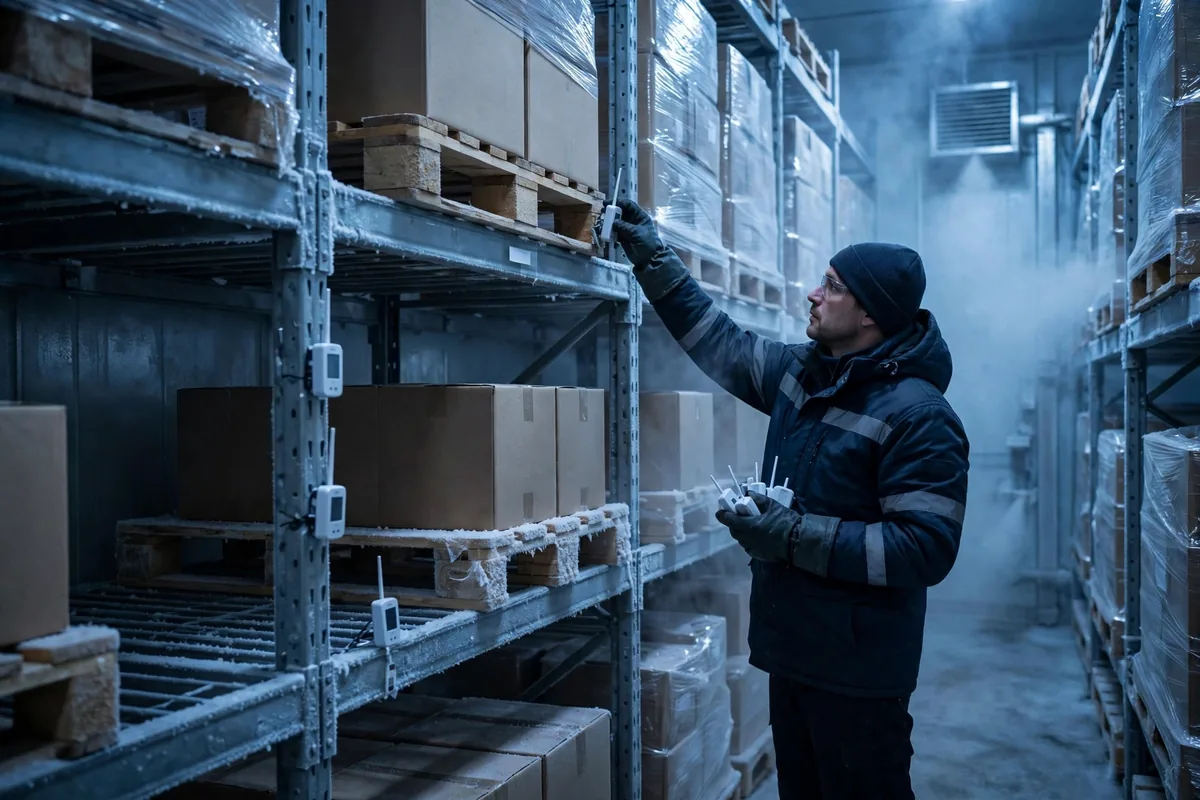
Let me be blunt: warehouse temperature mapping cold room work is where most operators fool themselves. They buy a box of loggers, stick them on the walls, produce a thick report, and feel ready for an audit. Then the auditor walks in, ignores the report's thickness, and asks one question: why did you put the sensors there? I have seen too many sites fail on that question alone.
warehouse temperature mapping starts with the worst spot, not the average
Here is the trade-off nobody likes to hear. A mapping study costs time, labor, and usually a week or more of disruption. Skipping the hard parts saves all of that, and buys you a document that proves almost nothing. Auditors working under EU GDP expectations are not grading your paperwork. They are testing whether you actually know your room.
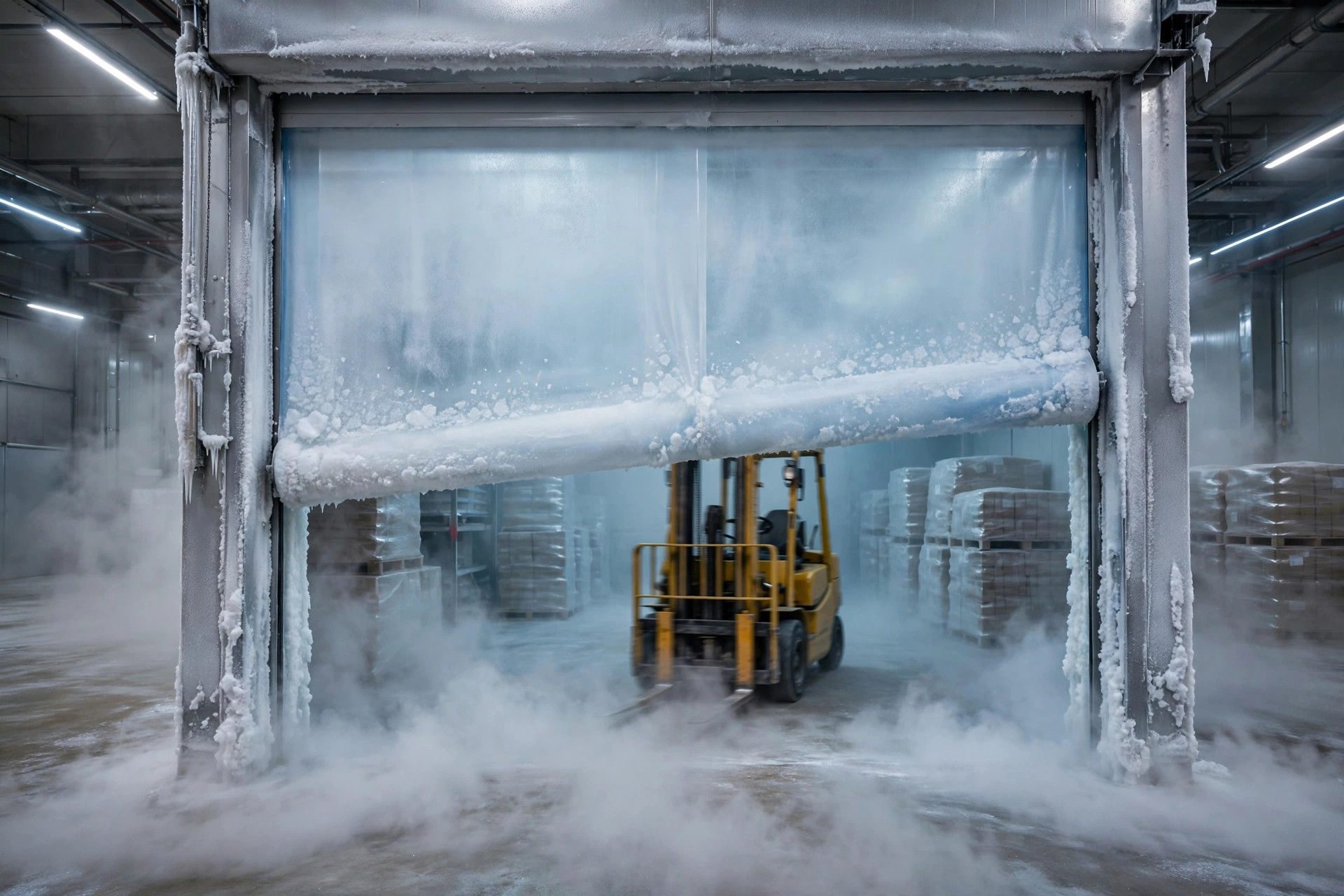
The dangerous spots in a cold room are rarely in the middle. They are by the door, directly under the evaporator discharge, near the return air path, on the top rack level close to lights and the roof, and in that first row of pallets that takes a blast of warm air every time the dock door opens. If your loggers never sat in those places, your study never measured your real risk.
In 2019 I walked a food cold store near Rotterdam with an owner who was genuinely proud of a full year of monitoring data without a single excursion. The auditor barely glanced at it. He walked the room, pointed at two high rack positions near the roller door, and asked whether product was ever stored there. It was. Then he asked what proved the temperature in those positions. Silence. A follow-up mapping found those spots ran several degrees warmer than the room center on busy summer afternoons. Not for long, but long enough to matter. The data was honest. The sensors were simply in the wrong places.
So step one is not logger count. It is a reasoned map of heat sources, cold sources, and dead air: doors, evaporators, lighting, traffic lanes, and rack height. Cover high, middle, and low levels, the corners, the center, the door zone, and the air paths. How many loggers you need depends on the room's size, shape, and use, and you should justify it against the current version of the GDP guidance and your customer quality agreements that apply to you, not copy another site's number.
cold room studies have a season problem
The second trap is timing. Run your study in the mildest week of spring and the curves will look beautiful. They will also tell you nothing about August or January. Serious operators treat season as a variable: summer heat and winter cold each get considered, and so does load state, because an empty room, a half-full room, and a packed room move air completely differently. Product blocks airflow and stores cold. An empty-room map can be irrelevant by the first full week of operation.
A pharma distribution client expanding a cold store in North Rhine-Westphalia in 2022 ran a clean spring study and got lovely data. Their quality lead insisted on a summer repeat before go-live. The July run found a sustained warm layer along the top level of the sun-facing wall every afternoon, something the spring study had completely missed. Waiting a season cost them one extra round of loggers and labor. Shipping against the spring report alone would have put their first summer of product at risk. That is the math: a modest delay versus the disposition rights over an entire room of goods.
Now the counter-intuitive part. Mapping more often does not make you more compliant. What auditors respect is a clear trigger logic for re-mapping: a layout change, a refrigeration replacement, a racking reconfiguration, a seasonal shift, or a temperature deviation that needs explaining. Repeating studies with no change in between, and ending up with reports that contradict each other, is worse than one well-reasoned study. The value of warehouse temperature mapping cold room work is not frequency. It is that each study answers the question: what changed, so we proved it again.
what auditors actually check in a cold room
After sitting through several audits, I boil it down to four things. First, was the protocol written and approved before anyone touched a logger, with placement rationale, sampling interval, duration, and acceptance criteria fixed in advance? Protocols written after the data arrives are obvious. Second, are the loggers' calibration certificates current, and do the logger IDs match the placement map exactly? Map, table, and physical device disagreeing kills the report's credibility on the spot. Third, is the raw data complete and traceable, with no conveniently selected time windows? Fourth, and this is where most sites fall down, did the conclusions change anything? The hot and cold spots your mapping found should drive where your permanent monitoring probes live and how your alarm limits are set. A mapping report in a drawer while the fixed probe sits in the most comfortable spot in the room is the single most common disconnect I see.
Use this simple framework when your study closes:
| Check | Pass standard | Cost of failing |
|---|---|---|
| Worst spots identified | Hottest and coldest points backed by data and marked on the map | Fixed probes in the wrong place; daily monitoring measures nothing |
| Seasonal coverage | Hot and cold season effects addressed or a follow-up scheduled | First summer stock faces unknown risk |
| Load states | Empty versus loaded differences recorded | Conclusions collapse once the room fills |
| Conclusions applied | Probe locations and alarm limits cite the mapping results | Auditor calls mapping and operations two separate worlds |
where not to save money
Do not save on calibration; rented loggers are fine, expired calibration is not. Do not save on the door-open challenge; test the room the way it actually works, including how long the temperature spikes during a normal loading peak and how long recovery takes. And do not save on briefing your people: during a study, nobody moves a logger on a whim and nobody quietly lowers a setpoint to make the curves prettier. Write those rules into the protocol and keep the records.
I will state the cost honestly. A serious warehouse temperature mapping cold room study means schedule disruption, staff on watch, and a report that has to survive quality review. The return is an evidence chain instead of a stack of orphan charts. A cold room does not sell low temperature. It sells provable low temperature. So before you file your next report, skip the conclusion page, open the placement map, and ask yourself one question: did I actually measure the worst spot in this room?
By Lao Mi, Supply Chain Veteran (20 yrs)