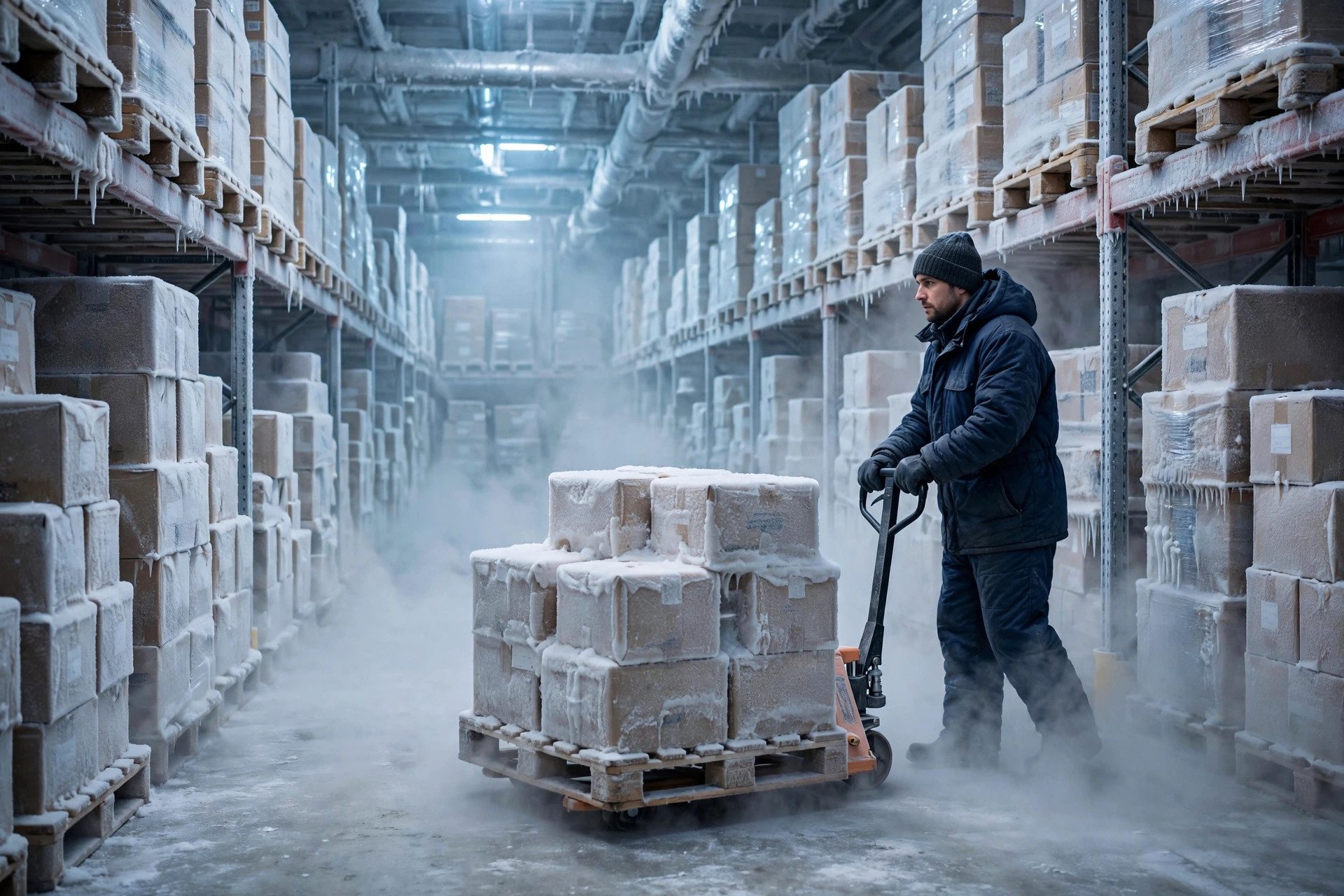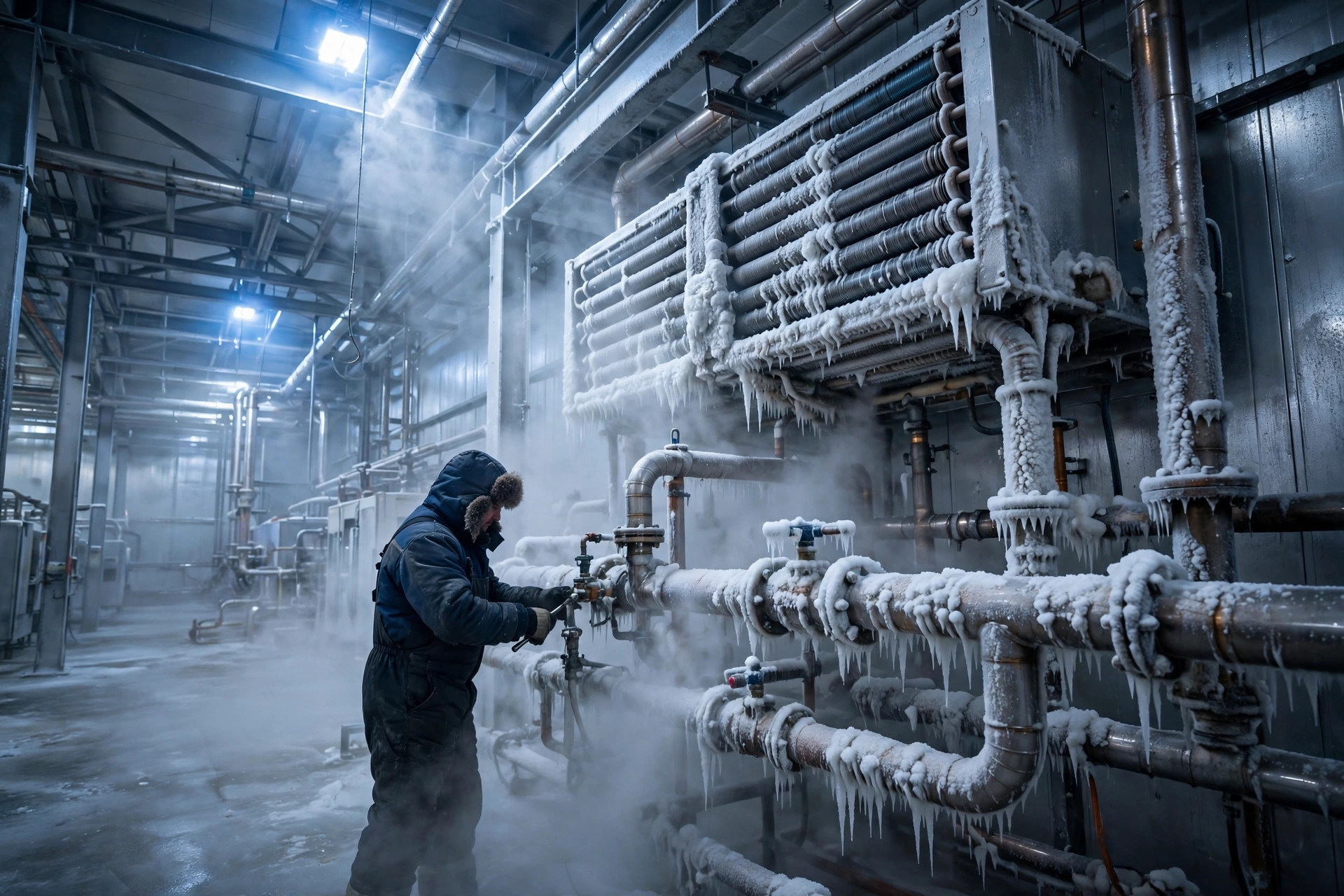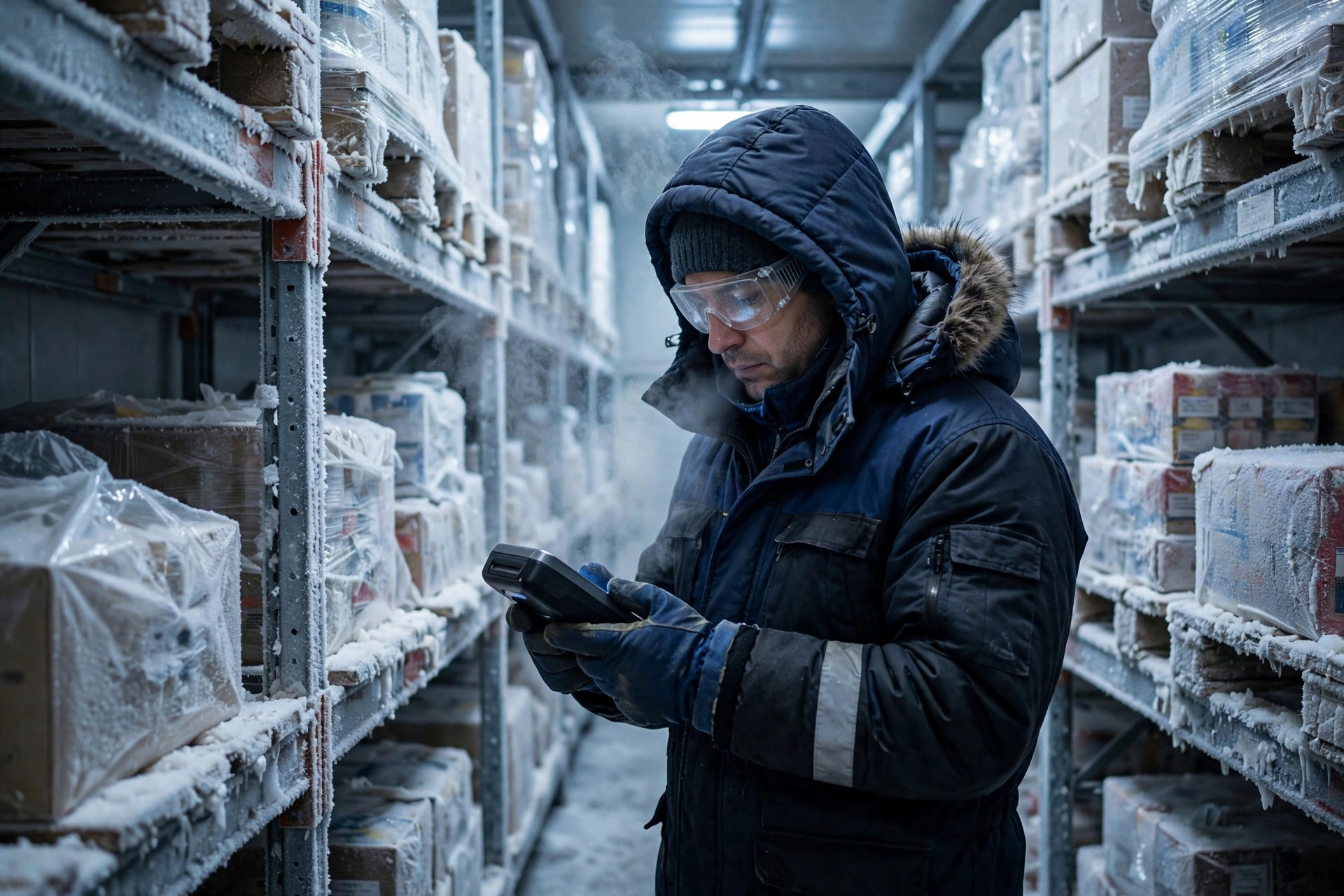
3:30 in the morning, at the freezer door. The thermometer says -25°C. Your breath turns to frost before it clears your mask. The crew stomps their feet waiting for the door to open, PDAs tucked inside their jackets — leave one of those things in -25°C for five minutes and the screen starts ghosting.
Real talk: in cold storage cycle counting, the hard part was never the counting. The freight doesn't feel cold. People do.
The Big Annual Count That Nearly Broke Us
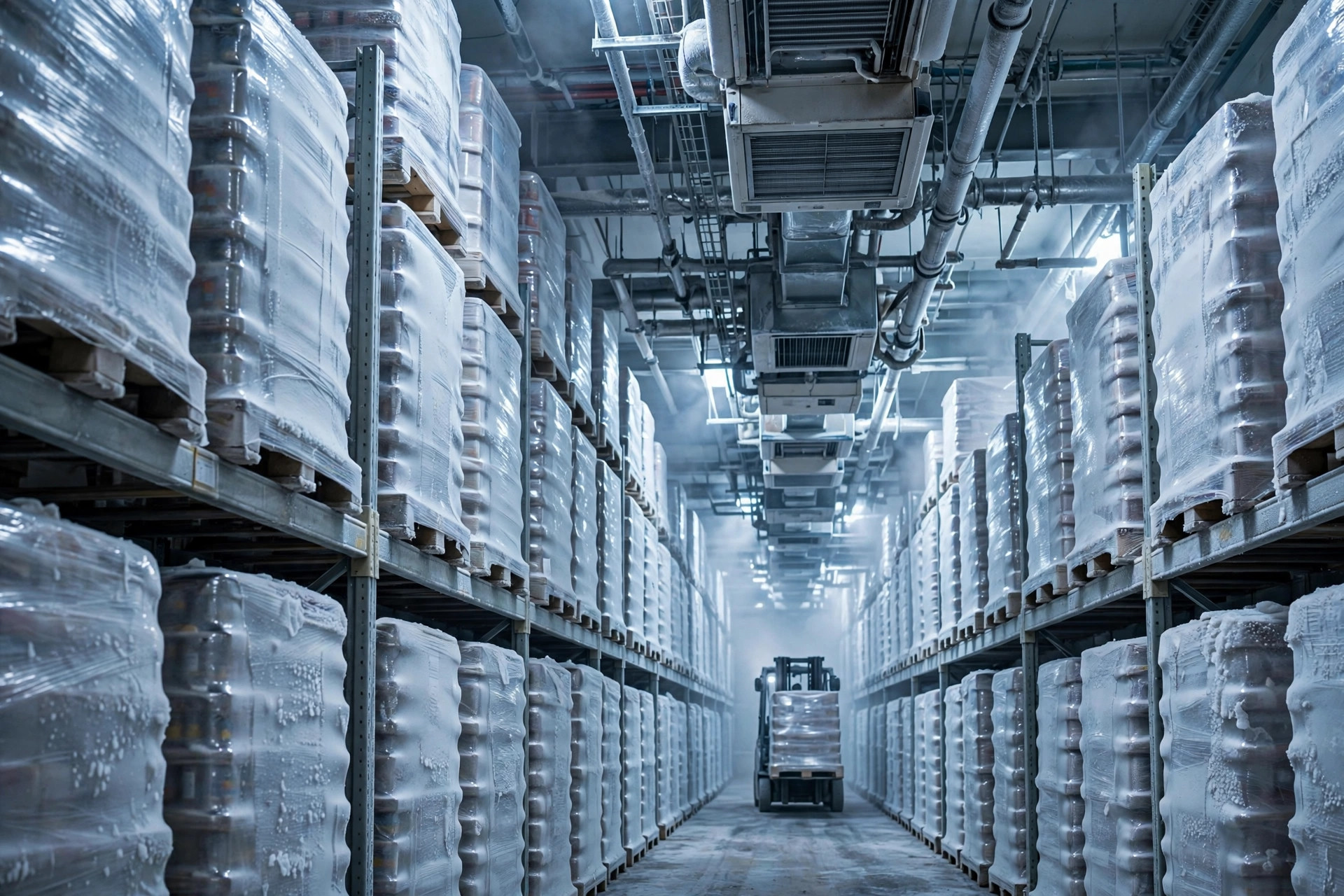
We run a frozen food distribution warehouse — roughly 20,000 pallet positions, a few thousand cases out the door every day. The year-end count in 2024 still scares me when I think about it.
The old way: shut the building down for 8 hours, all hands on deck, count everything in one shot. That night we had 40-plus people on the night shift, split into 10 teams. The first hour inside was fine. The second hour, things started falling apart. A new kid, Xiao Li, couldn't grip his PDA anymore — scan one barcode, drop the scanner. Old Wang took off a glove to wipe sweat and his finger stuck to the rack beam; he peeled off a layer of skin. Worst of all were the numbers: when you're frozen, your brain goes numb. Three teams mixed up "cases" and "pallets" that night, and the day shift spent four hours the next morning re-checking everything.
That one night cost us nearly $20,000 in extra labor alone (our own books), counting the shutdown and the rework. Scarier: two guys came out with mild frostbite and had to go to the clinic. After that night I told myself: we're never doing it this way again.
What We Tried That Didn't Work
I'll share the dead ends first, so you don't pay the same tuition.
First idea: throw more people at it, rotate every 30 minutes. More bodies, more frequent rotations — but every rotation means suiting up, signing in and out, handing off the PDA. Net productive time went down, not up. And the crew hated it: just when you'd warmed up, back inside you go. The temperature swing made everyone feel worse. We spent the money and suffered anyway.
Second idea: pre-stage the product into a 0°C tempering zone and count it there. Sounds clever. It's a trap. Moving freight is an extra step, and now you're tracking "how much went out, how much came back." The numbers got scrambled in that round trip. We spent two extra days reconciling. Not worth it.
Third idea — the one that stuck: don't move the freight, don't add headcount. Change the method. Zone cycle counting, strict rotations, better gear.
Our Fixed Playbook for Cold Storage Cycle Counts
First, the counting method. We killed the annual shutdown count. The freezer is now split into 12 zones; we count one zone a week, two hours per zone, no shutdown, no impact on outbound. Over a year, every zone gets counted four times, and our book accuracy is higher than it ever was under the old way. Real talk: during that old 8-hour shutdown, freight was still moving in and out — the numbers were stale before we finished. Cycle counting is the right answer.
Second, and this is the big one: the people plan.
40-minute rotations, no exceptions. The ACGIH cold stress guidelines work on the same logic: at around -25°C with moderate work, you come out and warm up on a schedule. Check the latest edition for the exact table; we landed on 40 minutes. And don't think 40 minutes is short — ten extra minutes inside can mean twenty minutes in the break room and you're still not warm.
Buddy pairs, always. Two people go in together and watch each other. If your partner's face goes pale or his words start slurring, you walk him out. No permission needed. That rule came from the veterans, and it works better than any policy I could write.
Gear check before entry: thermal base layer, fleece, windproof shell, two pairs of gloves (thin plus thick), dry socks. The break room always stocks dry gloves and socks for swaps. When a veteran trains a new hire here, lesson one isn't how to scan — it's how to dress. Dress wrong and you're just suffering in there.
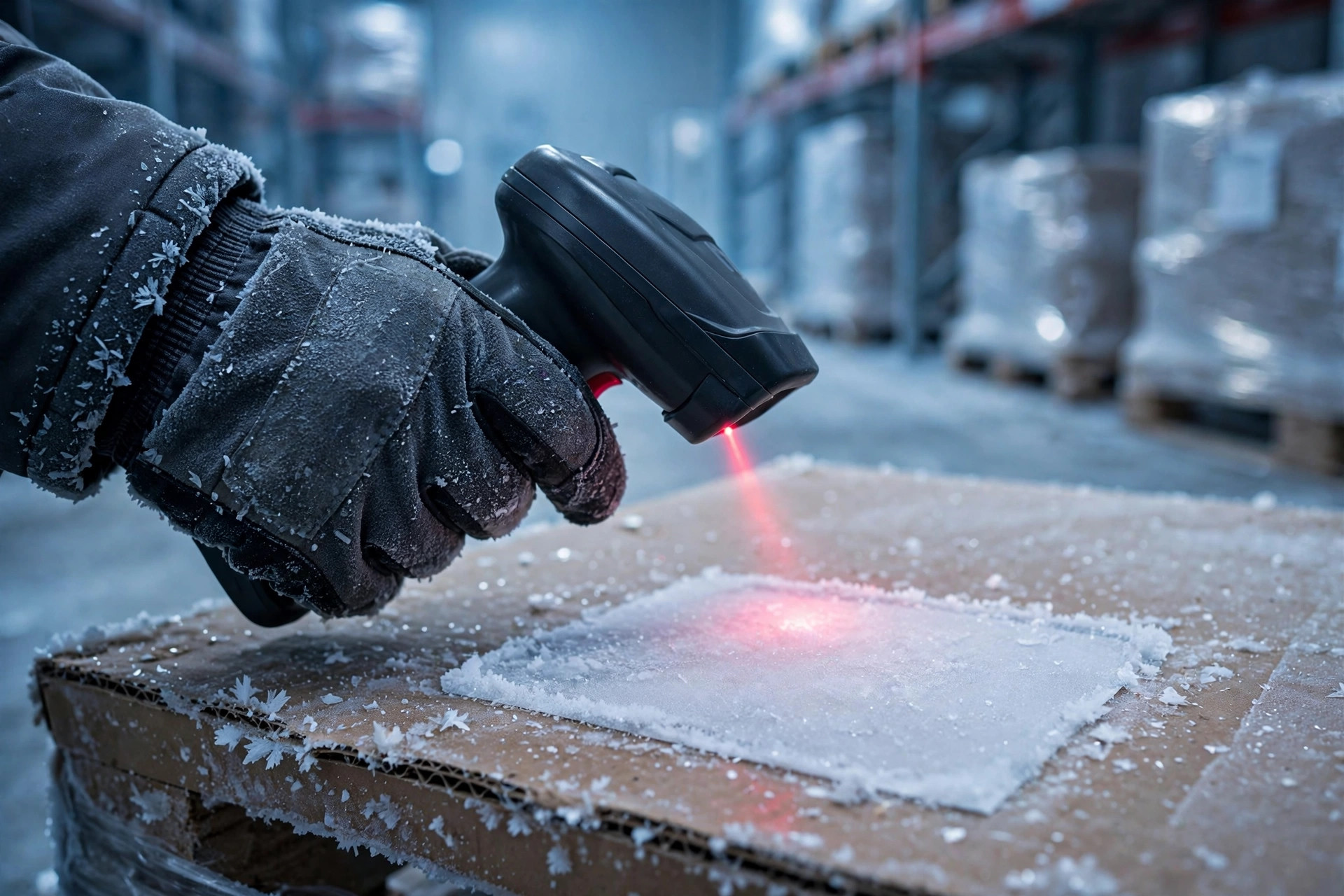
Third, the gear. PDAs get insulated pouches — tucked inside the jacket, pulled out to scan, tucked right back in. Count sheets are printed and clipped to boards ahead of time so nobody's writing inside the freezer. Pens die after two lines at -25°C. We learned that one the hard way too. And the break room keeps hot soup ready. One bowl between rotations — that's how you rebuild morale, one bowl at a time.
The Math on Three Counting Methods
| Method | Downtime cost | Labor cost | Error rate (our warehouse's experience) | Crew condition |
|---|---|---|---|---|
| Annual shutdown count | High — 8 hours dark | High — 40+ people at once | ~3%, brains numb from cold | Half the crew calls out the next day |
| Zone cycle counting | Near zero | Spread across weeks, similar total | ~0.5% | Normal shifts, nobody notices |
| Spot checks + focused recounts | Low | Lowest | ~1–2%, depends on sampling | Easy, but you never quite trust it |
Here's the contrarian part: the number-one cause of cold injuries in freezer counting isn't the low temperature. It's sweat. You work hard at -25°C, your base layer gets damp, and your perceived temperature falls off a cliff the moment you go back in. So our rule now: no heavy physical work in the half hour before a freezer entry, and the break room stocks dry clothes. The key to preventing frostbite isn't inside the freezer. It's outside it.
One reminder for fellow ops folks: never schedule back-to-back night shifts the night before a count. Fatigue plus cold equals guaranteed errors — guaranteed to land exactly where you least want them. I build the count-day roster myself. Night crew sleeps during the day, non-negotiable. That one's in our SOP now, and no amount of pleading changes it.
By Chen Feng, Warehouse Operations Manager