Let me lay my cards on the table first: I run a 3,000-square-meter warehouse. Twelve people including me, about 2,000 to 3,000 cartons out the door every day — which is exactly why the cobot palletizer vs traditional palletizer question keeps me up at night. Last October, Lao Wang — our best palletizer — threw out his back lifting a 25-kilo carton and was out for three weeks. For those three weeks I palletized two hours every evening after my day job, then walked home holding the wall. I posted a job ad the next day. Seven people showed up in a month. Two lasted the whole month, both with the "I'll leave the moment something better comes along" look in their eyes.
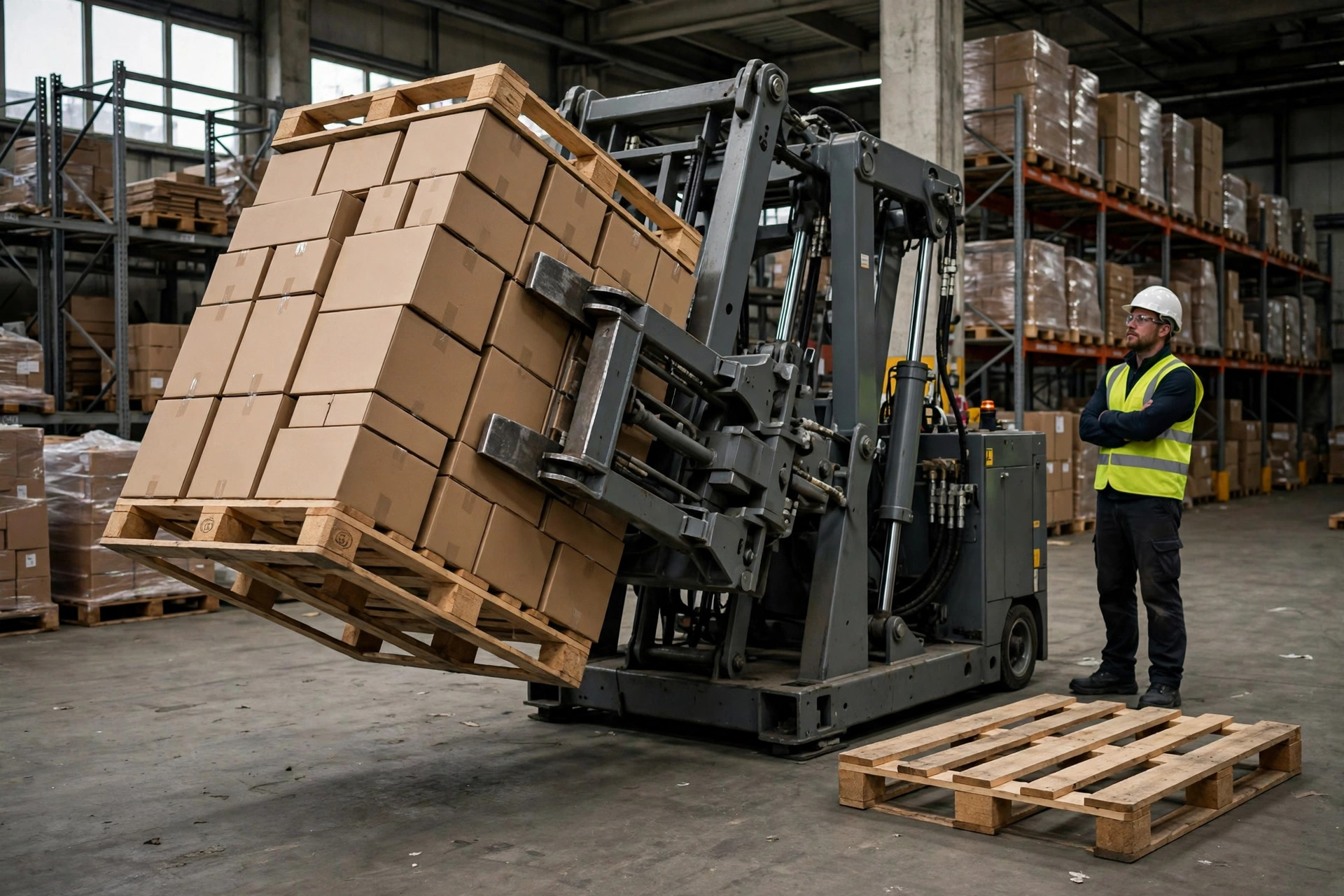
So I did what any desperate small warehouse owner does: I got quotes for traditional palletizing machines. Then my wallet filed a formal protest. A full line — safety fencing, conveyors, civil works — runs well into the millions in RMB. Public numbers from Western integrators put a single palletizing line at roughly US$60,000 to US$250,000, and high-speed integrated setups can blow past US$500,000. We small warehouses simply can't burn money like that.
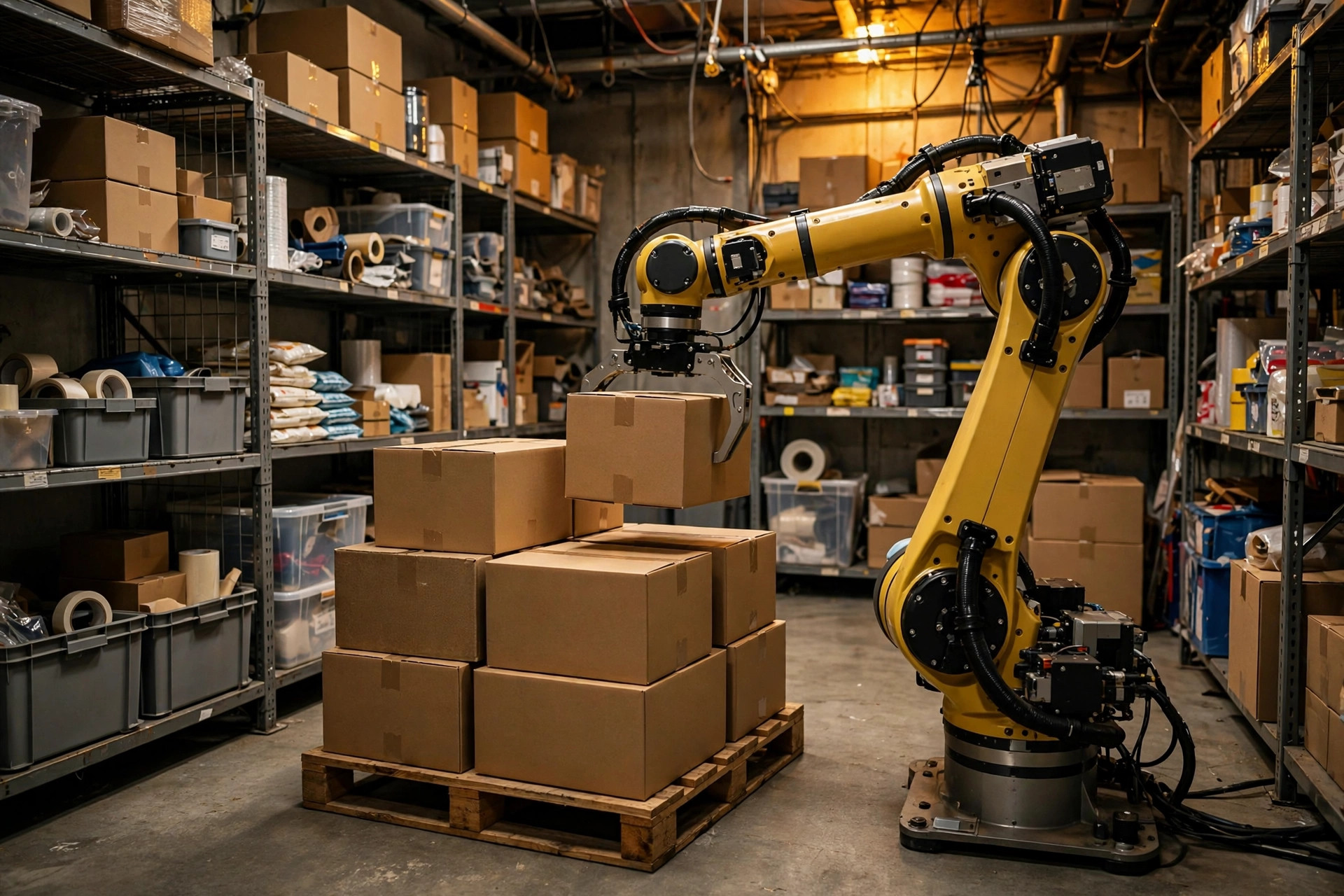
That's when I stumbled onto the middle path: the cobot palletizer. The whole "cobot palletizer vs traditional palletizer" debate looks completely different when you're not a Fortune 500 company. Here's our real math, from a warehouse that counts every penny.
The Three-Way Showdown: Hands vs Cobot vs Traditional Palletizer
Forget the sales decks. Grab a calculator and run your own numbers. Here's my table, built from our actual operation. Treat the figures as order-of-magnitude estimates — check current vendor quotes and your local labor costs before spending a dime.
| Manual labor | Cobot palletizing cell | Traditional palletizer line | |
|---|---|---|---|
| Upfront investment | Zero | RMB 300k–500k all-in for a domestic setup (arm + gripper + small conveyor + software + install); imported brands cost more | RMB 1.5M+ to start (fencing + conveyors + civil works + integration) |
| Cycle rate | One worker: 400–600 cartons/day depending on carton weight, and afternoon output drops ~30% | 6–10 cases/min (vendor specs generally top out around 10 cycles/min), roughly 3,000–4,000 cartons per 8-hour shift | 20–40 cases/min — not even a contest |
| Floor space | Zero | About 4–6 square meters, no safety fencing, parks against a wall | Dedicated fenced safety zone, dozens of square meters plus construction |
| Changeover | The human brain adapts for free | Drag-and-teach or touchscreen recipe change, ~10 minutes | Half a day minimum to reconfigure a pallet pattern, plus test runs |
| Annual operating cost | ~RMB 110k per worker/year (RMB 6,500 salary plus social insurance, management, and hiring churn — real cost ~RMB 9,000/month) | ~RMB 20k/year in electricity and maintenance (power bill is a couple hundred RMB a month) | Higher across the board — plus you need someone who can actually service it |
| Hidden costs | Can't hire anyone, back injuries, peak-season stockouts and penalty clauses | Basically zero | Downtime during commissioning, held hostage by your integrator |
Here's my payback math, done the pessimistic way: we run 2,500 cartons a day, and one cobot does 3,000+ in an 8-hour shift — it replaces two palletizing positions. That's ~RMB 220k in labor saved per year, minus RMB 20k operating cost, net RMB 200k. On a RMB 400k investment, that's a two-year payback. From year three on, the arm is a "digital employee" that takes no salary, no sick days, and never throws out its back.
Our Two Near-Disasters
Disaster one: October 2025, Lao Wang's back, three weeks out, right before peak season. Two of us palletizing 3,000 cartons a day — by day three, Xiao Li's wrist was swollen too. I ran a terrifying calculation: one week of missed shipments, with penalties and lost customers, would have cost me half a cobot. The real cost of manual palletizing isn't wages. It's the risk that your entire operation walks out the door — or gets carried out on a stretcher.
Disaster two: hiring. I offered RMB 7,000 a month for a palletizer. The first applicant's opening question was "is there air conditioning," followed by "can I do it sitting down." Fair enough — hauling 500 cartons of 25 kilos a day would break me too. This isn't a money problem. The job has become socially radioactive for young workers. And it's not just my little warehouse; it's a chronic condition across the whole industry.
My Neighbor Lao Chen: The Guinea Pig (March 2026)
Lao Chen runs a 5,000-square-meter warehouse down the road, and he's braver than me. In March 2026 he installed a domestic-brand cobot palletizer — RMB 380k, turnkey. I've visited three times. The shocking part wasn't the speed (honestly, it works at a pretty "zen" pace). It was watching it run from 8 AM to 8 PM without a word of complaint, on a monthly power bill of barely RMB 200.
Six months later I asked if he regretted it. "I regret it deeply," he said. "I regret not buying it two years earlier. The money I burned on recruiting, training, and watching people quit would have bought two arms." Then the detail that sold me: before a promotion, when carton sizes changed, he tapped a few buttons on the touchscreen and the new pallet pattern was live in 10 minutes. With a traditional machine, he'd have waited two days for the integrator to show up and reconfigure it.
The Counterintuitive Take: The Cobot's Real Rival Isn't the Traditional Palletizer
Big-vendor narratives love framing "cobot palletizer vs traditional palletizer" as a speed contest. The cobot loses that fight every time — 6 to 10 cases a minute against 20 to 40. But that's entering a marathon runner in a 100-meter dash. Wrong race.
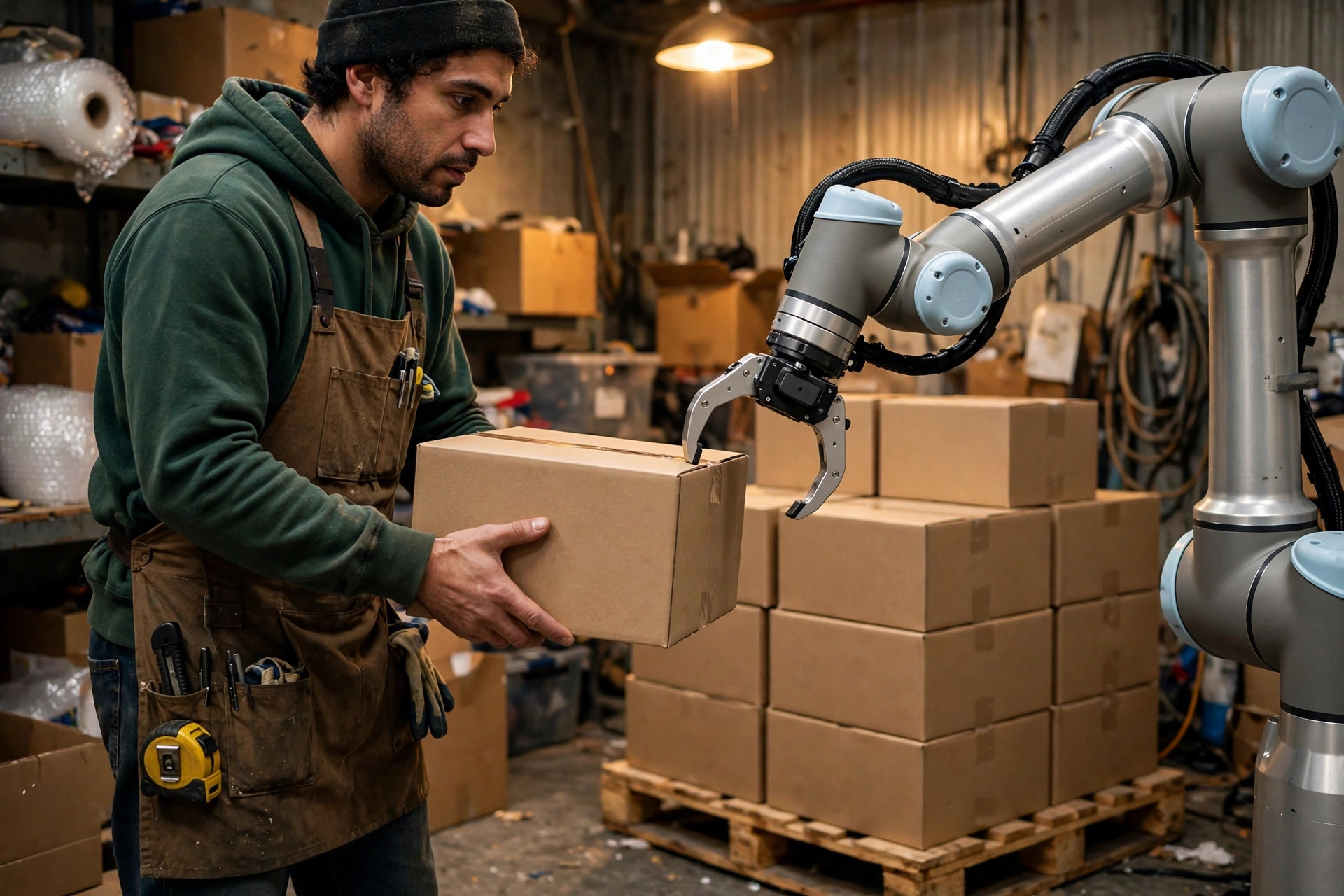
The cobot's real weapons are three things a traditional palletizer can never offer: no fencing (saves dozens of square meters plus construction — a lifesaver when every square meter of your warehouse prints money), 10-minute changeovers (we live with mixed SKUs and non-standard pallets as a way of life; a traditional machine takes half a day to switch patterns, by which time we've already shipped the wave), and human-robot tag-teaming (during peaks, a worker can jump in and help without stopping the line — open the fence door on a traditional machine and the whole line halts).
So the real comparison is: a cobot vs "workers you can't hire + backs you can't afford to break + peak-season stockout risk." For a warehouse our size, this is a labor-risk calculation, not a throughput calculation. Cycle rate is a rich company's game. Not blowing up is a poor company's necessity.
The RMB 3,000 Fix That Got Us Through Peak Season
Before I worked up the nerve to buy the arm, we spent just over RMB 3,000 on a hydraulic lift table and welded a few pallet positioning frames. Immediate payoff: stacking height dropped from 1.8 meters to 1.2. Lao Wang's back hasn't flared up since he came back, two people handle 3,000 cartons without the death march, and throughput went up roughly 20%.
That cheap fix taught me the right order of operations: first spend small money on "will my people survive," then talk about automation. Never reverse the sequence. A lift table is affordable for any small warehouse — order tonight, use it tomorrow.
The Three-Question Test: Is Your Warehouse Ready for a Cobot?
- Do you palletize between 1,500 and 5,000 cartons a day? (Below that, manual labor still wins on cost. Above that, look at traditional machines and stop torturing the cobot.)
- Do your SKUs, carton sizes, or pallet specs change often? (The messier your mix, the bigger the cobot's 10-minute-changeover advantage.)
- Has hiring driven you to question your life choices? (If yes, your labor risk already outweighs the equipment investment risk.)
All three: go get vendor proposals with your eyes closed. Two out of three: worth a serious quoting round. Only one: buy the lift table first and bank the savings.
Advice for Fellow Small Warehouses
- Rent before you buy. Subscription models already exist abroad (around US$14–18 per operating hour), and domestic integrators are starting to offer leases. Rent one for a peak season, calculate your real payback, then decide. Don't let a sales deck decide for you.
- Don't worship imports. A domestic arm with domestic integration lands at RMB 300k–500k, and the speed and reliability are plenty for our volumes. Spend the savings on your crew's paychecks — that buys more loyalty than any brand name.
- The gripper matters more than the arm. If your carton sizes vary, make the vendor test gripper compatibility with your actual cartons before you talk brands. A bad gripper turns the fanciest arm into an expensive statue.
- Keep a human in the loop. During peak surges, people need to jump in and help anytime. The cobot's greatest virtue is that it doesn't banish humans — no fencing means people and the arm share the same floor. That's a feeling of security no traditional machine can ever give you.
Small warehouses have their own way of surviving. The giants race on cycle rate; we race on "no stockouts, no injuries, no money burned." The cobot palletizer isn't the fastest answer — but for warehouses like ours, stuck between workers we can't hire and machines we can't afford, it might be the middle answer we can actually reach.
By Xiao Ma, Small Warehouse Owner