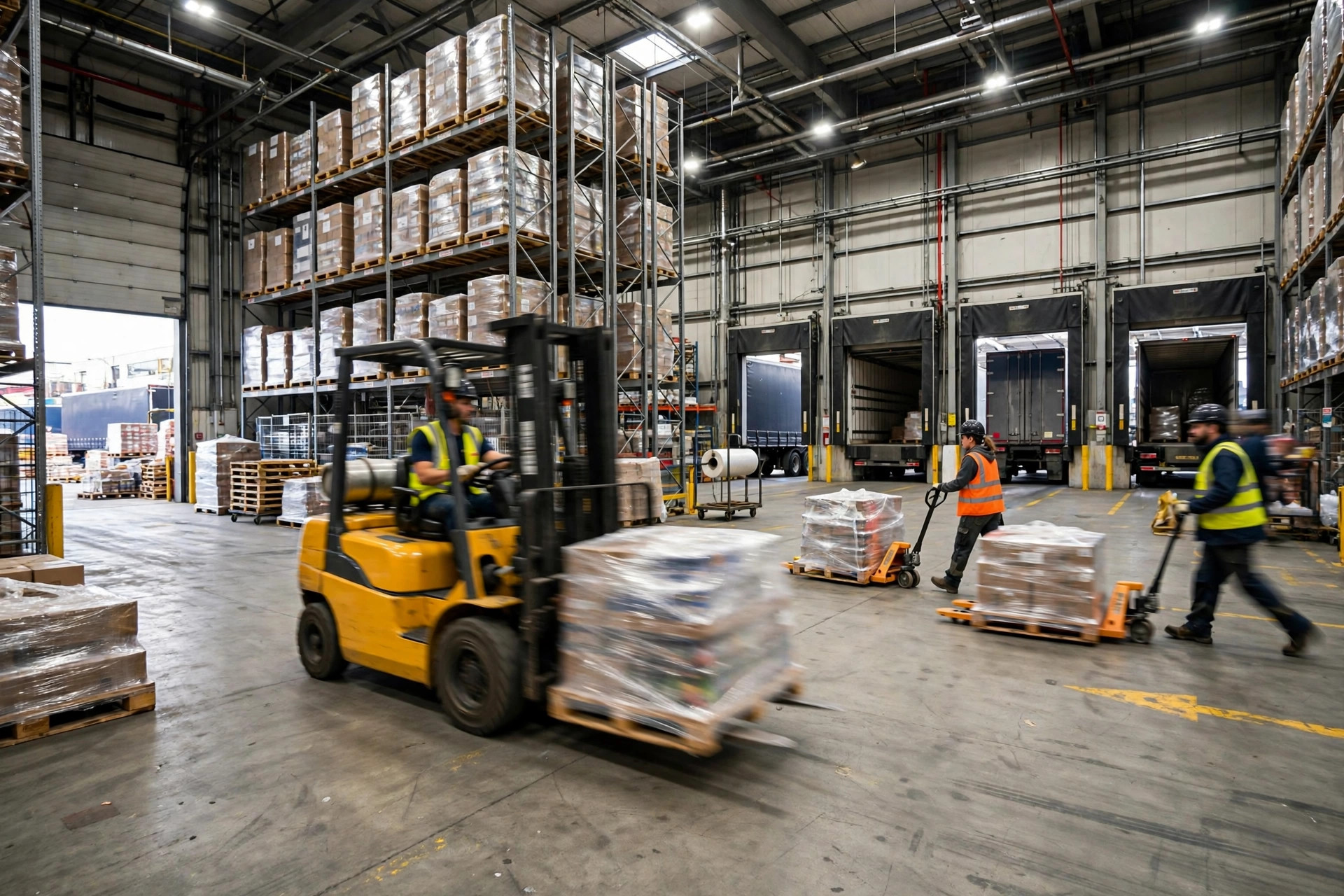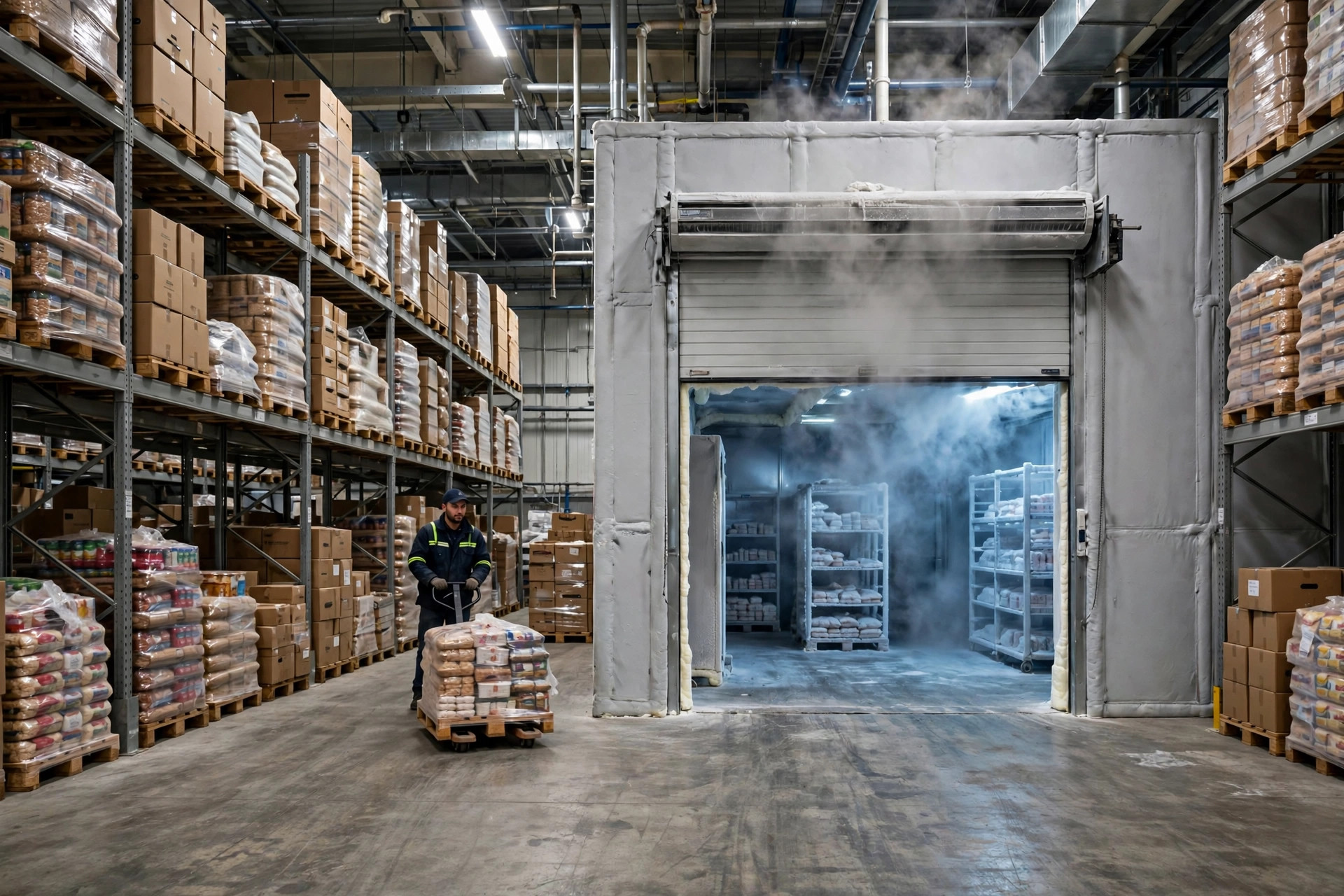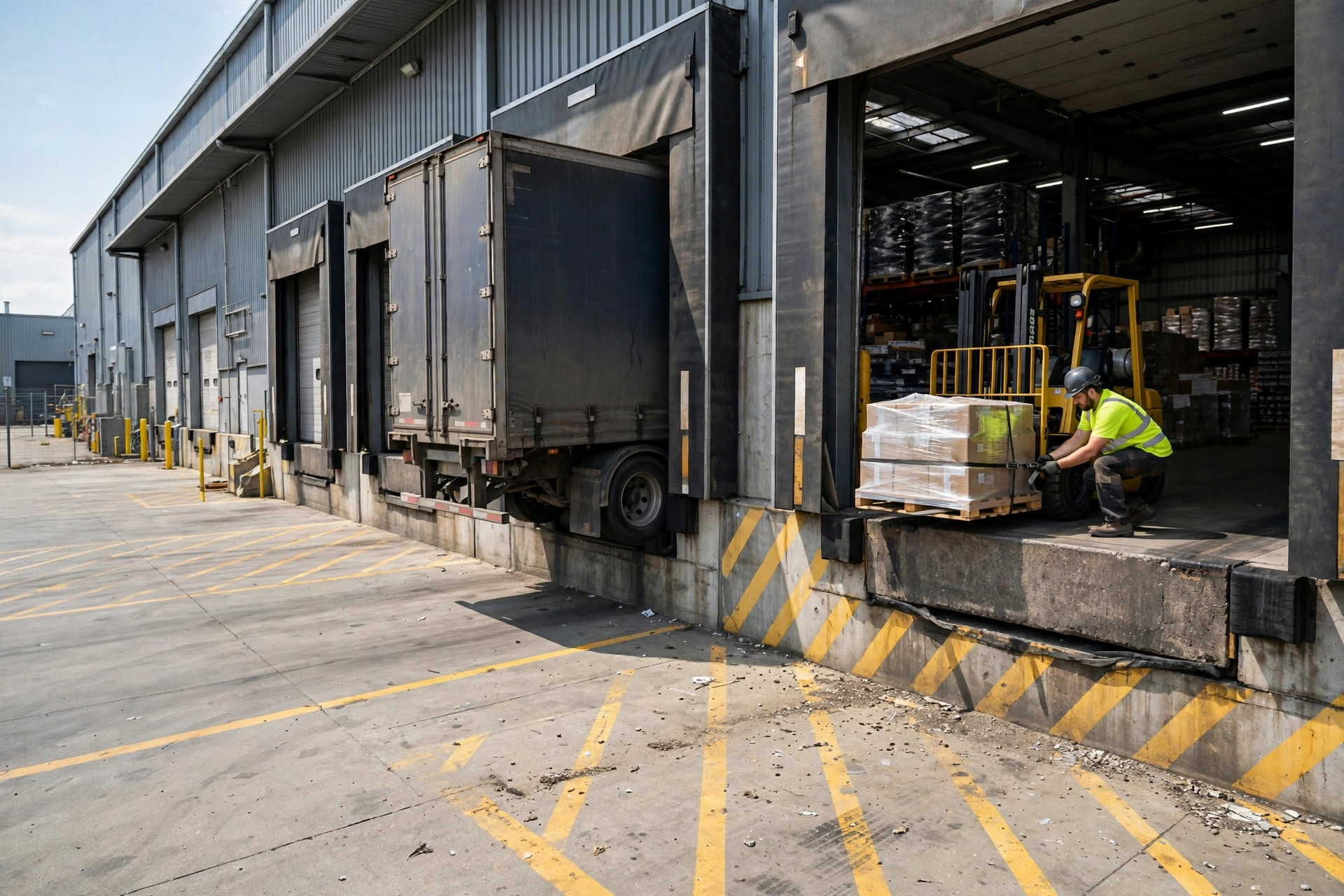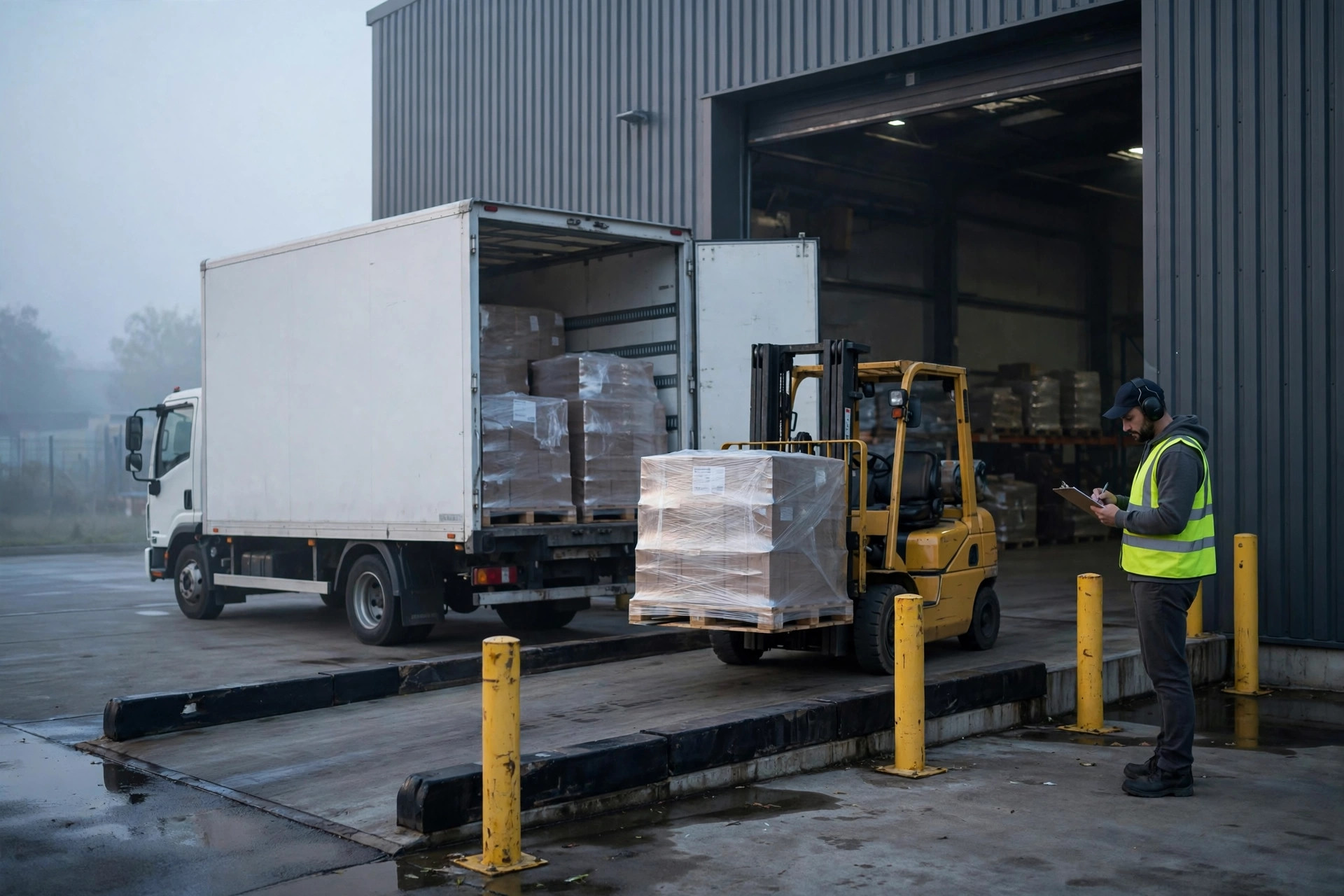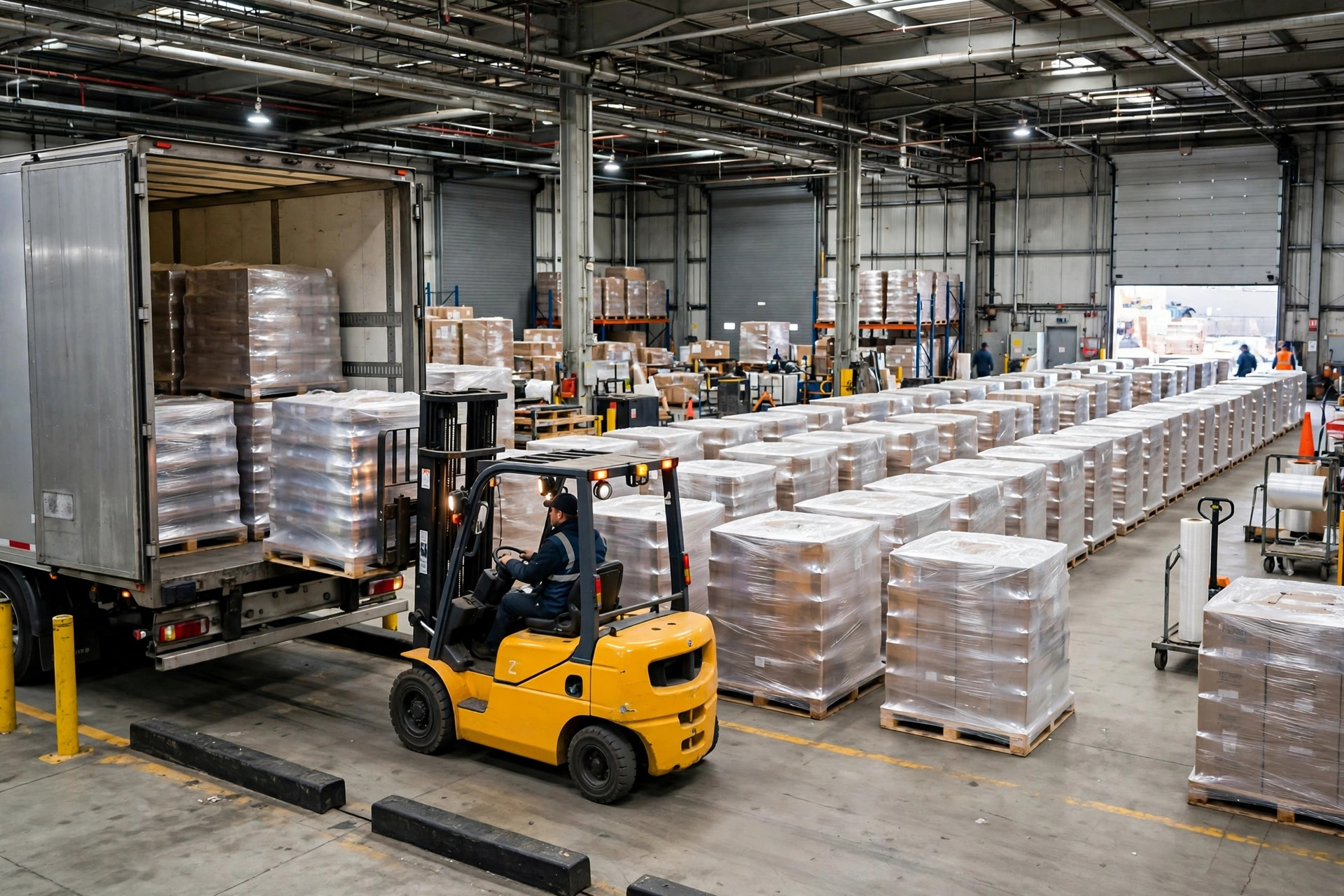
Let's start with the math. 180 inbound orders a day, 12 minutes each to check line by line against the purchase order — one receiver clears about 40 orders in an 8-hour shift, so you need 4.5 people. Switch to blind receiving — take the freight in first, reconcile against the PO later, before putaway — and each order takes 4 minutes. One person clears 120 a day. You're down to 1.5 people. Three people's peak-season labor, 60 days, at a loaded cost of $25–30 an hour: $36,000–$43,000 saved. That is the entire pitch for blind receiving in one line: cut your receiving headcount by two-thirds.
I come from finance. I don't do receiving operations; I do the money. So let's see whether blind receiving actually saves money or just moves the bill somewhere else.
The Labor Math: Full Verification vs. Blind Receiving
| Full verification | Blind receiving | |
|---|---|---|
| Time per order | 10–15 min | 3–5 min |
| Labor-hours for 180 orders/day | ~36 hrs | ~12 hrs |
| Receivers needed (8-hr shifts) | 4–5 | 1–2 |
| 60-day peak labor (at $28/hr) | ~$60,000 | ~$20,000 |
The $40,000 gap is real. Peel one more layer off the labor structure: a US warehouse receiver's $18–22 hourly wage is the sticker price; benefits, insurance, and payroll taxes add 30–40%, landing at $25–30 an hour loaded. Peak season's real killers are two line items: overtime at 1.5x — two extra hours a day costs $1,300–$1,600 more per person per month — and temp workers at a 20–30% wage premium who work slower. Under full verification, both are rigid: volume up 50%, headcount up 50%. Blind receiving cuts exactly those two. Of the $40,000 saved, that rigidity is the most valuable part.
In November 2025 I audited a 3PL warehouse in California — 80,000 square feet, about 420 pallets and 180 inbound orders a day at peak. They switched to blind receiving at the end of October: the receiving team went from 9 people to 4 (two kept on full verification for high-value orders), and November–December inbound labor came in about $75,000 under the prior year. The GM told me that covered more than half a year of their WMS subscription.

Where the Savings Leak Back Out: Three Hidden Costs of Blind Receiving
Blind receiving doesn't eliminate quality cost. It moves it from before receiving to after. The moved costs come in three forms, and each one is more expensive than labor.
First, late discrepancy discovery. With traditional receiving, a shortage is caught on the spot — the BOL is annotated, the driver is there, the supplier is on the phone, and liability is clear. With blind receiving, the shortage surfaces 2–3 days later at pre-putaway reconciliation. By then the freight is in inventory: stockouts where there shouldn't be, oversells where there can't be, and every fix is a rush job.
Second, broken evidence. "You say 200 units were short; the supplier says you didn't mention it at receiving." Blind receiving means voluntarily surrendering your receiving inspection evidence, which guts the shortage-claim clause in your supplier agreement. I've watched claim recovery rates fall from 80% to 20% — the missing 60% gets absorbed, in cash, by the warehouse.
Third, book-to-physical reconciliation cost. When the system says one thing and the shelf says another, month-end turns into adjustment entries and extra cycle counts. Nobody books that labor against receiving, but the money leaves anyway.
A consumer electronics client of mine, Q4 2025: Bluetooth earbuds at about $60 a unit, roughly 35% margin. One inbound lot came up 200 units short under blind receiving; the gap wasn't found until reconciliation three days later, by which point they'd been stocked out for three days. At 70 units a day, that's 210 × $60 × 35% — about $4,400 of margin gone. The supplier, citing "no exception noted at receiving," honored half the claim. Total damage: over $5,000. The savings were measured in dollars per hour; the loss was measured in dollars per unit. That money was spent badly.
The Break-Even Line: Which Freight, Which Volumes Make Blind Receiving Worth It
One inequality settles it:
Daily net gain from blind receiving = hours saved × hourly rate − expected discrepancy loss Expected discrepancy loss ≈ daily orders × discrepancy rate × average discrepancy value × lag multiplier
The lag multiplier, from my experience: ~1.5x for a one-day lag, ~3x for three days — the longer the delay, the faster stockout and dispute costs compound.
If the left side (savings) beats the right side (losses), blind receiving wins. If the inequality feels abstract, use the three-tier rule:
- Low-value consumables (cartons, dunnage, under $2 a unit): average discrepancy value is trivial. Blind-receive everything, no hesitation.
- Mid-value regular SKUs ($2–$50): blind receive plus 10% spot checks; if the discrepancy rate tops 2% for three straight days, switch back to full verification.
- High-value SKUs (over $50, or best-sellers with 30%+ margin): no blind receiving — keep full quantity counts plus sample carton opens at minimum.
One more lever most warehouses miss: don't argue about whether to blind-receive; tier it by supplier. Grade vendors on historical discrepancy rates — Grade A (a year-plus relationship, under 1% discrepancy) goes fully blind; Grade B (1–3%) gets blind receiving plus spot checks; Grade C (new vendors, over 3%) gets full verification. That puts 70–80% of order volume through the blind channel while confining risk to the remaining 20%. Saving labor and controlling risk were never in conflict. Blanket policies are.
Here's the counterintuitive part: blind receiving's biggest cost isn't the discrepancy itself — it's that you voluntarily handed over your inspection evidence. Blind-receiving 100% of orders and fully verifying 100% of orders are the same kind of laziness: deciding without looking at the freight or the numbers.
So here's the calculable conclusion. Plug last month's numbers into the inequality — daily orders × discrepancy rate × average discrepancy value < hours saved × hourly rate. Left side smaller: blind receiving pays. Left side bigger: verify everything. Recompute whenever the SKU mix changes: weekly in peak season, monthly off-peak. Do the math first, then move the freight. That's the whole science of blind receiving.
By Lao Zhou, Logistics Cost Analyst