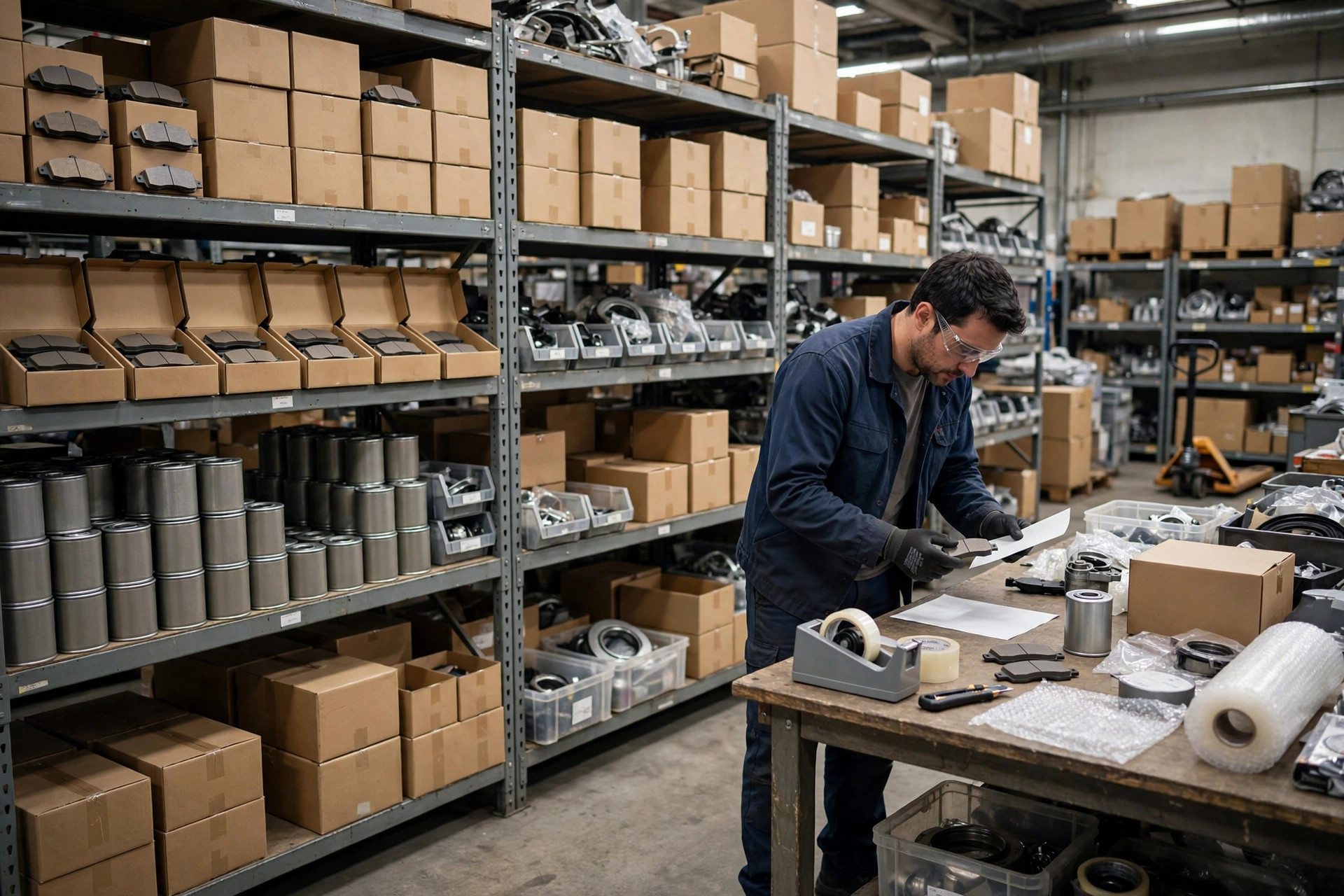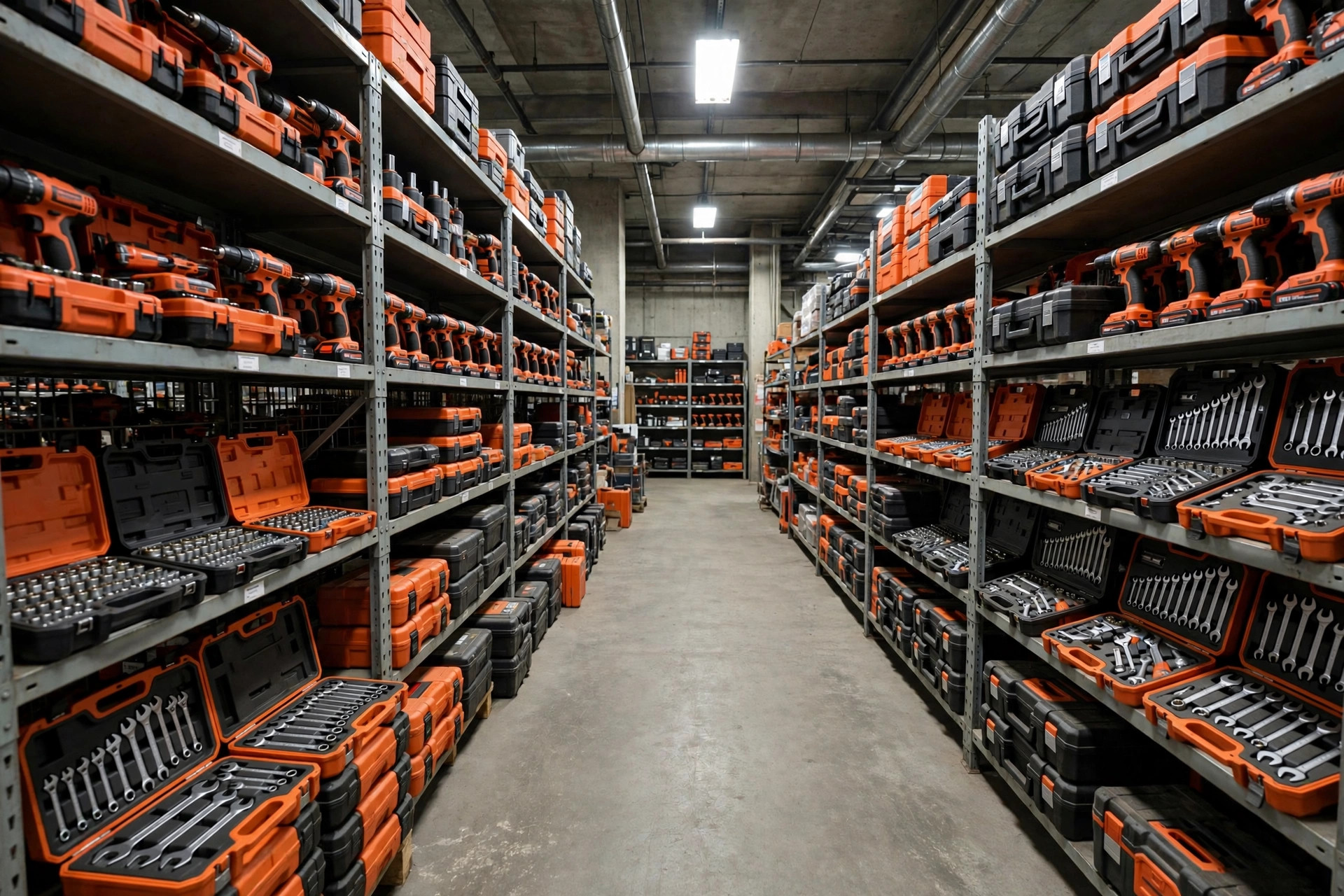
We have a client, a direct-to-consumer bike brand out of Southern California. They signed with us in spring 2024, shipping four to five hundred fully built bikes a month. Before us, their previous 3PL had asked to terminate the contract after six months. The reason given: "Your freight takes too much space, assembly eats too much labor, and your returns are a nightmare."
That sounds like an excuse. It isn't. In bicycle ecommerce fulfillment, bulky and odd-shaped goods are the ultimate stress test: racking height, skilled labor, and returns triage. Miss any one of the three and a 3PL would rather walk away from your business. Here is the pricing playbook nobody on the sales side volunteers.
Bulky Storage in Bicycle Fulfillment: How You Rack It Is What You Pay
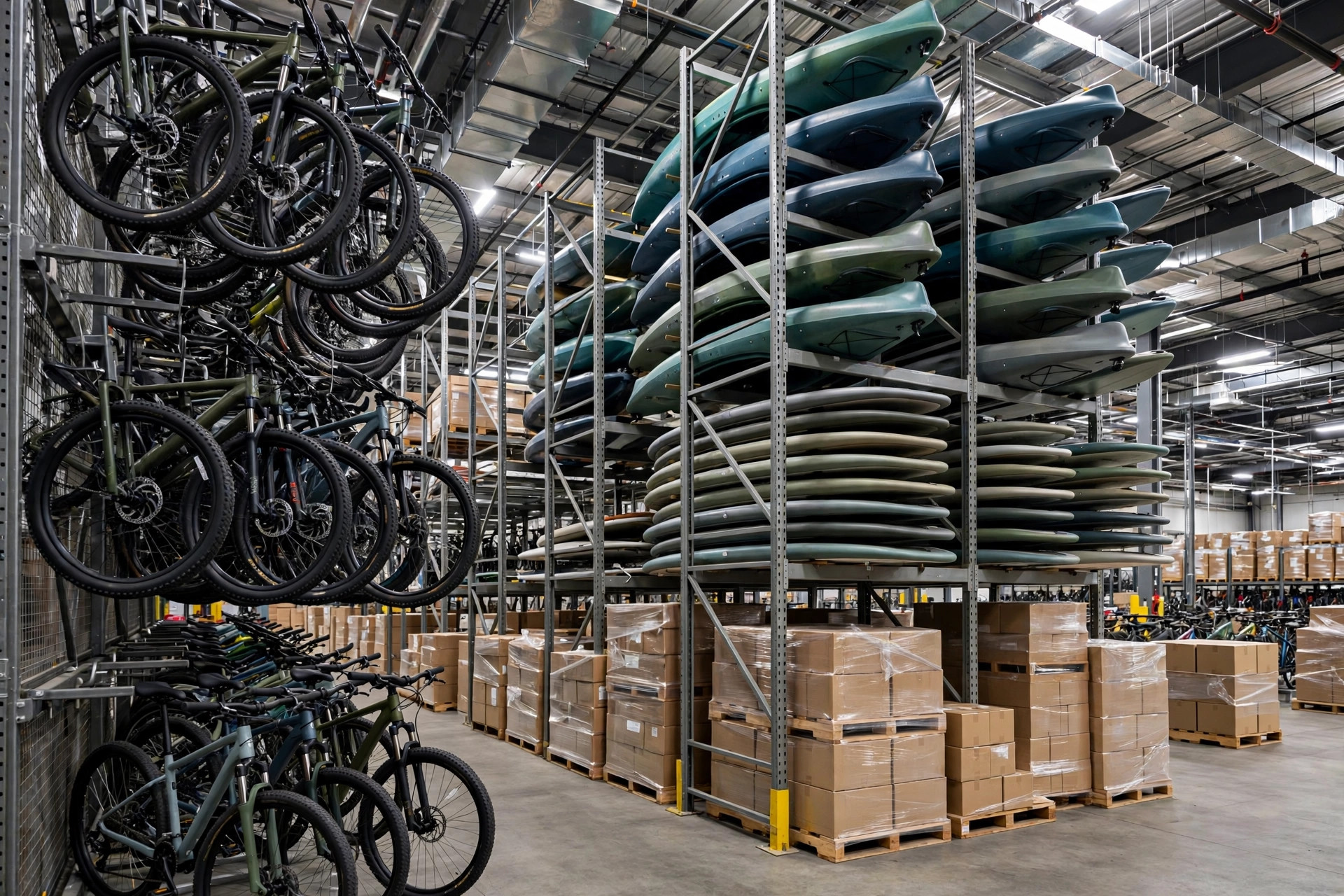
Storage first. When this California brand came to us, their boxed bikes — roughly 55 inches long, 30 inches tall, with 29-inch wheelsets — were sitting flat on pallet racking, one bike per pallet position. At their old 3PL's rates, a pallet position ran roughly $15 to $25 a month, so bike storage alone was costing them several thousand dollars monthly. The first thing we did was switch everything to hanging storage: frames on hooks off the uprights, wheels broken out onto narrow shelving. One pallet position now holds three to four bikes. Storage cost dropped to about a third of what it was.
No technology involved — just the oldest trick in bulky warehousing. Tents, paddleboards, and rooftop cargo boxes follow the same logic: stand it up instead of laying it flat, hang it instead of stacking it. Another client of ours, an inflatable paddleboard brand in Colorado, switched from flat-stacking to vertical storage against the wall ahead of the 2023 peak season and fit nearly twice the inventory into the same footprint. The rent they saved covered two extra weeks of safety stock.
There is a catch, and it is a hard one: your 3PL needs the ceiling height and the hanging hardware. Plenty of small-parcel 3PLs simply don't have a bulky zone — low clear heights, no reinforced uprights. Ask before you sign, not after your freight arrives and the bikes end up stacked on the floor.
A typical bulky-goods quote breaks down like this. Ask your 3PL to itemize it line by line — wherever they resist is where the margin is hiding:
| Line item | Common basis | Typical range |
|---|---|---|
| Bulky storage | Per pallet position or cubic foot | $15–$35 / position / month |
| Inbound putaway | Per unit or per pallet | $3–$8 / unit |
| Pick and pack | Per order, plus oversize surcharge | $8–$15 / order |
| Assembly | Per bike or per labor hour | $25–$60 / bike |
| Returns inspection and refurb | Tiered per unit | $10–$40 / unit |
| Oversize handling fee | Charged at outbound | $5–$12 / order |
Notice where the real money is: outbound and assembly. Storage is the most transparent line on the sheet. When a 3PL quotes you an "all-in" number, make them split it. The games fall apart the moment you do.
The Assembly Pricing Playbook
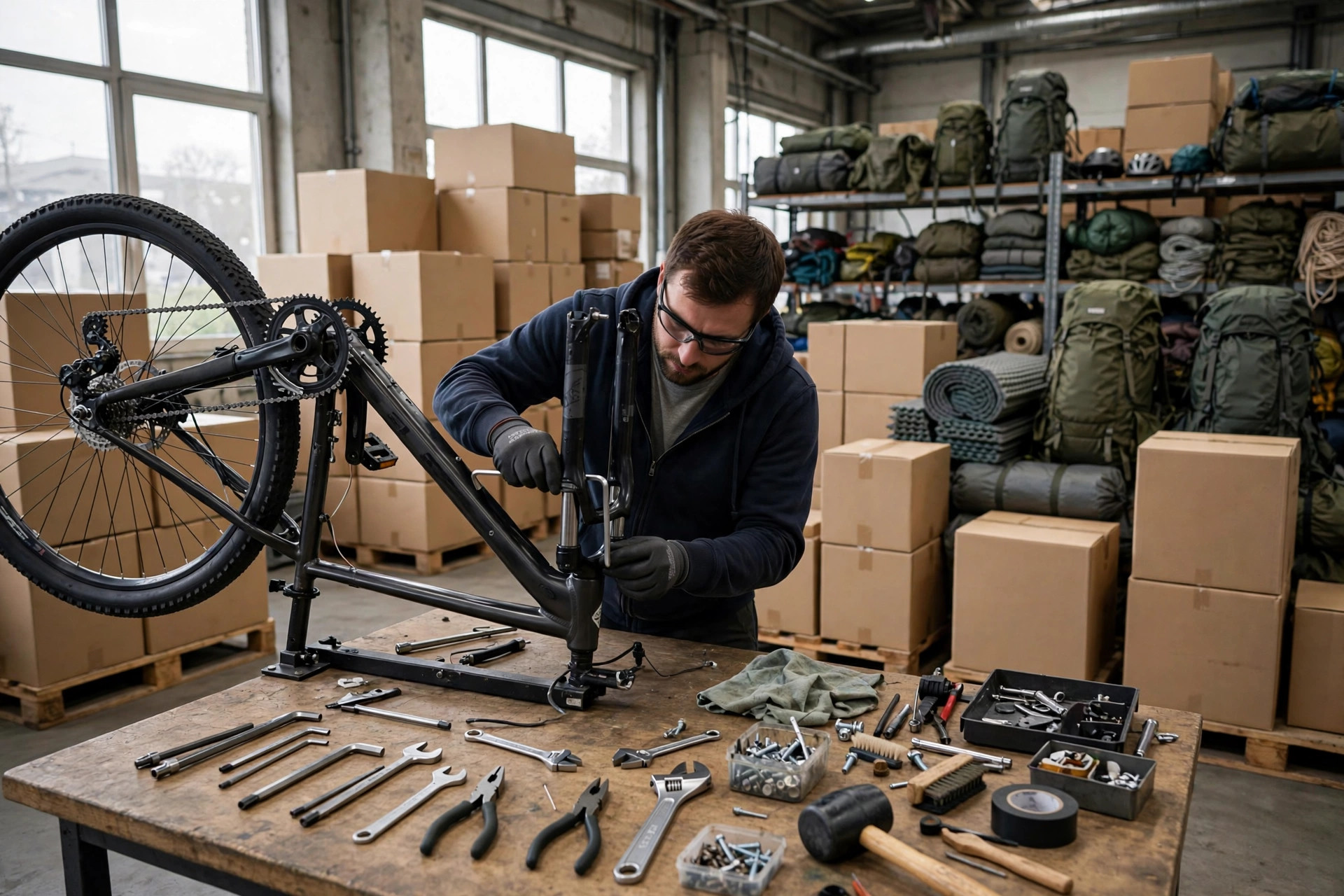
Assembly is the hardest part of bicycle ecommerce fulfillment and the murkiest line on the quote. A bike out of the box needs the front wheel, handlebars, and pedals mounted, plus derailleur and brake adjustment. A trained tech takes 20 to 40 minutes. At US warehouse labor rates, $25 to $60 a bike is a fair range. Anything under $20 should make you nervous — either a rookie is practicing on your product or steps are being skipped.
Our California client was paying $18 a bike at their old 3PL — a "friendly rate." The result: misaligned derailleurs, a spike in customer complaints, and return shipping costs that ate the assembly savings several times over. We quoted $38 a bike with experienced bike mechanics and a signed QC checklist covering brake travel, gear indexing, and tire pressure. Complaints fell to a quarter of their previous level within two months. Assembly is not where you save money.
Here is the counterintuitive part: plenty of 3PLs don't refuse bike business because they can't do it — they refuse because they won't risk it. One scratched carbon frame on a $2,000–$3,000 bike wipes out a month of margin. Add the hiring headache — bike mechanics are scarce, training takes weeks — and the return on that labor looks worse than plain apparel fulfillment. So the 3PLs that do take bike assembly charge a premium, and it isn't gouging. It's risk pricing. Before you negotiate the number down, ask whether they've assembled your category before and whether they run a QC checklist. If they can't answer, walk away no matter how cheap the quote.
One more insider detail: per-bike versus per-hour pricing changes everything. Per-bike caps your cost — if the tech is slow, the 3PL absorbs it. Per-hour billing on a difficult build (an e-bike with internal cable routing, for example) will blow past your budget. Push for a fixed per-bike rate, and renegotiate line by line when you add a new model. E-bikes are a growing share of bicycle ecommerce fulfillment, and battery-compartment wiring plus torque-sensor calibration take noticeably longer than a standard build. Get e-bikes priced as their own line item before peak season forces the conversation.
Post-Test-Ride Returns in Bike Fulfillment: Inspection Is a Craft
Many bike brands offer a 30-day test ride, which creates a problem small-parcel warehouses never see: the returned bike might be a near-new machine with 200 miles on it, or a crashed one with a stretched chain. The inspection and refurb workflow decides whether that bike goes back to inventory at full price or gets cleared out at a discount.
Our grading runs three tiers. Grade A: barely ridden, cleaned and fully tuned, back to stock as new. Grade B: light wear, consumables replaced (brake pads, bar tape), deep-cleaned, listed separately as certified pre-owned at roughly 70–80% of new price. Grade C: frame damage or core component failure — scrapped or parted out. The grading rubric is attached to the contract, one copy for the brand and one for the 3PL, so nobody argues later about what "like new" meant.
The Colorado paddleboard brand has it worse: returned inflatables need an airtightness check. Our process is to inflate, let it sit 24 hours, and watch the pressure drop. Anything beyond the threshold goes straight to Grade C. That 24 hours of floor space and labor shows up on the quote as a separate "returns inspection fee," typically $10–$40 a unit. Brand owners always ask why returns cost money at all. The answer is simple: inspection is labor plus floor space. If the 3PL doesn't charge for it, they're recovering it somewhere you can't see.
One cost brands consistently miss: outbound parcel surcharges on boxed bikes. A bike box trips oversize thresholds easily, and carriers revise dimensional-weight policies every year — treat current rates as "check the carrier's site for the latest." Our contracts put routing on the 3PL ("route via lowest-cost carrier") with a quarterly true-up, and oversize surcharges listed as their own line so the brand sees exactly where every dollar went.
Three Questions for Your Next 3PL Contract
Question one: how is bulky storage billed, and can hanging or vertical racking reduce my footprint? This tests whether the 3PL actually has bulky capability. A small-parcel warehouse winging it will stumble here.
Question two: who is doing the assembly, is there a QC checklist, and is the quote per bike or per hour? This is about risk and quality control. Remember the $18-a-bike lesson.
Question three: how many inspection tiers do returns get, and how is each tier handled and billed? For any brand with a test-ride policy, this clause is non-negotiable.
After a hundred-plus warehouse contracts, my rule of thumb is this: in bulky categories, the traps live in the fine print under "value-added services." Everyone comparison-shops storage. Assembly and returns are where deals are won or lost. Get these three questions answered clearly and you'll squeeze at least half the water out of any quote.
By Susan, 3PL Sales Director