In snack e-commerce, fulfillment is not won on pick speed. It is won on expiry control and damage control. Bluntly put: the biggest cost in this business was never freight. It is the expired product you throw away and the broken orders you reship. If you cannot account for those two line items, the bigger your order volume gets, the faster you lose money.
The Pit I Watched Happen: 400 SKUs, and Expiry Broke First
2022, City of Industry, California. A snack subscription-box client came to me doing roughly 30,000 orders a month. Their SKU count had gone from 80 to over 400 in a single year. The hero product was a nut energy bar with a 90-day shelf life — counted from the production date, not the day it hit our dock.
Three things killed them. First, mixed batches: units with different expiry dates sat in the same slot, and pickers grabbed whatever was in front — usually the shortest-dated stock. Second, subscription boxes ship monthly; one wave went out with 12 days of shelf life left, customers checked the date, and the chargebacks rolled in. Third, the long-tail SKUs did not move, occupying a third of the pick zone and generating expiry risk every single day.
In two months they wrote off roughly $20,000 of expired product. Two sides to this: SKU explosion is the price of growth, but if expiry management does not keep up, the faster you grow, the bigger the write-off hole gets.
Expiry Management: The Line Between Profit and Dumpster in Food Fulfillment
Expiry management for snack e-commerce comes down to four rules. Skip one and you are digging your own hole.
First, batch and expiry capture is mandatory at receiving. No expiry date in the system, no completed receipt. Handwritten dates on paper, keyed in later — the error rate is terrifying. Scan it or make the field required.
Second, a three-color expiry light. Green: more than 90 days left, pick normally. Yellow: 30 to 90 days, priority pick, pushed to the front of the pick queue. Red: under 30 days, locked — no regular order touches it, reserved for clearance promotions only.
Third, pick by earliest expiry, not first-in-first-out. The first pallet in is not necessarily the shortest-dated — suppliers love shipping near-expiry tail lots. FIFO-only picking is shipping blind.
Fourth, audit expiry monthly. The red-light SKU list goes straight to the merchandising team: mark down, bundle, or clear — pick one. Nothing sits in the building 'waiting to see.' With expiry, waiting has exactly one outcome.
Here is a stocking framework for the purchasing desk: one axis is velocity, the other is remaining shelf life. Fast movers with long dates — stock normally. Fast movers with short dates — small, frequent replenishment; pay the extra freight. Slow movers with long dates — stock with a cap. Slow movers with short dates — do not stock; buy to order, or cut the SKU. Tape that matrix to the buyer's wall. It beats any meeting.
Snack E-Commerce Breakage: Packaging Only Solves Half
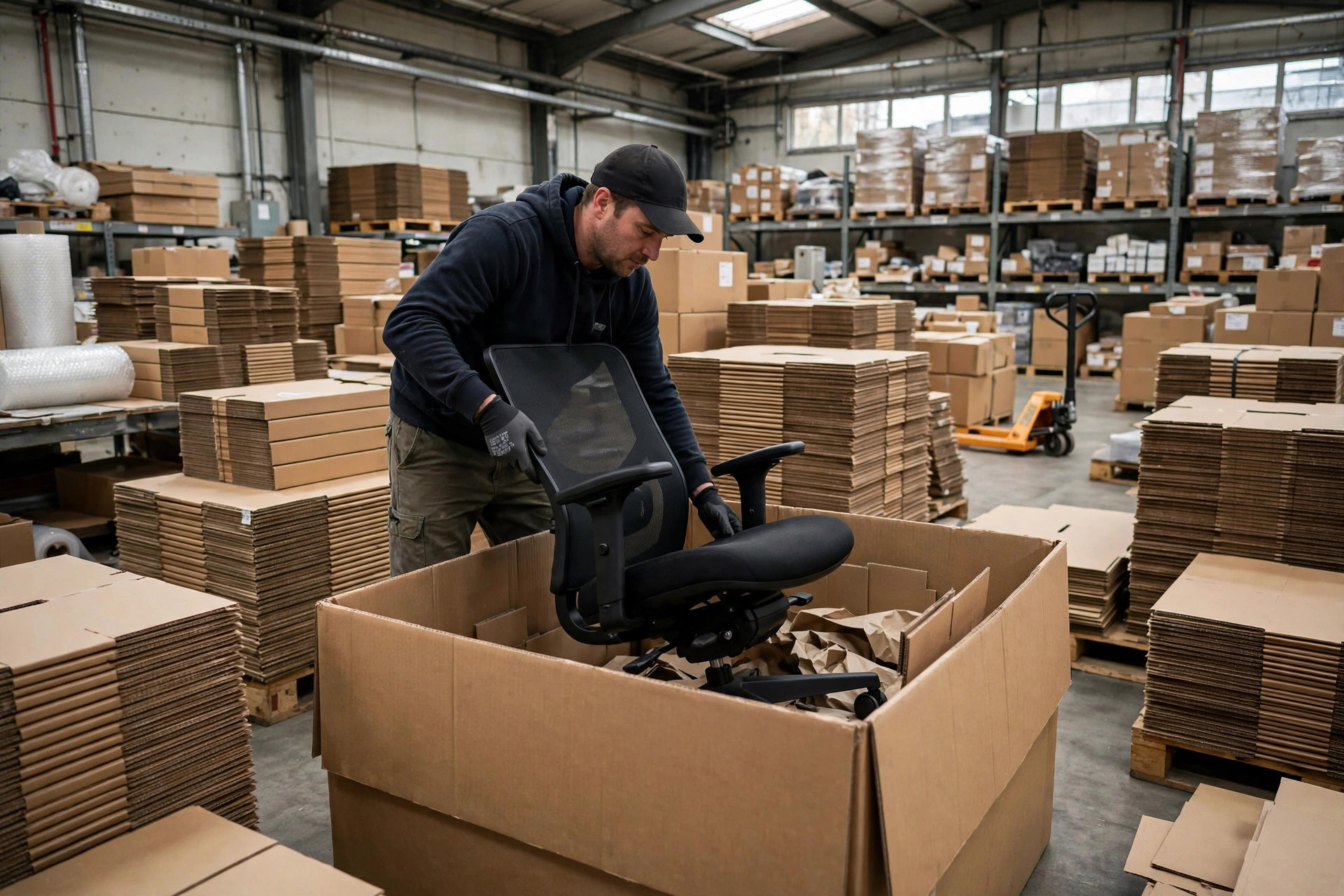
The second pit is breakage. Chips, rice cakes, wafers — a case of 24, the picker pulls single units, two bumps in transit and they arrive as crumbs. This client started at roughly 8% breakage. One photo of crumbs from the customer, and support had to reship. I ran the reship math with them: product plus freight plus labor, about $9 a parcel. On an $18 order, that eats half the margin.
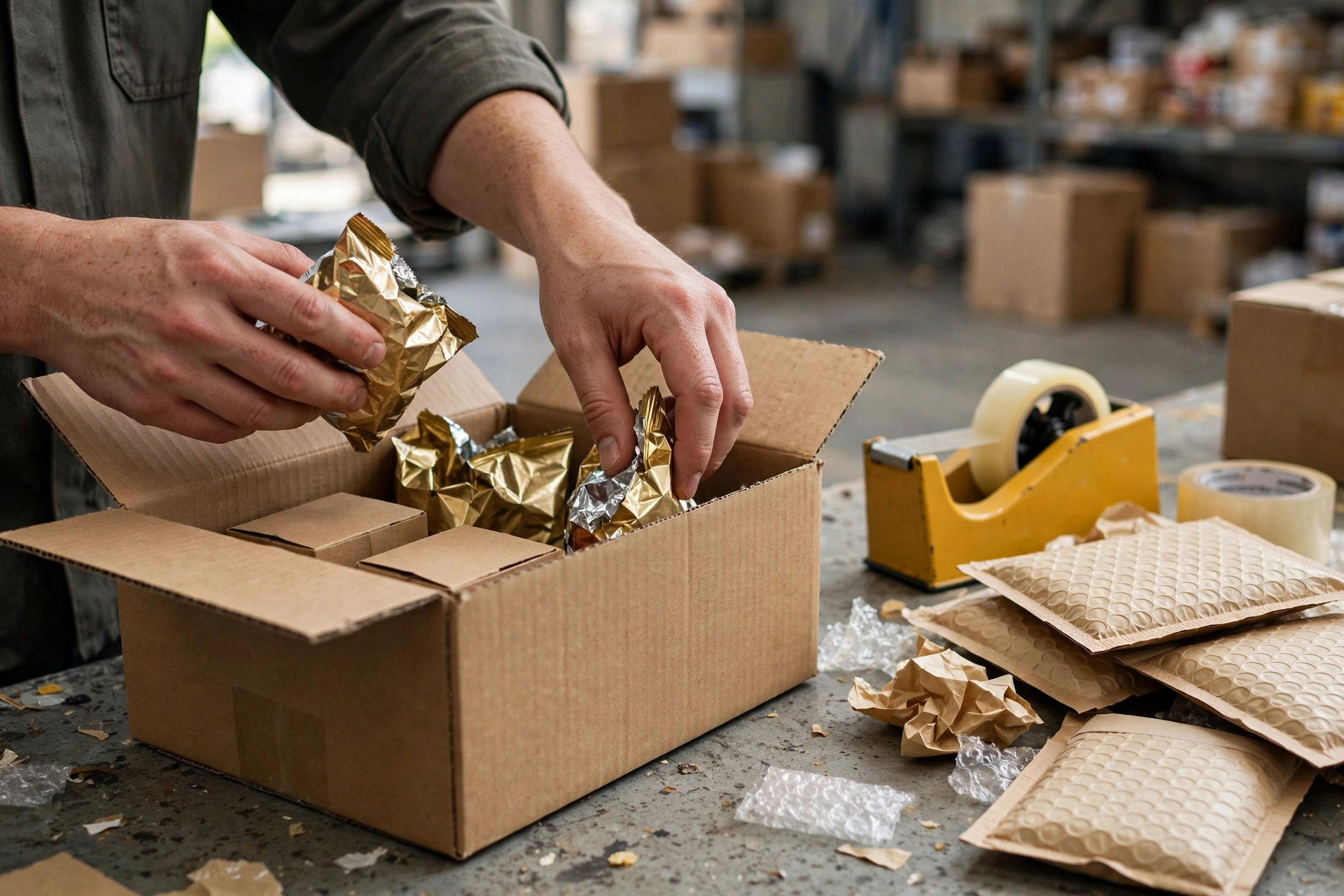
The fix was bubble sleeves and dividers for fragile items. Two sides to it: the cost is about $0.40 more packaging per parcel, packing runs about 15% slower, and peak season needs one more head. The payoff: breakage dropped from 8% to under 2%. The math on 30,000 orders a month — before: 2,400 reships times $9, or $21,600 a month. After: 600 reships is $5,400, plus $12,000 in extra packaging, for a total of $17,400. Over $4,000 saved a month. Worth it.
But here is the counterintuitive part: packaging only solves half. Below 2%, every extra dollar has thin marginal return. The remaining 2% splits evenly between the pick — how units get pulled from the case — and the carrier's sort, where parcels get thrown. Neither is fixed by packaging. That takes picker training and carrier claims negotiation. Know that, and you stop throwing money at thicker mailers.
One more line item most sellers never model: a returned snack is a scrapped snack. Opened food cannot be resold under US food safety rules — check your platform's current policy. So a return costs the full product value plus freight both ways, not just the return label. Treating 'fewer returns' as ten times more important than 'faster returns processing' is the mindset shift that matters.
After the SKU Explosion: Slotting and Picking for Snack Fulfillment
SKUs go from 80 to 400 and the pick zone stays the same size. That is how most snack sellers die. My approach is three steps.
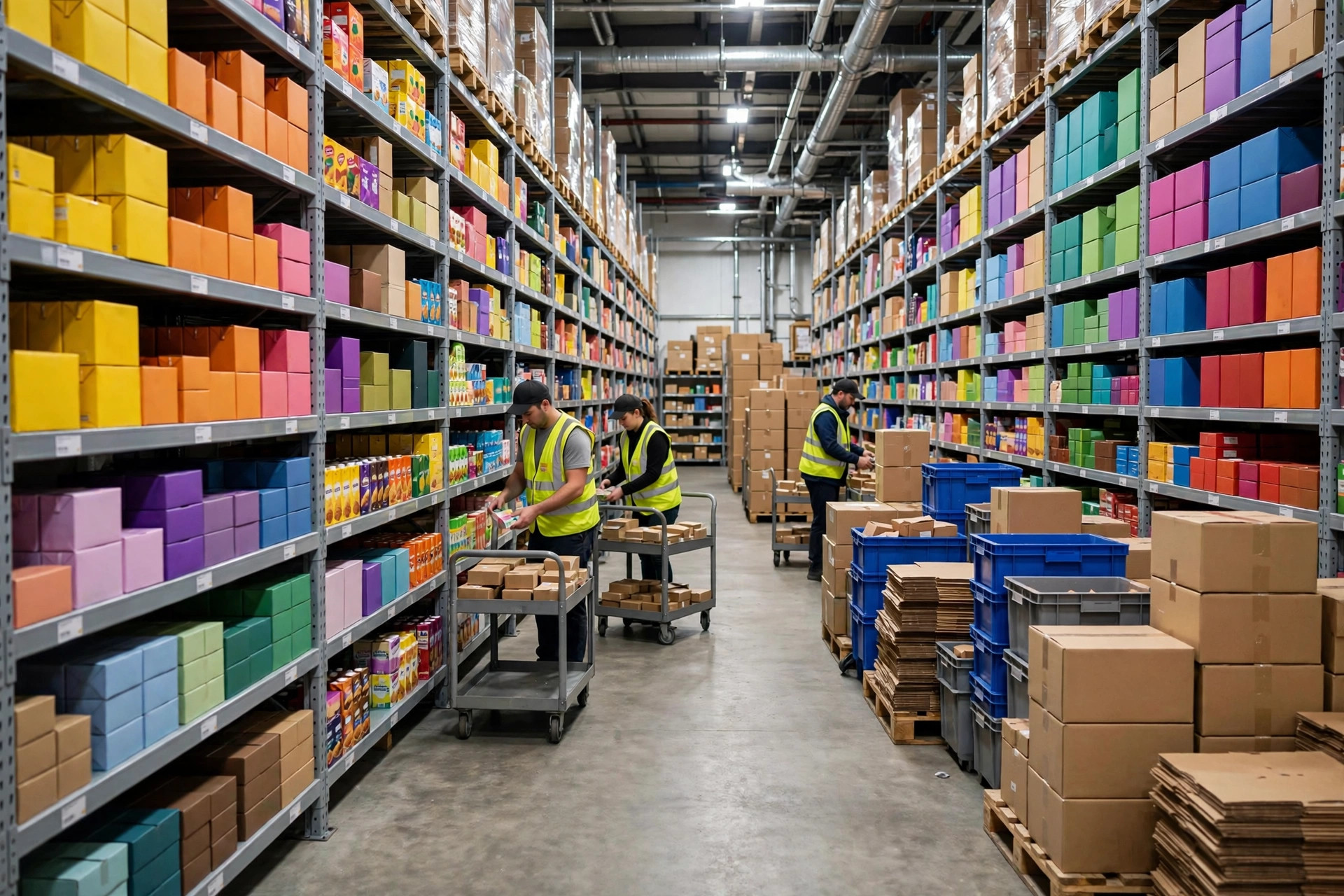
First, slot by velocity. The top 20% of SKUs drive 80% of orders — golden zone, closest to pack-out. Long-tail SKUs move to the secondary zone, or stay in full cases and get picked by the case.
Second, wave picking. Small units, huge variety — discrete order picking is suicide. Wave 20 to 30 orders at a time, the picker grabs everything for the wave in one pass, then sorts to order at the put wall. At 30,000 orders a month, that change alone cut travel distance by more than a third.
Third, tie slotting to expiry. Yellow-light SKUs move forward; red-light SKUs leave the pick zone entirely. Slots are not permanent — they follow the expiry clock.
And a word of advice: when SKUs explode, do not rush into automated sortation. Small items, wild variety, spiky volume — the ROI on conveyors and auto-sorters rarely beats manual wave picking plus expiry lights. I have seen a 50,000-order-a-month snack warehouse walk away from a $400,000 automation quote and double its pick productivity with a $60,000 racking retrofit and process redesign. Automating a messy process just makes the mess faster.
So the next time someone tells you snack e-commerce is just 'picking a little faster,' ask them one question: how much of your inventory right now has less than 60 days of shelf life left? If they cannot answer, they have not started doing the expiry math.
By Lao Mi, Supply Chain Veteran (20 yrs)