Here's my verdict up front: in auto parts e-commerce, fitment data is not an IT problem. It is a warehouse problem. If you searched for "auto parts ecommerce warehouse fulfillment challenges," this is the one that actually costs money — because every bad fitment record gets paid for twice: once when it ships, and again when it comes back.
So let me say it plainly: you don't win by handling returns faster. You win by not shipping the wrong part in the first place.
I watched the same brake pads ship wrong three times
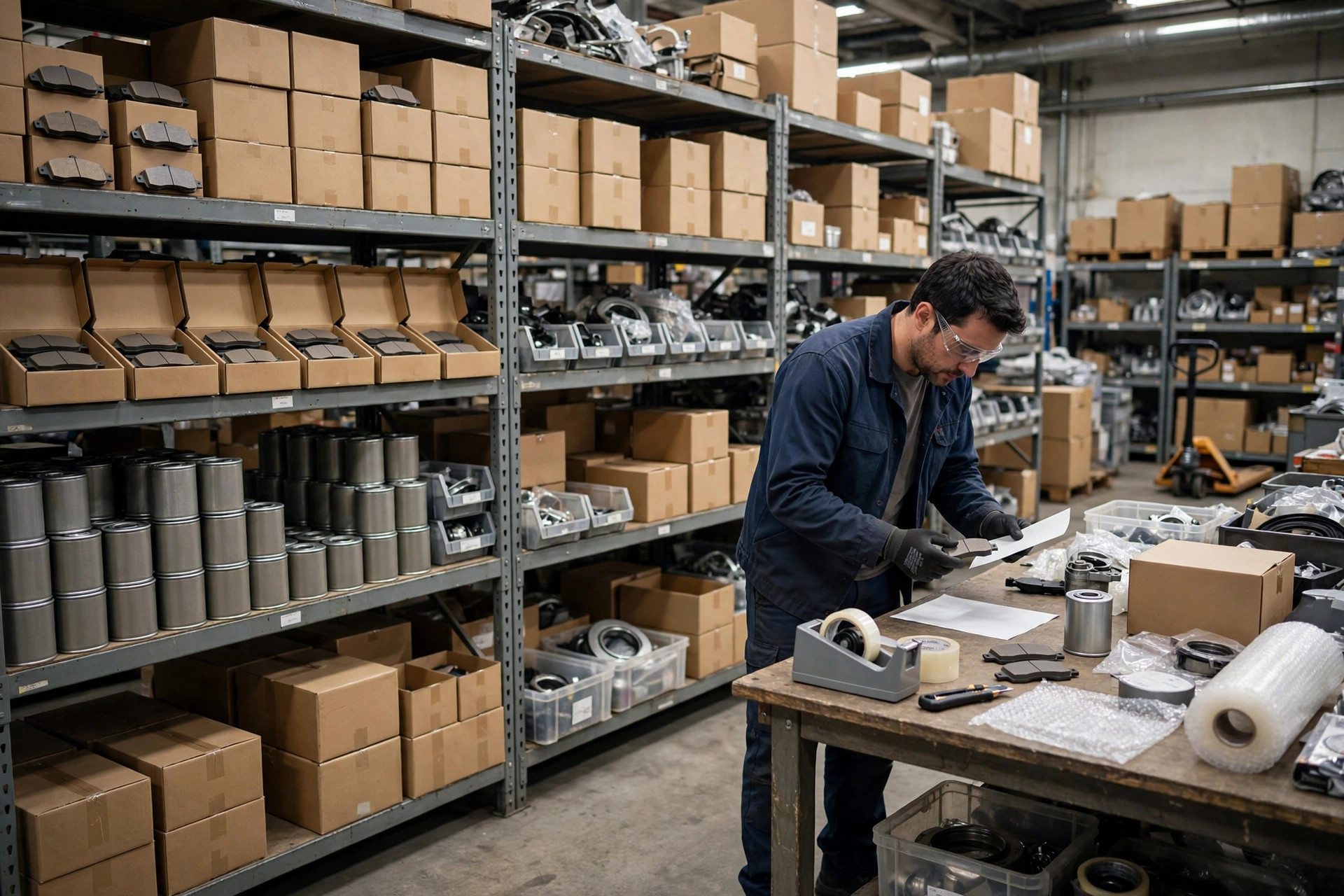
A few years ago I walked into an auto parts e-commerce warehouse in Ontario, California to do a diagnostic. The returns area told the whole story before anyone opened their mouth. Brake pads were the worst pile on the floor. Same vehicle model, three engine configurations, two model-year refreshes. The pads looked identical on the shelf. Two millimeters difference on the backing plate — and the customer couldn't bolt them on, so they came back.
The warehouse crew kept telling me: "Our pickers pick exactly what the order says." They were right. The order was wrong. A customer picks year-make-model on the storefront, the system says "this fits," but the record only covers the 2.0T, not the 2.4L. The picker ships a correct pick of an incorrect order.
This isn't one warehouse's bad luck. Online auto parts returns run close to 30%, with incorrect vehicle fit as the leading reason (Overnight Glasses, 2026). Another 2026 industry figure puts auto parts returns at 19.4%, with roughly 86% of them traced to inaccurate fitment information (ServeRetail). One bad record in the catalog, and the whole warehouse runs in circles paying for it.
Why auto parts ecommerce warehouse fulfillment challenges start before the pick
There are two sides to this. The storefront's fitment data is the source; the packing bench is the gate. You probably can't fix the source — that belongs to the product team and the suppliers' data feeds. But the gate is yours. Guard it.
My approach is low-tech, and it works: add a fitment verification step at the packing bench. Not every order — volumes are too high for that. Three categories:
- Start with your highest-return categories. Brakes, suspension, rotating electrical — the usual suspects. Get those under control first.
- Flag SKUs that fit multiple configurations of the same vehicle, and have the system prompt the packer to confirm the configuration code. One letter off, and the order doesn't leave.
- New SKUs get 100% verification for the first two weeks. Don't let fresh data cause trouble before it's proven itself.
Let me be clear: the verification step is not about distrusting your pickers. It's about distrusting the data. Your pickers follow the ticket. Nobody ever checks what's behind the ticket.
A published distributor case shows what that gate is worth: 68,000 SKUs, and wrong-part returns hitting 6.2% of online orders — three times the rate of phone and catalog orders for the same SKUs. The audit found 41% of SKUs had incomplete fitment records: missing engine configurations, stale model-year coverage, missing submodel exclusions. Sixteen weeks of data remediation cost about $38,000. Wrong-part returns dropped to 1.4%. And before the fix, returns and customer service were burning roughly $212,000 a year. Even I can't argue with that math.
Which SKUs get the verification treatment? I keep it simple: every month, rank your SKUs by return rate times monthly order volume, and start from the top. High return rate with tiny volume costs you little. Medium return rate with huge volume is where the real money burns. A framework nobody follows is worse than no framework.
Returns triage: three steps, and never let a test-fitted part back into sellable stock
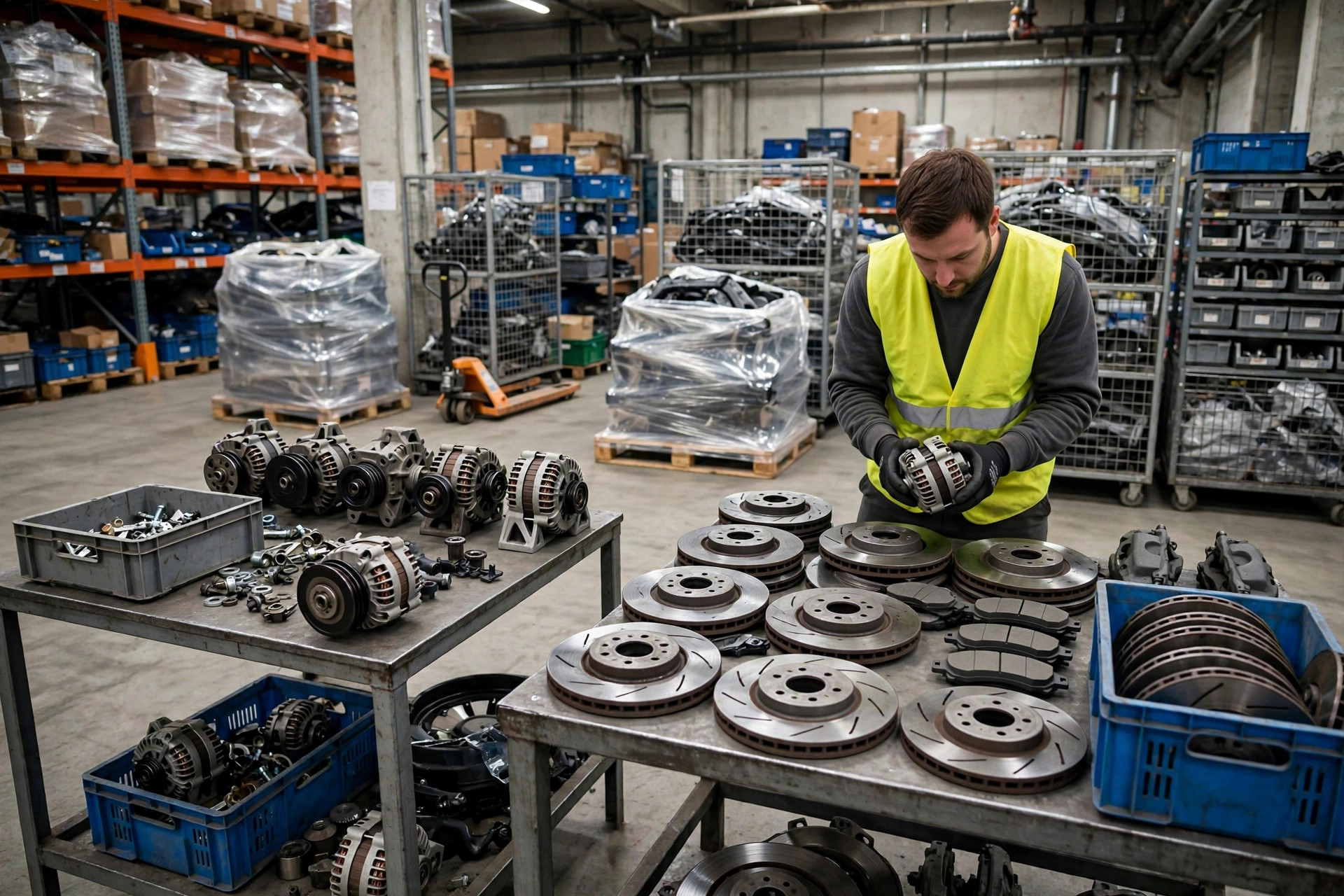
When parts come back, do not restock them straight away. Auto parts returns have a trap that other categories don't: the test fit. A customer bolts an alternator on, it doesn't fix the problem, they take it off and send it back. The box is open, the surface is scratched — you can barely see it, but it's not a new part anymore. Rotating electrical is the worst category in the industry, with return rates running close to 50% in some channel data. Test-fitting is one of the main killers.
My returns triage rule is three steps:
- Read the return reason first. Wrong-fit returns usually mean the part itself is fine — inspect it and put it back in sellable stock. Test-fitted parts go in a separate pile.
- Check the packaging and the surface. Opened box, installation marks — it never goes back to sellable inventory. Clearance or scrap. Don't risk the next order's reputation to save one unit's cost.
- Log the data. Every returned SKU and its reason goes into the log, reviewed monthly: whichever SKU has the highest return rate gets its fitment data fixed first. That's the real value of returns triage — it's not a cost center, it's a health report for your fitment data.
And here's the trade-off nobody wants to talk about: refusing returns. Industry research estimates roughly 16% of automotive return requests get refused by retailers, mostly parts that show signs of installation. Refusing saves you money — but the bad reviews and the customer service calls come back to find you. Your refusal rate is a mirror. It reflects how bad your storefront data is. The worse the data, the more you refuse; the more you refuse, the worse your reputation. It's a loop, and the only exit is at the source.
The math on auto parts ecommerce warehouse fulfillment challenges
Most people calculate return cost as freight. The real cost of one mispick looks like this:
| Cost item | What it really is |
|---|---|
| Outbound freight | Spent. Gone. |
| Return freight | You pay it or the customer pays it — either way, it's your cost |
| Triage labor | An hour at the returns bench costs far more than an hour at the packing bench |
| Reship freight and lost time | The customer waits twice; the review risk doubles |
| Test-fitted depreciation | An opened part sells at clearance or gets scrapped |
Now compare: a verification step at the packing bench costs you a few dozen seconds per order. One mispick costs you all five rows above. I have watched too many warehouses spend their money on "faster returns processing" — more people at the triage bench, slicker RMA workflows, all very impressive. Two sides to that: faster returns processing only makes the mistake cheaper. Preventing the mistake is what actually saves money. Counterintuitive? The battlefield of returns management isn't the returns bench. It's the moment the order is placed and the second the box gets packed.
So winning these auto parts ecommerce warehouse fulfillment challenges has nothing to do with how fast you process returns. It's about how many mistakes never leave the building. My one piece of advice: next time your return rate keeps you up at night, don't start at the returns bench. Start with your fitment data and the verification step at your packing bench. The warehouse can't fix bad data. But the warehouse decides whether the bad data gets to leave.
By Lao Mi, Supply Chain Veteran (20 yrs)