It was 5:50 in the morning, the week before Black Friday, and I was running the pre-shift meeting at our 120,000-square-foot building in Ontario when Zhao tore into me in front of everybody — all because of a fight over wave picking vs zone picking vs batch picking, the three picking methods our building has tried over the last five years.
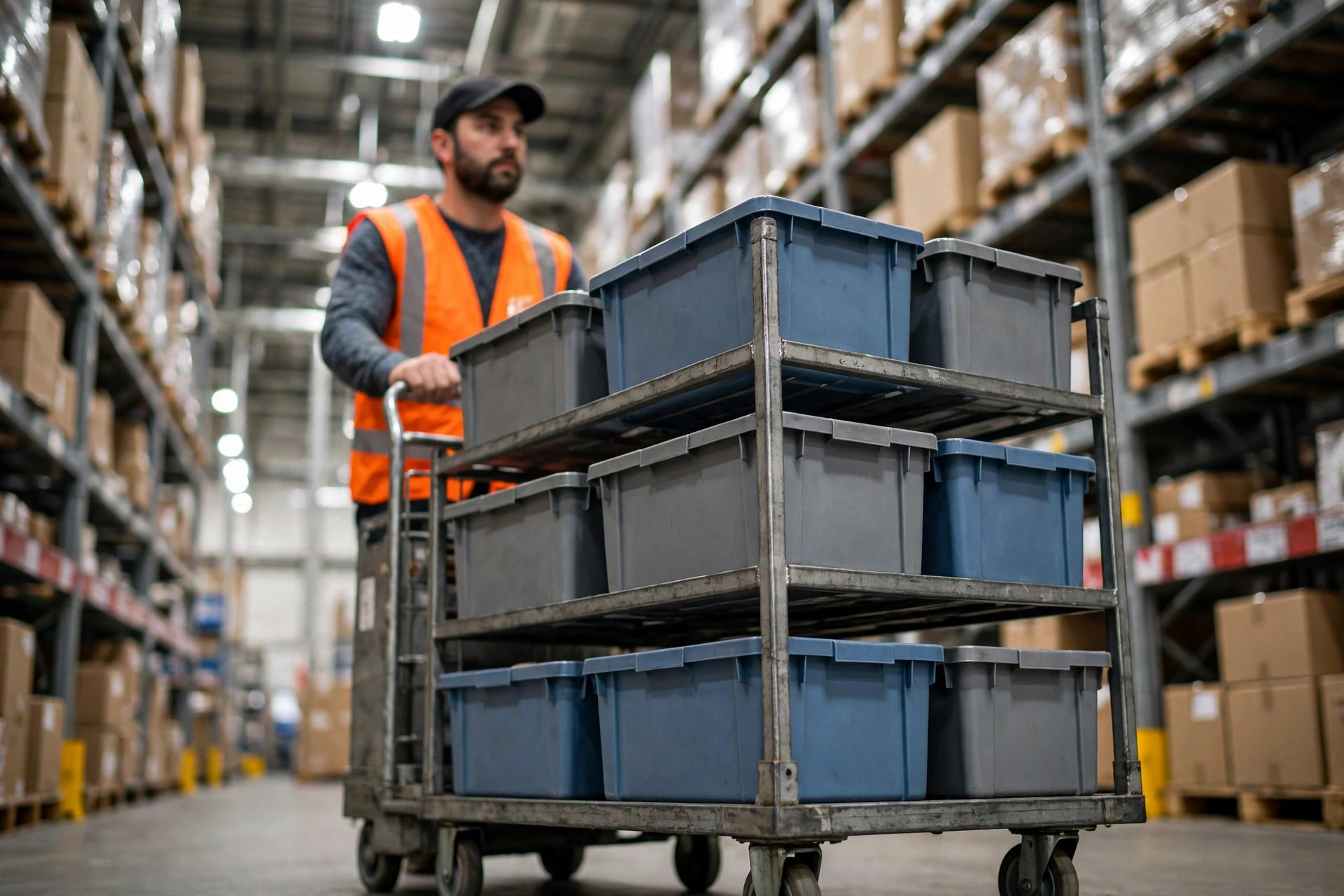
Zhao has worked for me for eight years. He's my picking lead, and he usually has my back. That morning he held up a wave pick list — 120 order lines — with four totes stuffed full on his cart, and pointed at the consolidation area, where freight was spilling into the aisle. "Boss," he said, in front of forty people, "your wave picking is faster, sure. But freight sits at the QC bench for two hours. You call that fast?"
I'll be honest: I lost face. But he was right. Each method cost us tuition — here's the bill, so you don't pay it twice.
How we got forced into changing methods
We started with the dumbest method there is: discrete picking. One person, one order, one cart, walk it back when you're done. At 3,000 orders a day, it worked fine. In 2021 we hit 7,000, and discrete picking fell apart — pickers were logging over 20,000 steps a day on their pedometers, and at 10 PM we still had 300-plus orders unshipped, with drivers honking at the dock and my crew running on fumes inside.
That winter I ran the numbers: under discrete picking, most of a picker's shift goes to walking, not picking. Walking creates no value, but the paycheck goes out anyway. Once you see that, switching isn't a choice — it's survival.
Wave picking: our first faceplant
We tried wave picking first. The logic was clean: batch two hours of orders into a wave, release it all at once, everybody picks at the same time, freight rides the conveyor to consolidation, orders get married up and ship complete.
Pick speed went up. The problem was at the consolidation bench.
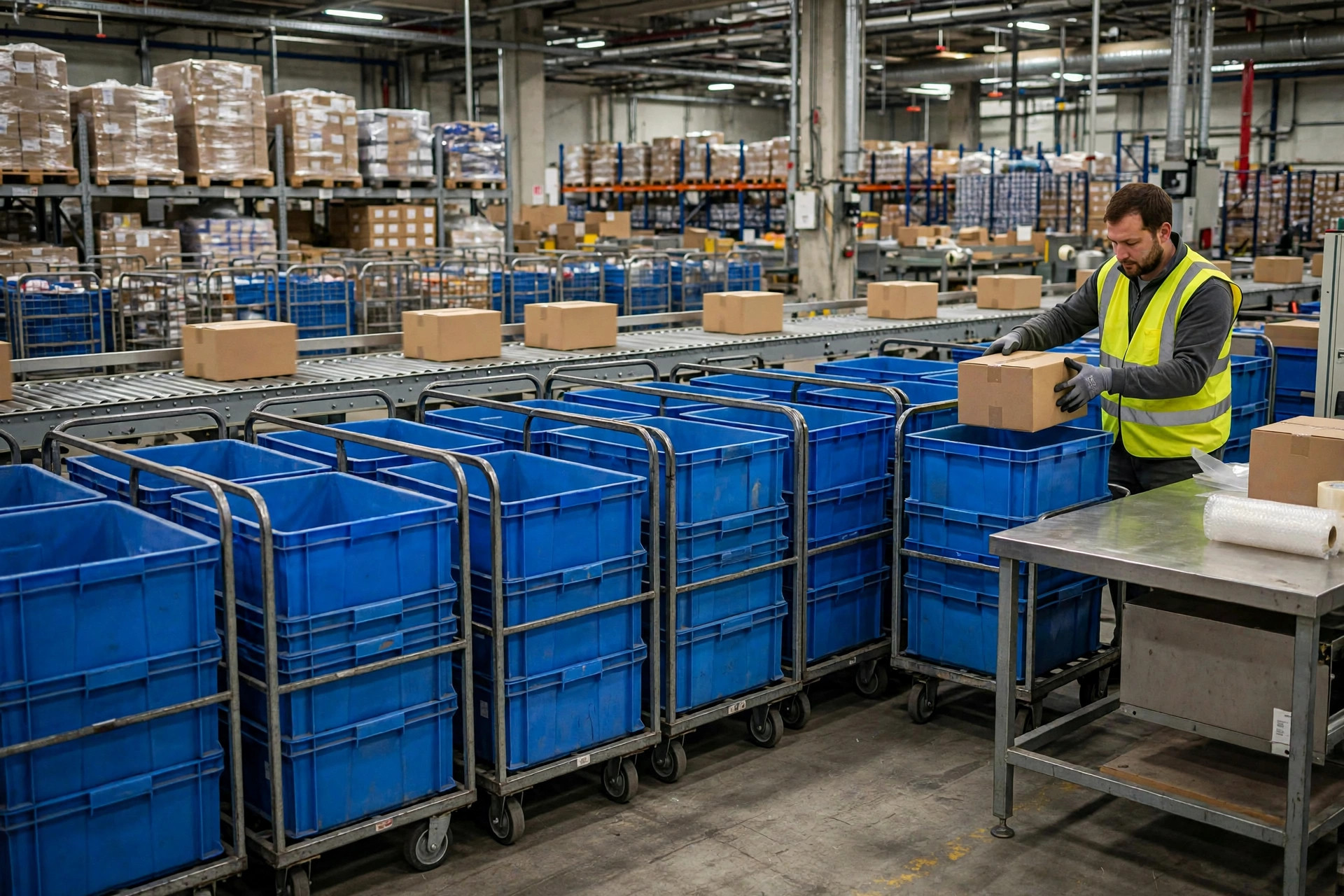
Here's the nasty thing about waves: freight hits consolidation all at once. A 400-order wave gets picked in 40 minutes — then three people at the bench face 400 orders of merge, sort, and check. At our worst, the consolidation area took two full days to clear. Customers complained; the CSRs' phones melted.
I'll be honest: the biggest trap in wave picking isn't picking. It's consolidation and QC. Adding ten pickers is easy. Adding ten people at the bench means more floor space, more sort slots, more system capacity — a completely different cost curve.
Our rule now: wave picking fits B2B orders with lots of lines (five-plus on average) where the customer wants the whole order shipped complete. And staff the bench at 1.5x your pick headcount — we ran 1:1, and that was a bloody lesson. 1.5 is the floor. Set wave size by what consolidation can digest, not by pick speed.
Zone picking: new hires productive in two days, but the hot zone burns people out
After wave blew up on us, we tried zone picking. Split the building into zones A, B, and C by aisle. Each person owns one zone. Totes get passed zone to zone, and everything lands at pack-out.
The best thing about zones is people management. Veterans train rookies, and a rookie only has to learn one zone's locations. Training went from a week to two days. Temp labor walks in during peak and they're productive almost immediately. Of the three methods, zone wins on training, no contest.
But zones have a dark side: the workload never balances. All our hot SKUs sat in Zone A. The Zone A crew worked till 9 PM every night while the Zone C crew ran out of work at 4 and scrolled their phones. Same pay, wildly different effort — morale dropped faster than our order volume. One month we lost two people out of Zone A. They didn't quit the company; they quit being tired.
Now we redraw zone boundaries every quarter based on SKU velocity, keeping the three zones roughly equal. You can't draw the lines once and walk away — SKU heat moves, and if the boundaries don't move, the people do (out the door).
Zone picking fits: big buildings, long aisles, spread-out SKUs, high turnover. Bluntly — the harder it is to hire, the more zone picking shines.
Batch picking: a rocket for small orders, but the sort is the choke point
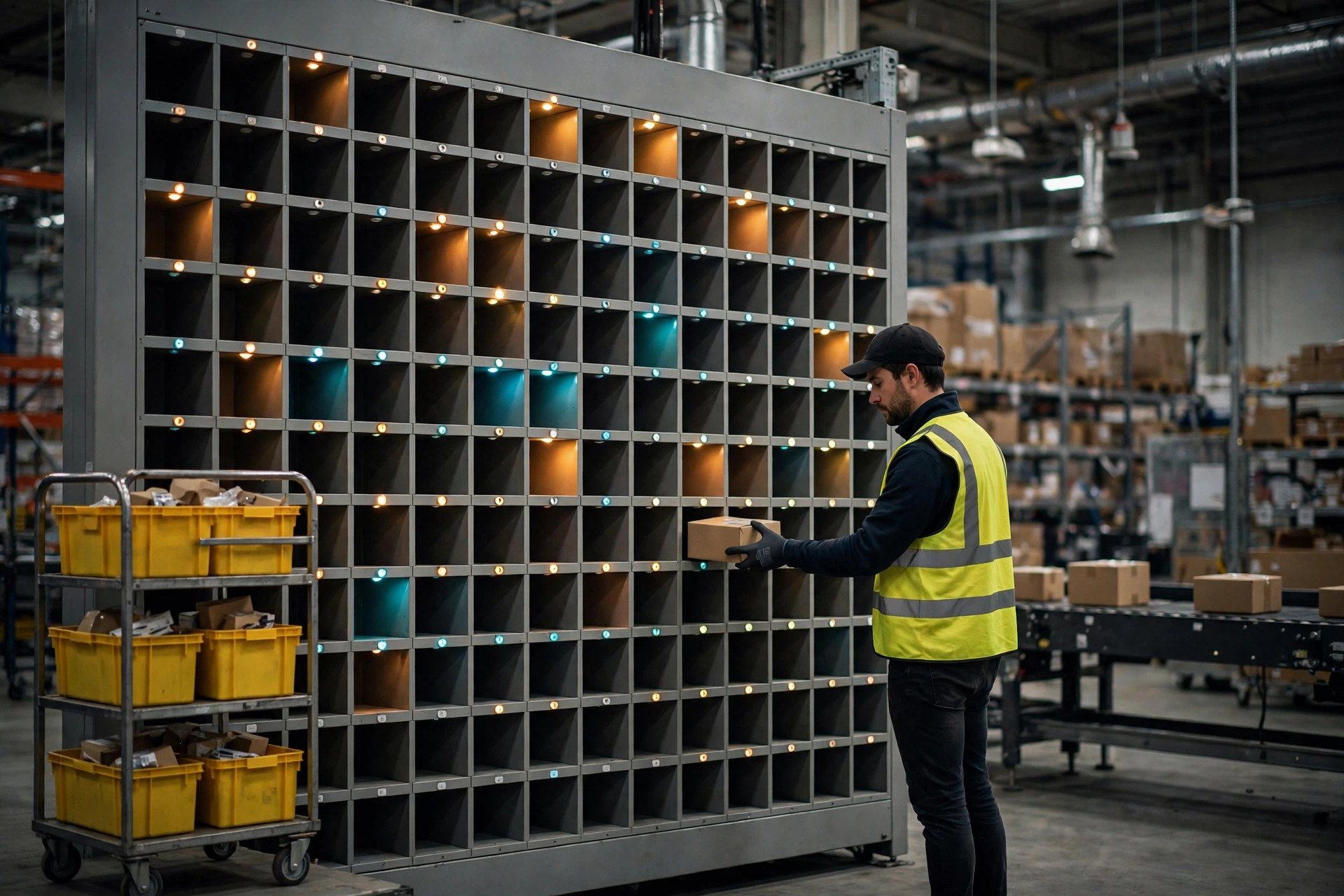
Third: batch picking. Release 30 small single-line orders at a time (one or two lines each), pick them all on one cart run, then sort them order-by-order at the put wall.
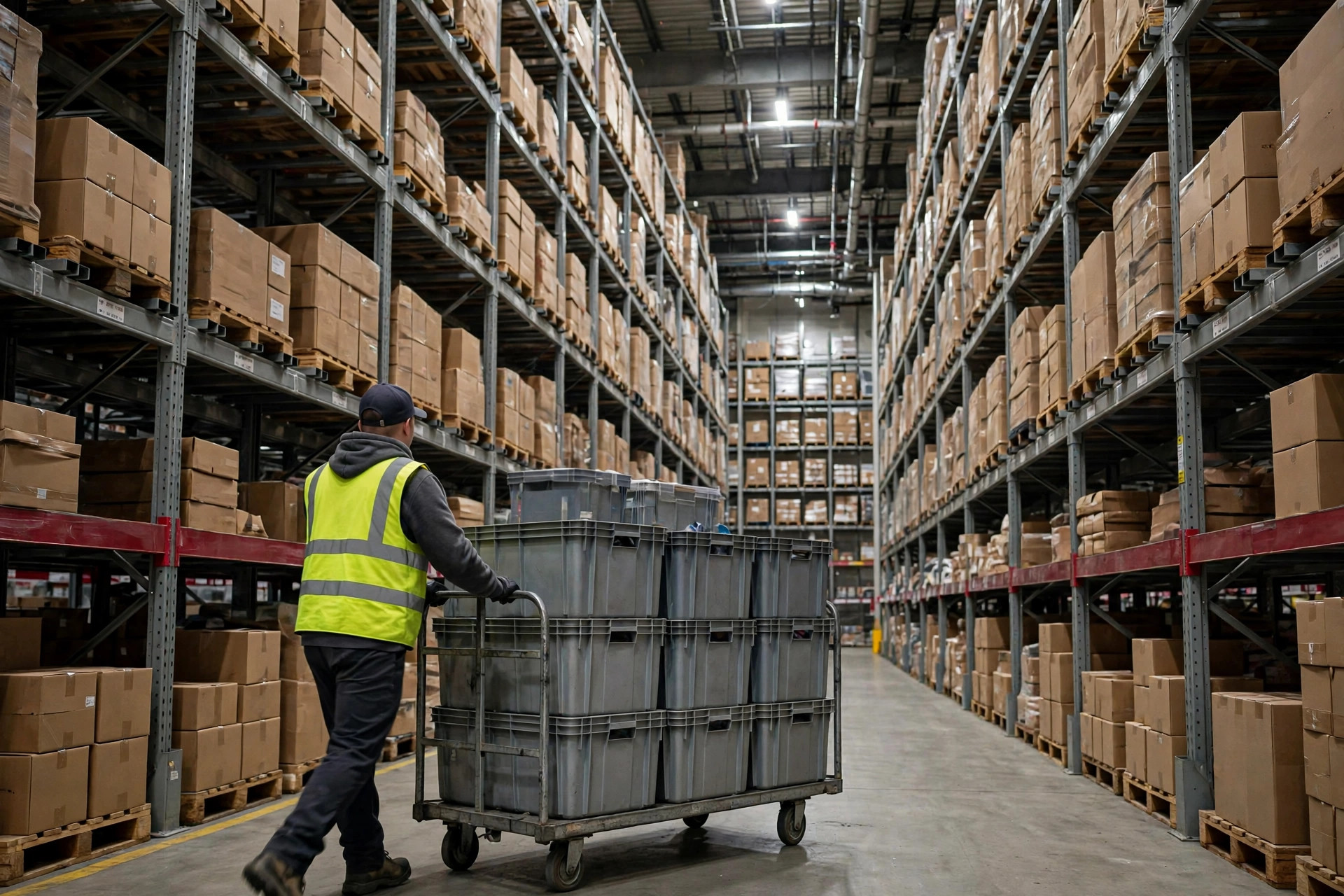
For small e-commerce orders, this thing is magic. We measured it: same crew, switching from discrete to batch, throughput went up roughly 30% — because one cart run covers 30 orders, and the walking gets spread thin.
But batch lives or dies at the sort: short on put-wall slots, one wrong light, one wrong label — mis-sorts climb fast. One peak we got greedy, pushing batch size from 30 to 50. Mis-sorts multiplied; customer service spent a month on returns. After that we made it a hard rule: batch size is set by put-wall slots and sort capacity, not by how much the cart can hold.
Batch fits: lots of small single-line orders, concentrated SKUs — the classic e-commerce profile. Once orders get line-heavy, batch falls apart — 50 orders at eight lines each, and the sort will drive people insane.
Match the method to your order profile
When people argue wave picking vs zone picking vs batch picking, I say the same thing: stop arguing, pull the data. Take three months of orders and look at two numbers:
- Average lines per order?
- What share of outbound volume comes from your top 20% of SKUs?
Those two numbers basically decide which method you deserve:
| Order profile | First choice | Why |
|---|---|---|
| Lots of small single-line orders (1–2 lines avg), concentrated SKUs | Batch picking | One trip, many orders; walking spread thin; simple sort |
| Multi-line orders (5+ lines avg), must ship complete | Wave picking | Wave-level completeness, one consolidation pass |
| Big building, long aisles, spread SKUs, high turnover | Zone picking | One zone to learn, fast training, easy supervision |
| Hot SKUs heavily concentrated (top 20% = 70%+ of volume) | Zone + batch hybrid | Hot zone runs batch; slow zones run zone or wave |
Head-to-head, from our own building (order of magnitude — verify against your own numbers):
| Wave picking | Zone picking | Batch picking | |
|---|---|---|---|
| Walking per picker | Medium (routed by wave) | Low (one zone only) | Lowest (many orders per trip) |
| Time to train a rookie | Slow (must learn whole building) | Fast (one zone) | Medium (must learn the sort) |
| Consolidation complexity | High (the bench is the bottleneck) | Medium (zone handoffs) | Medium (the sort is the bottleneck) |
| Morale risk | Bench crew gets crushed | Hot zone burns out, cold zone idles | Mis-sorts mean angry customers |
| What kills it | Understaffed consolidation | Boundaries never redrawn | Greedy batch sizes |
What we run now: a hybrid
I'll be honest — I've rarely seen a building thrive on one pure method. Here's our current setup:
Hot SKUs get their own "speed zone" — concentrated SKUs, low line counts, running batch picking at full throttle. Slow-moving SKUs run zone plus wave: zones for people management (one zone per person), waves for rhythm (a wave every two hours, shipping complete).
Every morning I look at yesterday's numbers to set today's wave size: whatever time consolidation cleared yesterday is the capacity I plan around today. How fast picking goes doesn't matter. What time the bench clears — that's the number that matters. That's the scar tissue from Zhao calling me out, and now it's house law.
Three reminders for fellow operators
First, don't ask "which picking method is best." Pull the data first. Average lines per order, SKU concentration — without those two numbers, any choice is a guess.
Second, before you launch wave picking, staff and space the consolidation bench first. Pick-to-bench at 1:1.5 is the floor. Below that, the faster the wave, the faster you die.
Third, zone boundaries aren't set-and-forget. SKU heat moves; boundaries have to move with it. Otherwise the busy zone burns out, the quiet zone idles, and eventually everybody walks.
There's no silver bullet in picking — only "what fits right now." Volume and SKU mix change; the method has to change with them. We've switched three times in five years, and we'll probably switch again.
By Chen Feng, Warehouse Operations Manager