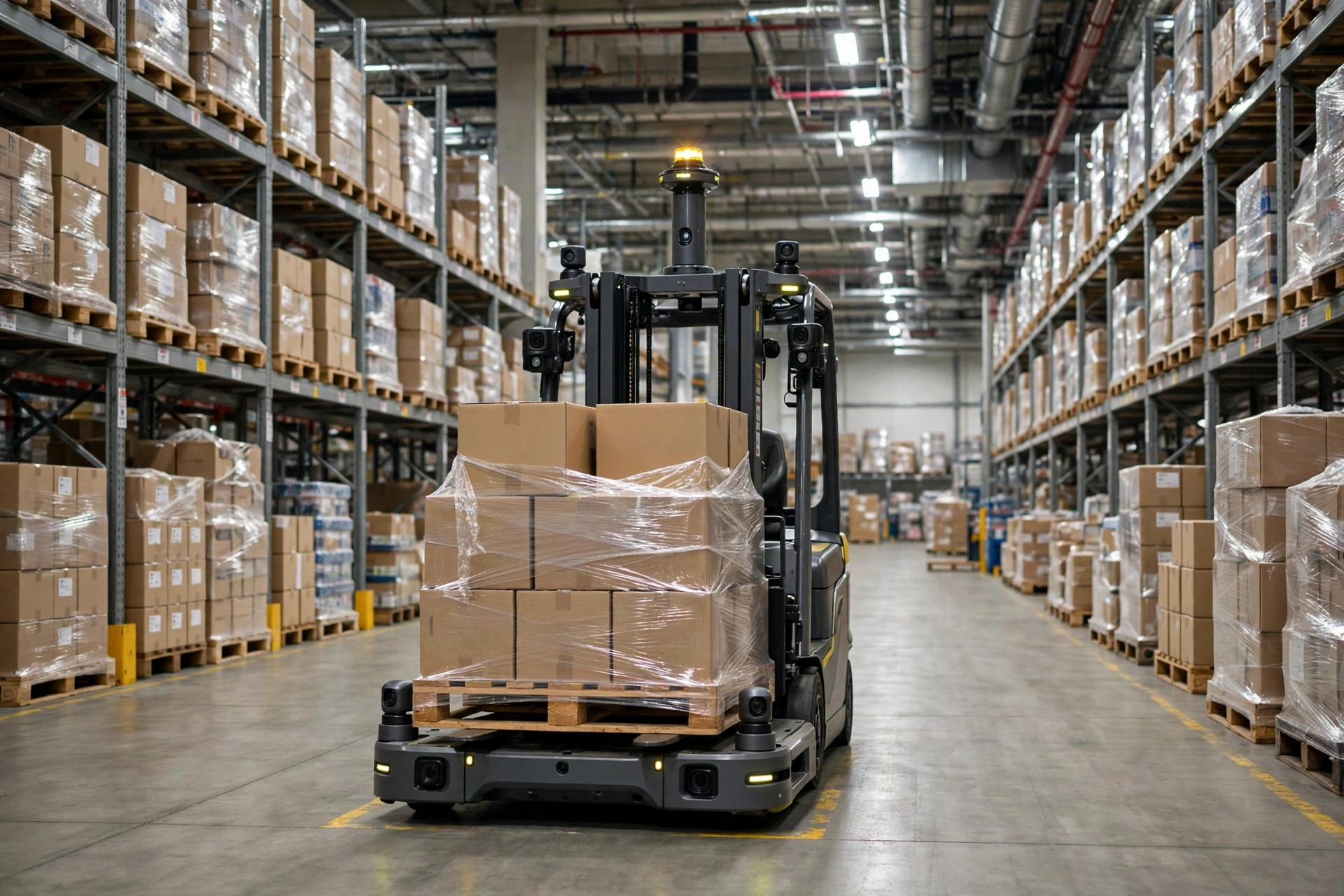
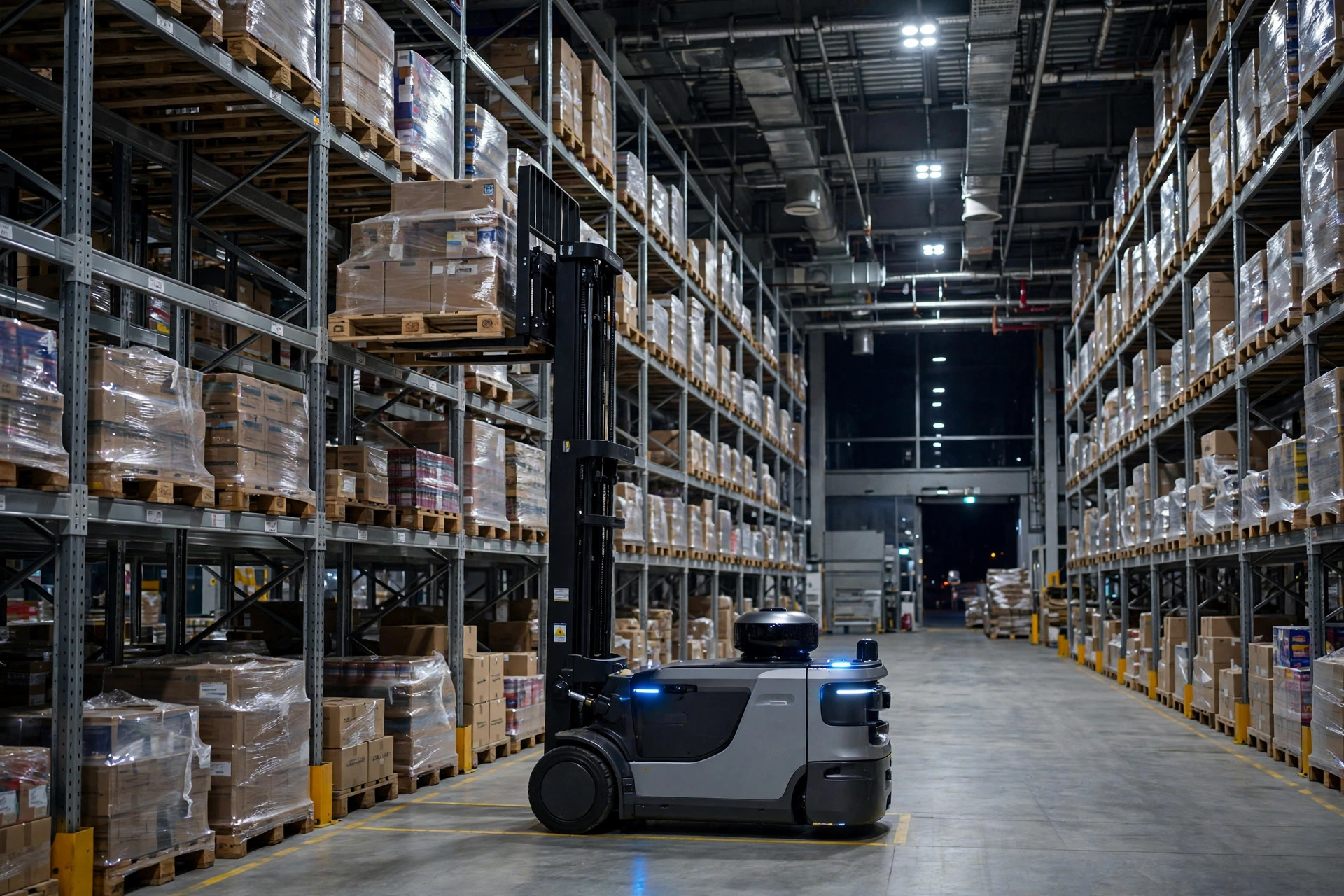
Let me tell you something. I have been driving trucks for fifteen years, and I have spent more nights than I can count waiting at warehouse gates in the Inland Empire. One night, around two in the morning, I was parked outside a warehouse near Fontana, waiting for a dock door, when I saw an autonomous forklift roll down the aisle by itself, pick up a pallet, and carry it away. No driver. No one walking alongside it. Just a machine, doing its run, while the whole building was nearly empty.
I sat there in my cab and watched it make three trips. Smooth, steady, no wasted motion. And my first thought was not about technology. It was: that thing does not get tired, and it does not get bored. My second thought was: it also does not improvise.
That night stuck with me, because both thoughts turned out to be true. An autonomous forklift can be a beautiful thing in the right warehouse, and a headache in the wrong one. The trick is knowing which warehouse you are.
Where an Autonomous Forklift Earns Its Keep
The first warehouse I saw one working in ran a simple, punishing routine. Every night, the same pallets came off the same inbound lane, went to the same racking, and came back out in the same order. A night crew of a few people kept it going, and the forklift ran the fixed route between receiving and storage, trip after trip. That is the sweet spot: fixed routes, repetitive moves, and work that has to happen when humans least want to do it.
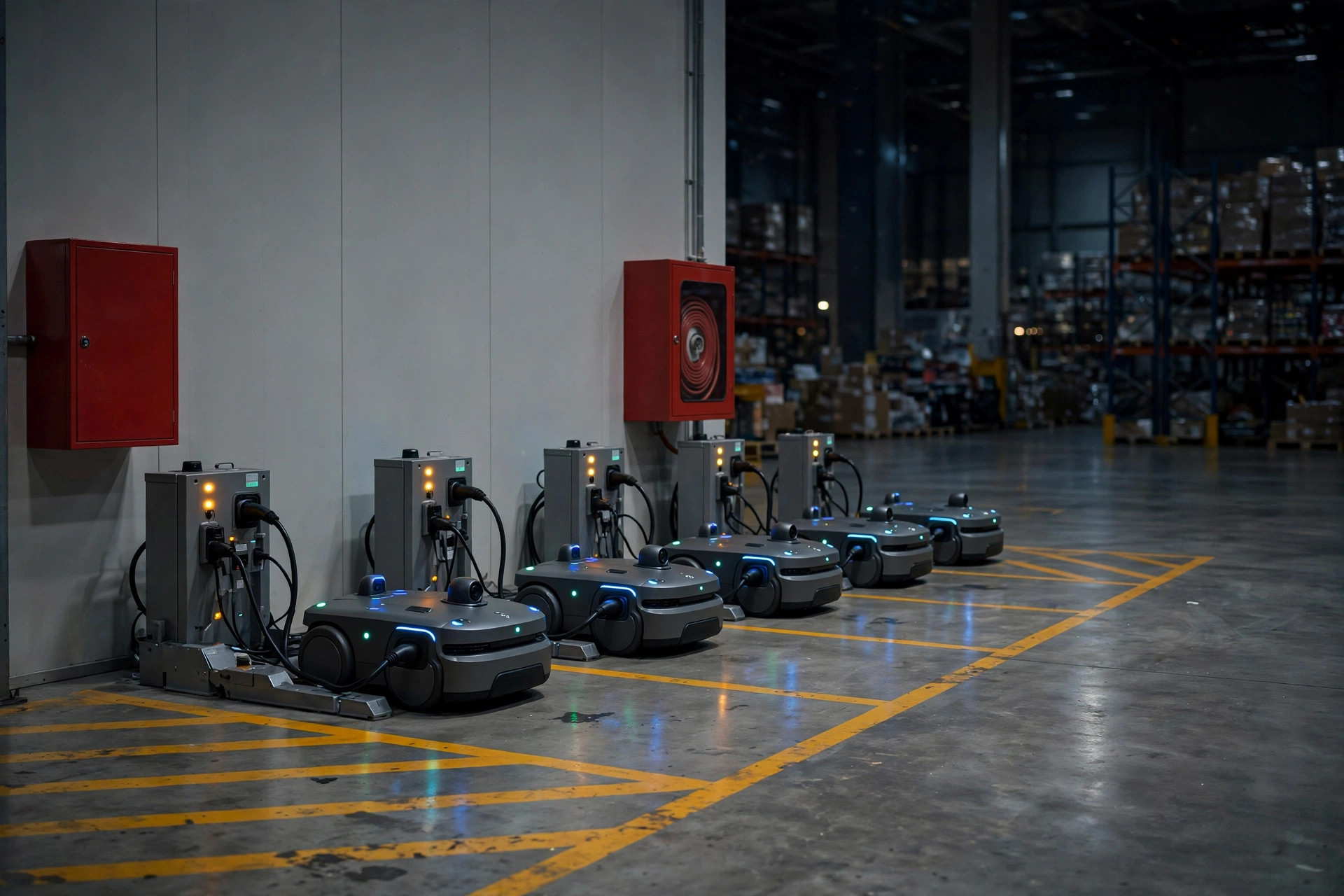
Night shifts are the clearest case. A warehouse that receives late and ships early has a gap in the middle of the night where pallets still need moving. An autonomous forklift does not care that it is three in the morning. It does not need a break, and it does not call in sick. Long, straight runs between two points are another good fit, especially when the pallets are uniform and the floor is clean and level.
The other place it shines is the boring, high-volume shuttle: moving full pallets from a staging lane to a rack, or empties back the other way, hundreds of times a week. The work is identical every time, and identical is exactly what a machine is good at.
Where You Should Not Touch an Autonomous Forklift
Now the other side. A few months after that night in Fontana, I was picking up at a different warehouse, a cramped building with narrow aisles, people on foot everywhere, and pallets stacked in whatever shape the day had produced. Someone there told me they were thinking about going driverless. I told them to hold off.
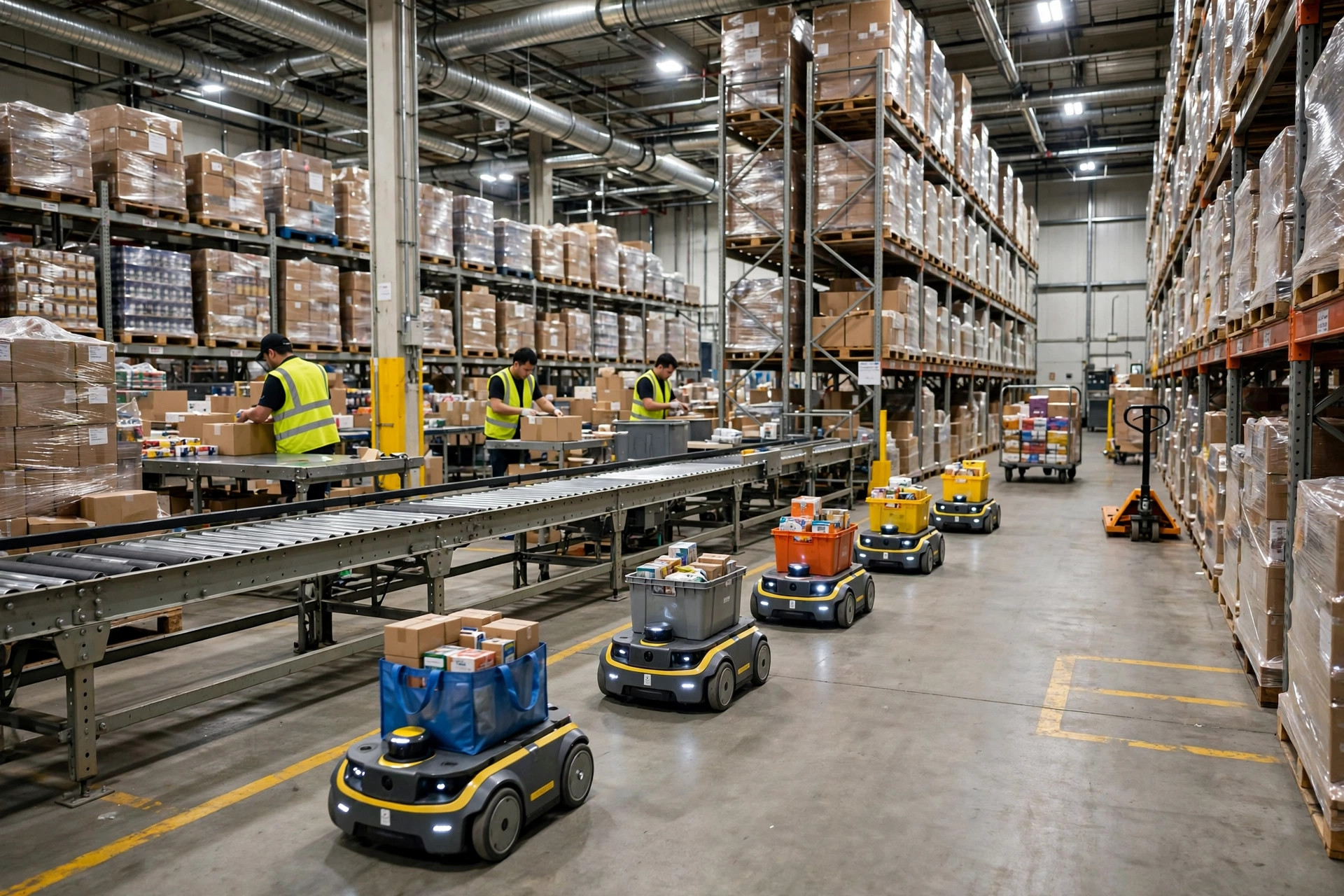
Mixed traffic is the first problem. A driverless forklift sharing a tight aisle with people on foot, hand jacks, and drivers backing up is a different animal from one running an empty lane at night. It can stop, sure, but every stop slows the whole building down, and every near miss costs you trust. Cargo that is odd-shaped, leaning, damaged, or stacked differently every time is the second problem. A machine expects the pallet to look the way it looked yesterday. A human driver takes one look at a leaning load and knows to slow down or rewrap it.
The third problem is the messy dock. Live loading, partial pallets, last-minute changes, a driver who needs a pallet swapped right now: that is the world I live in, and it is all improvisation. A driverless forklift does not improvise. In a building where the plan changes every hour, that is a real limitation.
| Situation | Driverless forklift | Human driver |
|---|---|---|
| Fixed route, uniform pallets | Excellent: steady, tireless | Fine, but bored and costly on nights |
| Night shift shuttle | Excellent: runs while the building sleeps | Hard to staff, overtime adds up |
| Mixed aisles, people on foot | Risky: stops often, trust drops | Better: reads the room |
| Odd-shaped or damaged loads | Poor: expects a standard pallet | Better: adapts on the spot |
| Constant last-minute changes | Poor: follows the plan, not the day | Better: improvises |
Here is the counterintuitive part, and I say this as a man who has watched machines take work people used to do: the cheapest forklift is not always the one with no driver. A driverless truck still needs a clean floor, clear lanes, marked zones, reliable wireless coverage, and someone who maintains it and manages the exceptions. If your floor is cracked, your lanes are blocked, and your pallets come in ten different shapes, the machine will spend more time stopped than moving, and you will have paid good money to go slower.
Before a warehouse buys one, I would tell the owner to walk the building and answer five questions honestly. Are the routes fixed and repeatable? Are the pallets uniform? Can you separate the machine's lanes from foot traffic? Is the floor flat and the Wi-Fi solid? And who handles it when the machine stops and waits for help? If any answer is no, fix that first. The machine is the last step, not the first.
Safety is part of the same conversation. People and driverless trucks can share a building, but only if the building is set up for it: clear pedestrian paths, crossings, speed zones, and rules everyone actually follows. A machine that stops for every person in its path is safe and useless. A building that pretends the machine is not there is dangerous. The middle ground takes planning.
So here is my advice, from fifteen years of backing into docks at all hours. If your warehouse runs the same pallets down the same lanes all night, a driverless forklift will quietly make you money. If your warehouse is a daily scramble of mixed loads and mixed traffic, keep your drivers. Machines are honest workers, but they only do what the floor lets them do.
There is an old saying: sharpen the axe before you chop the wood. Get the floor, the lanes, and the pallet discipline right first. Then, if the job still fits, let the machine run.
By Shifu Zhao, Trucking Veteran (15 yrs)