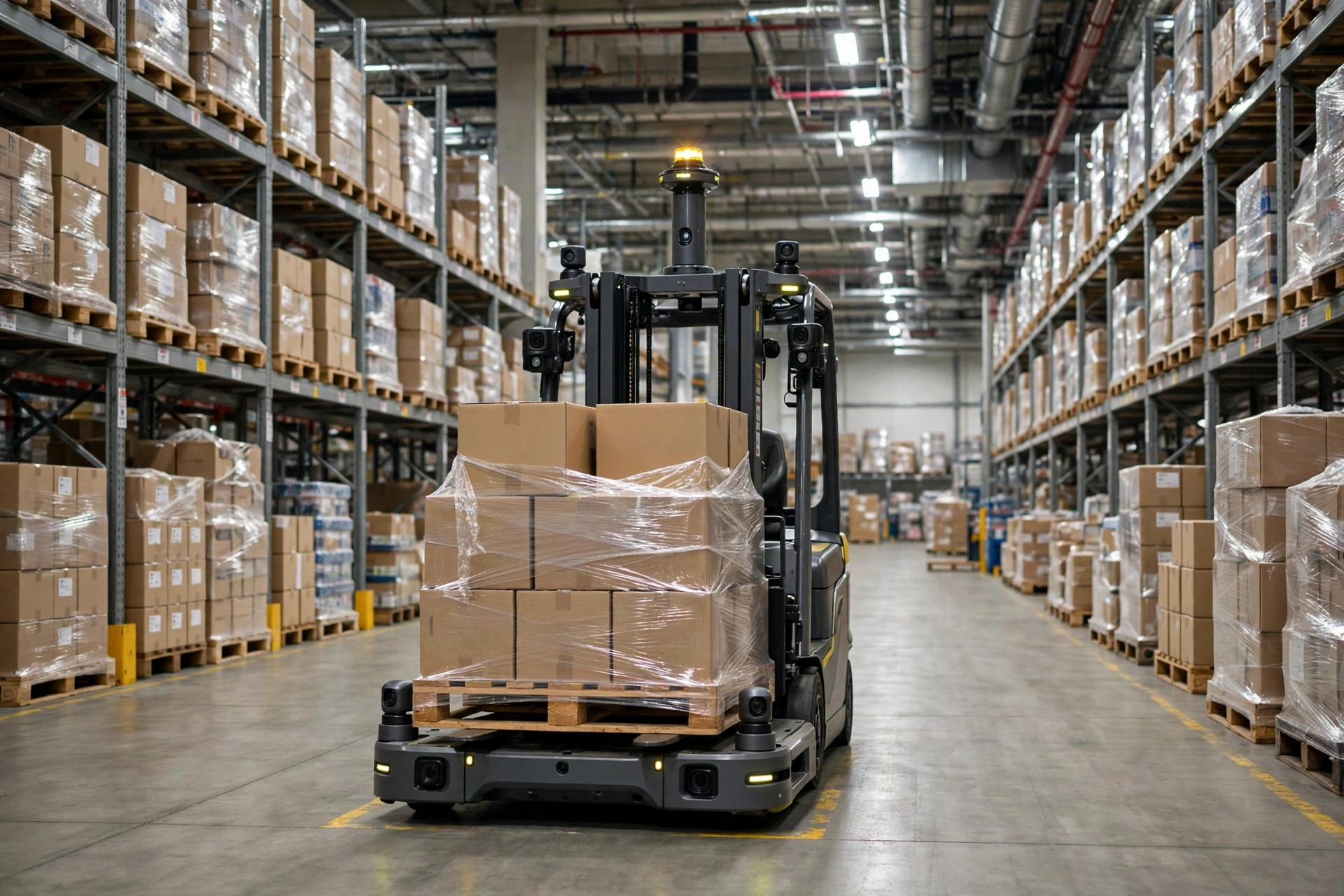
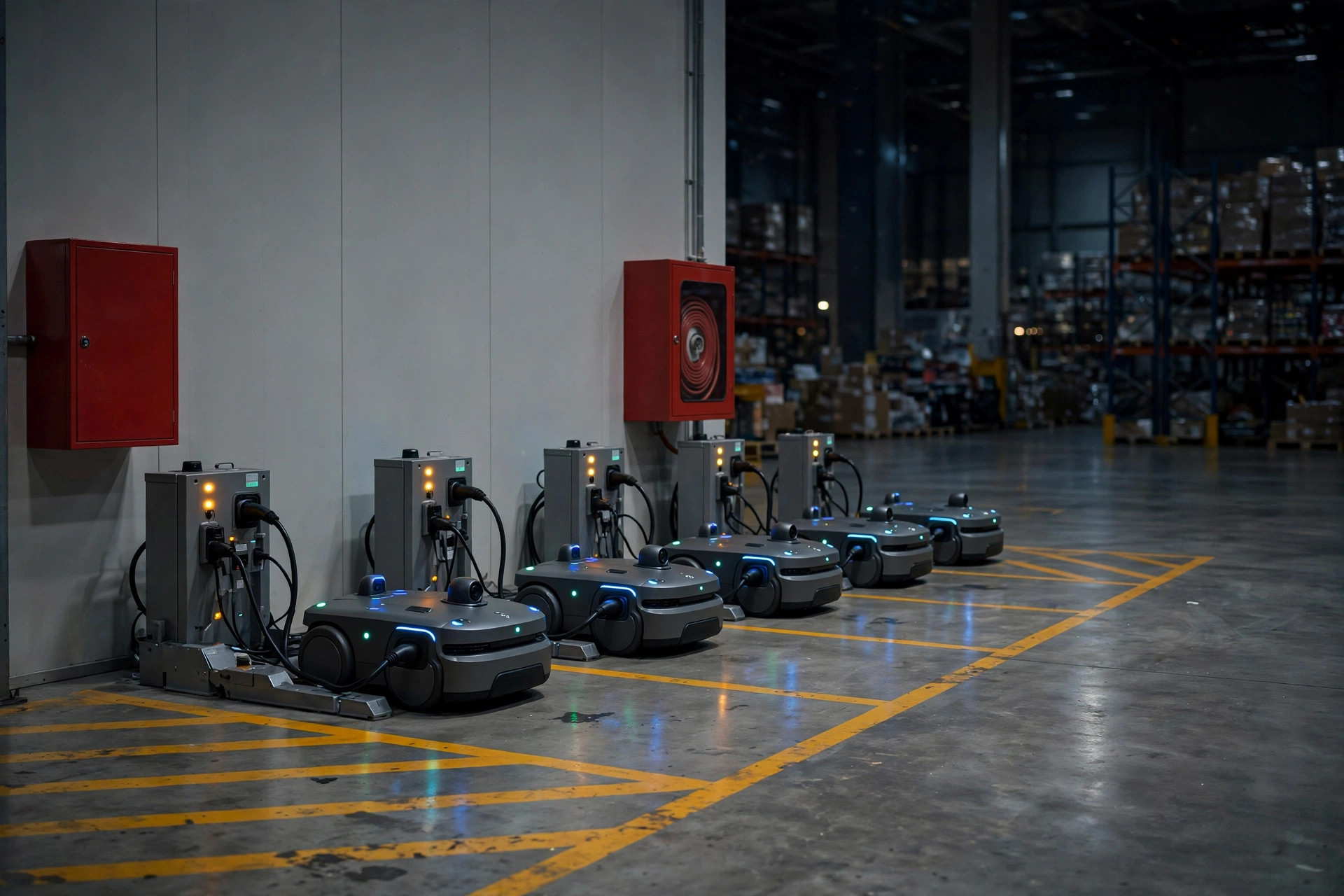
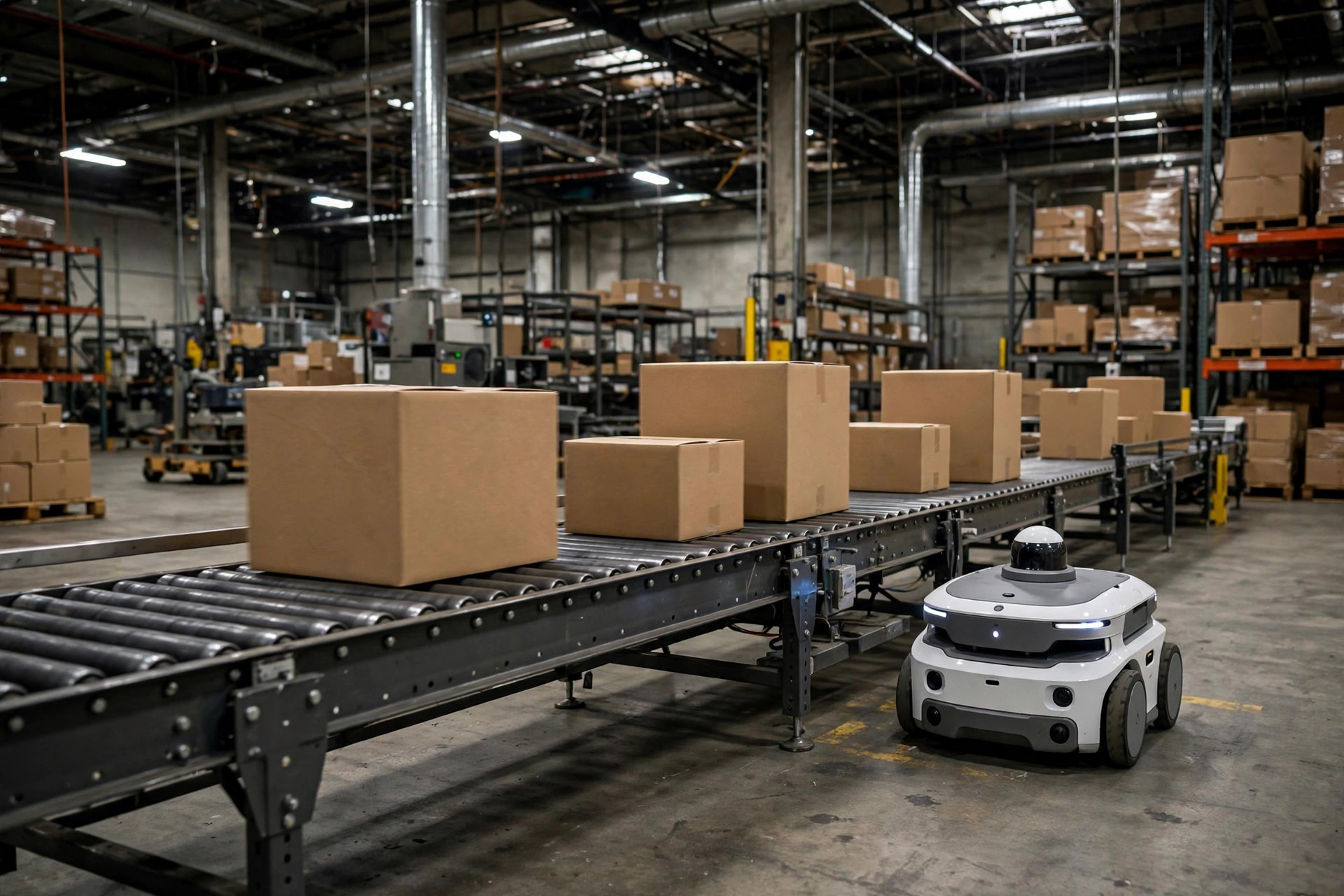
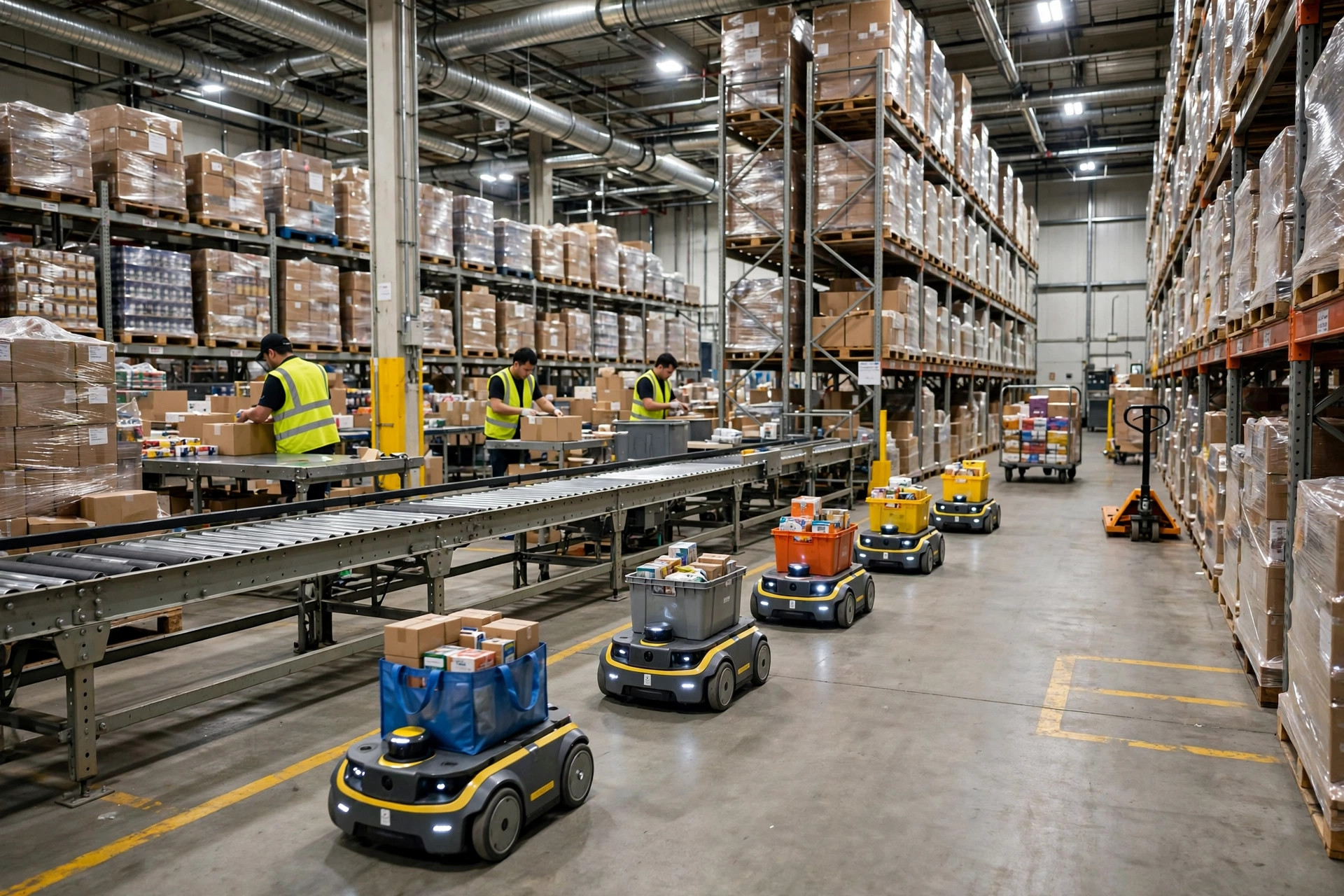
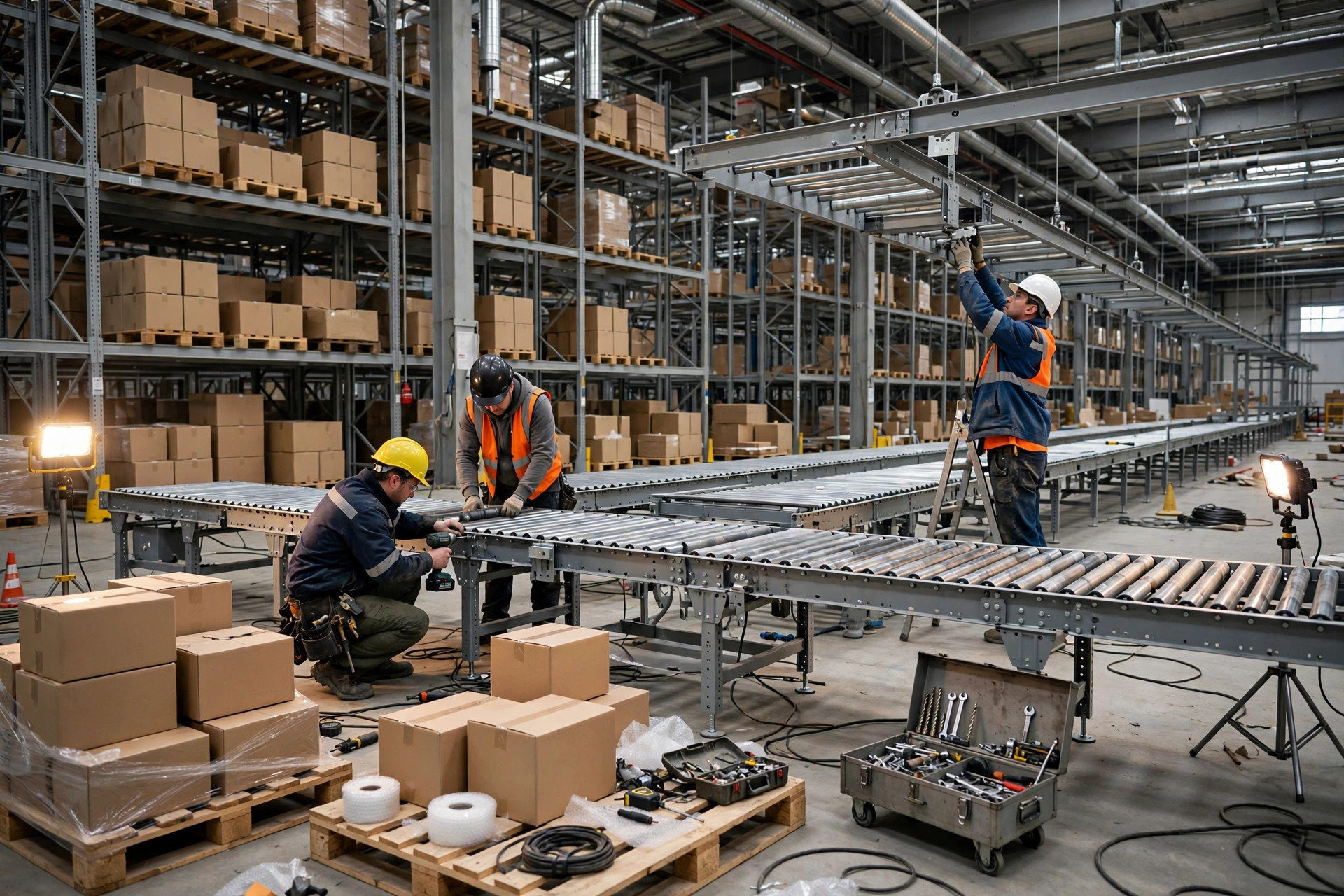
Last November, in the busiest weeks before peak season, I rolled into a contract warehouse outside Jiaxing with a full trailer. The dispatcher told me the dock crew was slammed and I'd be cooling my heels for a couple of hours. So I parked myself by the dock door and watched: a swarm of flat little AMR robots hauling totes around the floor on their own, turning corners like they owned the place — while right next to them a conveyor line sat half-lit and half-dead, two guys unbolting a guard rail. I asked their equipment manager what was wrong with the line. He laughed the tired laugh of a man with regrets. "Bought it this time last year," he said. "Already want it gone."
Let me tell you something. Fifteen years driving trucks, I've killed time on more warehouse docks than I can count. And this whole AMR-versus-conveyor argument? It isn't about which technology is more advanced. It's about whether your freight, your lease, and your order volume can live with something bolted to the floor.
How a Conveyor Line Becomes a Paperweight
Summer of 2023, I picked up a load at a cross-border e-commerce warehouse in Bao'an, Shenzhen — small home appliances, 300,000 to 400,000 orders a month, double that in peak season. They were commissioning a brand-new sortation conveyor: scan, weigh, auto-divert into chutes, the works. I was genuinely happy for them. Money well spent, I thought.
Then I went back at the end of 2024 and barely recognized the place. Their SKU count had exploded from about 8,000 to nearly 20,000, including a bunch of odd-shaped items — the biggest one, an air fryer whose box was two fingers wider than the chute. The conveyor couldn't turn and couldn't add chutes. Before the big sale they wanted 20 more divert chutes; the integrator said the line would have to come apart, three days of downtime minimum. Three days before peak — would you dare? They ended up hand-sorting on the floor next to a multi-million-yuan line sitting there like expensive furniture. And the kicker: their lease had less than two years left, the landlord was talking about a rent hike, and nobody knew if they'd even stay. Move that conveyor? You might as well scrap it.
How a Little AMR Fleet Turned Things Around
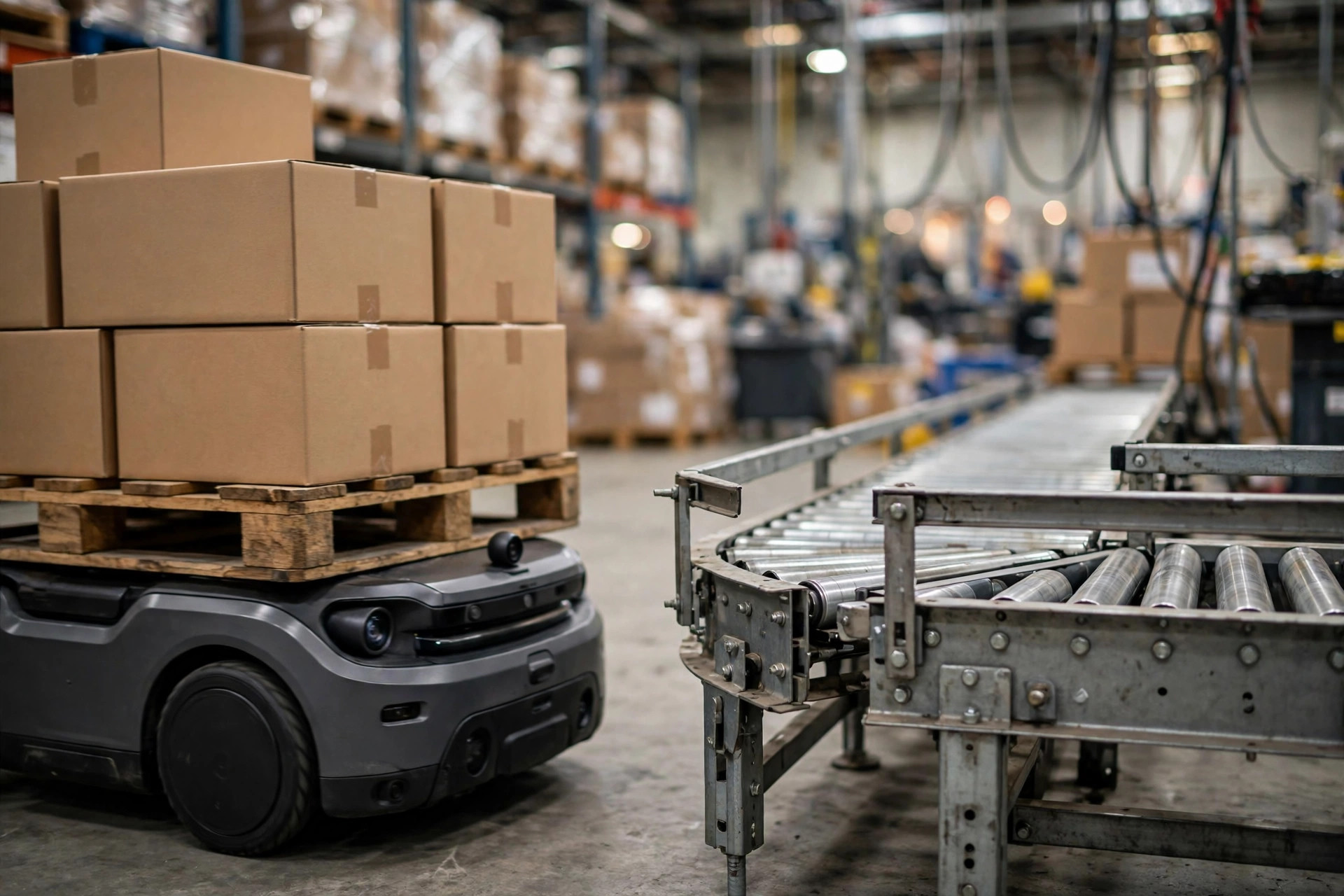
Back to that warehouse in Jiaxing. The night before the big mid-year sale, they landed a huge last-minute order — volume tripled overnight. The equipment manager told me he called the AMR vendor at 10 p.m., got 20 more bots delivered, and by sunrise the floor map was drawn, tasks were assigned, and the fleet was running. Not a single order missed. I was floored. Try adding 20 chutes to a conveyor overnight.
Their lease only had two years left too, but nobody was sweating. Bots are bought by the unit — moving day means loading them on a truck. Client changes? Reassign the tasks and the fleet learns the new job by morning. Contract warehouses live on churn — the building stays, the clients come and go — and that business model was practically invented for AMRs.
Let's Do the Math: When the Robots Should Take Over
Stories are nice, but let's put numbers on paper. These are example estimates based on 2025 market conditions — get your own quotes, but the order of magnitude holds:
| Conveyor line | AMR fleet | |
|---|---|---|
| Upfront cost | High. A 200-meter sortation line with scanning runs about USD 400k–700k (example estimate) | Buy by the unit. USD 20k–35k per bot; a 10-bot fleet runs USD 200k–350k |
| Go-live time | Civil works plus install and commissioning: 4–8 weeks | Unbox, mark lanes, scan the map: 1–3 weeks |
| Adding capacity | Shut down, extend, pay by the meter, wait weeks | Add bots, add capacity — same day |
| Layout changes | Tear down and rebuild, 3+ days of downtime | Redraw the map, done in hours |
| Maintenance | Belts, chains, motors are wear parts; one section down, the line stops | Batteries, sensors, remote software updates — but you feed a fleet-management system |
| Moving out | Basically scrap | Load them on a truck, run them in the next building |
So conveyors win on "steady and cheap per order"; AMRs win on "fast and flexible." But there's a catch hiding in that math — your volume has to be steady for the conveyor's numbers to work.
Here's how I walk warehouse owners through the decision. Three questions, and the answer usually falls out on its own.
First: how stable are your volume and SKUs? If peak season triples your off-season, if your SKU list turns over every year, if clients come and go — don't bolt anything to the floor. Go with the bots. But if your volume is steady as a rock and your SKUs haven't changed in three years, a conveyor's per-order cost drops so low it'll make you smile.
Second: how many years are left on your lease? Under three years — don't pour concrete in somebody else's building. A conveyor you can't move is a renovation gift to your landlord. Long lease or your own building? Then the line starts making sense.
Third: what does your freight look like? Thirty-kilo cartons, full pallets moving long distances — fixed equipment is steadier and cheaper. Small parcels, thousands of SKUs, pick paths that change daily — that's the bots' home turf.
The Uncomfortable Truth: AMRs Aren't Free Lunch Either
Now the part that gets me in trouble, and the part most people get backwards: buying AMRs isn't buying machines. It's hiring a fleet — and fleets need feeding. Annual fleet-software fees, map maintenance, charge management, spare bots to cover breakdowns — it never stops dripping. And when you scale up, bots cause traffic jams. Forty or fifty of them in one building and dispatch complexity climbs fast; run it badly and it's a bigger headache than any conveyor.
Which is why, counterintuitively, the bigger your volume, the harder I push you to look at conveyors. Past a certain scale, fixed costs amortize down to nearly nothing per order — and then "steady" is the cheapest thing money can buy. AMRs save their money in chaos: volume that swings wildly, layouts that change every quarter, leases nobody can predict. Send a conveyor into that kind of fight and it's dead on arrival.
There's an old saying among us drivers: the barracks are permanent, the soldiers rotate. The building is rented, the freight keeps changing — don't drive piles into somebody else's land. Before you buy any equipment, ask yourself those three questions. The answer will walk out on its own.
By Shifu Zhao, Trucking Veteran (15 yrs)