Early in 2023, a client called me: "Lao Mi, we've got $800K. We want automation — conveyor first, or AMRs first? What's the right phased automation investment sequence?" I told him: don't pick equipment yet. Get the investment sequence wrong, and you'll spend the money with the bottleneck still standing there.
Here's my verdict, straight: for a small or mid-size warehouse, the phased automation investment sequence should be conveyor first (pack and verify zone), then AMRs (long-distance transport), and goods-to-person last. Not because conveyors are fancier — this thing has two sides. A conveyor is cheap, pays back fast, and carries low risk — but once it's bolted down, your layout is locked in concrete. AMRs are flexible, you can add them in batches, and you can course-correct — but the hidden costs are real and payback is slower. The logic of the sequence: eat the certain wins first, then bet on flexibility.
Skipping Phased Automation: What a $1.8M All-at-Once Build Cost
In 2019, a 3PL in Carson, California — 40,000 square feet — went all in at once: AS/RS, conveyor lines, and a high-speed sorter, roughly $1.8 million total. On paper it was beautiful: standard cartons flow out of the AS/RS, ride the conveyor, and the sorter diverts them by order.
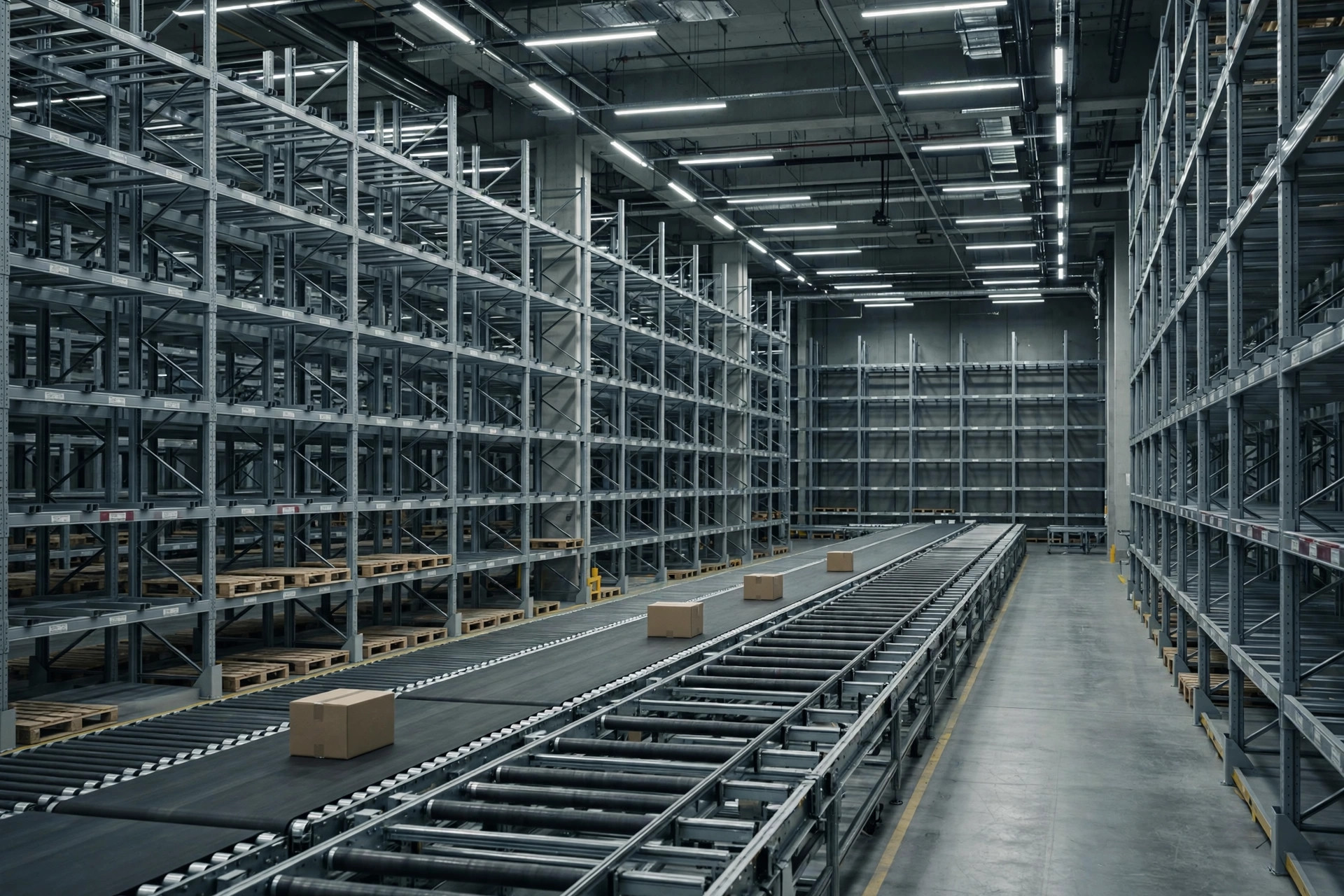
Then the 2020 peak season changed the order mix: bulky items and returns jumped from 15% to 35% of orders, and those can't ride a conveyor at all. Conveyor utilization fell below 40%; the sorter sat half-idle every day. Worse — rerouting a conveyor means new wiring plus downtime, easily tens of thousands of dollars and a week of lost production. The owner wanted to change it. He couldn't afford to.
I've seen too many cases like this, and the root cause is always the same: buying everything at once locks in three years of order mix in advance. Conveyors aren't expensive to buy — they're expensive to change.
Getting the Investment Sequence Wrong: 20 AMRs Bought, Pack Stations Turned Into a Parking Lot
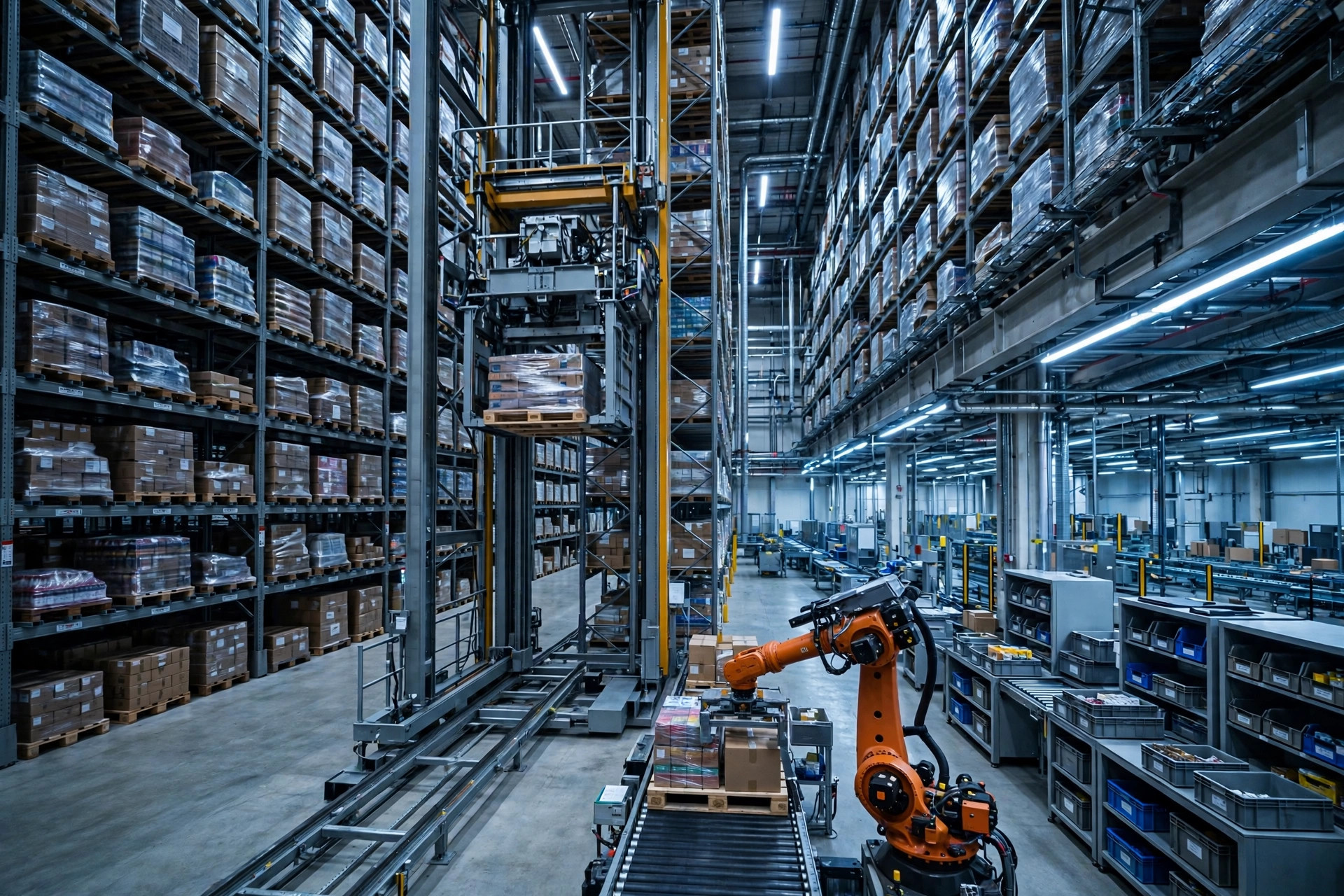
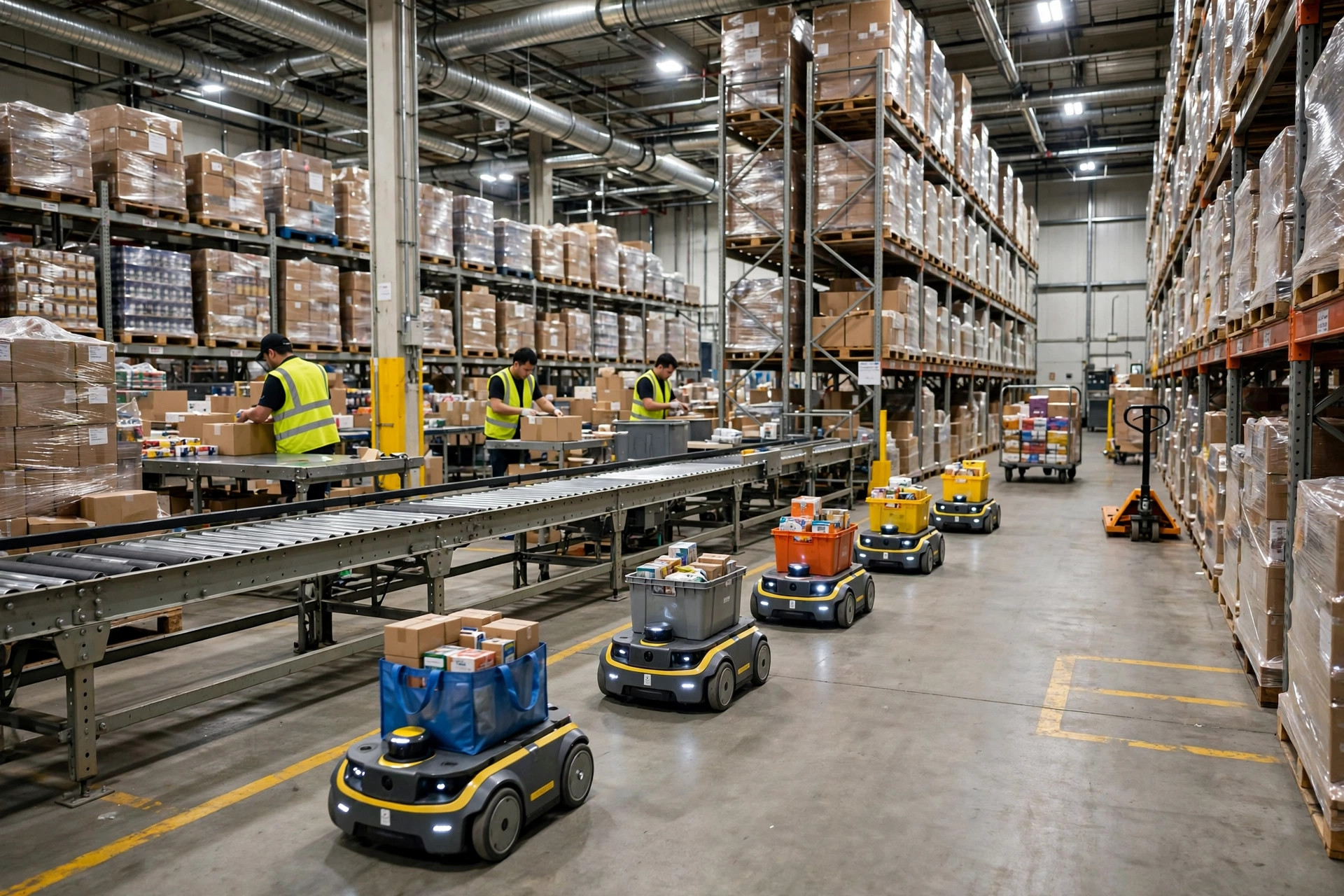
Late 2021, an e-commerce client in Ohio doing 8,000 orders a day bought 20 AMRs first (about $35K–$50K each including fleet management — close to $900K total). Picking efficiency genuinely went up. Pickers stopped running marathons across the floor.
But the pack zone was untouched. The AMRs delivered totes to the pack stations, where goods piled up waiting for manual packing — at peak, hundreds of totes queued on the mezzanine. They had to retrofit a conveyor later, and discovered the AMR handoff height didn't match the conveyor. Two more weeks of rework.
The lesson from that pit: automation's scariest failure isn't picking the wrong equipment — it's leaving no interface between phases. Of all the rework I've seen, 80% isn't an equipment problem. It's stage one leaving no path for stage two.
Running the Numbers: Fix the Walking, or Fix the Queue?
Take a mid-size warehouse doing 3,000 orders a day. Picker wage around $19 an hour (a common California range for frontline warehouse labor in 2026). Walking eats roughly 50–60% of pick time — a number the industry has verified over and over. Eight to ten miles a day per picker is normal.
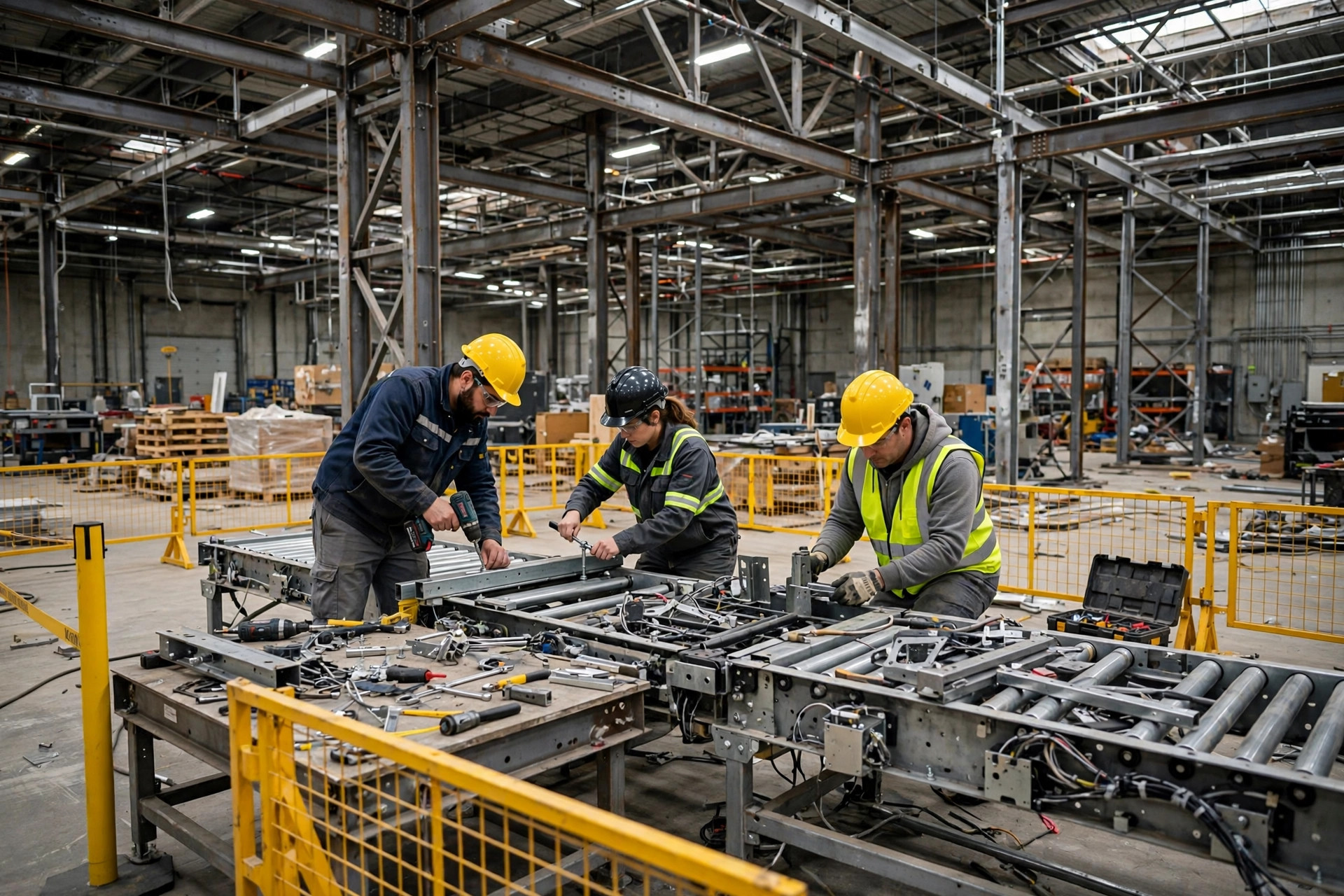
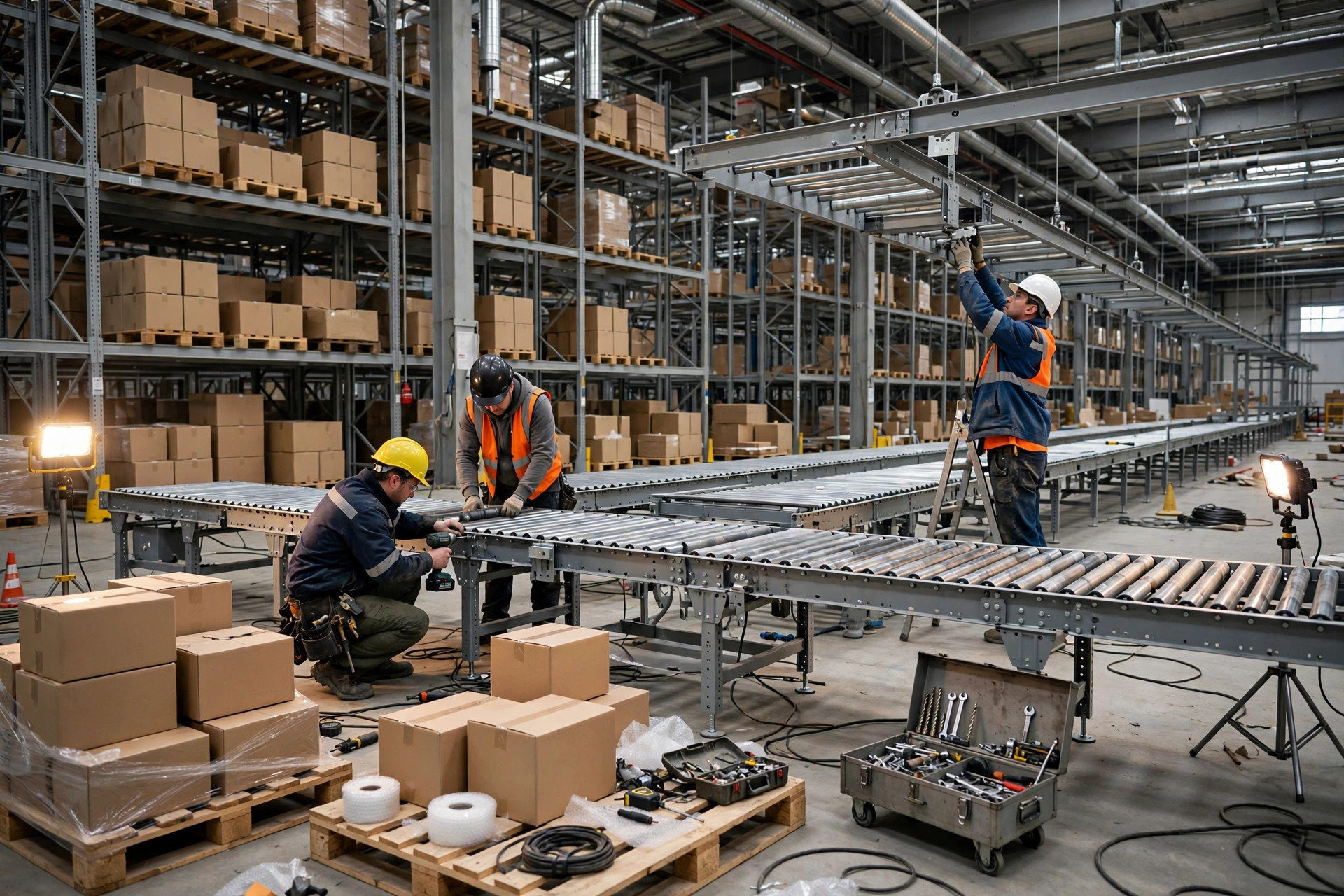
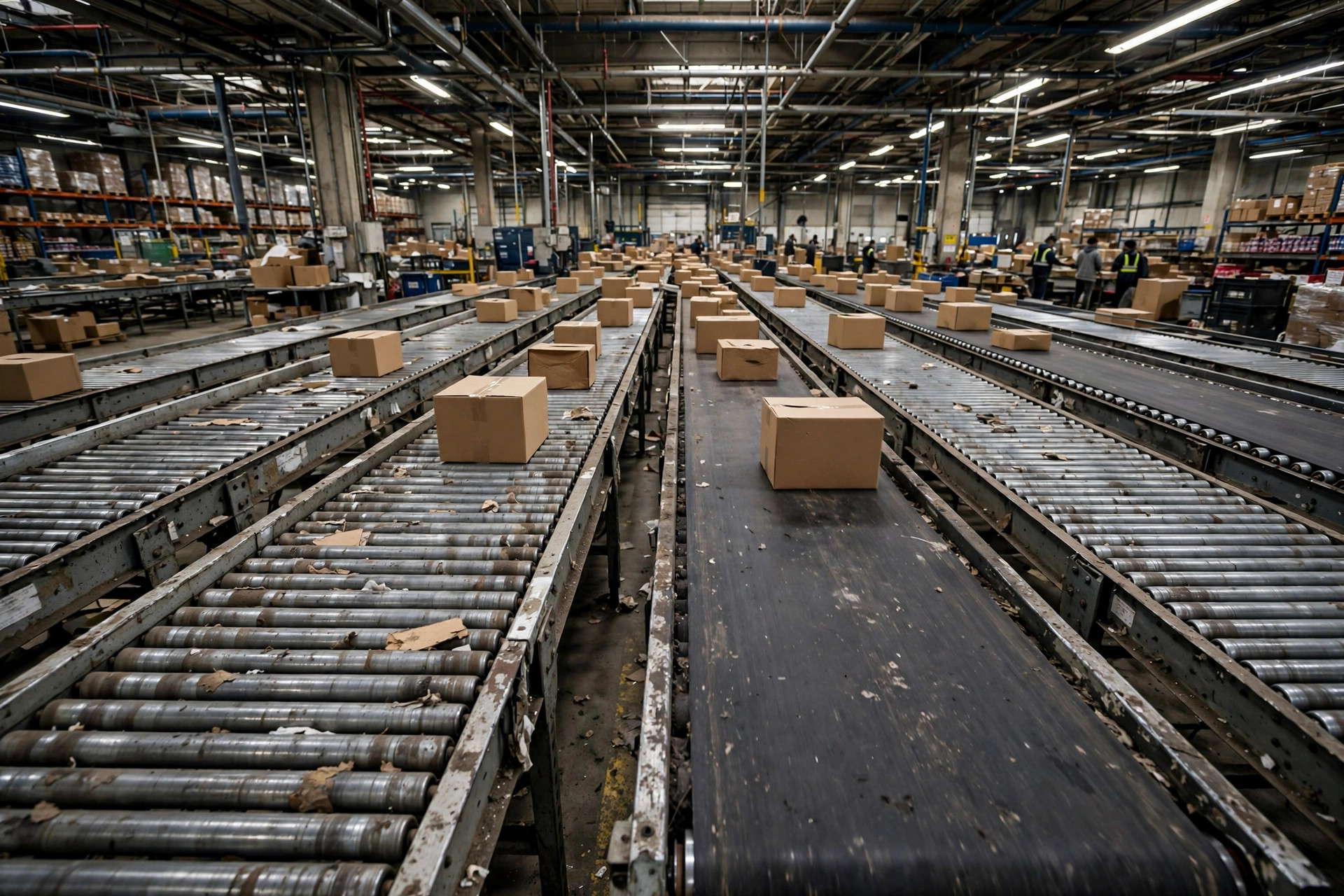
Stage 1, conveyor (pack/verify/in-out docks): 100 feet of modular belt conveyor, at $300–$500 per foot from integrators I've worked with, comes to about $40K. It fixes the queue: pack-and-verify goes from hand-carry to a flow line, saving 2–3 heads — roughly $120K–$150K a year in labor, payback in about a year. The cost side: the layout locks. So you only put it where the flow won't change for a decade.
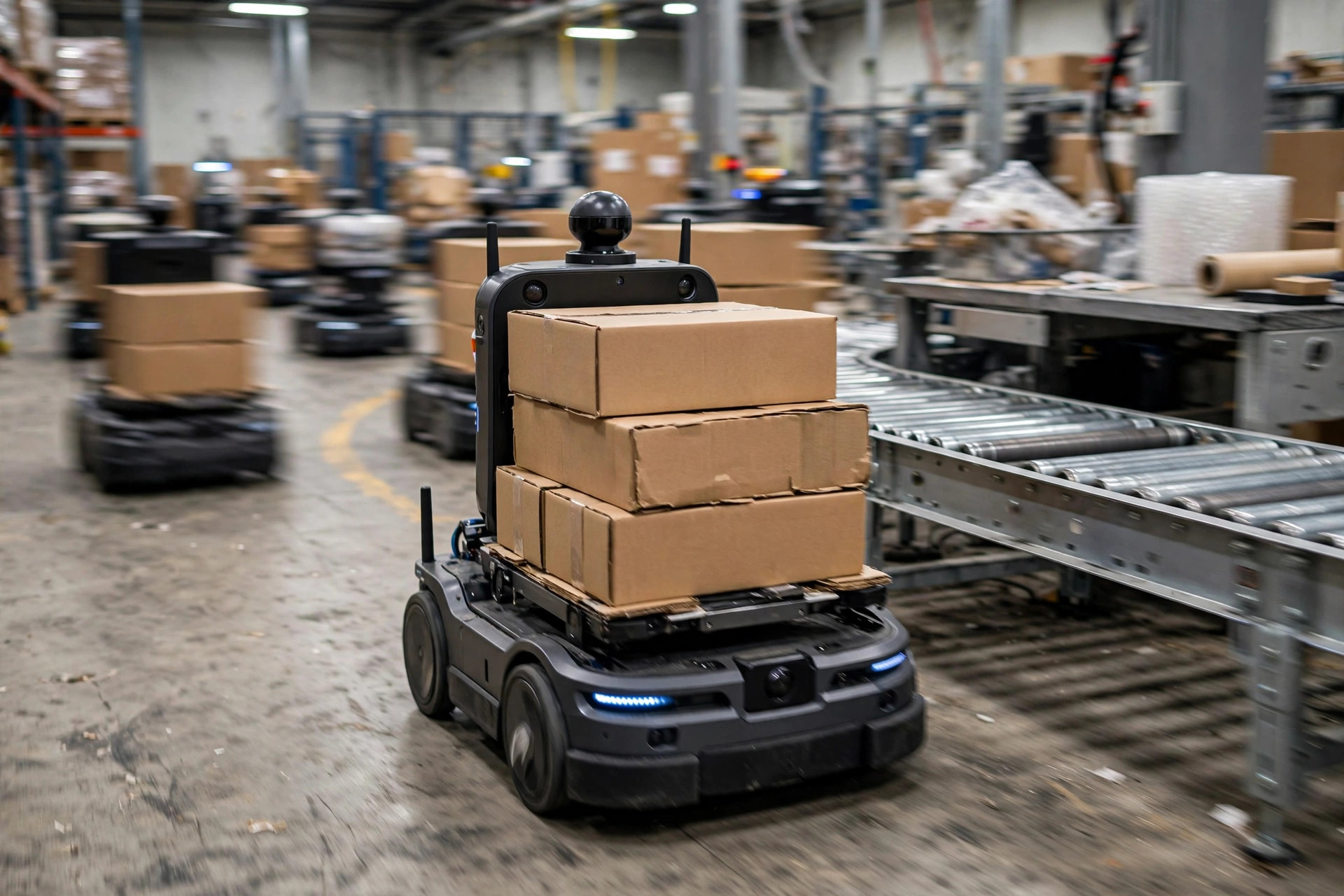
Stage 2, AMRs (transport/replenishment): start with 8–10 units, about $300K–$500K, cutting daily walking by more than half. The upside is you can add them in batches — ten this year, ten next — and course-correct if you misjudged. The cost side: fleet software, a charging area, and floor flatness work are hidden costs, and AMR ROI lives or dies on order density. Without enough volume, the robots just drive around empty.
See the pattern? Conveyor goes first because its return is certain and calculable. AMR returns depend on the volume ramp. Tight budget? Eat the certain win first.
The Phased Automation Playbook: Four Questions Before You Spend
Before touching any equipment, ask yourself four questions:
- Where's the bottleneck? If pickers walk the most → AMRs first. If the pack-and-verify queue is longest → conveyor first. Time it with a stopwatch on the floor; don't guess.
- Is your order mix stable? If SKUs and carton profiles will likely change within three years → flexible AMRs. If carton profiles are stable and motions are fixed → conveyor, cheap and nearly indestructible.
- How many budget rounds do you get? One shot → conveyor's fast payback. Two years → conveyor in year one, AMRs in year two.
- Who maintains it? A broken conveyor needs an electrician. A broken AMR needs someone who understands fleet software. Equipment nobody can maintain is furniture.
The Minimum Viable Automation Investment Sequence
| Stage | What to buy | Bottleneck it fixes | Typical spend | Payback reference | Layout lock-in |
|---|---|---|---|---|---|
| Stage 0 | Process cleanup, data hygiene | The free bottlenecks | Near zero | Immediate | None |
| Stage 1 | Conveyor (pack/verify/in-out docks) | Pack-zone congestion | $30K–$80K | 1–2 years | ★★★ Locked |
| Stage 2 | AMRs (transport/replenishment) | Long-distance walking | $30K–$50K per unit, add in batches | 2–3 years | ★ Adjustable |
| Stage 3 | Goods-to-person / sorter | Picking efficiency ceiling | Hundreds of thousands and up | Depends on volume density | ★★★ Locked |
Three interface rules, locked in before stage 1 construction starts:
First, reserve AMR handoff positions when laying conveyor: standardize handoff height and tote specs, and leave one removable conveyor section so future changes don't mean tearing out the whole line.
Second, buy an expandable execution system: get the WES's AMR interface in stage 1. Don't swap systems in stage 2.
Third, don't skip stage 0: map the most-walked route on the floor first. I've seen warehouses that fixed the process and realized they didn't need equipment at all — that's the cheapest automation there is.
Bottom line: a phased automation investment sequence is really a bet between certainty and flexibility — take the certain wins with conveyor first, then bet on flexibility with AMRs. Reverse it, and you either pour money into iron you can't change, or buy robots with nothing to haul.
So stop asking "conveyor or AMR first." Ask instead: do you know what this warehouse looks like in three years? If not, buy what you can return, adjust, and add in batches.
By Lao Mi, Supply Chain Veteran (20 yrs)