"How long until payback?" Never answer that question with a single number. In the spring of 2024, the general manager of a 3PL in Ohio brought me an $850,000 proposal for a conveyor line plus AMRs and asked exactly that. My answer: 36 months on paper — but those 36 months are not the whole answer. Half of the money that matters does not appear in that table at all.
The automation ROI question has a standard format. Put the model on the table first, then add back, one by one, everything the model leaves out. That is what the boss actually needs, not the words "two years."
The payback math is four lines, nothing more
Every automation ROI model has exactly four lines: what you invest, what you save each year, what you earn extra each year, and what it costs to keep running. Every number below is a labeled hypothetical example, used to demonstrate the method — not any vendor's real pricing:
| Item | Amount (assumed) | Note |
|---|---|---|
| One-time investment | $850,000 | Conveyor + AMRs + integration |
| Labor saving | $260,000 / year | Picking team cut from 12 to 7 people, $52,000 fully loaded per person per year |
| Efficiency gain | $90,000 / year | Higher hourly throughput, fewer temp workers and less outsourcing at peak |
| Annual maintenance | $65,000 / year | Service contract + spares + software fees |
| Net annual benefit | $285,000 / year | 260,000 + 90,000 − 65,000 |
| Break-even time | About 36 months | 850,000 ÷ 285,000 ≈ 2.98 years |
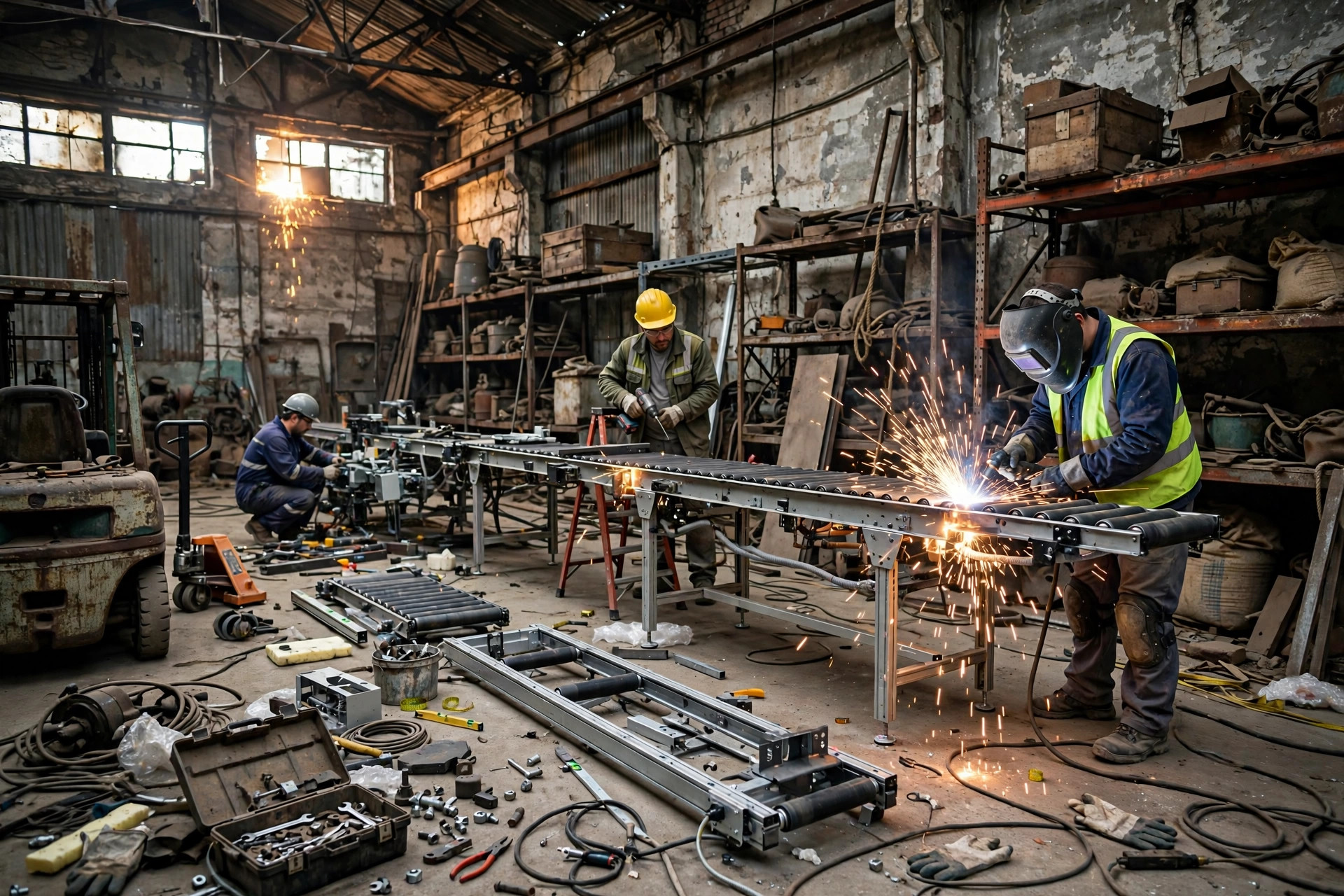
The arithmetic is the easy part. The hard part is where each line comes from. The labor line is the easiest to rig: 12 people cut to 7 — but did the five actually leave the payroll, or were they moved to another job in the same building, still collecting the same pay? An e-commerce warehouse in California made exactly this mistake in 2023. The proposal claimed eight heads saved; in reality only two left, the other six moved to quality inspection, and the wages did not drop by a cent. The timeline stretched from 28 months on paper to more than 60 in reality. When you count labor savings, count only the heads that genuinely leave the payroll. A reassignment is not a saving.
The efficiency line is the easiest to inflate. The vendor's proposal says "throughput up 40%," but you have to ask: measured on what order profile? Does your warehouse ship the same profile? Is the gain the same at peak and off-peak? I only trust numbers measured in the client's own building, or vendor numbers discounted by thirty percent. That discount is not distrust. It is leaving room for reality.
The maintenance line is the easiest to forget. The service contract is often free in year one and starts billing in year two. Spares, the annual software fee, upgrade charges — all of it belongs in a five-year view. Any model that only counts year-one maintenance is a fake table.
Four things payback never counts
The answer is 36 months. But if you make the decision on that one number alone, you will miss four things, and any one of them can matter more than the timeline itself.
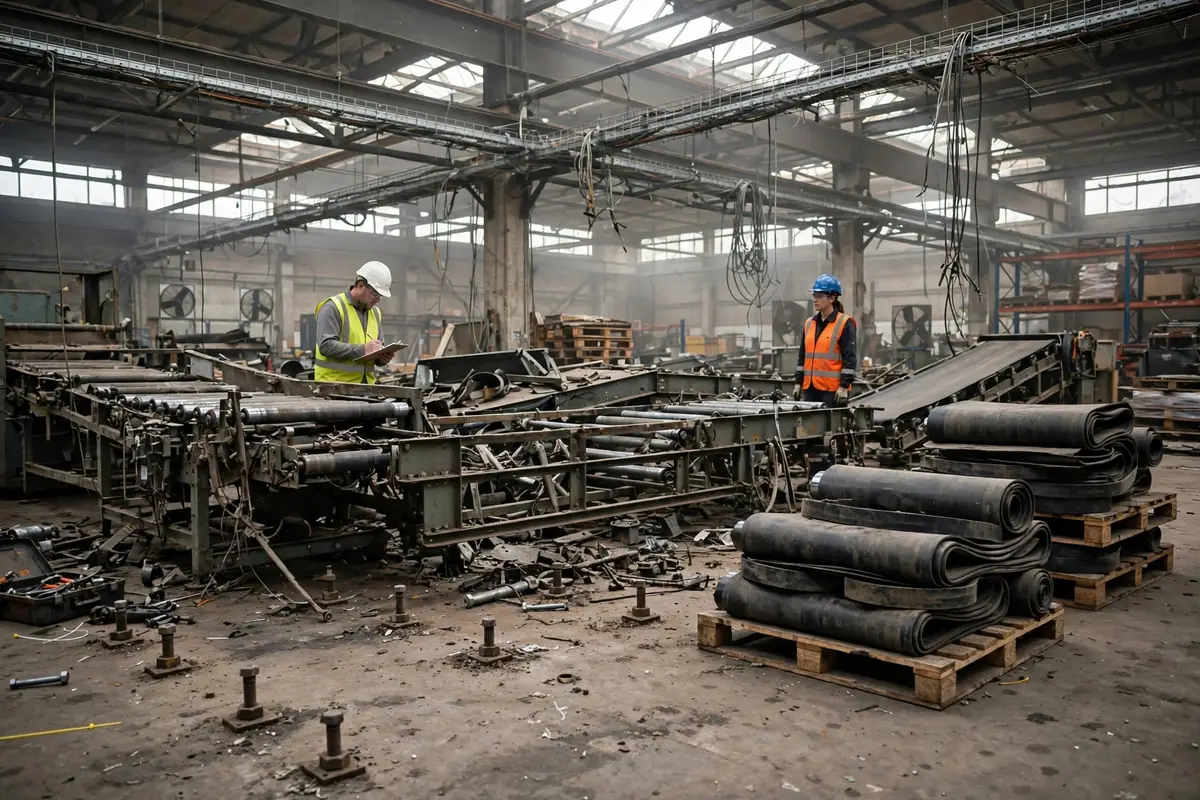
First, residual value. A conveyor line and a fleet of AMRs are not consumables. After five years they still have value — they can be sold, moved to another building, or parted out. A timeline-only calculation assumes the equipment is worth zero after five years, which is simply wrong. A well-maintained conveyor line typically still holds around twenty percent of its original value at year five. That money belongs in the total return.
Second, flexibility. A human team can scale up and down, and equipment cannot — but equipment also never quits. In the fall of 2024, the warehouse next door to that Ohio 3PL lost three veteran pickers and spent two months failing to replace them, covering peak season with temp workers while the error rate doubled. Sometimes the biggest value of automation is not saving money, it is being able to ship when nobody will take the job. That never shows up in that calculation, but the boss needs it in mind.
Third, hiring difficulty. This is related to the last point, but it deserves its own line. Turnover among frontline warehouse workers stays high year after year. One position hired three times in a year means three rounds of recruiting, training, and ramp-up, none of it free. Automation takes over the night shifts and the heavy-lifting roles that are hardest to fill, and what it saves is not just wages but recruiting cost and management attention. Put the drop in annual recruiting and training cost into the ROI and the timeline often shortens by several months.
Fourth, fewer errors. This is the hardest to measure and the most valuable. Cut the picking error rate by one point and returns, reshipments, customer service contacts, and refunds all fall together. Six months after go-live, that Ohio project cut its mis-ship rate from six per thousand to two per thousand, and the reshipment and service cost saved that year came to more than $40,000. I did not put that number in the table above, because it only became measurable after the fact and is hard to forecast precisely in advance. But it has to sit in the decision as an invisible gain.
Here is the counterintuitive part: the project with the shortest timeline is often not the project you should build. A point solution that pays back in 24 months may fix exactly one bottleneck, while a system-level project that pays back in 40 months may clear every bottleneck in the building. When the boss asks "how long until we break even," the standard answer is not the shortest number you can find. It is a complete table: the timeline, the assumptions it rests on, the four things the table leaves out, and how far the answer slips if the assumptions fail. If you can give those four answers, you have actually answered the question.
One last thing — a conclusion format you can reuse. Next time the boss asks, answer like this: "This project costs $850,000, nets $285,000 a year, and pays back in about 36 months. That assumes five heads genuinely off the payroll and the efficiency gain discounted by thirty percent. Four more gains sit outside the table — residual value, flexibility, hiring, and error rates — and they are all positive. If the efficiency gain comes in at half the forecast, the timeline slips to about 43 months." Swap in your own numbers. Keep the format. After those four sentences, the boss can judge for himself whether the money is well spent.
By Lao Zhou, Logistics Cost Analyst