Here's my verdict up front: an electric forklift is the cheaper truck to run in most indoor warehouses today — but that doesn't mean your warehouse should switch. Not yet, anyway. I've watched too many owners sign a purchase order because the quote looked good, then spend the next three years paying for the charging room, the battery swaps, and the downtime they never budgeted for. An electric forklift saves money on fuel and maintenance. It can also quietly eat every dollar it saves if you buy it for the wrong job.
This is a two-sided question, and anyone who tells you one side always wins is selling you something. Electric trucks are quiet, clean, and easy on drivers over a long shift. Diesel trucks are strong, they don't care about rain or rough yards, and they refuel in five minutes. Both are good machines. The mistake is buying the wrong one for your floor.
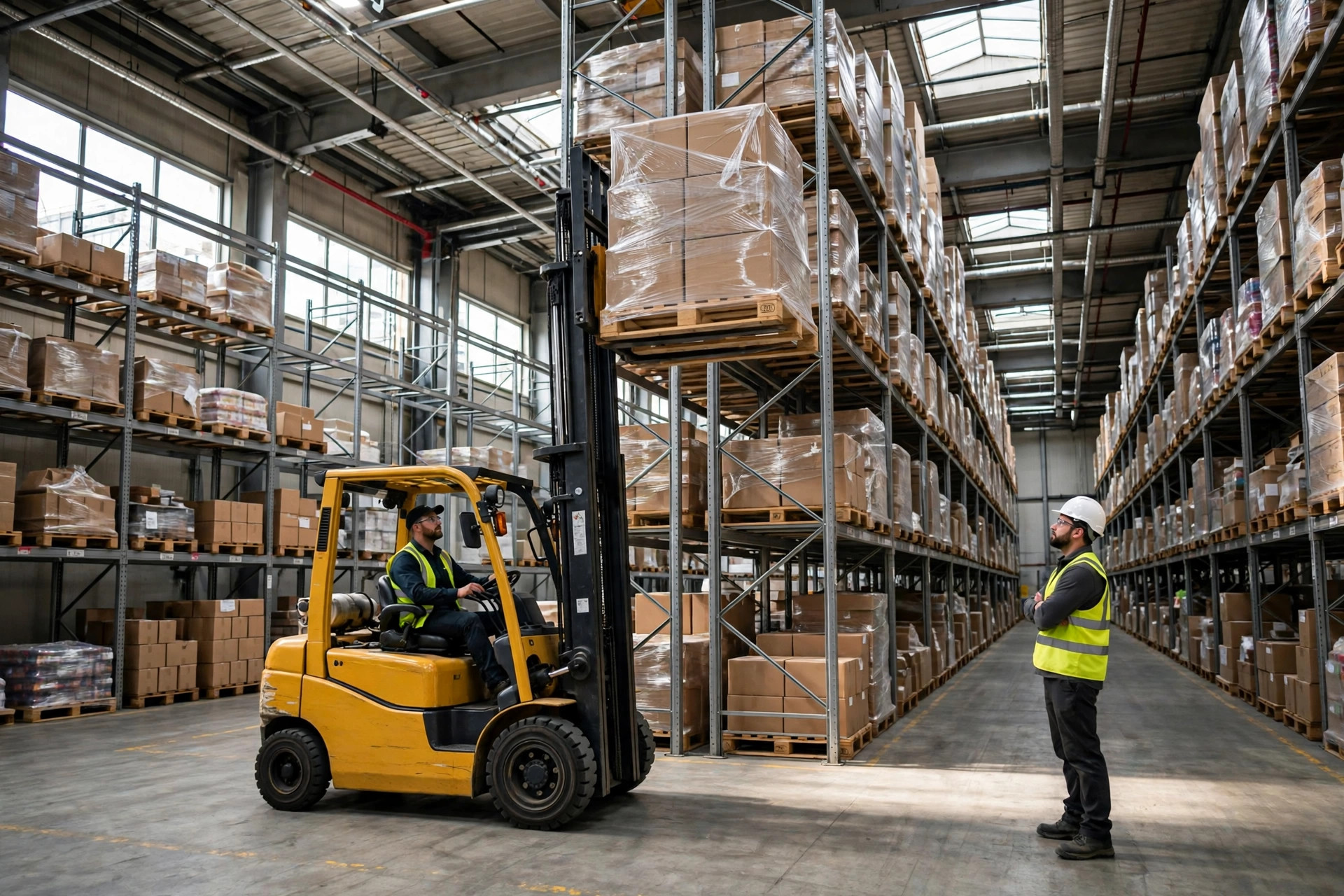
Let me tell you about a pit I walked into with a client. Fall 2023, a 3PL outside Los Angeles, 60,000 square feet, half indoor racking and half open dock, two shifts in peak season. The owner wanted to replace all 12 diesel forklifts with electric ones in one shot. The quote looked great, and on paper the fuel savings paid for the premium in about a year. He was ready to sign.
I asked him to hold off and spend one day watching his own floor. The problems showed up fast. Half the work happened on an outdoor dock — rain, dust, ramps — and the electric trucks burned through charge out there. Worse, the building had no charging room and not enough electrical capacity. Running a new feed and carving out a charging area would have cost as much as two more trucks. And his drivers were used to refueling on the go; with lead-acid batteries, a midday swap took half an hour and wrecked the shift schedule. In the end we replaced only the six indoor trucks, kept diesel outside, and built half the charging room he originally planned. He told me later that a full switch would have stalled his first peak-season day.
Where an Electric Forklift Costs More, and Where It Pays You Back
The first cost line is purchase price. Published 2026 U.S. pricing puts a new electric forklift at roughly $22,000 to $55,000, with the battery and charger adding about $7,500 to $9,500 on top. A comparable diesel or LPG truck starts lower. Electric typically costs 20% to 40% more upfront, and dealers will tell you that themselves. On this line alone, diesel wins.
The second and third lines flip the picture. Energy: an electric forklift runs about $1,200 to $2,000 a year in electricity, against about $4,000 to $6,000 a year in diesel. Maintenance: electric trucks have far fewer moving parts, roughly $500 a year, while a diesel truck commonly runs $1,500 to $2,500 a year in oil, filters, and exhaust work. Published comparisons put the combined annual saving around $10,000 to $11,000 per truck versus a gas or propane equivalent at high utilization — but notice the qualifier. If your trucks don't run full shifts, your savings shrink with them.
The fourth line is the one buyers keep forgetting: charging infrastructure. Lead-acid batteries need a swap area, ventilation, and someone to manage the rotation. Lithium-ion charges fast and skips the swap, but the battery premium is real. Does your panel have the capacity? Where do the chargers go? Who charges at night? I once saw a warehouse where drivers queued for chargers until midnight, then argued over plugs at 6 a.m. before a single pallet moved. None of that shows up on the quote. All of it shows up in your costs.
The fifth line is resale value and fit. An electric forklift's resale value lives or dies on battery health — a well-kept battery holds value, a dying one gets discounted by the cost of replacement. A diesel truck's resale tracks brand and hours, and outdoor trucks wear faster. Then there is the hard line on application: food, pharma, and any indoor site that can't tolerate exhaust basically require electric. Outdoor, heavy, multi-shift work with poor charging access still belongs to diesel. California's zero-emission forklift rule points in one direction, but check the official source for the latest enforcement timeline before you plan around it.
| Cost line | Electric forklift | Diesel forklift |
|---|---|---|
| Purchase | $22,000–$55,000, plus about $7,500–$9,500 for battery and charger | Lower starting price |
| Energy per year | about $1,200–$2,000 | about $4,000–$6,000 |
| Maintenance per year | about $500 | about $1,500–$2,500 |
| Charging infrastructure | Charging area, electrical capacity, fast charging extra | Refuel and go, minimal building work |
| Resale and fit | Best indoors, resale depends on battery health | Best outdoors and heavy duty, resale tracks hours and brand |
Here's a worked example — clearly labeled as a hypothetical example, not a quote. Say you run six 5,000-pound counterbalance trucks, one 8-hour shift, 250 days a year. Price the electric forklift at $35,000 and the diesel at $26,000, and the electric fleet costs $54,000 more upfront. Energy plus maintenance runs about $2,000 a year per electric truck versus $6,500 per diesel truck, so six trucks save about $27,000 a year on those two lines. On that math alone, payback lands around two years. Now add a $30,000 charging-room buildout and a $6,000 lithium premium per truck. Payback stretches past three and a half years. Run fewer hours, or keep half your work outdoors, and it stretches further. The arithmetic is simple, and it's the whole point: the more hours you run, the faster the electric forklift wins. The fewer hours you run, the harder it is to catch up.
Four Questions Before You Switch to an Electric Forklift
Here's the counterintuitive part: an electric forklift doesn't save money by being bought. It saves money by being run. A truck parked in the corner saves nothing, however cheap its electricity is. And a diesel truck running ten hours a day can still be the right call, even with expensive fuel. Most bad decisions here come from comparing sticker prices instead of comparing utilization. That's the trap.
So before you sign, answer four questions. What share of your work is indoors? Is there outdoor or heavy work an electric truck genuinely can't do? What does your electrical capacity and charging space look like today, and what will the upgrade cost? And are you switching in phases or all at once? My advice has been the same for years: switch in phases. Replace the indoor, fixed-route trucks first, run them for three months, look at the real electricity and maintenance numbers, then decide on the next batch. Buying trucks is business, not belief. Run it like business.
One more piece of advice: don't switch a month before peak season. New trucks, new batteries, new charging routines — three new things colliding with your busiest weeks. One failure is all it takes. Switch in the slow season, work out the kinks, and let peak season be about moving freight.
How many hours a day do your trucks actually run? Answer that honestly, and the electric forklift versus diesel question mostly answers itself.
By Lao Mi, Supply Chain Veteran (20 yrs)