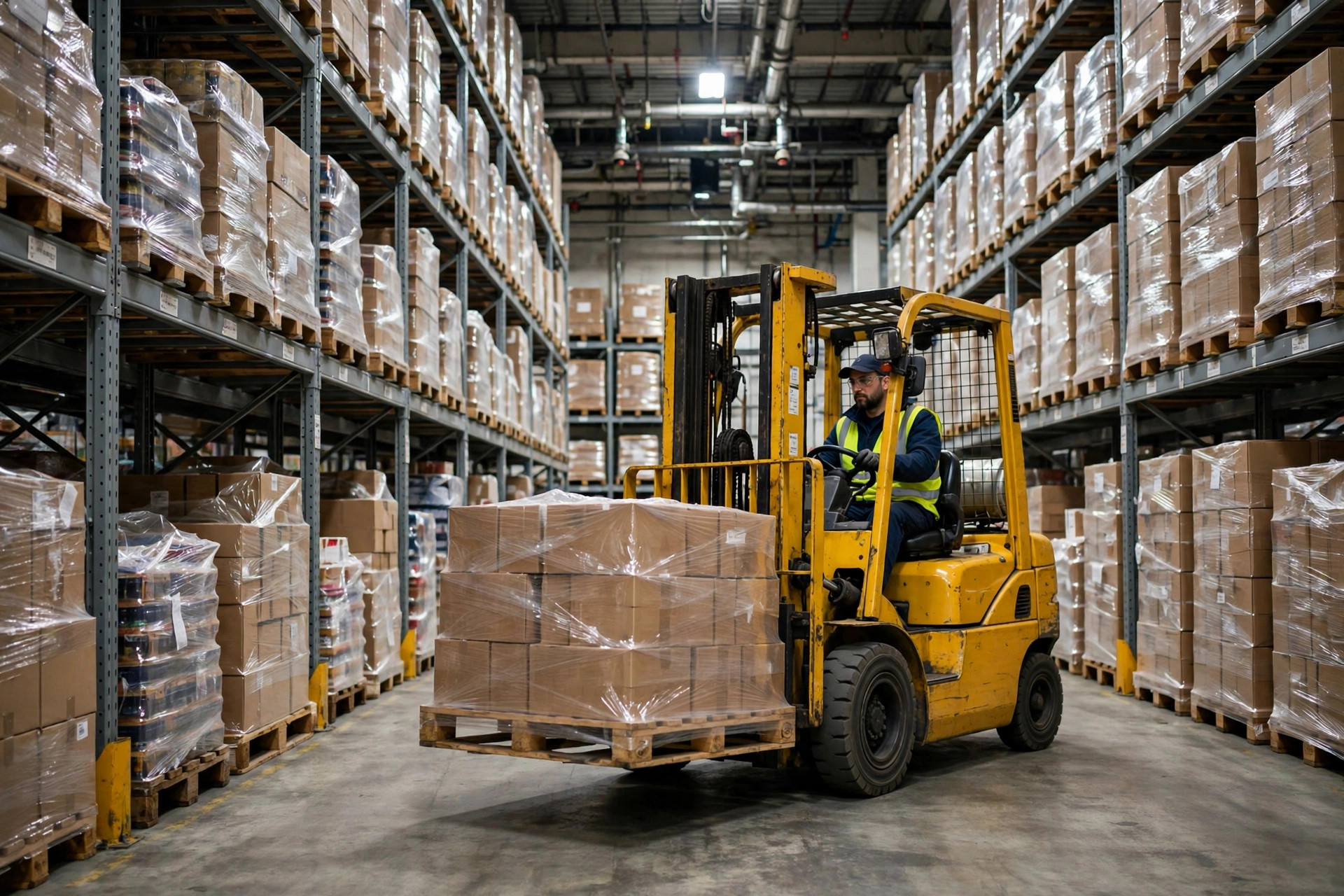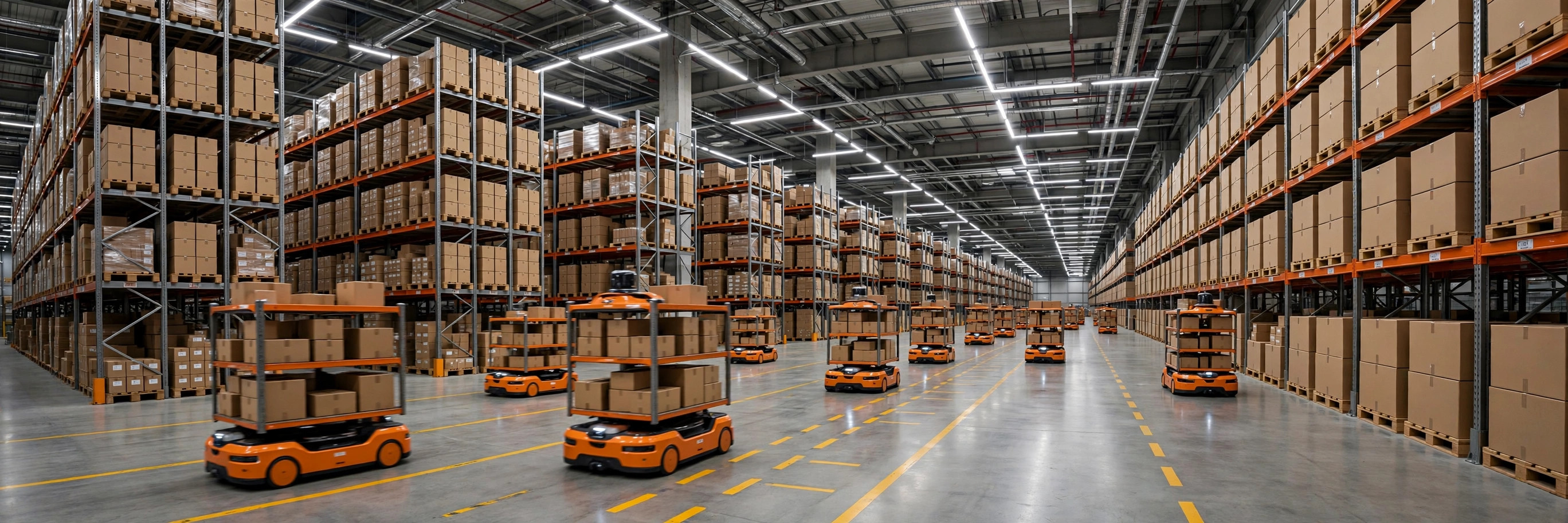
Every seller group chat has that one automation vendor: "Our AMRs pay for themselves in 18 months!" Sure they do. Meanwhile my friend's warehouse is 30 months in and still paying off the loan.
So how long does warehouse automation take to pay back, really? I've been asked this by vendors trying to sell me equipment, and by my own boss trying to keep the budget sane. Here's the no-BS version — three ways to calculate it, so the next time someone pitches you a payback fairy tale, you can throw the real math back at them.
How Long Does Warehouse Automation Take to Pay Back? Typical Ranges
First, the honest answer: nobody can give you one exact number. Order volume, shifts, local labor costs, equipment type — change any one of them and the answer changes. But after years of watching sellers automate, here are the typical ranges I use as a starting point:
- Packing automation (auto case sealers, print-and-apply labelers): 1–2 years to pay back.
- AMR goods-to-person picking: 2–4 years.
- Automated storage and retrieval (AS/RS): 4–7 years.
These ranges assume US warehouse labor costs. The more expensive your labor, the faster the payback; where labor is cheap, expect these timelines to stretch. So when a vendor tells you "our equipment pays back in 18 months worldwide," ask one question: based on whose labor costs? If they can't answer, you don't need to believe the rest of the numbers either.
Payback, IRR, NPV: Three Ways to Answer "When Do I Get My Money Back?"
When your boss asks "how long until it pays back," figure out which metric they're actually asking about. All three translate to "payback" in casual conversation, but the math is completely different — and vendors will always quote whichever one flatters their product.
| Metric | Formula | Plain-English meaning | Vendor favorite? |
|---|---|---|---|
| Payback period | Total investment ÷ annual net cash flow | How many years until I recover my principal | ★★★★★ |
| IRR (internal rate of return) | The discount rate that makes NPV zero | The annualized return on this money | ★★★ |
| NPV (net present value) | Future cash flows discounted back − total investment | After accounting for the time value of money, how much I actually net | ★ |
Payback is the simplest, but it has a fatal flaw: it ignores everything after the payback date. Project A costs $500K, pays back in 1.5 years, but the equipment only lasts 3 years. Project B costs $800K, pays back in 2.8 years, and lasts 10 years. By payback, A wins. By NPV, B destroys A. Vendors will only ever talk payback. Now you know why.
Let's run the numbers. Full disclosure: this is a worked example with illustrative assumptions, not a vendor quote — a $480K AMR picking system, 5-year life, generating $200K per year in labor savings plus throughput gains:
| Year | Cash flow | Cumulative |
|---|---|---|
| Year 0 | −$480K | −$480K |
| Year 1 | +$200K | −$280K |
| Year 2 | +$200K | −$80K |
| Year 3 | +$200K | +$120K |
| Year 4 | +$200K | +$320K |
| Year 5 | +$200K | +$520K |
Payback = 480 ÷ 200 = 2.4 years (still $80K short at year 2, recovered in year 3). IRR: the discount rate that makes five years of $200K equal $480K in present value — roughly 30%. As long as your cost of capital is below that, the project is worth it. NPV: at an 8% discount rate, five years of $200K is worth about $799K in today's money. Minus the $480K investment, NPV is roughly $319K. Greater than zero — green light.
Use all three together, and no single pretty number can fool you.
Two Real Scenarios With Real Math
Scenario one: in 2024, a friend running a 3PL in Ontario, California was doing about 3,000 orders a day — double that in peak season. He installed 20 shelf-carrying AMRs for goods-to-person picking. The vendor's pitch: replace 6 pickers, double throughput, 22-month payback. Then he showed me the actual books: implementation and tuning dragged on for 4 months (he couldn't touch the operation before peak season, so it had to go in during the off-season), first-year maintenance ran about 8% over budget, and throughput during the training period was barely half of what was promised. Real payback: 34 months.
But here's what he doesn't regret. After go-live, his first Black Friday saw pick accuracy jump from 97% to 99.5%, and his return rate dropped a full percentage point. That hidden gain never appeared in the vendor's ROI spreadsheet — and it's the part of the investment he values most.
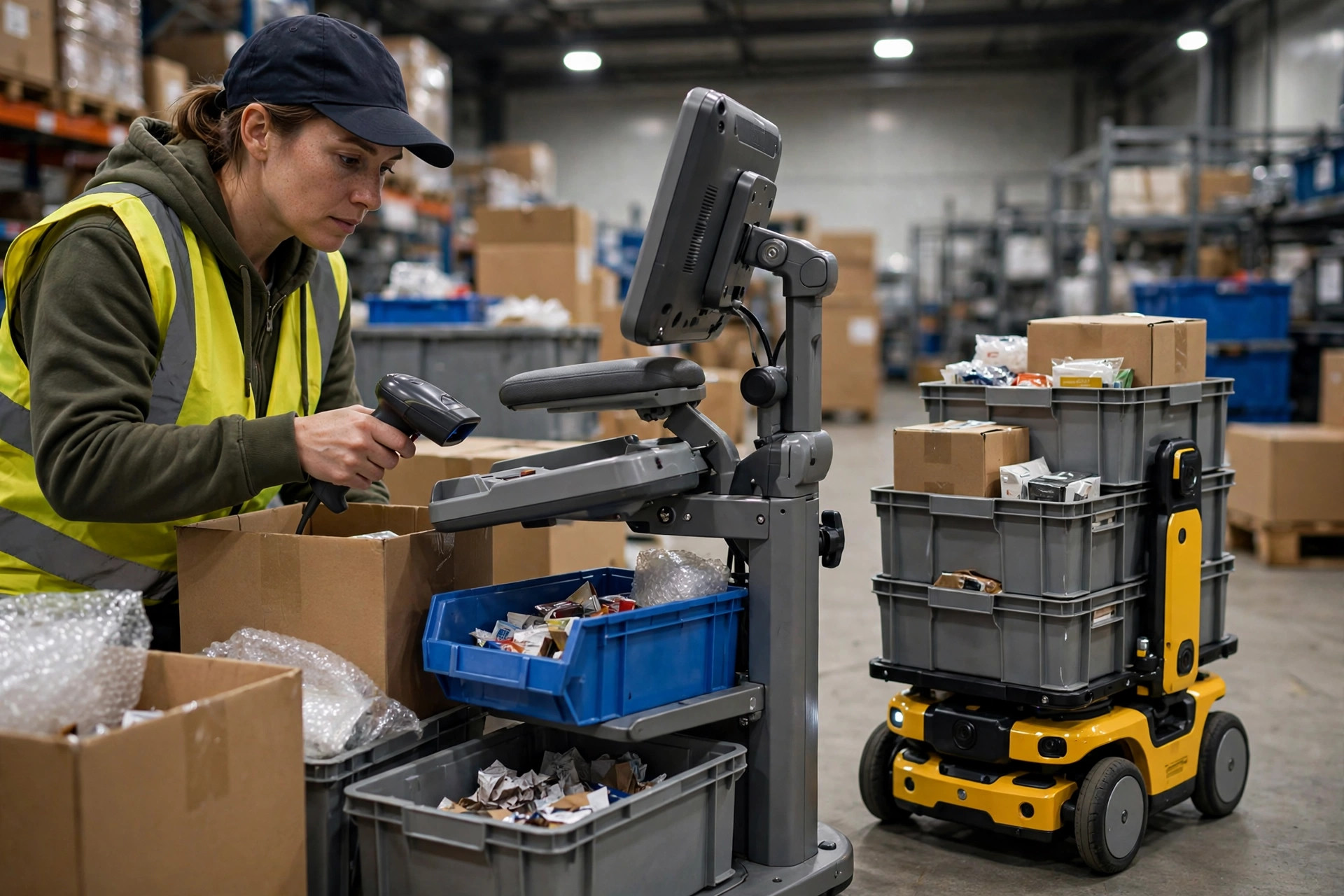
Scenario two: early 2025, a Shenzhen-based home-goods seller with his own warehouse doing 8,000 orders a day installed a full auto packing line — case erecting, sealing, and shipping-label application in one. This guy is sharp: he wrote an acceptance clause into the contract — if the line couldn't hit 12 cartons per minute, 20% of the final payment would be withheld. The vendor tuned it to 13 per minute. His math was simple: packing headcount dropped from 9 to 3, and at Shenzhen warehouse labor costs, that's a 14-month payback. The only thing that went wrong was the shipping-label printer integration with the WMS — two weeks of manual labeling. He says those two weeks were the most labels he's stuck on in his entire life.
The Three Costs Vendors Never Put in Their ROI Slides
Pitfall section. These three costs never appear in a vendor's spreadsheet, but every one of them slows down your payback.
First, implementation downtime. Equipment installation, tuning, staff training — expect 1–3 months of chaos. My friend's warehouse is the textbook case: he couldn't go live for 4 months before peak, and during those months he was paying for the full equipment while earning zero from it. Rent and labor didn't pause for anyone.
Second, maintenance and software subscriptions. AMR batteries, wheels, sensors are consumables. WMS integration fees and remote-maintenance contracts kick in after year one — typically 5–10% of total investment per year. Vendors often "include" these in year one and send the bill in year two. A lot of sellers only remember this line item when the invoice lands.
Third, and this is the counterintuitive one: the fastest-payback project is often not the most profitable project. A packing line pays back in 14 months and sounds amazing. But a full AMR system that takes 3 years to pay back might be what saves you when peak-season volume hits and you can't hire enough people. One saves money; the other saves the business. If you only look at payback, you'll always pick the packing machine. If you look at NPV plus business continuity, the answer can flip completely. Run the numbers, but first decide what you're optimizing for: saving money, or staying alive.
So the next time a vendor thumps their chest about "18-month payback," ask them to put maintenance costs, implementation downtime, and acceptance-tested throughput into the spreadsheet and recalculate. If they do it, keep talking. If they won't, block them. Tried and tested — this one works.
By Ah K, E-commerce Seller (5 yrs)