Frankly, an automated warehouse power outage is not scary because the lights go out. It is scary because the stacker crane freezes halfway up the rack with a pallet on its forks, the shuttles sit dead in their lanes, and system locations no longer match the goods on the shelves. The disaster is that nobody knows what to do next, and everyone waits for someone else to speak first. Equipment is one side of it, and people are the other. You buy the equipment side and plan the people side; a plan written before the outage is a cost, after it is tuition.
I have seen too many warehouses keep their emergency plan as a single sheet taped to a wall, saying nothing more than call the duty manager if the power fails. Then the power really fails, the duty manager does not answer, and the crew stands at the aisle entrance staring into a dark rack. A plan is not written for the inspector. It is written for the person on the night shift who may be new and may not know the automated warehouse well. If that person can hold the situation together by following the sheet, the plan passes. If not, it fails.
What Happens Inside an Automated Warehouse When the Power Goes Out
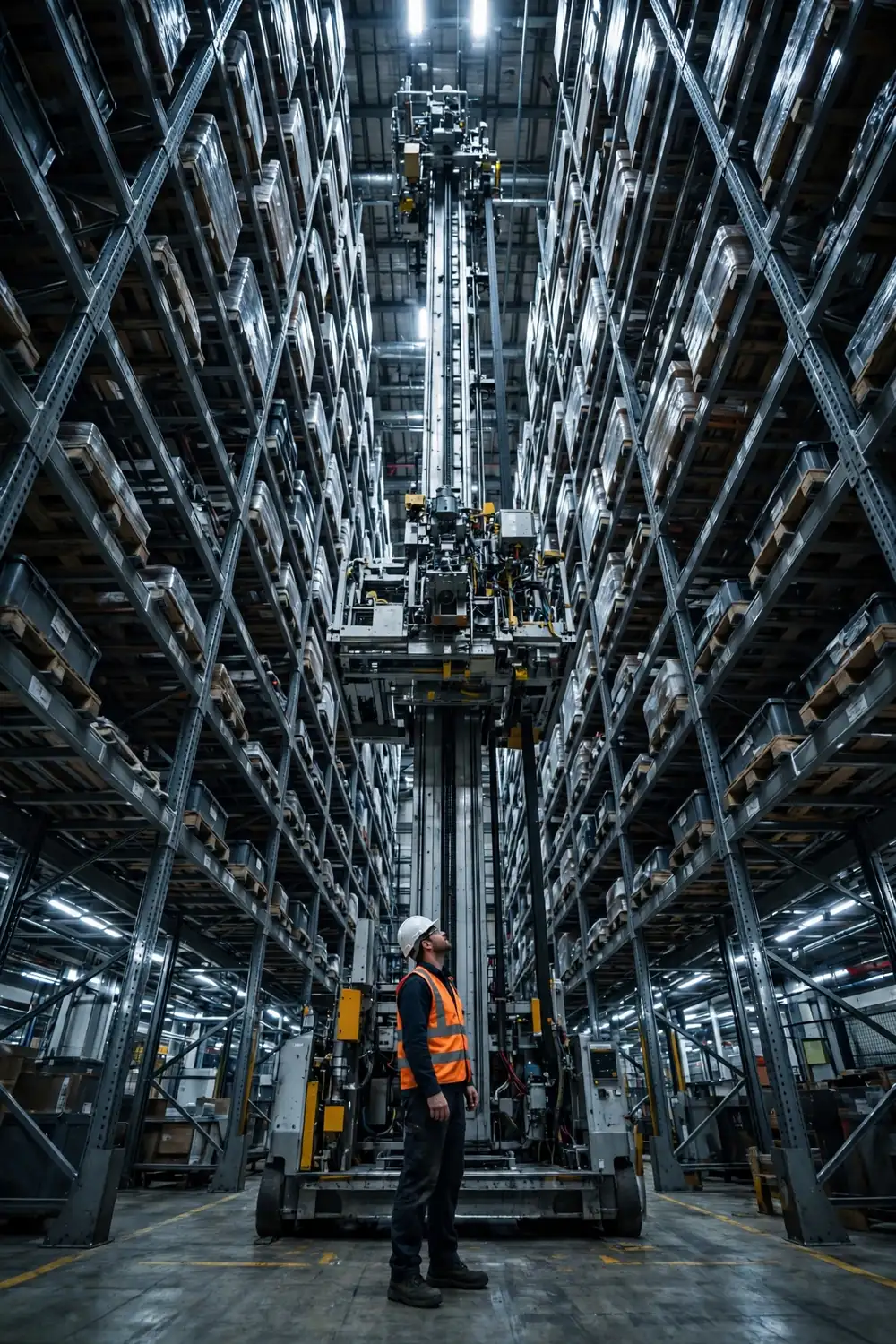
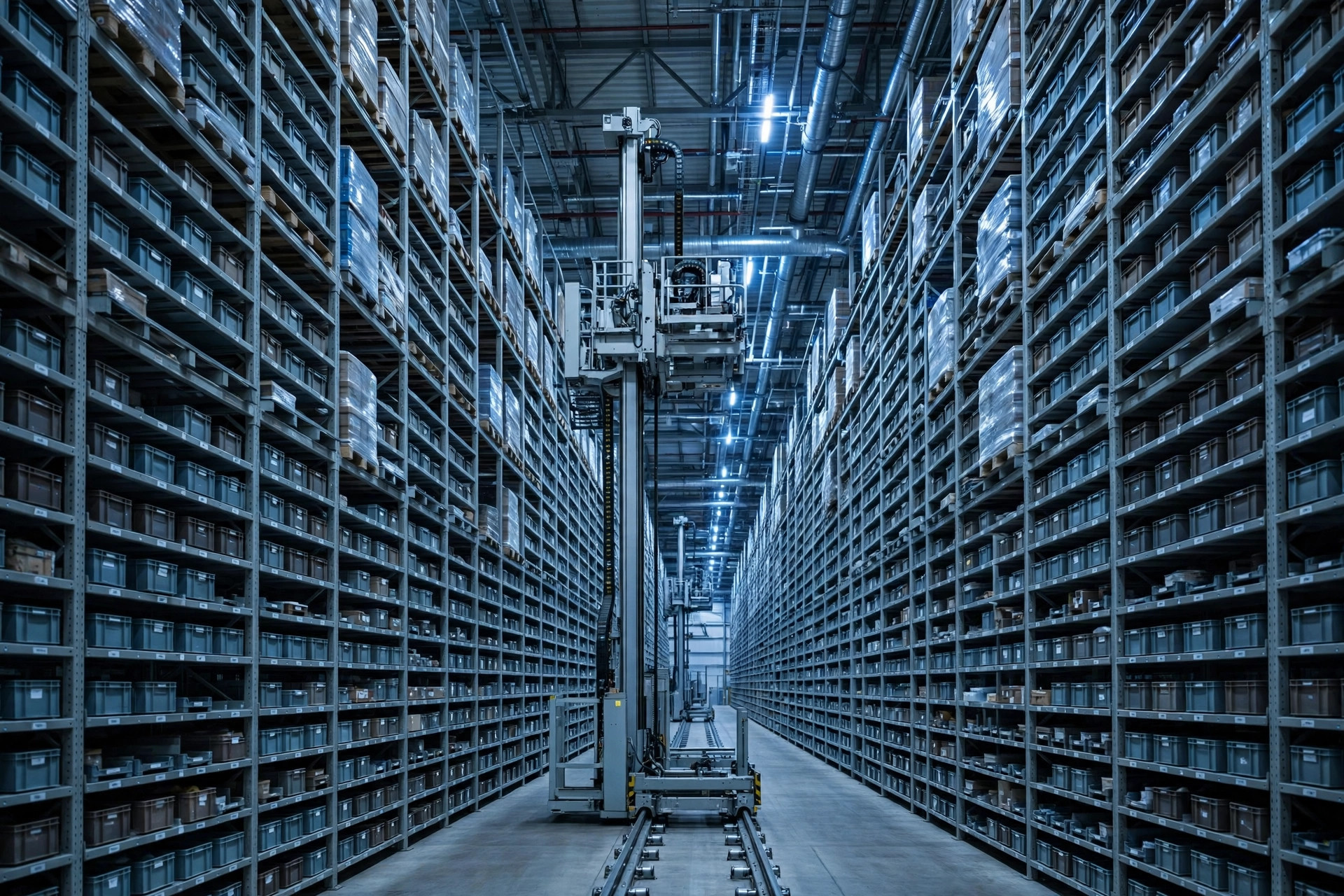
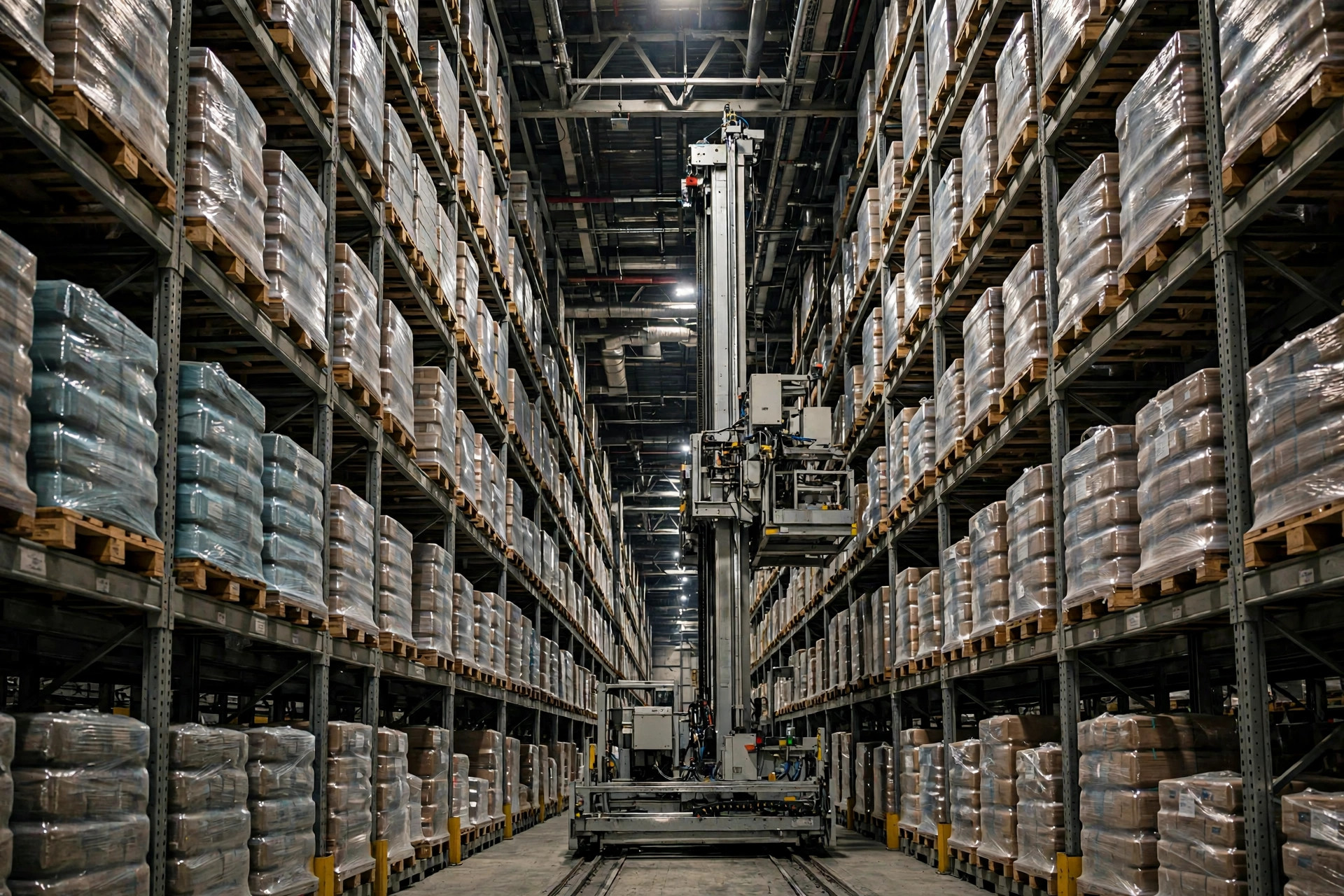
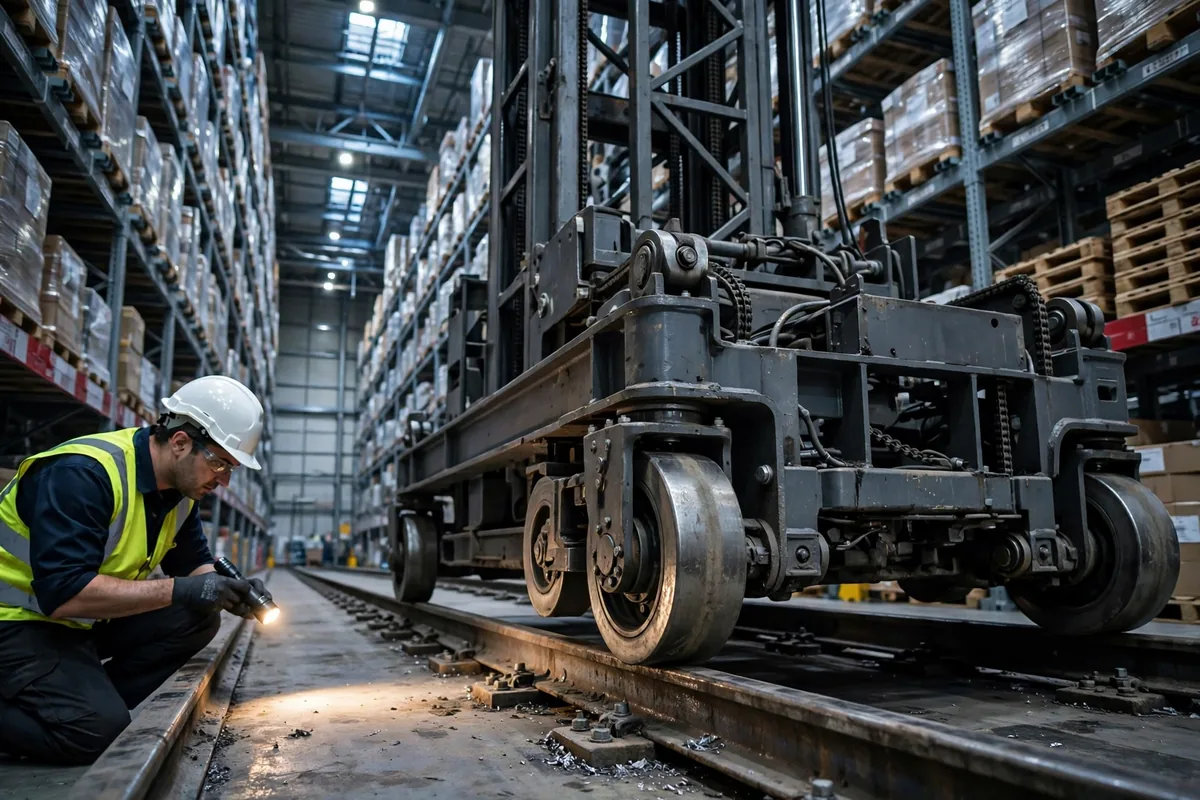
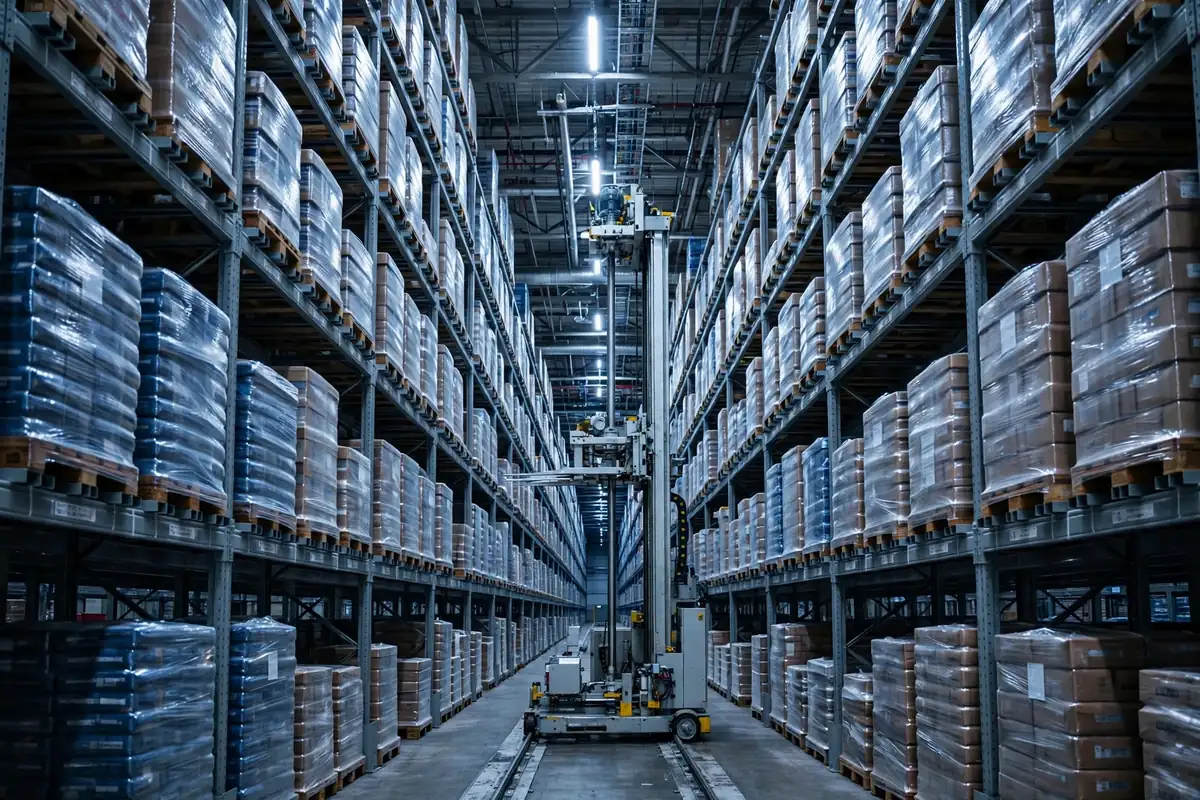
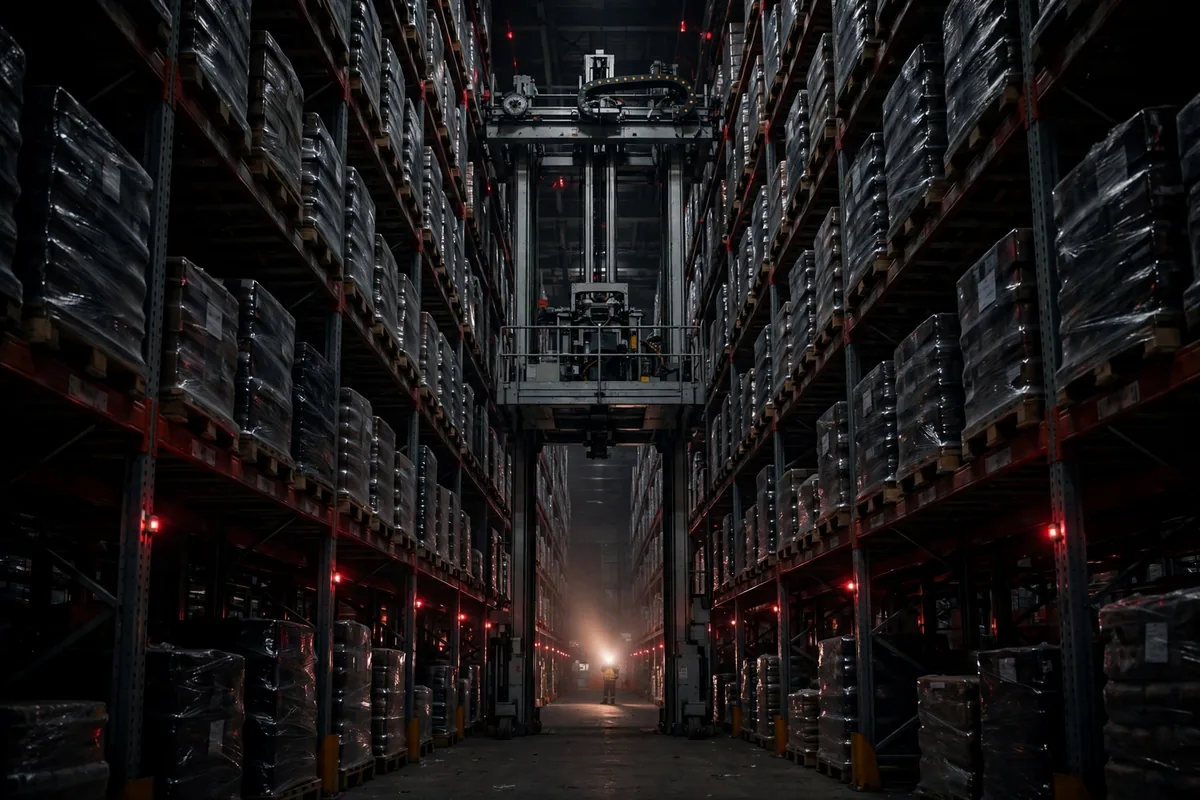
The moment power drops, a stacker crane does not glide to a stop. Its drive loses power and the brake locks it exactly where it is. If the forks are extended, the pallet may sit half on the forks and half on the rack. If the crane is travelling mid-aisle, the whole machine blocks the aisle where it stands. Shuttles are the same: they stop on whatever level they happen to be on. With the lights out, the aisle is close to pitch black.
Illustrative scenario: late one night, a mid-sized automated warehouse is running a night replenishment shift, with a couple of stacker cranes working the aisles. The grid blips, both machines lock in place at once, one stops at a high slot with a pallet hanging in the air, and the other blocks the aisle entrance. Two people are on duty, one in the control room and one on the floor, with no radios between them. One of them wants to reboot the system, the other wants to check whether the pallet is stable first. They are not solving the same problem, and time slips away while nothing moves. Every figure here is illustrative; another warehouse would have different figures and the same mess.
A task cut in half leaves the recorded pallet location uncertain, and nobody knows which location is right until every location is checked after recovery. The worst case is a pallet the system believes is put away while it is still on the forks. That is why the first job after an outage is not restarting production. If the books do not match reality, do not move freight, because every move buries a problem for the next shift.
What Backup Power Actually Protects in an Automated Warehouse
Plenty of people assume a backup power supply and a generator mean the warehouse never stops. A backup power supply protects control continuity, data, and a safe controlled stop. A generator protects critical loads, but it takes time to start and its load is limited, so it cannot bring the whole warehouse back to full speed at once. If those two roles are written down wrong, then during an automated warehouse power outage, people make the wrong call, assume power is about to return, and wait while the stoppage stretches on.
The table below is a hypothetical example comparing power setups during an outage. The figures are illustrative, not the real ratings of any equipment.
| Power setup | What it can do after the outage | How long it holds, illustrative | Cost of recovery, illustrative | | Backup power supply | Control stays alive, crane brakes safely, task states saved | Minutes | Low | | Generator on critical loads | Lighting, control room, a few aisles | Hours | Medium | | No backup power | Everything stops | Depends on the grid | High |
The point of that table is one judgement: the value of a backup power supply is not how long it lasts, but that it lets the equipment stop cleanly and knowingly. Whether a crane stops under control or locks up changes the recovery workload by a wide margin. Its value is that the control room has light, the system has power, and people can see the aisle and direct the work. Treat a generator as a production power source and it will be the first thing to trip.
Illustrative scenario: another warehouse had a generator, and when the power failed the duty manager pushed every aisle onto it at once, hoping production would not stop. The generator ran a short stretch before its overload protection cut in, and the control room went dark a second time. That second blackout was worse, because the first outage had already saved the task states, while the second dropped control power during load switching and left task records inconsistent. Critical loads go on first and production loads wait; a wrong order turns backup power into a new failure point.
Recovery Order in an Automated Warehouse Power Outage
Power returning does not mean work can start. My order is people first, then equipment, then the system. People means checking whether anyone is stuck up high or hurt in the dark; until that is confirmed, no equipment moves. Equipment means crane and shuttle positions, fork states, and whether the pallets are stable. The system means whether task records match physical locations; where they do not, count first and send no new tasks.
Counting is the step most often skipped, because everyone wants to rush the delayed orders out. My approach splits recovery in two stages: check a small area first, open a single aisle, run a handful of real orders, confirm the three locations agree, and only then open the rest. Opening one aisle looks slow, and it is the fastest route there is, because rework on wrong shipments takes far longer than checking.
Here is a counterintuitive judgement: after an outage, the person who most needs to slow down is the one most eager to speed up. That is exactly when the pace has to be held down. Resetting equipment, checking locations, and trial-running orders cannot be skipped. Time saved by skipping a step gets paid back with interest in wrong shipments, rework, and complaints. A slower restart that avoids days of rework is the cheaper restart.
The Three Things an Emergency Plan Must Spell Out First
A plan does not need to be thick. Thick plans do not get read. The three things to write first must each name a person and an action.
One thing is who is in charge after the power fails. There is only one incident commander on the floor, and the name goes on the first line with a phone number beside it. The stand-in gets a name too, not a job title. The commander decides safety first, not when production resumes, and that decision cannot wait for a meeting.
Another thing is how equipment stops, gets checked, and gets reset. A crane stopped high up, forks extended into a slot, a shuttle that cannot get home: each situation gets a written step a person can follow. Whether to switch off automatic mode before a reset, whether to count pallet positions by hand first, those details belong in the plan.
The remaining thing is the recovery order and the trial-run standard. Which aisle opens first, how many pallets get counted, how many real orders run before the system is trusted: the standard can be figures or actions, and what matters is that the floor team can tell where they are in it. If the trial run fails, counting continues, and no order pressure justifies releasing the aisle early. The person who releases it and the standard for releasing it sit on the same line.
Do not rehearse it in the daytime when everyone is around. Rehearse it on a night shift when the crew is thin; one rehearsal shows which lines are empty words. Revise after the rehearsal, rehearse again, and keep going until the person on duty can say what to do without looking at the sheet. In an automated warehouse power outage, equipment and backup power cover only so much. What holds the line is a plan someone has rehearsed, revised, and dares to follow. So ask yourself: if the power failed tonight, would the person on duty in your warehouse have a plan like that in hand?
By Lao Mi, Supply Chain Veteran (20 yrs)