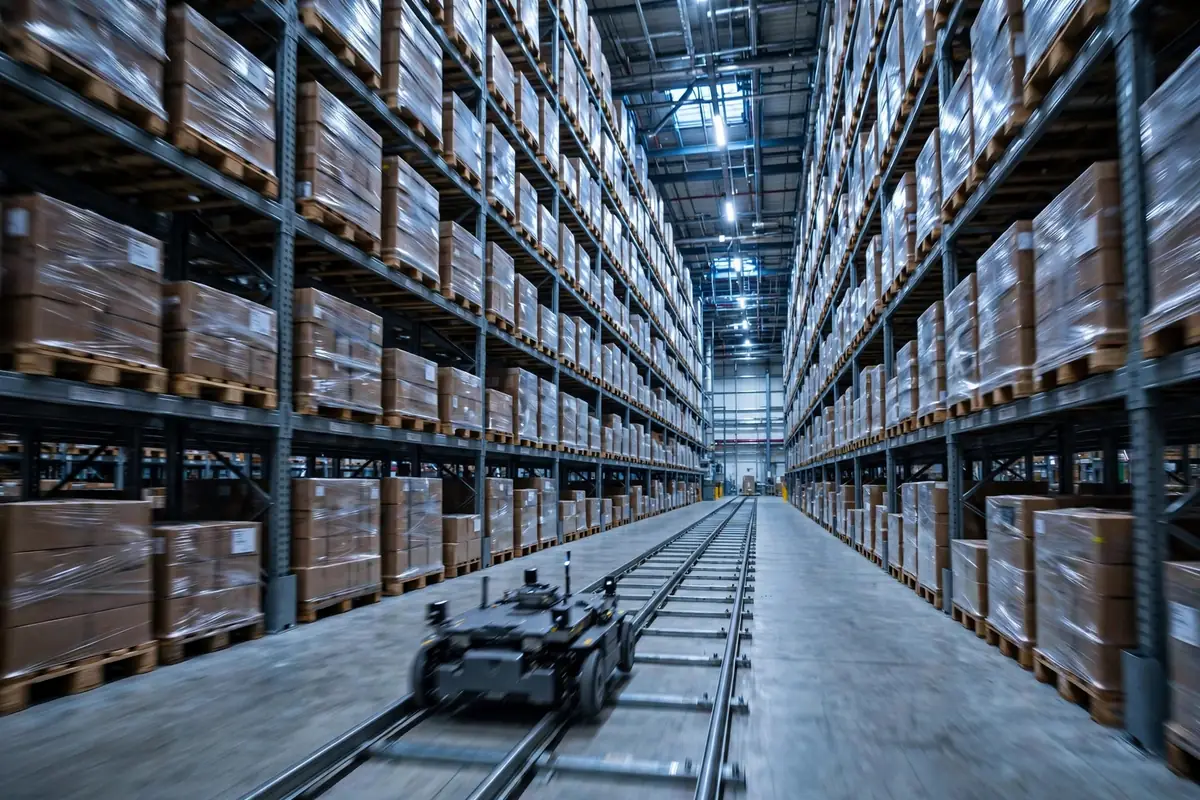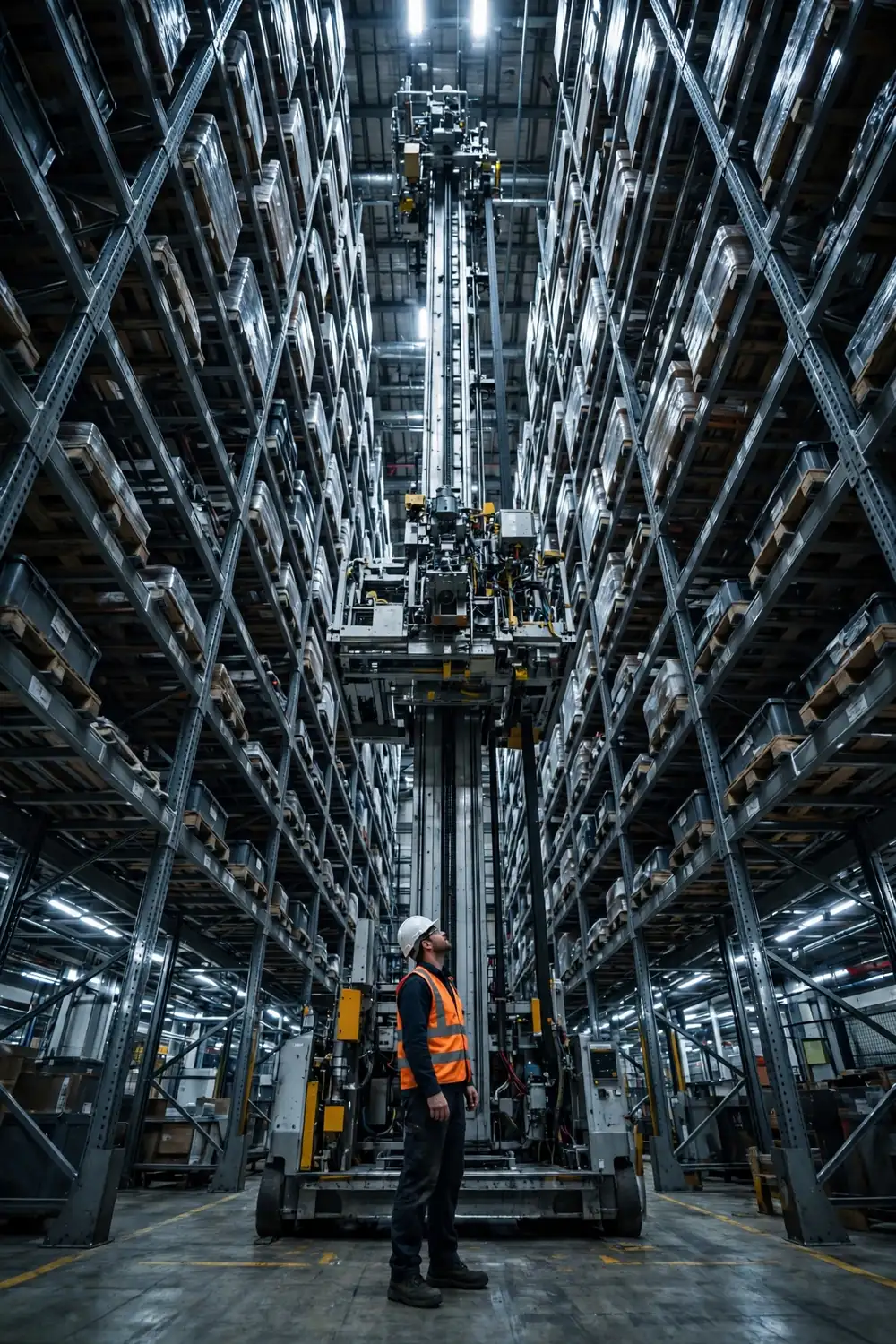
Last summer, on a Tuesday at 3 p.m., a power outage hit my warehouse. Not a tripped breaker — the whole street went dark. My little shuttle was sitting mid-aisle with a pallet on its back, and the stacker crane was parked on level three with its forks half out and a load hanging in the air. All I could think was: that's today's orders gone.
My warehouse is 3,000 square meters. The mini ASRS is second-hand, six meters tall, two aisles. Next to the big warehouses, my little setup is barely worth mentioning. But a blackout doesn't care how big your warehouse is. The big players ride it out on backup power. A small warehouse like mine gets by on a one-page plan and a bag of homemade tricks. That outage lasted 47 minutes. Not one pallet lost, not one order missed. Not because of fancy equipment — because we had thought through every step in advance.
The power outage hits — don't climb the racking
In the first ten minutes after the lights go out, don't rush to fix anything. Steady the people first. The aisle is dark, the racking is tall, and there may be pallets sitting on the floor from the last unload. Climbing up to grab a load right then is the most dangerous move there is. I have watched someone grab a flashlight after a blackout and scramble up the racking, slip, and twist an ankle before the load ever came down.
Do three things instead. Start by checking the breaker panel: is this our own trip, or is the whole area down? Our own trip, try resetting it. Whole area down, stop fiddling and call the property manager and the power company for an estimated restore time. Then photograph where the crane and the shuttle stopped — which level, whether the forks are out. One minute of photos now saves two hours of arguing later. And call your customers: any order due out today, give them a heads-up that the warehouse lost power, that you are handling it, and when you expect to be back. Customers can live with a delay of a few hours. What they can't live with is silence.
Two years ago I visited a friend's warehouse, 12,000 square meters, a 12-meter crane. During a blackout there, the operator's first instinct was to climb up and look at the load. He knocked a sensor out of alignment. After power came back, the system refused to recognize that level, and the stock check ran past midnight. Since then I have had one rule: after a blackout, nobody climbs the racking. Photograph, call, wait.
The crane is stuck mid-air — now what?
A load hanging in mid-air is the worst part of the whole mess. The crane is parked meters up, a load still on its forks, nothing coming down, and the aisle is blocked. Don't force it. Yanking and shoving can drop the load — damaged equipment is the small problem, a person underneath is the big one.
The proper way is the manufacturer's manual mode. Most stacker cranes and shuttles have an emergency procedure built in: release the brake by hand, crank the load down, or inch it along with a spare handheld terminal. The catch is that you have to know the procedure before the blackout, not during it. Every year in the slow season, I spend an afternoon walking through the full manual routine with the manufacturer's support tech on video, record it on my phone, and stick a one-page operation card on the control cabinet. Last summer I followed that card and lowered the shuttle's load pallet by pallet with the manual release. Twenty-five minutes, start to finish.
If the load sits too high for manual mode to reach, wait for power. Waiting is not sitting idle — ship what you can from the zones that are unaffected, and get tomorrow's orders sorted early. And whatever you do, don't send a forklift after a load hanging high up. A forklift reaching for a suspended pallet is unstable, and one wobble can tip the whole thing. I learned that the hard way in the winter of 2023, when my warehouse lost power and a well-meaning forklift driver tried to pull a pallet off level three. The pallet tilted, half a pallet of goods hit the floor, and I paid the customer over 800 yuan in compensation. Since then, anything out of reach waits for power. No heroics.
The backup power math: what a small warehouse can actually afford
Mention backup power to a small warehouse owner and watch them flinch at the quote. A full setup costs about as much as half another stacker crane. We can't burn that kind of money. But "buy nothing" is not the answer either. The sweet spot sits in the middle: keep just the control cabinet powered.
The reasoning is simple. After a blackout, the real headache is not that the crane stopped — it's that the control cabinet lost power and the position data went with it. When power returns, the system no longer knows where anything is, and the whole aisle needs a recount. Half a day, gone. Put a small backup unit on the control cabinet and the network gear so they stay online through the outage, and the position data survives. The crane returns to home on its own, and you are running again in about fifteen minutes. I call it "save the brain, not the arms."
Here is the comparison I worked out for my own warehouse — a hypothetical example, so treat the figures as indicative and check the manufacturer's latest quote:
| Option | Rough cost | What it saves | Who it's for |
|---|---|---|---|
| Buy nothing | 0 yuan | Nothing — a manual recount after every outage | Warehouses with very low-value stock and zero budget |
| Control cabinet only | about 3,000–8,000 yuan | Position data survives, back up in about 15 minutes | Most small warehouses — this is my tier |
| Control cabinet plus emergency lighting | about 8,000–15,000 yuan | The above, plus you can see in the aisle while lowering loads by hand | Areas where outages happen often |
| Full backup, machines keep running | about 150,000–400,000 yuan | Operations continue through the outage | Big warehouses where an outage costs a fortune |
There is a counterintuitive conclusion buried in that table: the most valuable backup power in a power outage is not the kind that keeps machines running. It is the kind that keeps the system remembering where things are. A machine stopped for half an hour costs half an hour of output. Lost position data costs half a day of recounting, plus orders that might ship wrong. A small warehouse has to spend its money where it counts: that one small unit on the control cabinet.
After the power outage: don't hit start yet
The easiest mistake after power returns is hitting start and letting the machine run home on its own. Voltage may still be unstable in the first minutes, and the system's data may not match what's physically on the racks. Starting blind just pushes the problem downstream.
My restart routine has four steps. Step one, check the power is steady: wait five minutes and watch for flickering lights or alarms on the control cabinet. Step two, check positions against the photos from the outage — shuttle level, crane aisle, one by one. Step three, return to home slowly in manual mode, never automatic, and confirm the track is clear. Step four, spot-check three to five pallets by scanning before taking new orders, and confirm the system stock matches the physical stock.
Last summer this routine caught a real problem at step two. The system said the shuttle was on level two, bay three. The photo showed bay four. One bay off, and that's a mis-shipped order and a compensation claim. It turned out the shuttle had slid half a meter in the instant the power cut out. If I had hit start right away, that wrong order would have gone out the door.
That half hour of checks looks like wasted time. It is the most valuable part of the whole plan. A power outage is not the scary part. Starting up careless after one is.
A small warehouse has its own way of surviving. The plan doesn't need to be a fifty-page document — one page on the control cabinet door is enough: who checks the breaker panel, who calls for the restore time, who to call when a load is stuck, who checks everything after power returns. Practice it one afternoon every six months, in the slow season, so it works in the busy one. Outages are going to happen. The point is to meet them without panic.
By Xiao Ma, Small Warehouse Owner