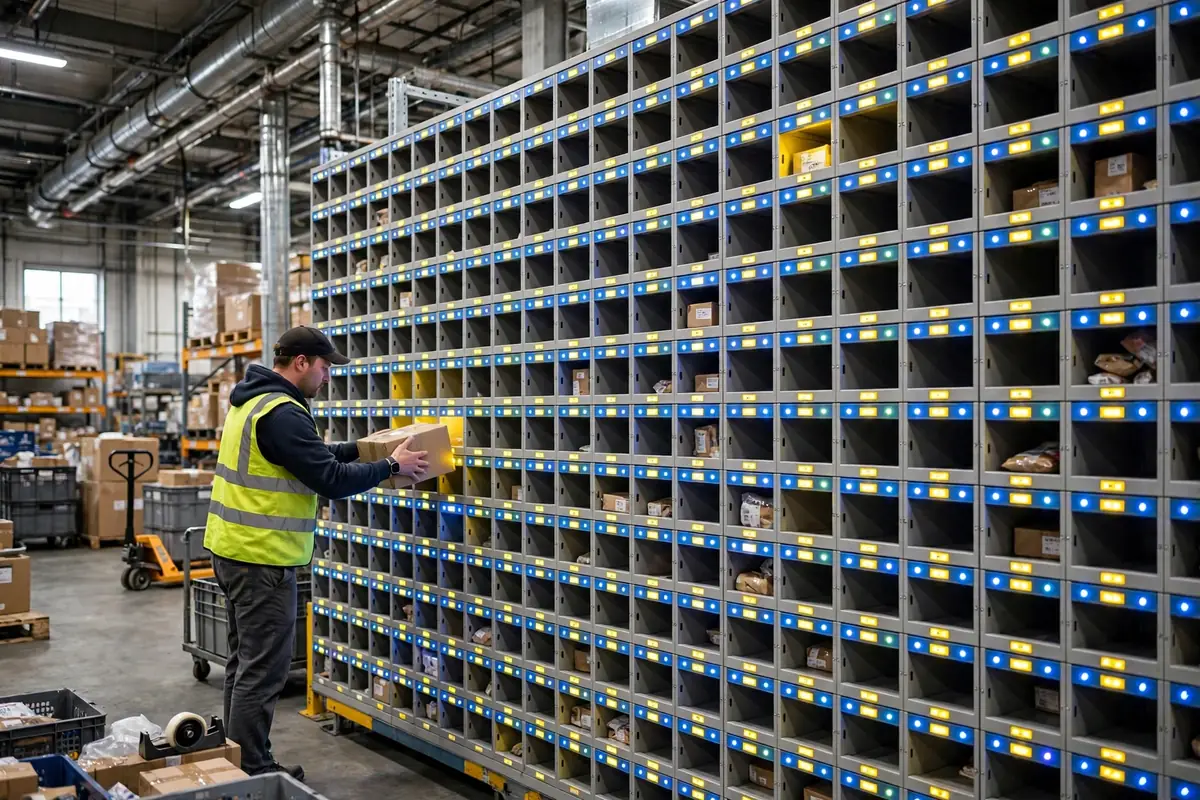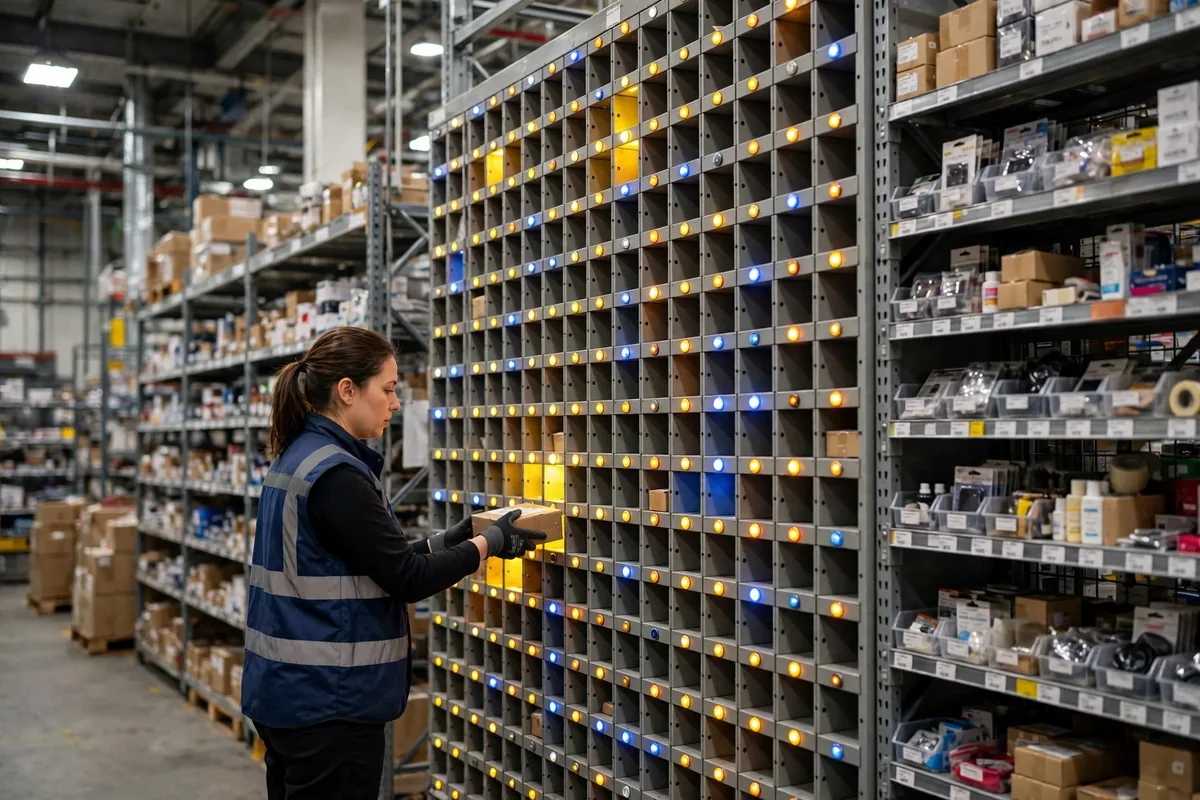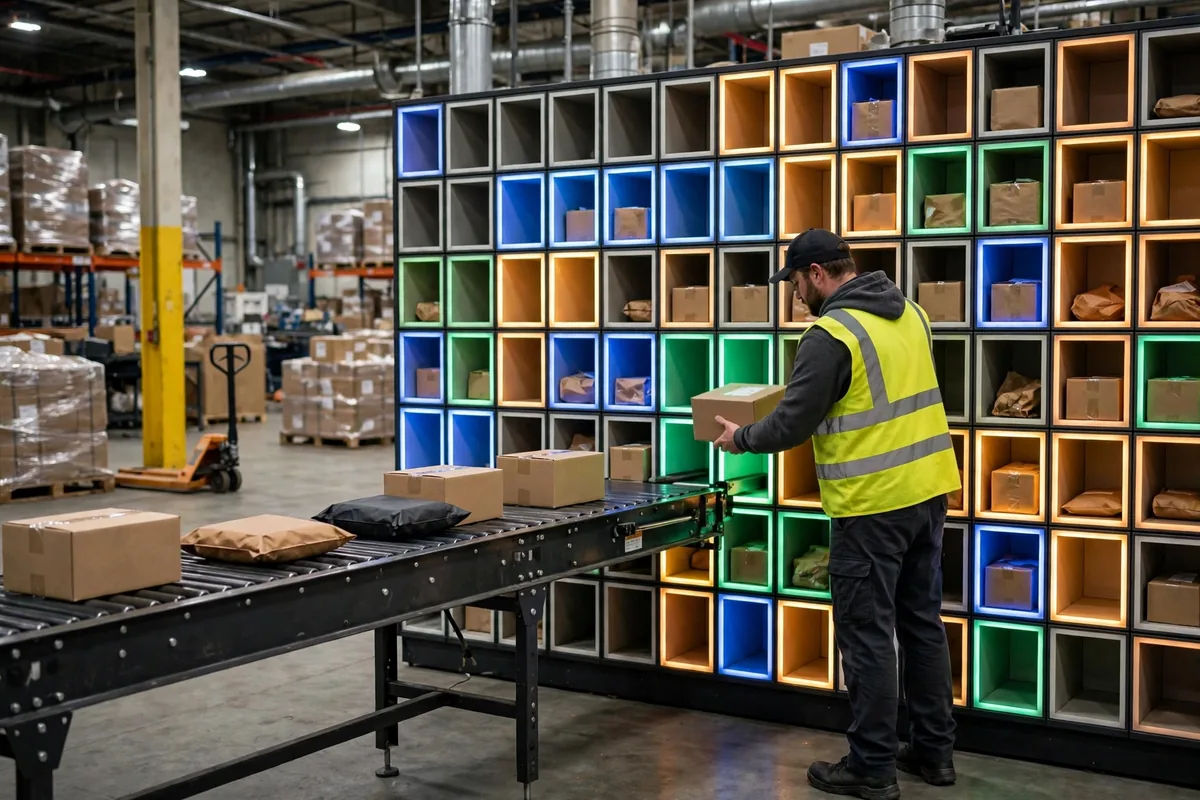
An automated put wall setup succeeds or fails long before peak season. I have commissioned walls that lit up perfectly on day one and were bypassed by operators by week two. The hardware worked. The setup did not. Think of it like a high-end dishwasher nobody uses because the racks were never adjusted — impressive, expensive, and quietly ignored.
If you still need the broader logic of secondary sortation, start with this complete put-to-wall secondary sortation guide first. That piece covers when a wall makes sense. This one covers only setup, commissioning, and the staffing ramp.
Automated put wall setup commissioning: slow first, then fast
My commissioning order never changes: one cubby, one wave, one exception at a time.
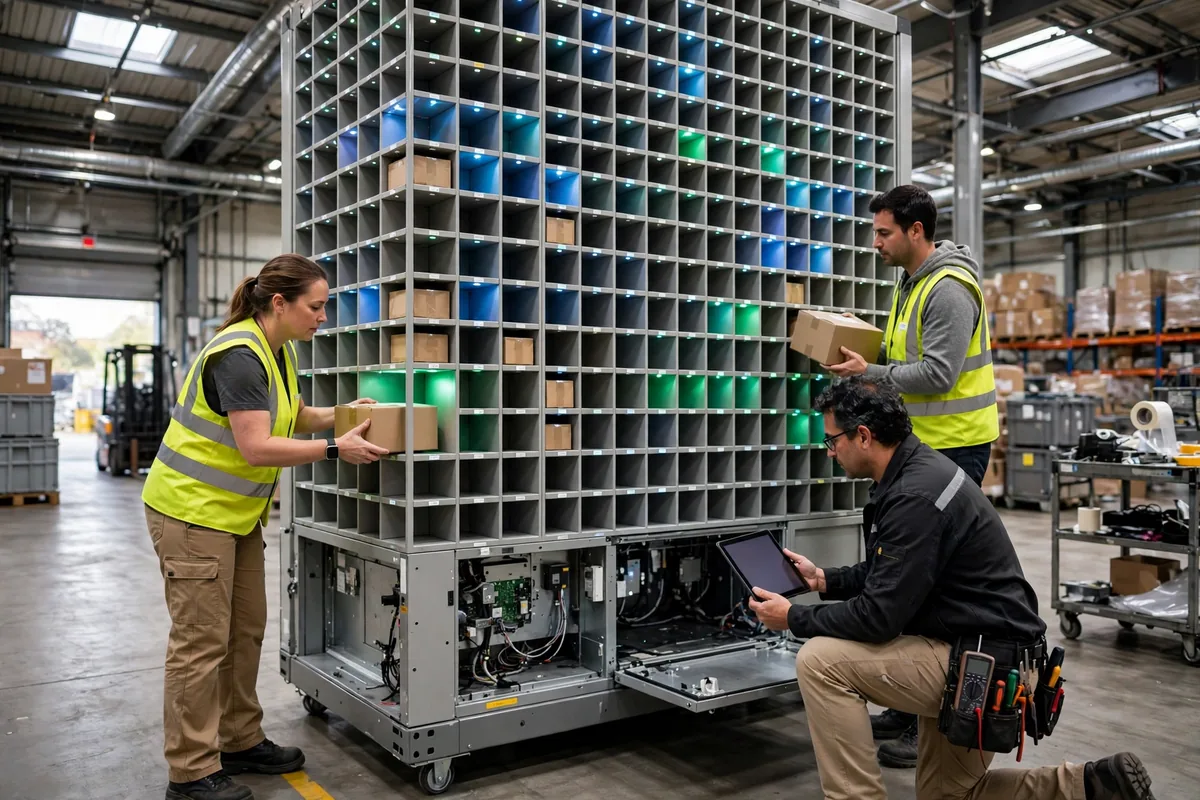
Step one is cubby mapping validation. In Reno, Nevada, last year, at a roughly 90,000-square-foot apparel site with several dozen wall positions, we walked every cubby with an empty tote — scan, light, confirm, repeat. We found three positions where the physical light did not match the system cubby number. That sounds trivial until you picture a mislabeled locker bank: every door opens, just for the wrong parcel. Skip this check to save an hour and you will spend weeks chasing mis-sorts with no clean root cause.
Step two is segmented rate testing. Do not start at full speed. Run a complete wave slowly and watch four segments separately: infeed, scanning, light direction, and put confirmation. In most sites I visit, the wall is not the bottleneck. Unstable infeed is. Product starves the wall, then floods it, and the wall's rhythm breaks. Stabilize the feed rate first, then argue about the wall's ceiling.
Step three is deliberate exception injection. Create a duplicate barcode. Smudge a label. Fill a cubby. Put to the wrong cubby. Drop the network and reconnect. In Columbus, Ohio, in 2023, at a household goods warehouse, we deliberately overloaded a few hot SKUs into single cubbies during testing. The full-cubby alert lit up but did not lock the position, so operators kept stuffing product in. We changed it to auto-lock plus an audible cue. If we had not forced that failure in testing, the first real promotion would have forced it for us, at volume.
Automated put wall setup staffing ramp: week one will be slower
Here is the counterintuitive part most vendors will not say out loud: productivity usually dips in the first week, and staffing to the demo rate on day one makes it worse, not better.
I ramp crews in three stages. The ranges below are illustrative planning patterns, not guarantees — calibrate them to your order profile:
| Stage | Staffing pattern (illustrative) | Goal | What the lead watches |
|---|---|---|---|
| Days 1-3, shadow | Normal crew plus one experienced coach | Learn the flow, ignore speed | Exception types, cubby habits |
| Days 4-7, ramp | Coach time halved, exception role kept | Approach normal rhythm | Full cubbies, mis-puts, replenishment |
| Week 2 onward, steady | Standard crew | Stable quality and output | Top three exception causes |
At a cosmetics warehouse in Dallas, Texas, management staffed day one to the vendor's demo pace. New operators could not keep up with the light rhythm, missed confirmations, and put to wrong cubbies. By evening the audit area was piled up. We stepped back to shadow mode — one person putting, one patrolling cubbies — and errors fell within three days. Only after a full week did we remove the coach. The wall had not changed at all. The ramp had.
Roles matter as much as headcount. Separate three jobs clearly: the put operator follows lights and nothing else, the cubby patroller handles full positions and completed cartons, and the exception handler owns damaged barcodes, system holds, and handoff to audit. When one person tries to do all three under pressure, quality is the first thing to go. It is like asking a driver to steer and answer messages at the same time.
Training should be short and physical. Fifteen minutes on four actions — light, put, confirm, full-cubby response — then straight onto the wall. Correct mistakes in the moment. An hour of theory teaches less than ten real exceptions handled with a coach beside you.
Post a short exception card at the wall. If a barcode will not scan, change the angle once, then route it to the exception lane instead of scanning forever. If a cubby is full, lock it and call the patroller; do not force one more unit in. If the system freezes a task, leave the physical product exactly where it is; do not move the carton on guesswork. Unglamorous rules, but they are what saves a night shift.
Finally, the maintenance trap. Light strips, buttons, and scanner windows are wear items. Dust and tape residue quietly degrade reads. Spend a few minutes at shift start wiping windows and testing lights, and sample button feel weekly. Skip it, and in a few months everyone will blame the software for what is really dirty hardware.
Whether the money was worth it comes down to one number for me: exception closure time. If an alert sits waiting, the fastest wall in the building is just creating a neater backlog. Commission slowly, ramp people honestly, rehearse exceptions before peak does it for you, and the wall becomes something the night shift actually trusts. One more piece buyers underestimate is wave sizing. A wave that is too large floods cubbies in minutes and forces constant patrolling and clearing. A wave that is too small never lets operators settle into a rhythm — just as they find the pace, the wave ends and the order mix changes. Vendor demos use curated order profiles for a reason. Your real mix of bulky items, multi-unit orders, and single-line orders behaves completely differently. Commission on your real orders, even if the numbers look slower. A true slow number beats a fast fictional one every time.
Infeed ergonomics belong in commissioning too. If the feeder loads product without regard to label orientation, the scanner downstream pays for it with re-reads all shift. If the put operator has to twist awkwardly for half the cubbies, fatigue will quietly tax your rate by the end of the shift. These are not glamorous engineering topics, but automation losses rarely come from one dramatic breakdown. They come from small motions repeated thousands of times. Fix standing positions, tote placement, and the exception lane location during setup, and put them on the start-of-shift checklist.
And never accept a wall on day-shift evidence alone. On days, engineers, supervisors, and the vendor are all standing there, so every problem gets an instant answer and the operation looks smooth. Run one real night shift with no vendor safety net before you sign off. If the night crew can run it alone, you have a system. If only the day shift can, you have a demonstration.
By Da Liu, Automation Engineer