Talk about a put to light system for ecommerce and most vendors start with the light. How fast it turns on, how bright it is, how many colours it can show. I start somewhere else. Show me your order profile for the last seven days and your staffing plan for the wall, and I can usually tell you in ten minutes whether that wall will speed you up or just light up your bottleneck in a prettier colour.
The light responds in milliseconds. A human reaches, turns, scans, confirms and walks in seconds. System takt is never set by the lamp. It is set by what your orders look like, how long each cubby stays occupied, and who is standing where when the peak hits.
Reading your order profile before a put to light system for ecommerce pays off
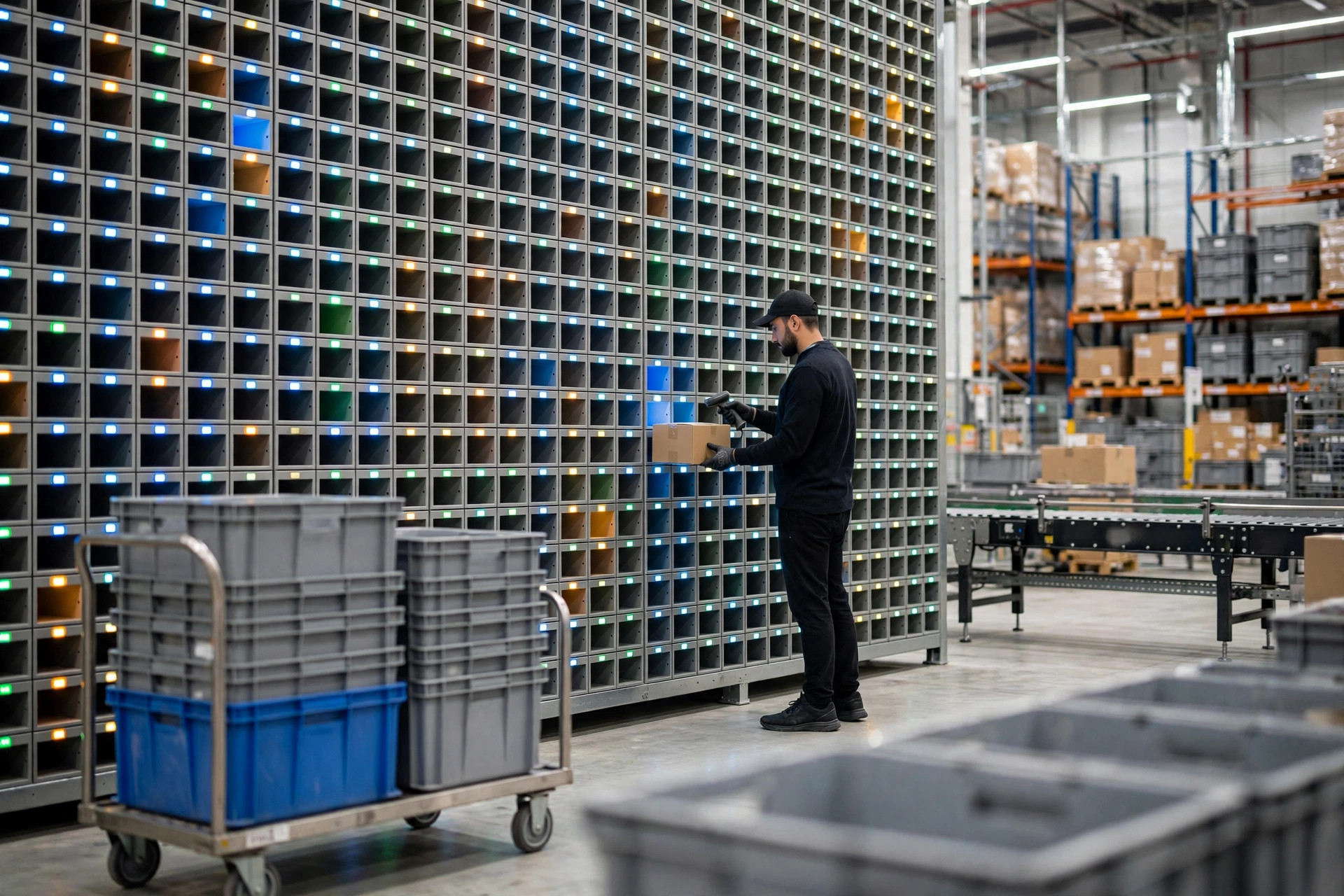
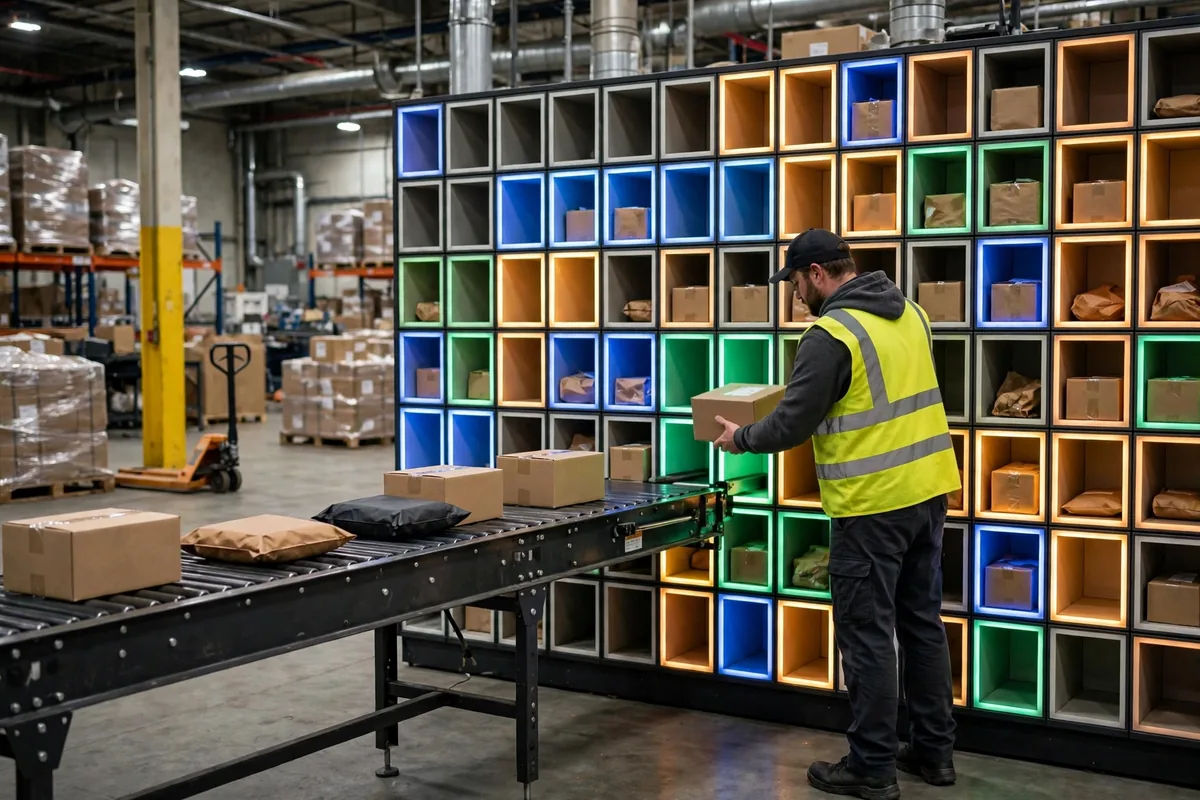
Think of the sort wall like a serving counter. If every table ordered the same set meal, portioning is easy. If one table ordered a banquet and the next thirty ordered a single snack, the same counter jams. Three numbers tell you which kitchen you run.
First, your single-unit rate: the share of orders with exactly one item. When that share is very high, orders do not need to wait in a cubby to be completed at all, and sorting often becomes an extra touch you pay for twice. Second, split your multi-unit orders properly. Do not hide behind an average items-per-order figure. Look at two-to-three item orders, four-to-six, and seven-plus separately. The wider that spread, the more uneven your cubby dwell time will be. Third, look at SKU concentration. If a small head of SKUs drives a large share of order lines, those products will be sorted into cubby after cubby, and your upstream picking rhythm will be dragged around by a handful of locations.
Here is the rough field test I use before anyone signs a purchase order:
| Order profile | What it looks like | What the wall really does |
|---|---|---|
| Mostly single-unit | Singles dominate, multi-unit is rare | Wall sits idle; direct pack with a check is leaner |
| Small multi-unit | Two to five items dominate, SKUs fairly concentrated | Best fit; cubbies turn fast and output climbs |
| Mixed basket sizes | Large and small orders run together | Needs zoning or separate waves or large orders block the wall |
| Long-tail and scattered | SKUs spread thin, lines per order swing wildly | Picking starves the wall; the wall waits for work |
None of this is theory for its own sake. The same hardware is two completely different investments under two different profiles.
Two warehouses, two different failures
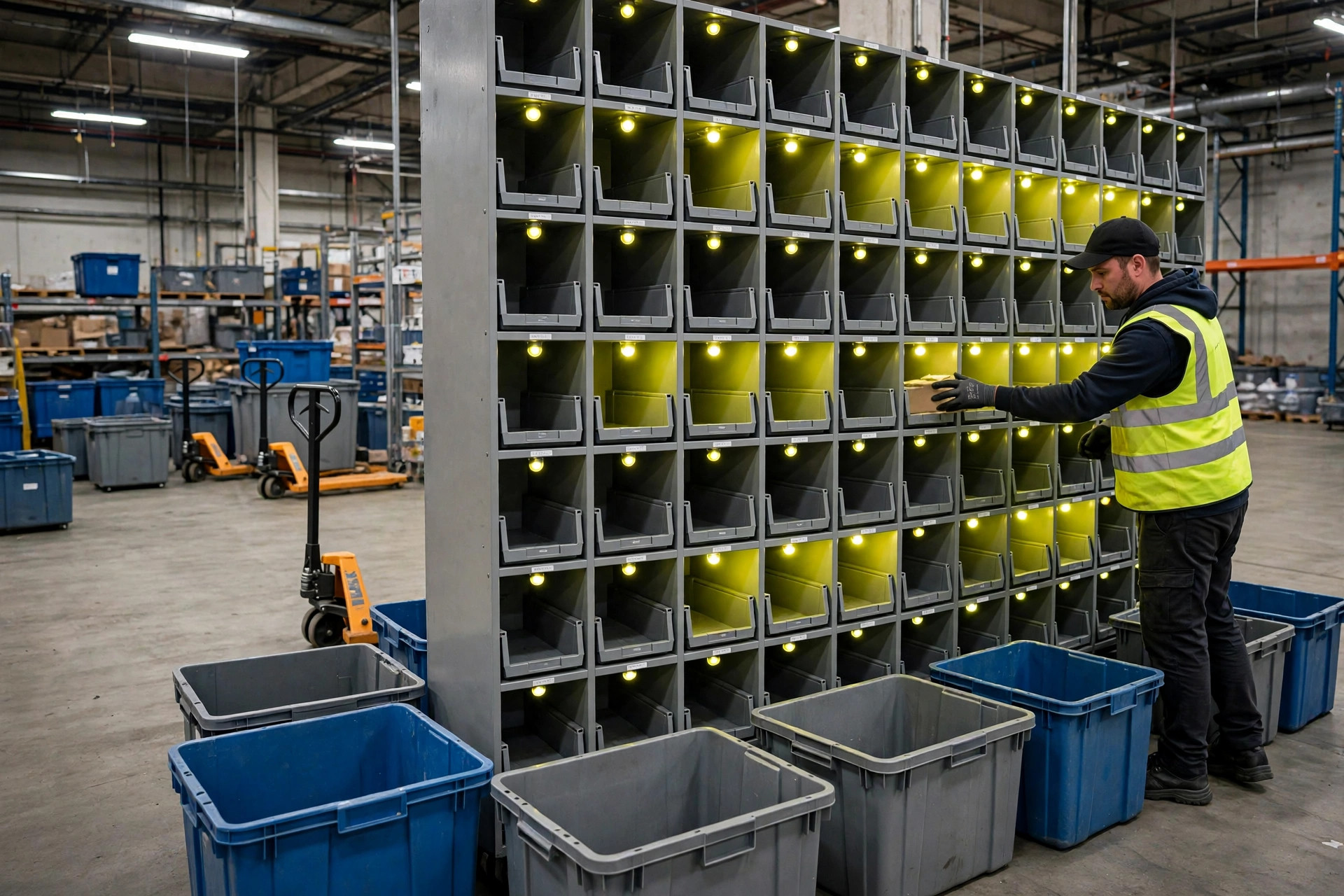
In late 2024, just before the big November sale, I visited a phone accessories warehouse near Shenzhen handling roughly eight thousand orders a day. On paper it was a perfect fit: small multi-item orders dominated. In the first week the supervisor told me output had barely moved and the wall kept jamming. I stood behind it for twenty minutes. Promotional bundle orders with a dozen or more items were being fed into the same wall. Each bundle waited for several upstream deliveries, so its cubby sat lit and occupied while small orders behind it had nowhere to go. Operators held product in their arms, then stacked it at their feet, and mis-sorts started exactly there, at floor level.
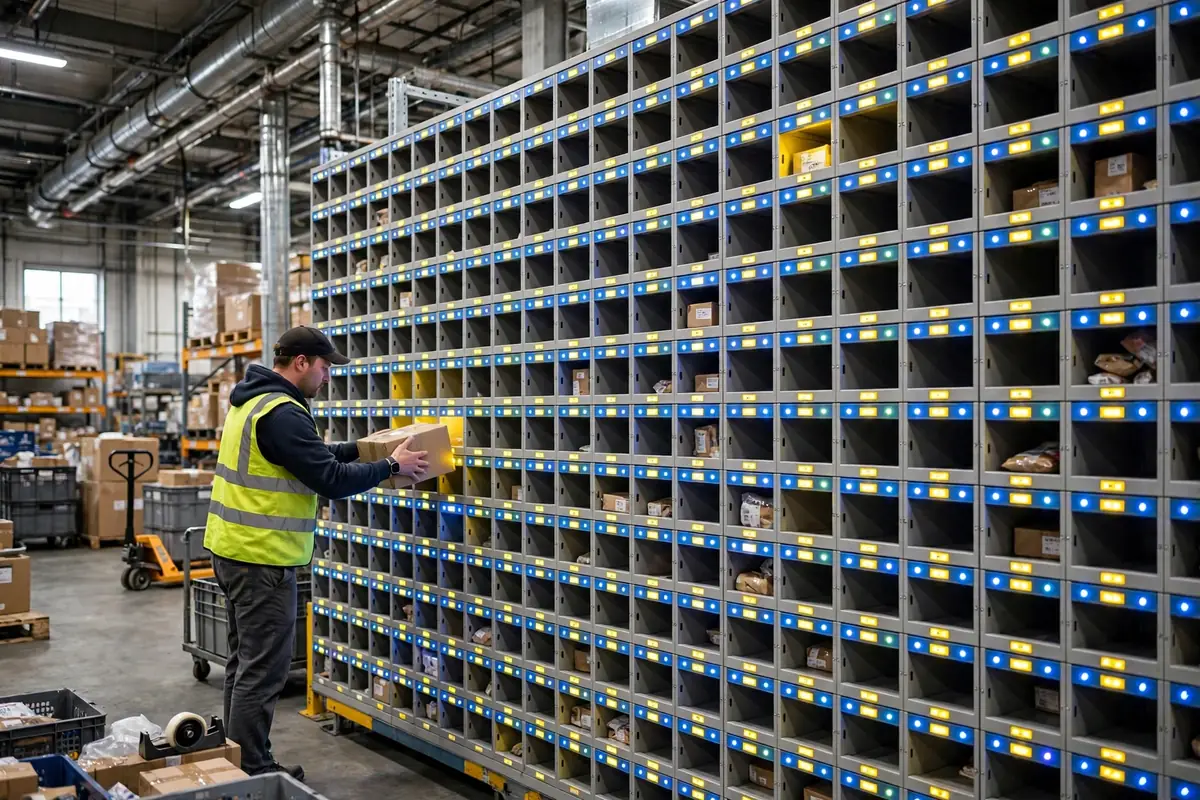
The fix was embarrassingly unglamorous. We split waves by profile: small orders stayed on the wall, large bundles went to a separate checking bench. We added a timeout rule so any order occupying a cubby too long was pulled out whole instead of welding itself to the wall. No new lights, no new controller. Cubby turnover smoothed out, completed orders per hour in the peak window rose clearly, and mis-sorts fell. If you want the hardware side itself, this guide to put-to-light sort wall selection and cubby design for ecommerce fulfilment covers the system in detail. My point is narrower: even a well-chosen system jams when the profile feeding it is mixed without rules.
The second case was an apparel warehouse near Hangzhou during the spring range launch in 2025. Their wall was not slow; it was hungry. A couple of hero products, a dress and a sun-protection jacket, drove a large share of order lines. Pickers kept looping back to the same few locations while sorters stood at dark cubbies waiting. The supervisor blamed the wave release logic. We timed the waiting instead of arguing about it, and waiting ate a serious slice of wall labour. We put a small forward staging pocket for the hero SKUs next to the wall, pre-filled it before the peak, and cut wave sizes down so consumption and replenishment could keep the same rhythm. Same wall, same crew, far less standing around.
The counterintuitive part in both sites was identical: more cubbies would have made things worse. More cubbies means a bigger wave, a longer walking span, more searching and more second-guessing at the button. It is like adding lanes to a junction and then wondering why merging got slower.
Staffing a put to light system for ecommerce: sorting fast is not shipping fast
The most common staffing mistake is stacking your best people on sorting because that is where the lights are. An order is not shipped when it is sorted. It still needs checking, packing, labelling and consolidation. Sort too fast for your checkers and you have not removed the jam, you have just moved it three metres downstream and given it cardboard.
My usual split looks like this. Put fast, accurate product recognisers on sorting, with a clear rule for calling exceptions instead of improvising. Put your most stubborn careful person on checking, because a sorter error that checking waves through becomes a return, a reship and a bad review. Split packing by basket size so small orders are not trapped behind the one huge order being boxed. Then keep one floater. That role sounds like a luxury until someone is absent or a wave lands badly, and then the floater is the only reason the wall degrades gracefully instead of seizing in a chain.
Do the takt maths honestly. In a forty-order wave, each sort is a short reach-and-confirm cycle, while checking and packing each order takes a multiple of that time. Staffing by headcount symmetry, one here and one there, looks fair on a roster and guarantees checking drowns first. Staff by work content per order, not by how many stations you bought. I have audited walls where the owner was pricing a second light rail while the real shortage was one checker and half a packer.
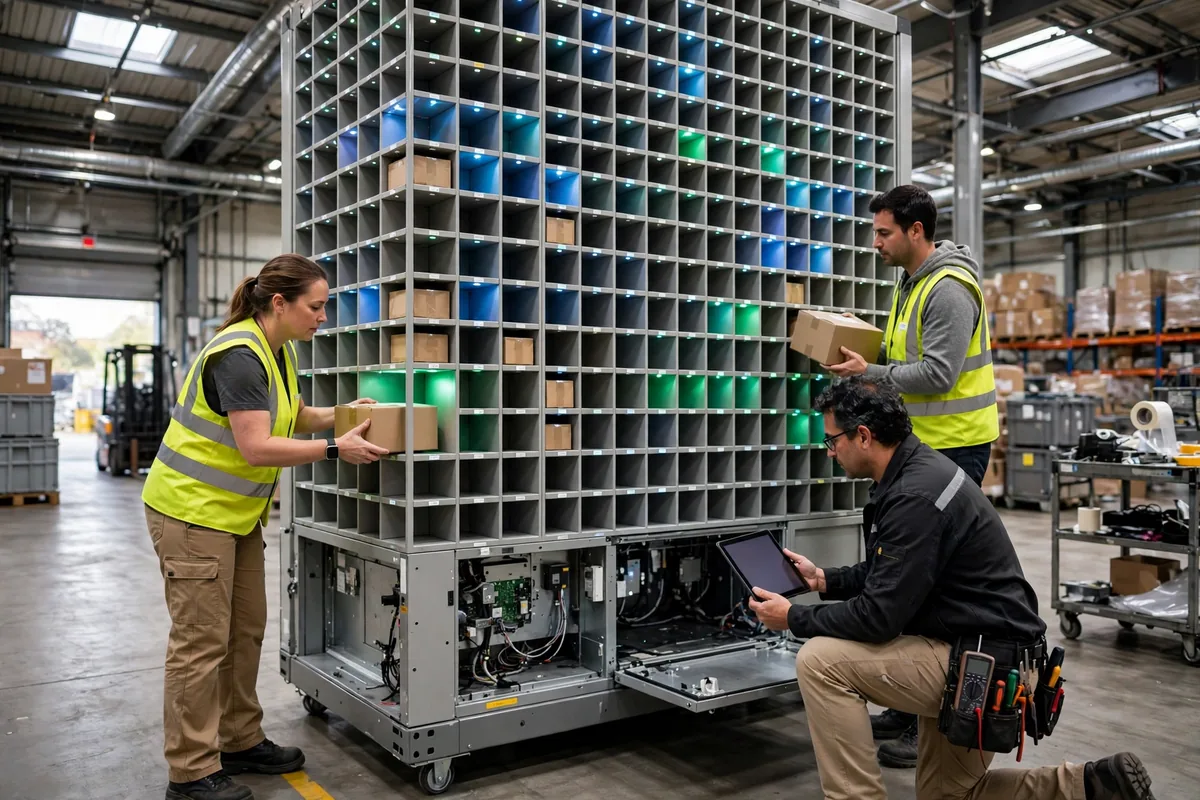
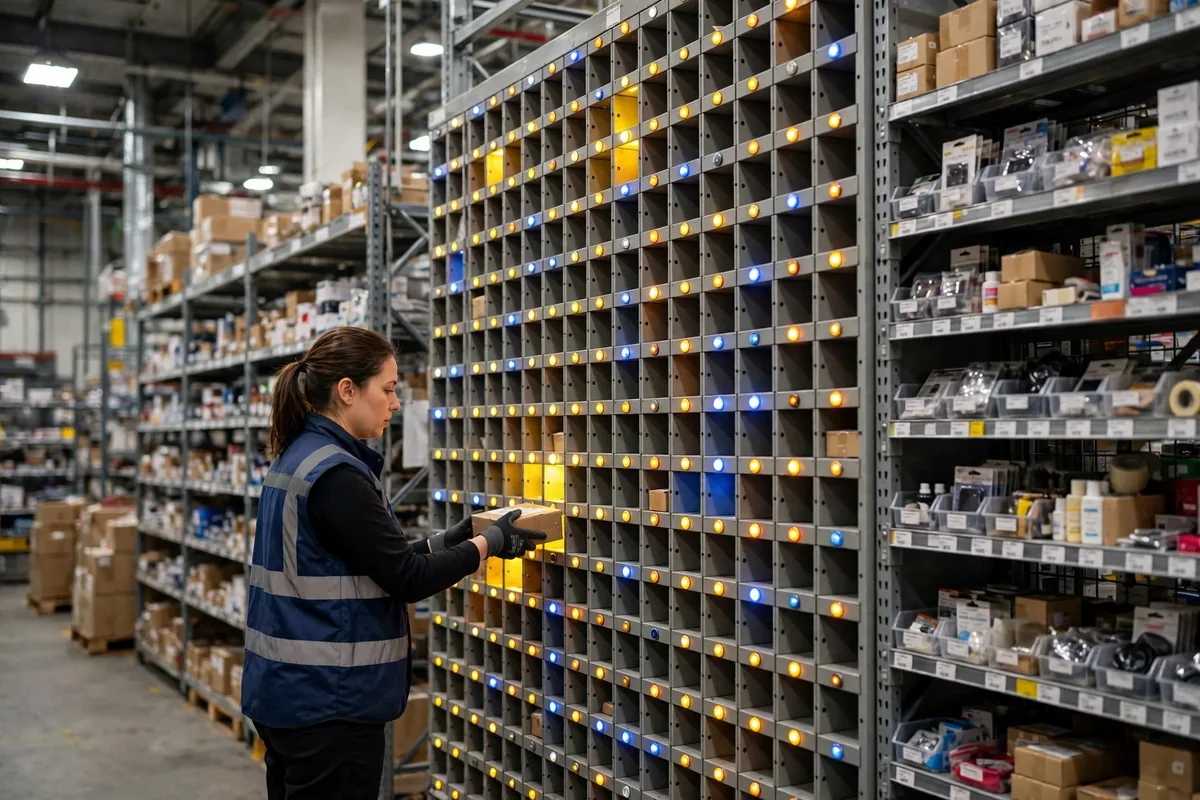
Maintenance deserves one blunt paragraph. Buttons and light modules are consumables. A cubby with a dead confirm button or a dim display does not announce itself politely; it quietly becomes a mis-sort generator. A proper pre-peak check walks a full simulated sort through every cubby and confirms that displayed quantity, button confirmation and the checking scan all agree. Doing that a week before your peak is cheap. Doing it during the peak, crouched behind the wall with a queue watching, is not.
So before you ask how fast the lights are, pull seven days of orders, split them by singles, basket bands and SKU concentration, and time sorting, checking and packing as three separate takts. If the profile fits and the crew behind the wall is staffed to match, a put to light system for ecommerce earns its floor space. If either one does not, you are buying a very expensive light show. Whether the money is well spent comes down to one number: checked orders completed per hour per metre of wall during your real peak. If that number does not move, the brightness never mattered.
By Da Liu, Automation Engineer