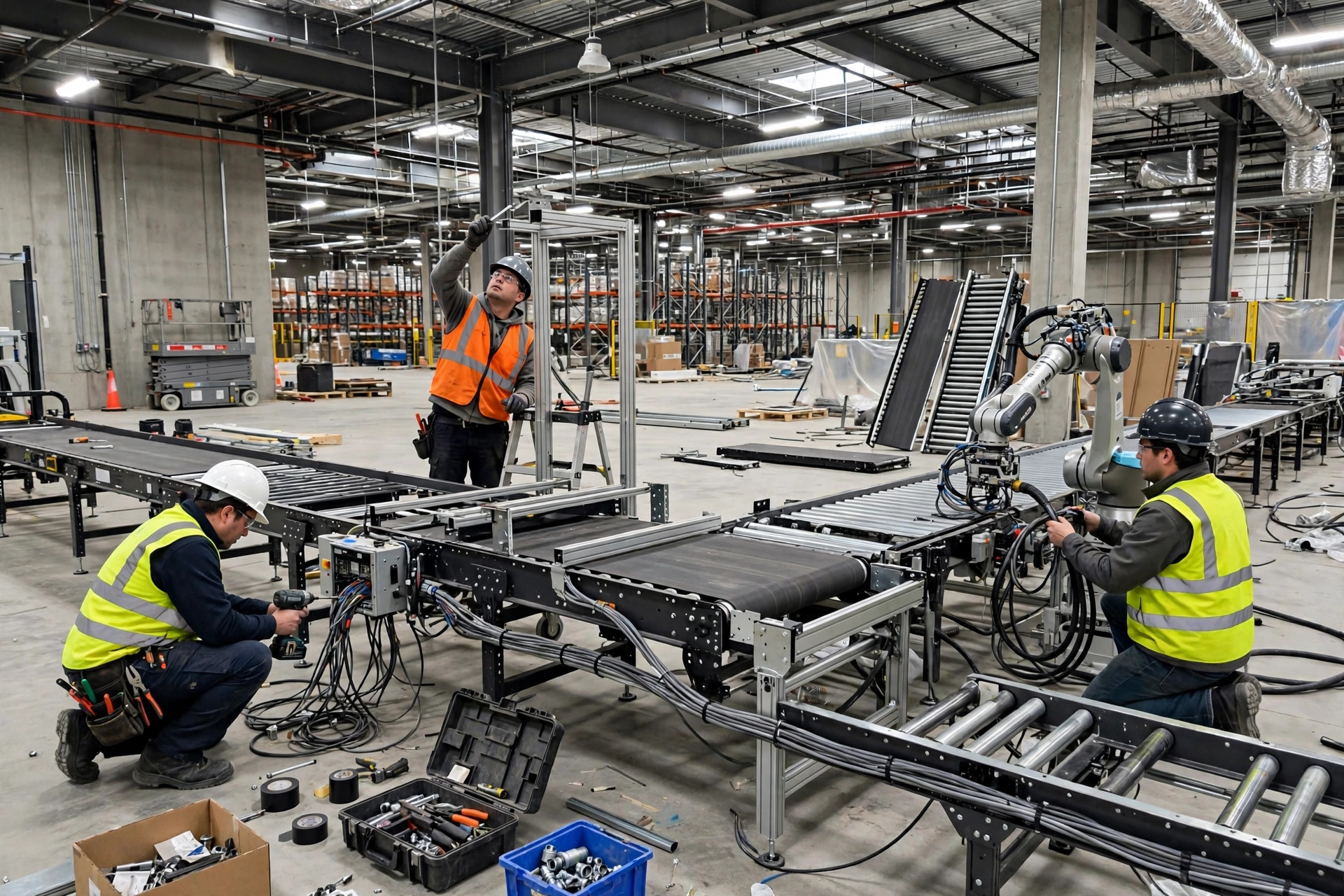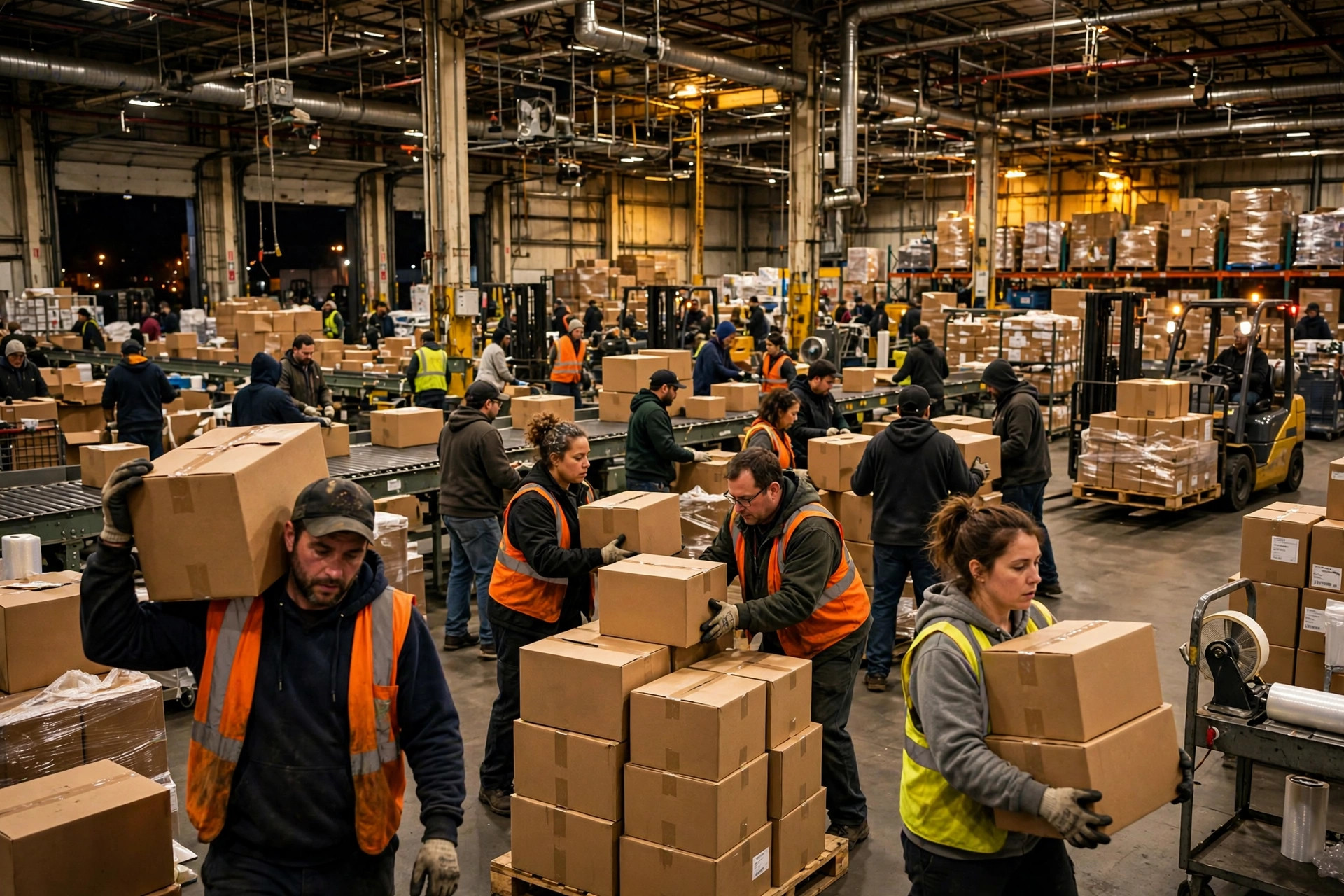
Let me open with a number. A 50,000-square-foot warehouse with 120 frontline workers carries a payroll of roughly $5.5 million a year. That's the number on the financial statements. You think that's your labor cost? The real bill is closer to $8 million. The extra $2.5 million is the opportunity cost of a manual warehouse: recruiting, overtime, injuries, errors, turnover, rent — a hidden tax, paid invoice by invoice. And automation? A mid-sized sortation line plus a few AMRs, amortized over five years, runs $1.5–2 million a year. So no — skipping automation isn't "saving money." It's swapping a one-time capital investment for a hidden tax that renews every single year.
No feelings, no vibes. Just numbers.
The Opportunity Cost, Itemized: Six Bills That Never Show Up on Payroll
Bill one: the peak-season hiring premium. November 2023, a 100,000-square-foot e-commerce warehouse in the Inland Empire was short 40 pickers two weeks before the holiday rush. The staffing agency's quote: $22 an hour, up from the usual $17–18. The owner signed. Two months of night shifts and overtime later, monthly labor cost was up more than 30% — and they still blew through capacity. Two weeks of delayed shipments cost them six figures in lost orders. That money was wasted: premium-priced temps who picked at half the speed of veterans.
Bill two: injuries. Back strains are routine in manual warehouses. In 2024, a home-goods warehouse in Texas had two back injuries; one case — claims, downtime, replacement labor, OSHA follow-up — cost six figures start to finish. The warehouse manager told me: "That one incident would have bought two forklifts." The more manual lifting you run, the more certain this bill becomes. That's just math.
Bill three: the turnover training tax. Annual frontline turnover of 30–50% is a common range across US warehousing. Hiring and training one replacement to independence typically costs $3,000–5,000. A 120-person warehouse losing 50 people a year burns $150,000–250,000 just on churn — and pays it again next year.
Bill four: picking errors. Manual picking error rates of 1–3% are a common industry range. Don't shrug at 2%: at 10,000 orders a day, that's 200 wrong shipments daily. Reship freight, returns handling, customer service, review damage — one error easily costs $20+ all-in. Over a year, the error tax runs into the high six figures.
Bill five: night and overtime premiums. A manual warehouse buys capacity elasticity with bodies and overtime. Night differentials, 1.5x weekends, double-time holidays — overtime premiums routinely eat 10% of the wage bill. Automation equipment has no concept of a night differential, and electricity prices don't compound like wages do.
Bill six: rent. Manual warehouses store at low density — wide aisles, manual pick zones, staging areas, all sized for humans. For the same inventory, an automated high-bay setup saves 30–40% of floor space. With Inland Empire rents where they are, every square foot saved is real money. Most automation ROI calculations leave this out entirely. That's a mistake.
One Table: The Opportunity Cost of Staying Manual vs. Automating
Put the six hidden taxes and the automation investment side by side (same 120-worker warehouse, $10k/year units):
| Cost item | Stay manual | Automate |
|---|---|---|
| Direct wages | 550 | 380 (~30% headcount reduction) |
| Peak hiring premium + overtime | 60–90 | 15 (elasticity comes from equipment) |
| Recruiting/training turnover | 15–25 | 8 |
| Injury claims and downtime | 10–20 | 5 (manual lifting drops sharply) |
| Picking error losses | 40–70 | 10 (system checks + scanning) |
| Extra rent from low density | 30–50 | 10 (freed space returned or reused) |
| Peak-season meltdown losses | 0–50 (depends on luck) | ~0 |
| Annual total | 705–855 | 428 + equipment amortization 150–200 = 578–628 |
| Automation capex (5-yr amortized) | 0 | included above |
Read it carefully: $7–8.5 million a year to stay manual, $5.8–6.3 million to automate. The $1–2 million gap is your annual hidden tax. And the manual column compounds upward every year while the automation column gets cheaper with use. Time is on only one side of this table.
A note on the numbers: these are magnitude-level estimates built from real warehouses I've worked with — your facility's exact figures will differ, which is the point. The six line items above are where the opportunity cost of a manual warehouse hides in most operations I've audited. If your numbers come out lower on any single row, they usually come out higher on two others. The shape of the table survives; only the totals move.
The Counterintuitive Part: "No Automation" Is the Biggest Opportunity Cost of All
Most people file automation under "investment" and staying manual under "spending nothing." It's backwards. Staying manual is the riskiest investment you can make: you trade a one-time capital outlay for an "annual labor subscription" that gets more expensive every year, swings wildly, and is entirely outside your control. You don't control wage inflation. You don't control the hiring market. You don't control when the next injury lands or whether peak season blows up.
Automation? Expensive on day one, then cheaper every year — predictable capacity, quantifiable errors. One cost compounds up, the other amortizes down. You tell me which one is the investment and which one is the consumption. The numbers don't care about your feelings. That annual subscription is the opportunity cost of a manual warehouse, renewed every January whether you budget for it or not.
When the Math Flips — Calculate Before You Move
I'm not saying every warehouse should automate. Run the numbers per facility; the flip point depends on three inputs:
First, daily order volume. Under ~3,000 orders a day, equipment utilization can't carry the amortization — fix your processes and slotting first. Second, SKU complexity. With 10,000+ SKUs and a heavy long tail, error-reduction gains get partially eaten by pick complexity — do ABC classification first. Third, growth outlook. If volume is growing 20%+ a year for the next three years, automate sooner — because the manual column compounds like interest.
Here's your computable conclusion, usable tomorrow morning:
Fully-loaded cost per unit = (annual wage bill + the six hidden taxes) ÷ annual units shipped. Get that number, then ask your integrator for the amortized per-unit cost of their automation proposal. If yours is higher, automation makes money. If it's lower, stay manual — and rerun the calculation every year.
Stop saying "automation is too expensive." Expensive compared to what? Run the numbers first — and rerun them every year, because the opportunity cost of a manual warehouse only moves in one direction. "Not running the numbers" is itself the most expensive option of all.
By Lao Zhou, Logistics Cost Analyst