Here is the number that decides whether an ASRS fire protection sprinkler design works: the amount of water that actually reaches the fire. Not the design density on paper, not the number of sprinkler heads on the drawings — the water at the seat of the fire, measured in a test. In a high-bay automated warehouse, those two numbers are often embarrassingly far apart, and the gap is almost always the racking.
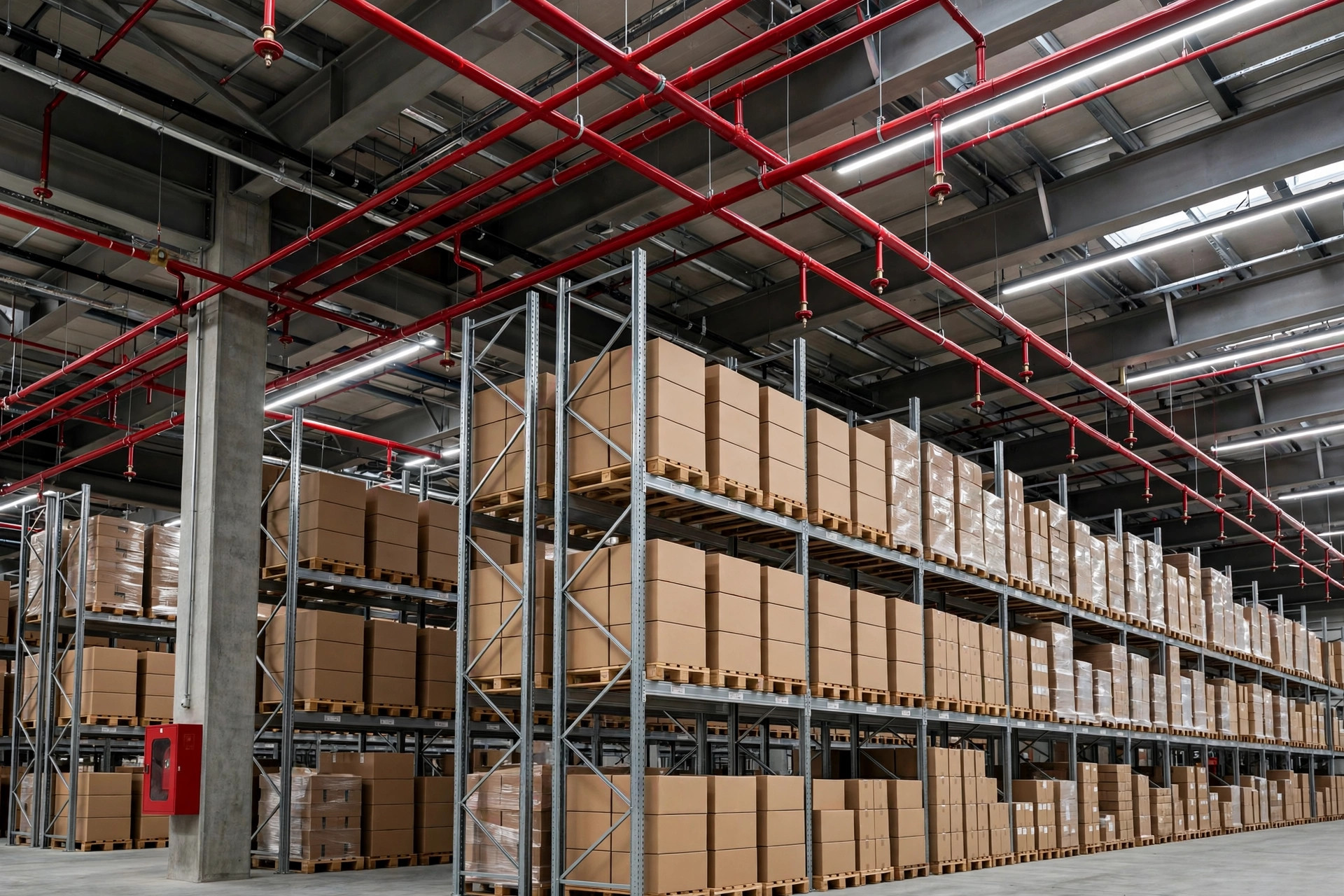
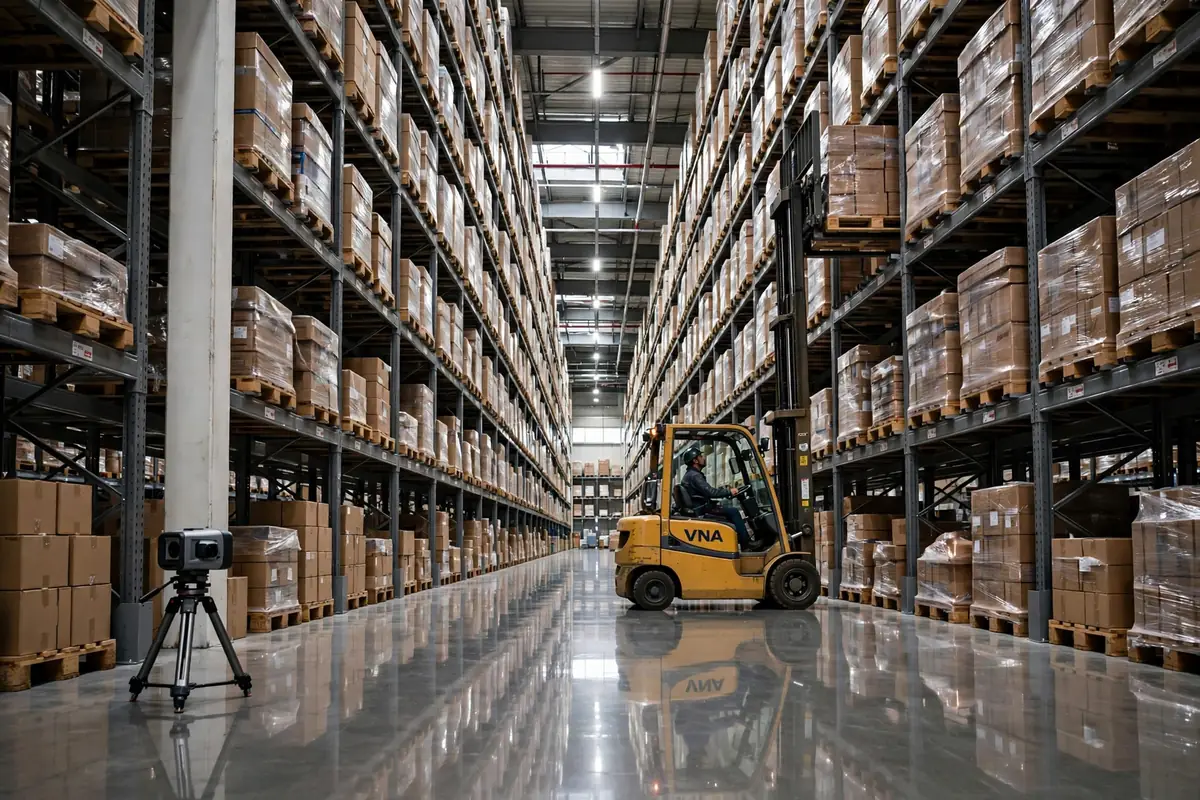
Think of a 24-meter ASRS as a windowless building with dozens of floors stacked tight and no stairs. A fire starts on a middle tier. Heat and smoke rise, the ceiling sprinklers open, and the water falls — straight onto the pallets above the fire. If those pallets are solid-decked and the cartons are packed tight, the water never gets through. The ceiling system did its job. The fire keeps burning anyway.
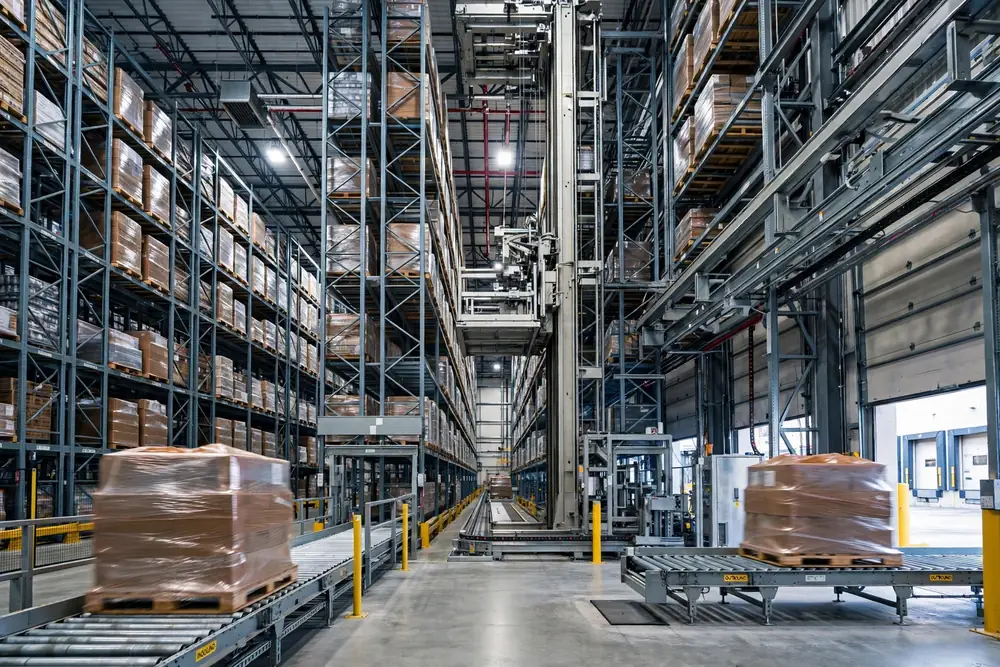
I watched this play out in an e-commerce warehouse in eastern China in 2023: a 24-meter ASRS, 12 aisles, double-deep racking. The fire drawings looked fine — early suppression fast response sprinklers at the ceiling, nothing in the racks. During commissioning, a simulated mid-rack fire showed the problem in minutes: water reaching the fire location was less than half the design value, blocked by the tiers above. The fix meant adding two levels of in-rack sprinklers, re-routing pipework, and moving stacker crane rails out of the way. The schedule slipped by nearly two months. Fire protection is part of the rack structure, not something you bolt on after the building tops out.
Why ceiling sprinkler water cannot reach the fire
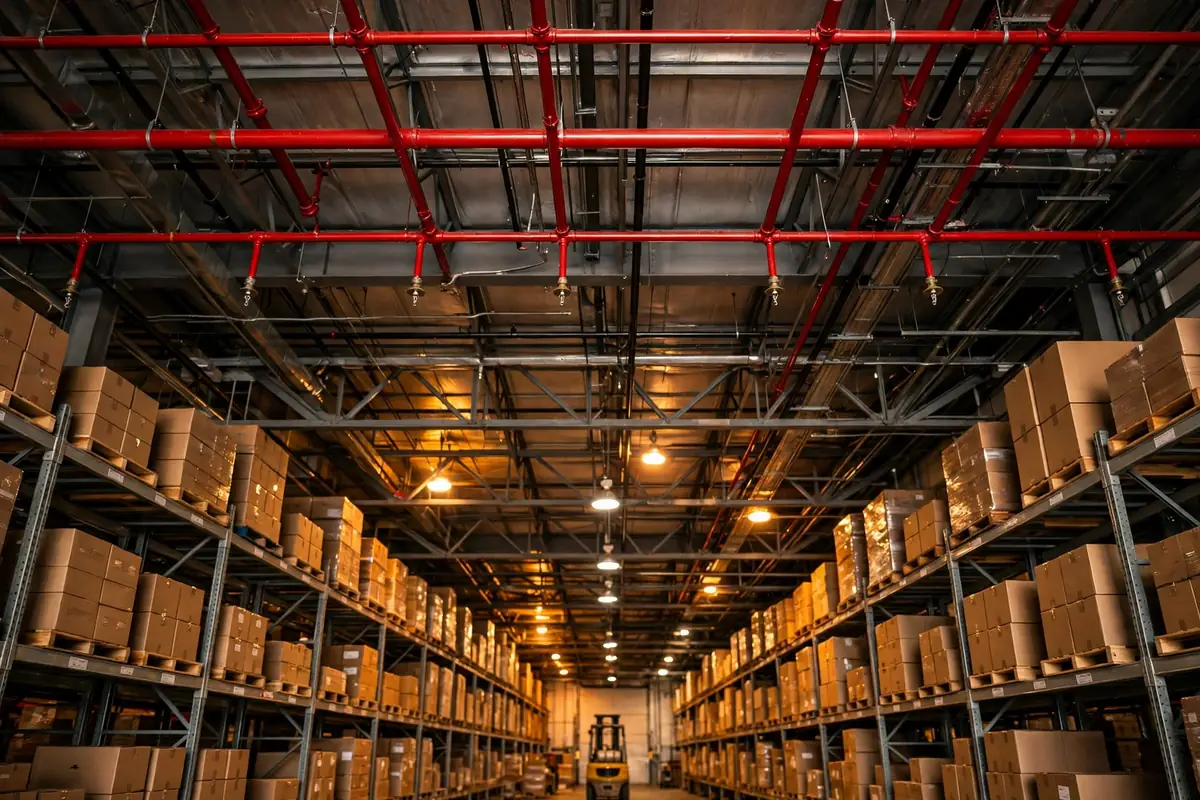
Early suppression fast response — ESFR — is the standard ceiling answer for high-pile storage, and it works by brute force: big droplets, high momentum, suppress the fire before it grows. Under NFPA 13 practice, ESFR protection of rack storage generally applies up to about 25 feet, roughly 7.6 meters, of storage height. But that number comes with conditions that too many proposals quietly drop: no solid shelves, no open-top containers, nothing that blocks the spray pattern. Change one condition and the conclusion changes. Any proposal that quotes "ESFR needs no in-rack suppressions" without stating the conditions has not done the work.
The other number worth memorizing is 6 inches, 152 millimeters. NFPA 13 requires at least 6 inches of vertical clear space between an in-rack the heads deflector and the top of the tier of storage below it. Six inches sounds generous until you stand in an aisle: a pallet set slightly off-center, a carton bulging over the edge, a beam mounted a little low — and the clearance is gone. Without it, the spray pattern cannot open up, and the suppression is decoration. This is a number to check with a tape measure at handover, not just on a drawing.
Flue spaces are the other half of the same physics. Longitudinal and transverse flues give heat somewhere to go and water somewhere to fall. The 2022 edition of NFPA 13 tightened the rules for deep-lane storage: racks deeper than 20 feet now need either 6-inch flue spaces on all four sides of every pallet load, or in-rack the headss. Pallet flow, pushback, and drive-in racks all fall under this. When I review a design, the first three numbers I check are rack depth, flue width, and whether in-rack suppressions are in the scheme. If those three do not line up, everything downstream is rework.
The in-rack sprinkler pipework is the real system
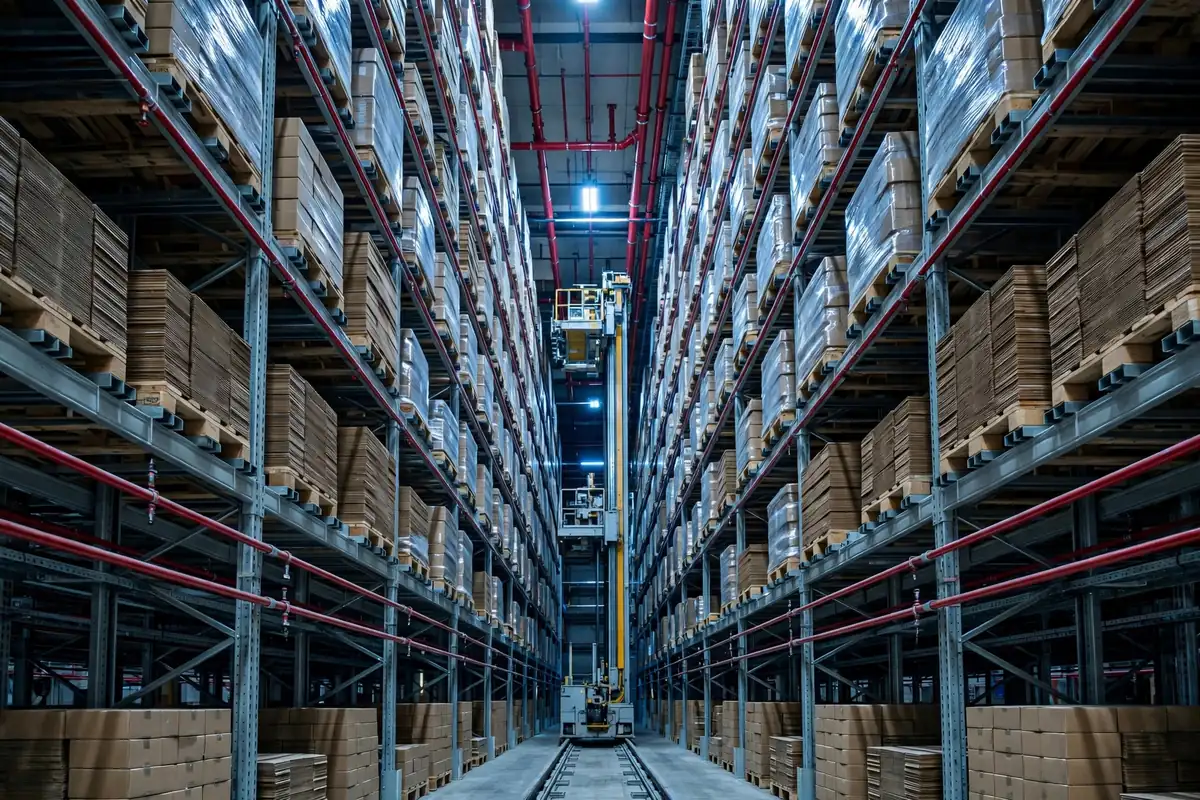
In-rack the headss sit inside the rack, discharging close to the fire tier instead of from 20 meters up. Their placement is precise for a reason: at least 3 inches from the rack uprights, so the upright does not block the spray, and no more than 18 inches from the aisle face of the storage, so the water is close to where it is needed. I have seen in-rack heads mounted tight against an upright, with the steel blocking half the pattern — the distribution test at handover told the story immediately.
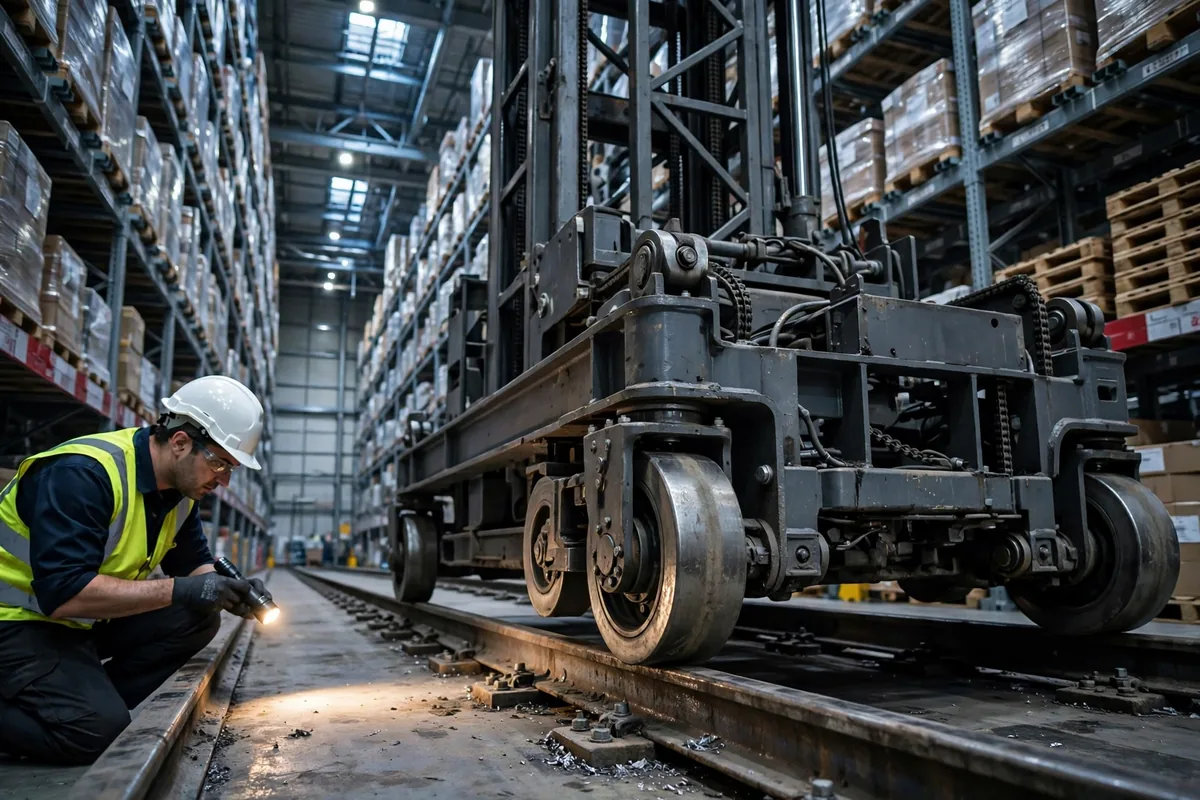
The hard part is not the heads. It is the pipework, and the pipework has to share the rack with beams, bracing, stacker crane rails, and shuttle rails. Get the sequence wrong — design the rack first, then squeeze fire pipework in afterward — and the pipes wander, the hydraulics get ugly, and the end-of-line pressure comes up short. The right sequence is the reverse: fire protection sets the pipe runs and suppression levels first, the rack structure works around them, and the crane supplier confirms clearances early. The smoothest project I worked on had the fire engineer, the rack supplier, and the crane supplier in the same room twice during concept design, and the pipe routing was frozen before steel was ordered. Zero rework on site.
Commodity classification deserves the same attention. Plastic pallets burn hotter and faster than wood, and foamed packaging pushes the hazard classification up a notch. A proposal that just says "pallets" without naming the material has not finished its homework. Batteries stored in the rack are another step up again — and they are increasingly common in e-commerce ASRS projects.
A quick decision framework I use in reviews:
| Storage situation | Ceiling system | In-rack the headss | Racking coordination |
|---|---|---|---|
| Within ESFR height limits, no solid shelves, ordinary cartons | ESFR | Usually not required | Keep flues clear, avoid solid-deck pallets |
| Above ESFR limits, or higher-hazard commodity | ESFR or standard spray | Required, level by level | 6-inch deflector clearance, pipes clear of rails |
| Deep-lane, flow, or drive-in racking over 20 ft deep | Verify against code | Flues on all sides or in-rack suppressions | Depth, flue, and the heads numbers aligned first |
| Plastic pallets, foamed packaging, batteries | Design to the higher hazard class | Required, tighter vertical spacing | Classify the commodity before sizing water |
That table sets direction only. Flow rates, head counts, and pipe sizes come from hydraulic calculation, never from a rule of thumb in a sales brochure. And note the honest limit in the current codes: NFPA 13 still offers limited guidance specific to ASRS — motors, controls, and batteries inside the rack, plus the fact that firefighters cannot get in — so designers lean heavily on insurer standards such as FM Global data sheets alongside the code. If your fire engineer has not mentioned that, ask why.
The counterintuitive judgment: cutting the fire protection budget on an ASRS is the most expensive saving in the building. In a conventional flat warehouse, firefighters can get in and some stock can be saved. In an ASRS, the aisles are narrow, the racks are tall, and nobody is going in once a fire takes hold. Lose control and you are looking at the building, the stock, and the equipment together. Fire protection is a small share of total ASRS investment, but it decides whether a fire is an incident or a total loss. Price it against the loss, not against the line item.
One more thing worth saying plainly: detection is not suppression. I see proposals loaded with flame detectors, aspirating smoke detection, and video flame analytics — while the suppression scheme is unchanged. Detection tells you there is a fire. It does not put water on it. Spend on suppression first, detection second.
So judge the design by one number: the water measured at a simulated fire location during commissioning. Write the acceptance test into the contract before design freezes — simulated fire positions, measured spray distribution, in-rack levels tested tier by tier. If that number passes, the ASRS fire protection design is real. Everything else is paper.
By Da Liu, Automation Engineer