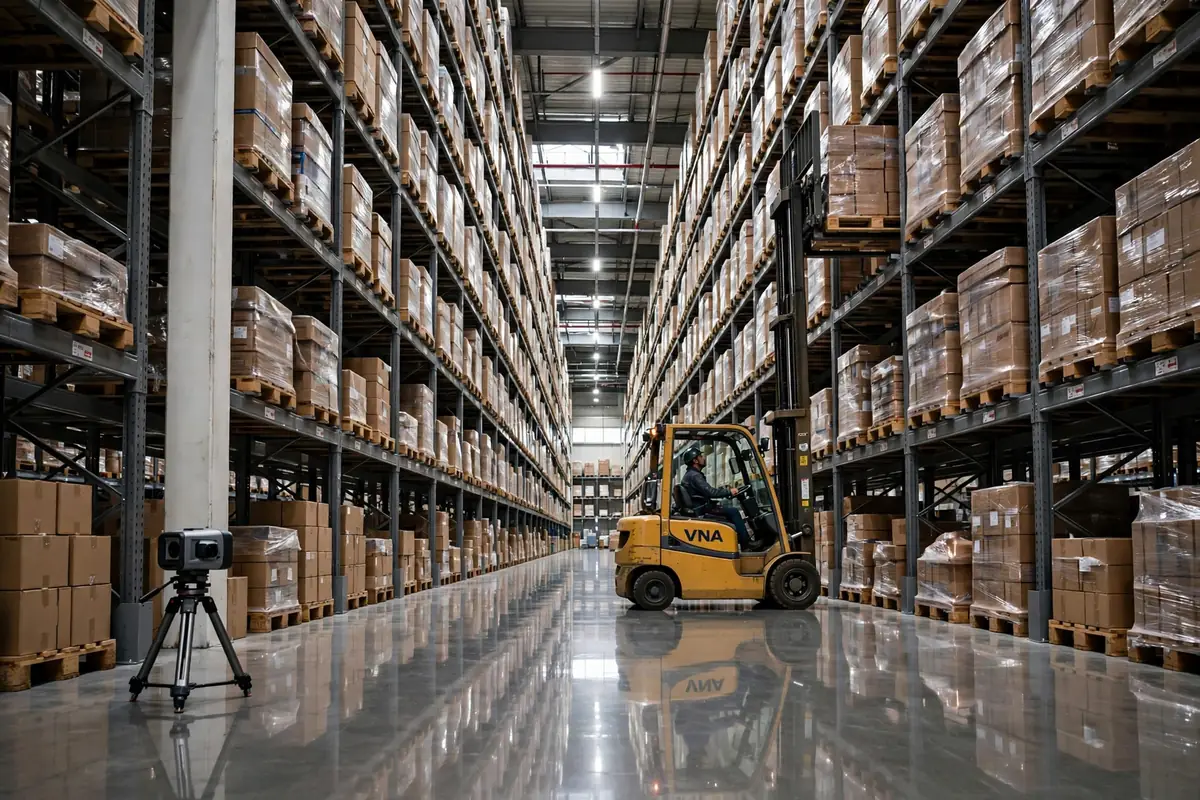
When people ask me about vna warehouse floor flatness, I usually start with the uncomfortable part: a floor that feels fine under your shoes can still be unusable for a high-bay turret truck. What looks flat at ground level turns into sway, drift, and scraped racking ten metres up, and by then everyone is blaming the truck for a problem that was poured into the concrete months earlier.
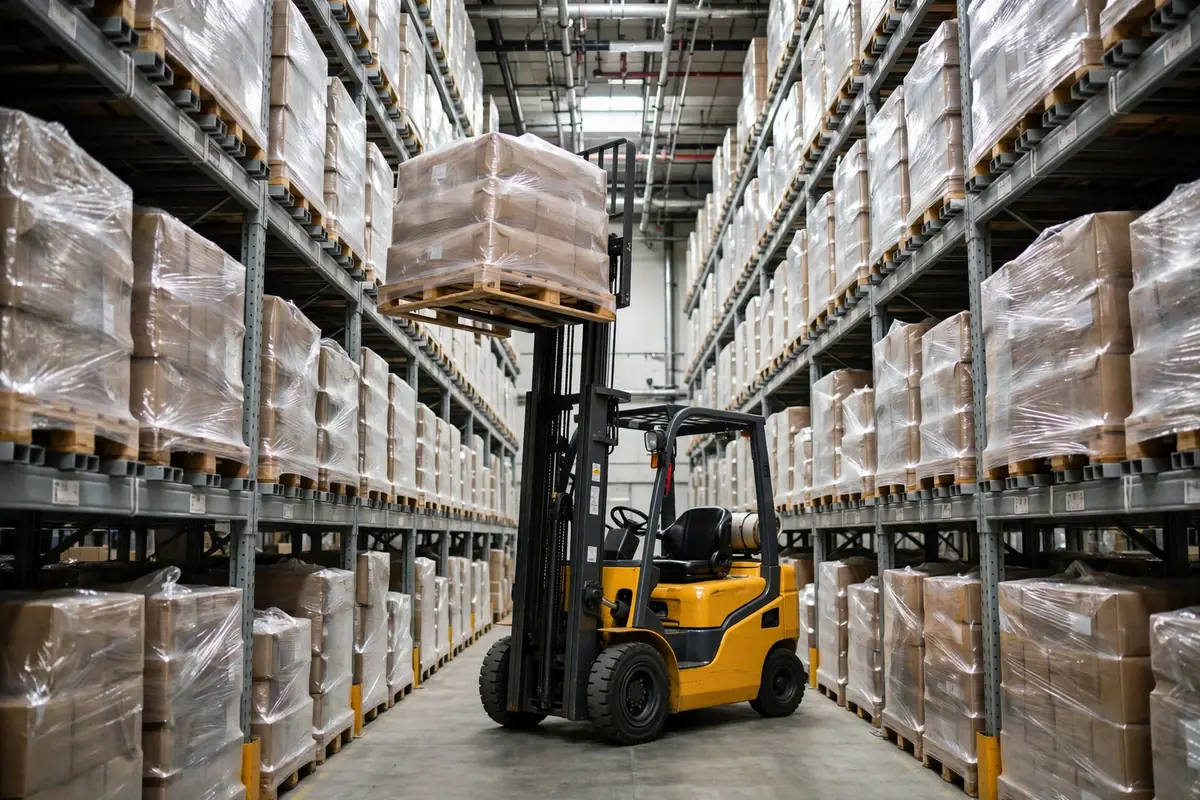
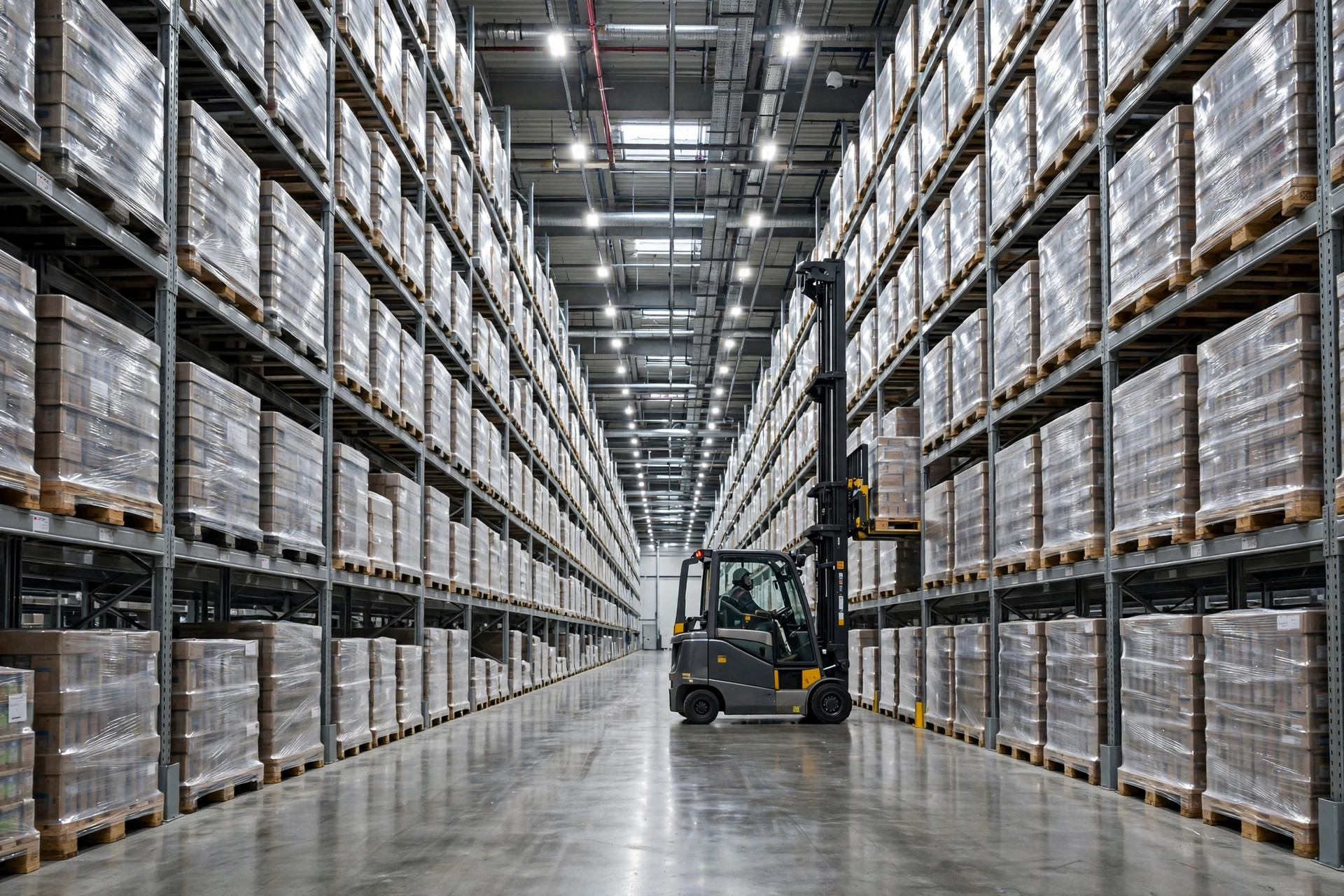
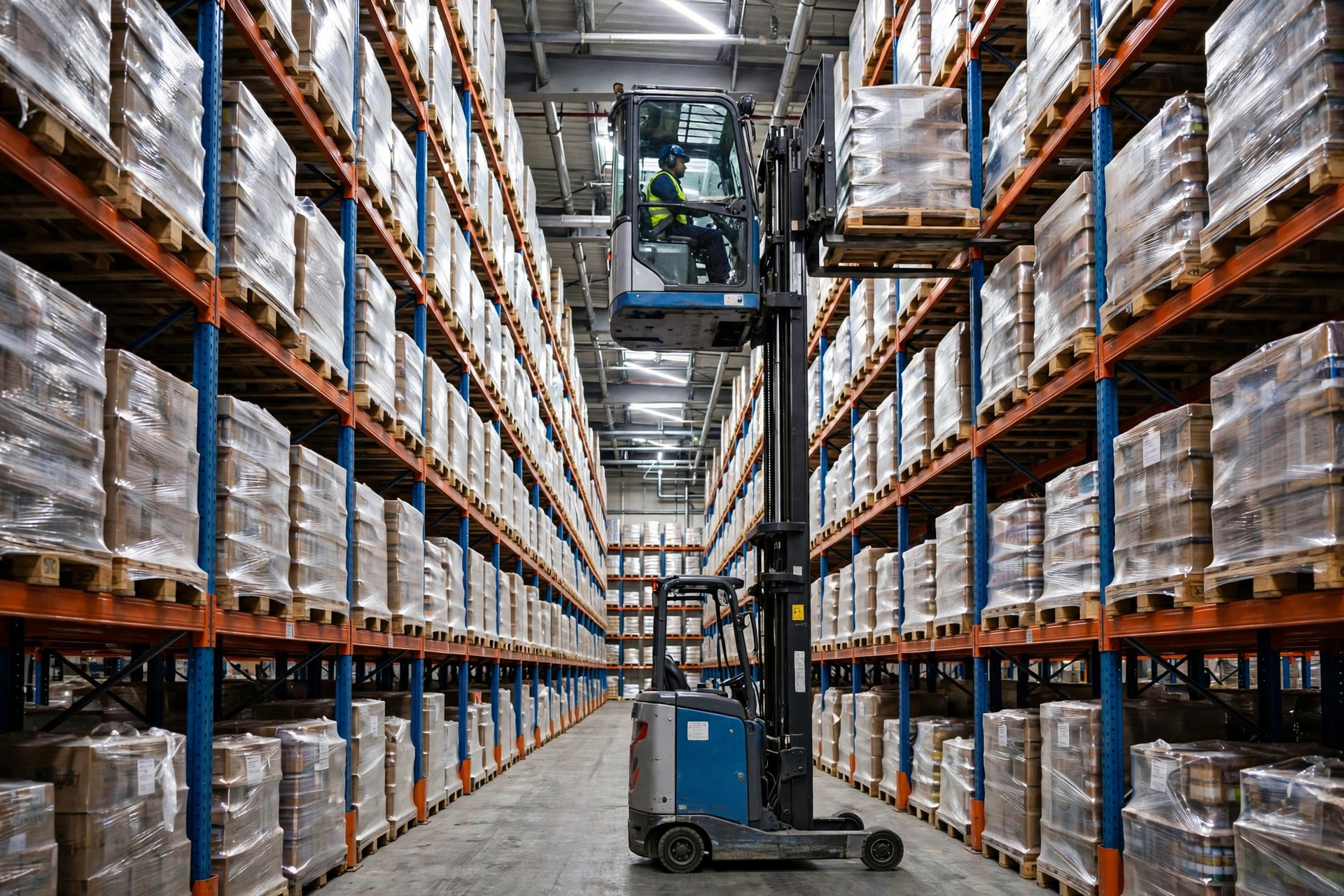
Think of a turret truck as a long chopstick standing upright in a narrow aisle. The clearance between truck and rack is tiny, so a small bump under one wheel becomes a much larger movement at the top of the mast. A reach truck crossing the same bump at low level just shudders for a second. A turret truck working high up may swing its forks far enough to miss the pallet opening entirely. The driver then creeps, corrects, creeps again, and your designed throughput quietly disappears.
I ran into this on a diagnostic visit to an auto-parts warehouse in East China in 2023, an illustrative scenario based on cases I have seen: the racking was up, the trucks had just arrived, and drivers refused to lift at speed because the mast swayed at height. The flooring contractor produced a straightedge report saying everything passed. The integrator said the truck parameters were fine. Both were telling their version of the truth. When we measured along the actual wheel tracks in the aisle, we found a long, gentle undulation that a short straightedge simply cannot catch. High-level work stopped while the floor was corrected, and the delay ran to roughly half a month. Every dollar of that pain could have been avoided before the pour.
Why vna warehouse floor flatness is a truck problem, not a concrete problem
Flatness is not smoothness. A floor can be polished and shiny and still rise and fall enough to upset a mast. Turret trucks travel the same two wheel lines in an aisle, over and over, so local bumps, dips, and joint steps on those exact lines become body roll and fork movement. Joints deserve special attention. If a construction joint or a repaired patch edge sits right under a wheel line, the truck gets a small step input on every single pass.
Settlement is the slower trap. A slab can pass on day one and drift out of tolerance a year later if the subgrade was poorly compacted. That is why I always ask for subgrade preparation records, not just the final test report. A passing report on a settling slab is a photograph, not a promise. Guidance systems make this worse in a subtle way too: wire-guided or rail-guided trucks cannot dodge a bad patch, because the path is fixed. Put the guidance path, the joints, and the wheel lines on one drawing before you pour, and half of these arguments never happen.
How to measure vna warehouse floor flatness without getting fooled
The most common trick in acceptance testing is measuring in the wrong place. Contractors love open, empty areas outside the aisles because the numbers look great there. The truck never travels there. Insist that measurement lines sit inside the aisles, on the wheel tracks, and run the full aisle length. Partial measurements of a convenient middle section tell you almost nothing.
Laser scanning is now my default for both new-build acceptance and existing-floor surveys because it covers everything and produces a height map where bumps and dips are visible at a glance. A straightedge is cheap and useful for spot checks, but it only sees short distances, and long gentle waves slip straight past it, exactly as in that auto-parts case. My rule is simple: laser scan for the record, straightedge for spot verification, and sign nothing until the two agree.
Timing matters as much as tools. Measure after the slab has cured properly and before the racking goes up, while every aisle is still reachable. Once racking is installed, some areas become hard to scan and even harder to repair. Keep the raw scan data, not just a summary sheet. Summary sheets can be cherry-picked; raw data cannot. Put that requirement, the measurement method, the aisle scope, and who pays for remediation directly into the construction contract. For actual tolerance limits and curing periods, follow the truck manufacturer and your local code requirements rather than any number a contractor quotes from memory.
New pour, grinding, or breaking it out: the trade-off
A new build is the cheapest moment to get this right, because flatness can be specified before a single truckload of concrete arrives. The contract needs three things spelled out: which areas are measured, by what method, and what happens if the result fails. A vague clause saying the floor shall meet relevant requirements is worthless in a dispute, and I have watched that exact sentence cost owners weeks.
Existing warehouses choose between grinding, patching, and partial re-pouring. Grinding suits local high spots and disrupts operations the least, but it cannot fix dips or settlement. Patching fills local low spots, yet the bond line between old and new material lives under constant wheel loads and is a durability question mark. Settlement has its roots below the slab, so surface work is cosmetic; breaking out and re-pouring the affected area is expensive and slow, but it is the only real cure.
Here is a hypothetical worked example, for illustration only, with no real prices attached: say grinding one aisle costs 1 unit of money plus 0.6 units of lost operation per day of closure, needs two days, and may need repeating in about two years. A partial re-pour costs 2.8 units, closes the aisle for five days, and then stays fixed for years. On direct cost alone, grinding wins. Add one rack strike, damaged goods, and a second grinding cycle into the ledger, and the answer often flips. The counterintuitive truth I keep repeating is that repeated grinding is frequently the most expensive option of all, because each round buys only a few quiet months while drivers lose trust in the truck and slow down permanently.
In 2024 I watched a South China e-commerce site, another illustrative scenario, nearly replace a truck over high-level sway complaints. We ran the same truck down several aisles at height and compared mast movement aisle by aisle. Some aisles were steady, others were not. Same truck, same driver, different floors. They corrected only the worst aisles instead of resurfacing the whole building, and the complaints largely vanished. Diagnose before you spend: prove whether the variable is the truck or the floor.
I will also fire a shot at the opposite fake requirement. If your operation never works at height, paying for a full high-specification superflat floor across the whole building is burning money. Flatness requirements follow the truck, the lift height, and the guidance method. Lock those first, then specify the floor, never the other way round.
Finally, treat the floor as a maintained asset. Re-check joints, patches, and wheel tracks on a schedule, ideally with a periodic laser rescan in your annual maintenance plan, instead of waiting for driver complaints. One rescan costs a fraction of one rack strike and one day of lost aisle capacity. Sites that file vna warehouse floor flatness away as a one-time acceptance checkbox almost always pay tuition later; sites that monitor it as a living condition keep their trucks fast for years.
Whether the money is well spent comes down to one number: average fork-alignment time at height. Measure it for a week before and after floor work, and watch what happens to aisle throughput per hour. That single comparison settles the grinding-versus-repour argument better than any sales pitch.
By Da Liu, Automation Engineer