The FM Global fire protection standard walked into my little warehouse with an insurance engineer attached, and my first thought was: there is no way we can afford to burn down.
Here is what happened. It was renewal time, and the insurer said they were sending an engineer to inspect the warehouse. I figured it would be a walkthrough. Instead the guy showed up with a stack of FM Global Data Sheets and spent the whole morning picking apart my sprinkler spacing, my rack clearances, my storage heights, my fire water tank. I was baffled: we passed the fire inspection last year, so how is everything suddenly wrong? The engineer just smiled and said: the code inspection makes sure people do not die. We make sure the goods do not burn down. One sentence, and it clicked: the strictest fire standard is not written by the government. It is written by the people collecting my premium.
Who exactly is FM Global?
I did my homework afterward. FM Global is a commercial property insurer, but not a normal one: it lives and breathes loss prevention engineering. It employs an army of engineers who assess risk at clients' plants and warehouses around the world. It runs its own laboratories and burns down full-size test warehouses on purpose. Since the 1960s it has run roughly 160 full-scale fire tests, studying exactly how sprinklers have to be arranged to knock down a rack fire. The findings go into its Property Loss Prevention Data Sheets, including the famous Data Sheet 8-9, "Storage of Class 1, 2, 3, 4 and Plastic Commodities," basically the bible of warehouse fire protection. Its FM Approvals arm certifies fire protection products. Whether your sprinkler head is good enough is their call.
One number says it all: FM Approvals found that the average fire loss at locations without sprinklers was nearly six times greater than at adequately sprinklered locations. So the insurer is not picking on you. It is protecting its own wallet, and your warehouse benefits on the side.
Where the FM Global fire protection standard is stricter than code
I lined up the engineer's punch list against the code. The strictness concentrates in four areas.
First, finer commodity classification. The code lumps "combustibles" into big buckets. FM's data sheets classify goods by burning behavior into Classes 1 through 4, with plastics in their own category and hard caps on storage height. The same rack holding cartons versus plastic parts gets two completely different designs.
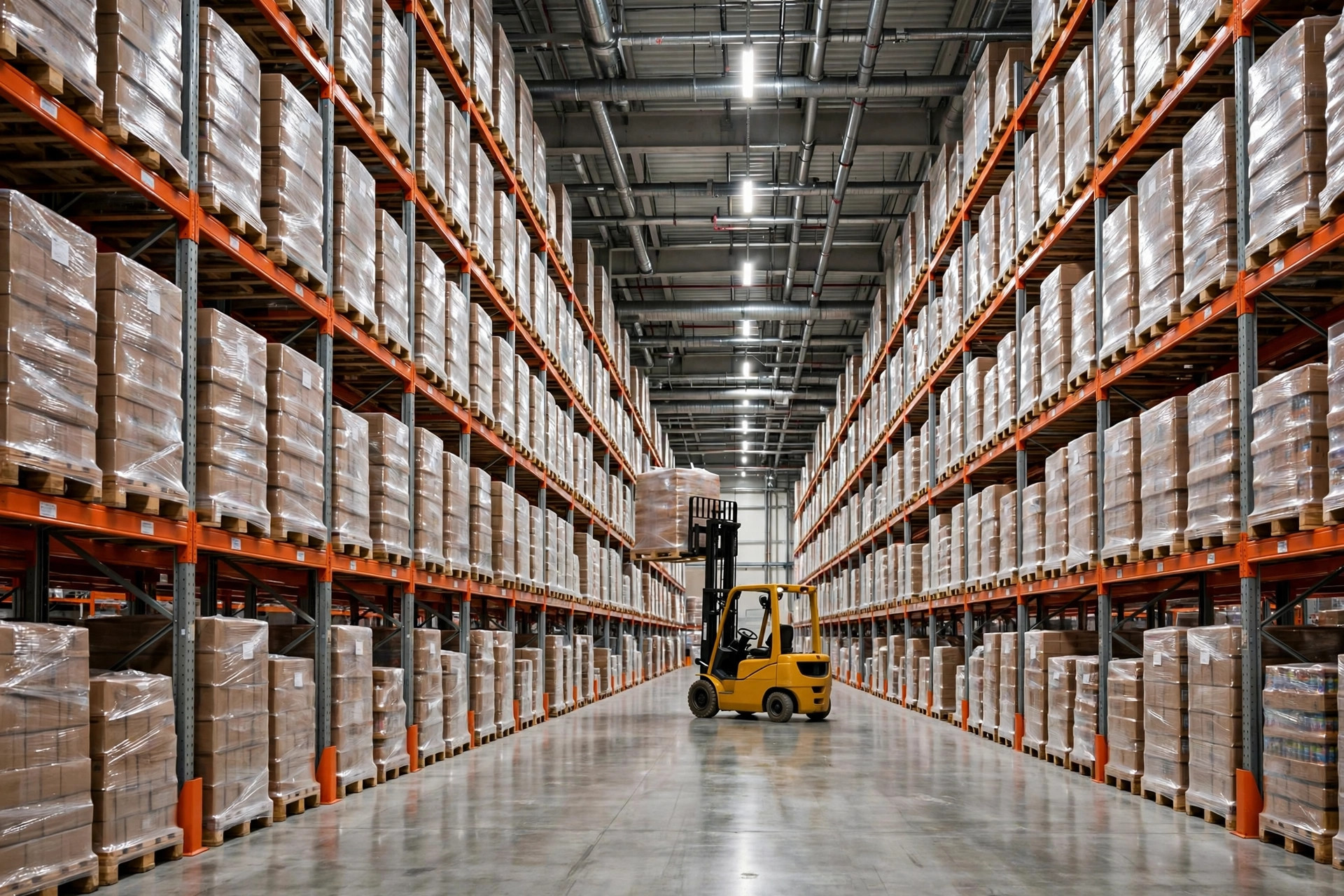
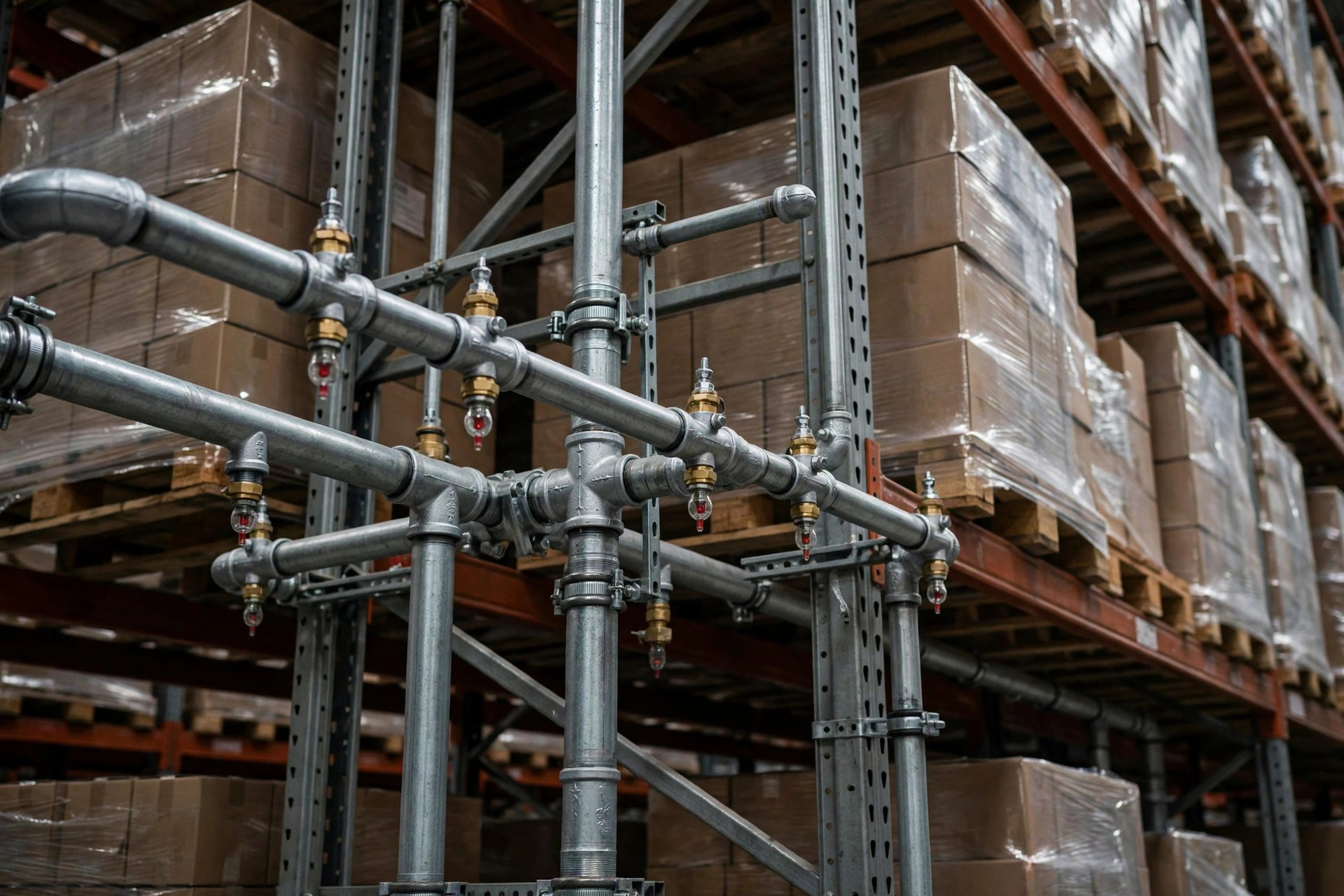
Second, in-rack sprinklers. Meeting code often stops at ceiling sprinklers. FM frequently requires another level of sprinklers inside the rack for high-bay storage. The engineer's words: "Fire starts in the middle of the rack. Water has to hit the fire directly." Ceiling water gets blocked by the upper rack levels. Obvious once you hear it, but an extra sprinkler level moves the budget up a bracket.
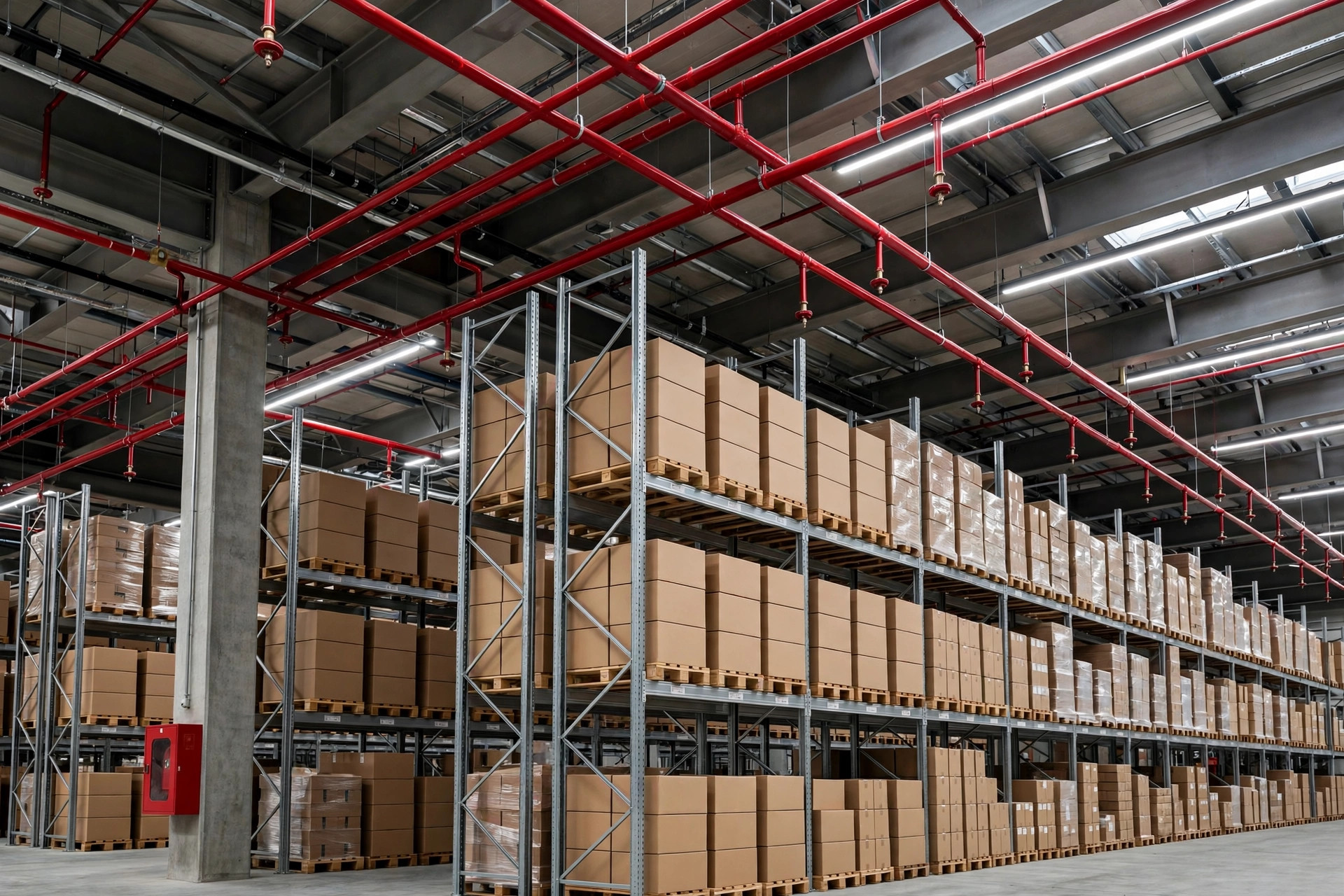
Third, flue spaces and clearances. Racks need longitudinal flue spaces so heat can rise to trigger the sprinklers and water can get down to the fire. We had packed our racks tight to fit more goods, which is a hard fail under FM. And nothing may block a sprinkler head. We had two layers of cartons stacked directly under one head. The engineer pointed at it and said, "That is putting a hat on the sprinkler."
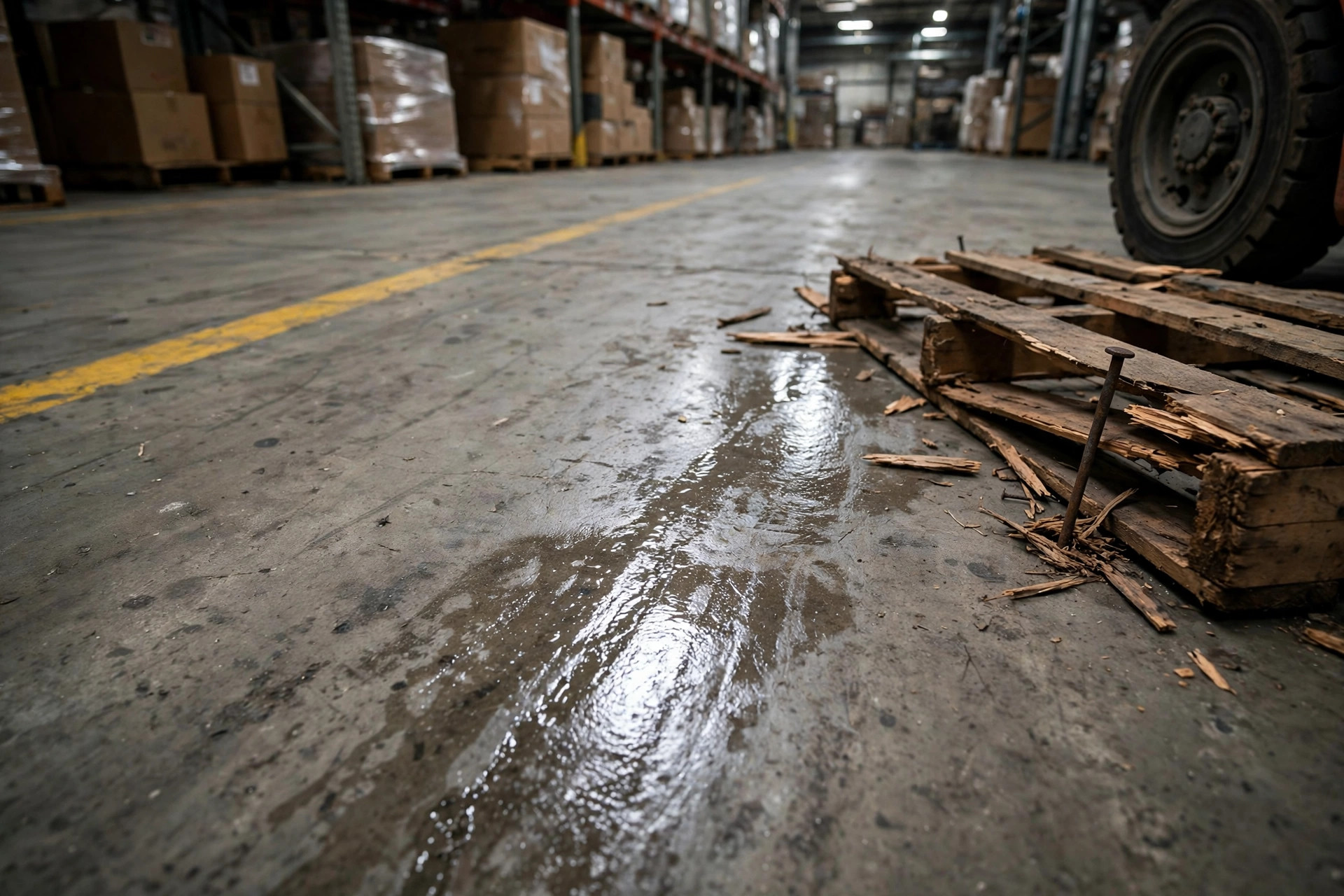
Fourth, housekeeping. A big chunk of the FM standard is daily discipline: keep aisles clear, take out the trash, keep the wiring proper. It does not just check whether you built it right. It checks whether you live dangerously day to day.
Our scrappy fixes
Honestly, rebuilding everything to the full FM standard is money my small warehouse does not have. But every item the engineer flagged was a lesson paid for with real fires. Ignoring all of it was not an option either. So we went the scrappy route: free fixes first, priorities second.
The free stuff went first: everything under sprinkler heads got moved, flue spaces got painted lines on the floor, aisles got cleared, wiring got sleeved where it needed it. Zero cost, and our inspection impression score shot up immediately.
Then the cheap big wins: the two rack rows over the height limit lost a level. We topped up extinguishers at every required point. We fixed the water tank level alarm. The engineer said it plainly: a tank with no water makes everything else pointless.
The real money went last: we did not add in-rack sprinklers everywhere, only on the two rack groups holding plastics and high-value goods. The engineer accepted it: protect the highest risk first. That is called grabbing the main contradiction.
When we went back to the renewal negotiation, the premium came down a notch. How much exactly varies too much between insurers for me to quote you a number, so go by actual quotes and do not let anyone invent one for you. But the direction is certain: make the risk smaller, and the insurer can afford to make the price smaller.
The math: should a small warehouse follow the FM Global fire protection standard?
| Build to minimum code | Build to the FM standard | |
|---|---|---|
| Fire protection investment | Just enough to pass inspection | Sprinklers, clearances, and water systems all upgraded; clearly higher cost |
| Premium | Baseline price, possibly rising year over year | Room to negotiate; go by the insurer's actual quote |
| Fire loss | Code only guarantees people survive; burned goods are your problem | Designed so the fire can actually be put out; expected loss an order of magnitude lower |
| Fits whom | Low goods value, leased space, short-term setup | Owned facility, high goods value, long-term operation |
Three questions and you will have your answer. One: how valuable are the goods inside? If one fire wipes out half a year of work, follow the FM standard. If the goods are ordinary and a loss would not hurt much, code compliance is fine. Two: do you lease or own? Landlords will not let you rebuild a leased building, so focus on management. An owned warehouse used for a decade spreads the investment thin. Three: do your customers care? Some big clients audit against the FM playbook. If you run 3PL, you cannot win those contracts without it.
One counterintuitive point to close: in warehouse fire protection, the most expensive part is not the sprinkler heads. It is the water. The source, the pump, the tank, the piping: that is where the real money goes. Plenty of people research sprinkler brands for weeks while their tank sits half empty year-round. Picking up sesame seeds and dropping the watermelon.
And FM's logic makes perfect sense in reverse: the insurer fears your warehouse burning down even more than you do, because it is their money on fire. So their standard is, by nature, the "how do we avoid paying out" standard, which makes it more honest than any minimum compliance bar.
Our final strategy: aim at the FM standard, spend in risk order. Every free management item gets done. Cheap fixes for high-risk items go first. The big rebuilds get scheduled across years. Small warehouses have their own way of surviving. We cannot copy the big players' full playbook, but the lessons the insurer paid for in real money are worth listening to.
By Xiao Ma, Small Warehouse Owner