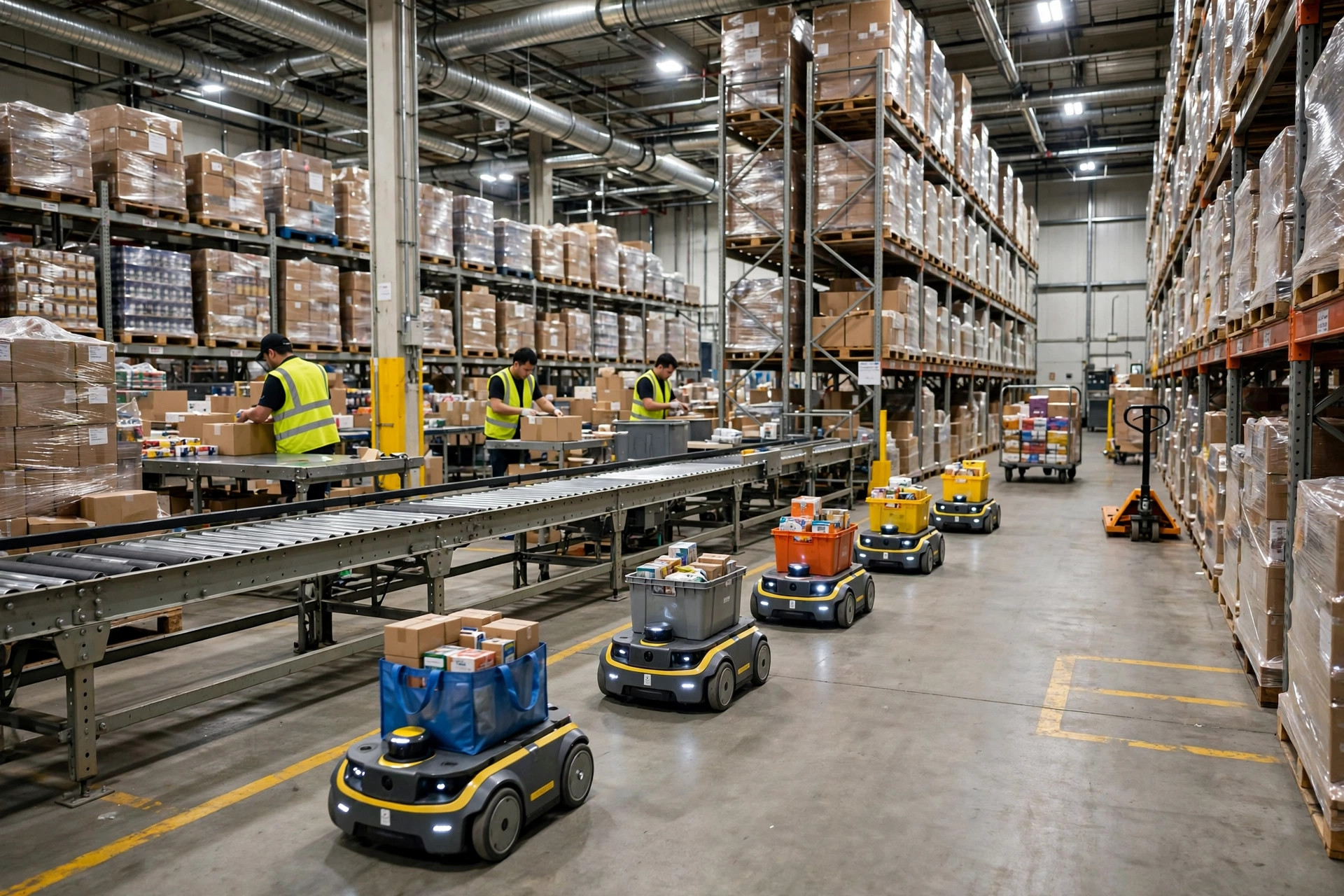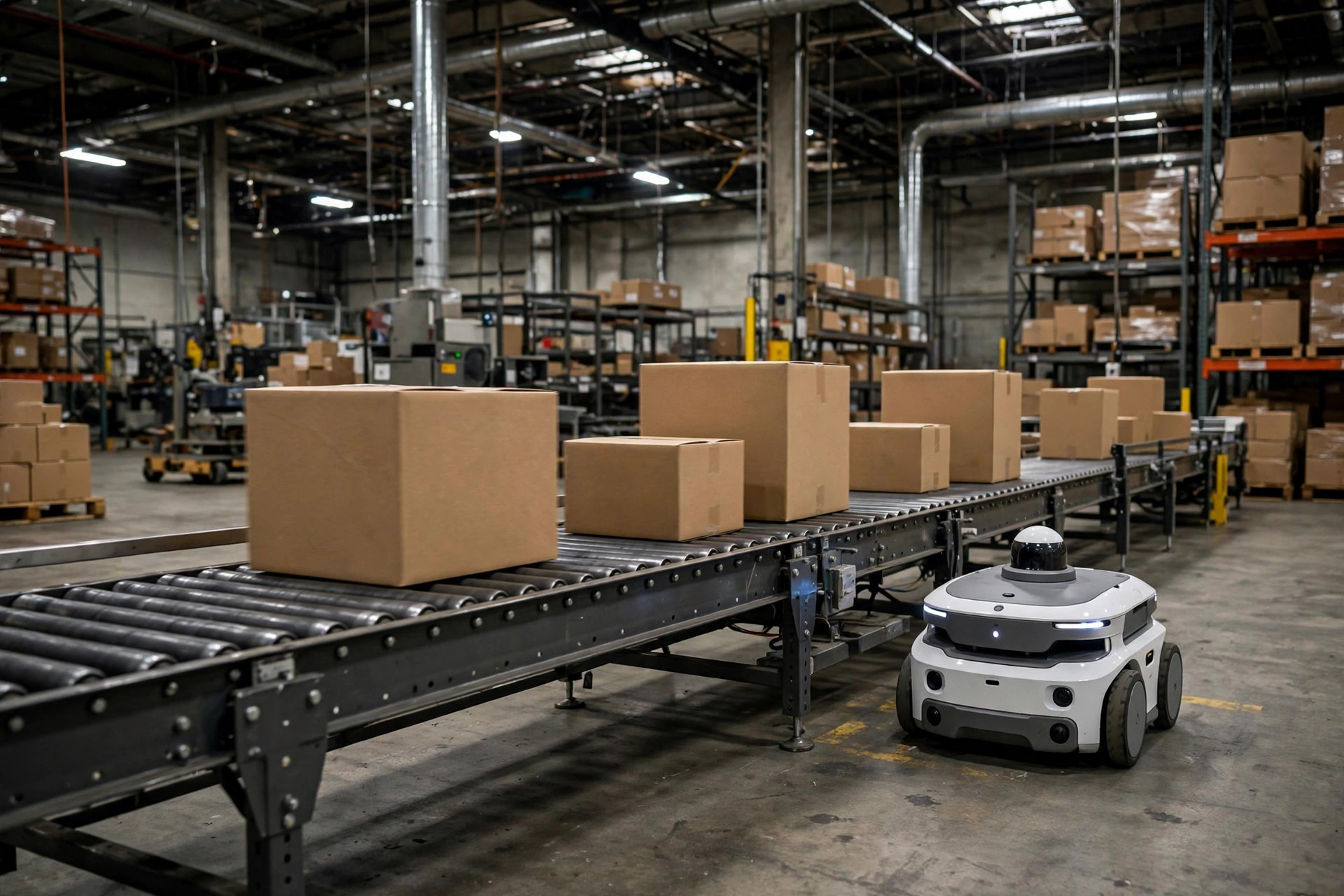
Last year our little warehouse gritted its teeth and bought 3 AMRs. The plan: AMRs handle long-distance moves, the conveyor handles the sortation outfeed, link the two together, cut labor in half. The reality? In the first month after "integration," AMRs queued at the end of the conveyor waiting for cartons while boxes piled up on the belt until the alarm went off — the two sides completely ignoring each other. We'd turned automation into "manual transfer": I hired a kid to stand at the handoff point and move boxes from the conveyor onto the AMRs by hand.
Yes, you read that right. Hundreds of thousands of dollars in automation, and we still needed human muscle at the handoff. Embarrassing to admit out loud.
Our predicament: we could afford the equipment, not the integration
The big-company playbook for conveyor amr handoff integration runs on a WES (warehouse execution system) — deep integration between the conveyor PLC and the AMR fleet manager. I saw the quote: $80,000–150,000 for integration, software licenses not included. Our little warehouse can't burn that kind of money.
But without a WES, you're on your own for three problems, and every one is a trap.
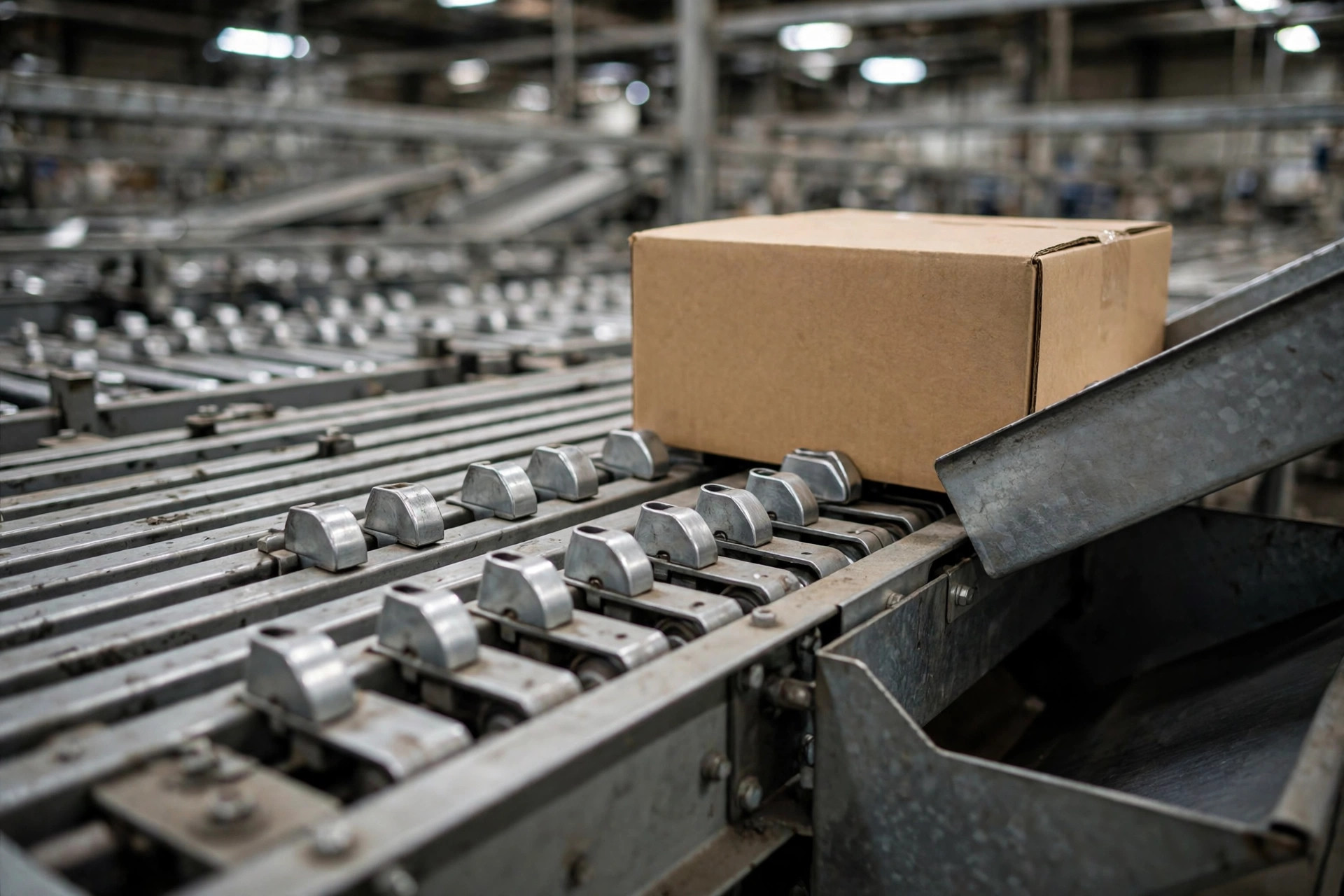
Trap one: the handoff station. The end of the conveyor and the AMR pickup point have to line up physically, within 2 cm. AMRs navigate on QR codes plus LiDAR — only when it stops dead-on can the lift mechanism pick up the tote. At first we cheaped out: painted a box on the floor and told the AMR to "stop roughly in the box." Result? Every stop landed 3–5 cm off, and the lift came up empty three times out of ten. Then we spent $2,000 on a mechanical positioning stop plus photoelectric sensors — the AMR drives up against the stop, position error drops under 1 cm. Two grand solving a hundred-grand problem. That's the small-warehouse way.
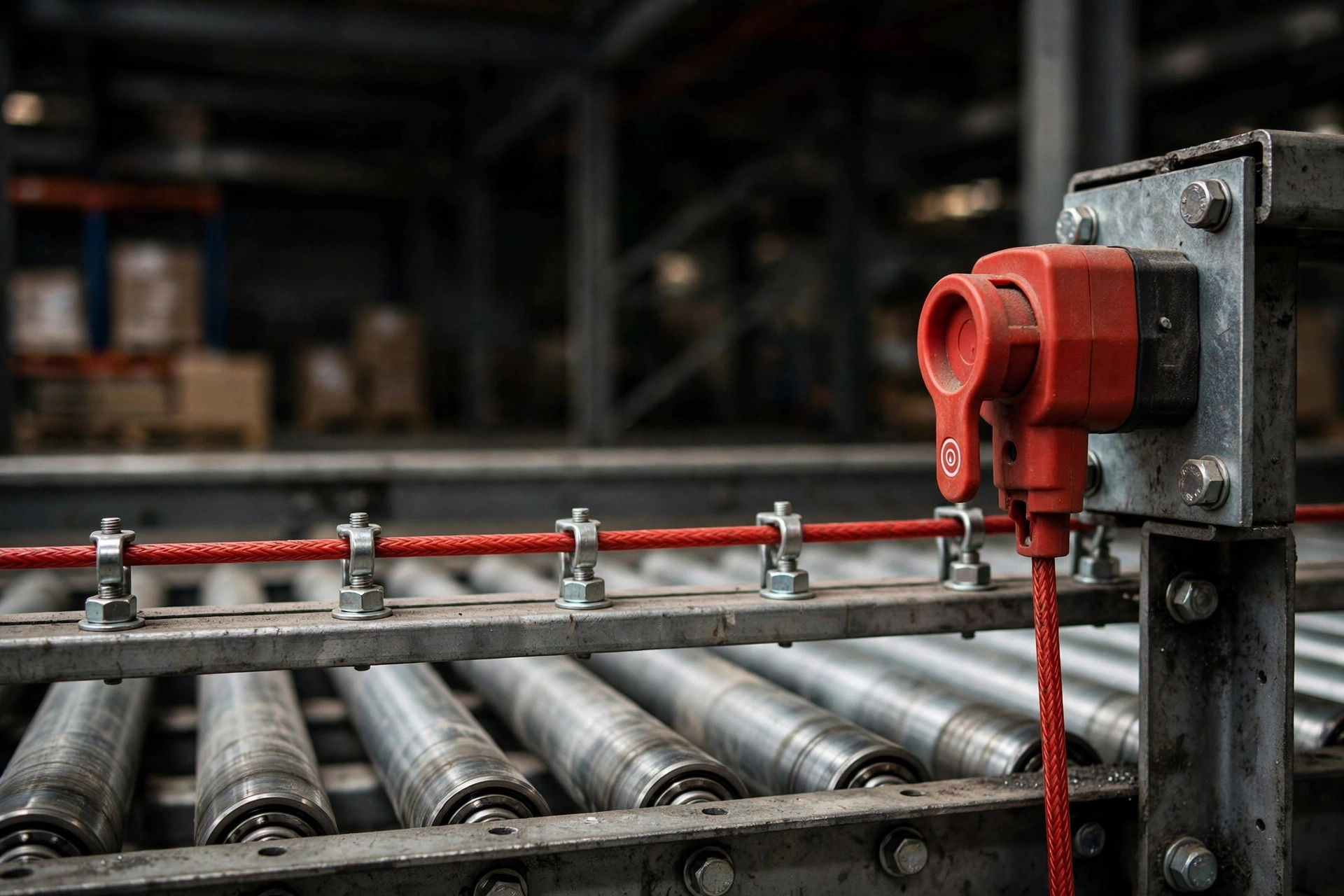
Trap two: the handshake signal. How does the conveyor know the AMR arrived? How does the AMR know there's a carton? Big companies do system integration. We did it the redneck way: photoelectric sensors plus relays. A photo-eye at the conveyor end sees a carton arrive, green light on. The AMR rolls in and hits a floor foot-switch (yes, the dumbest kind there is) — green goes red, conveyor stops feeding, AMR lifts the load, taps a second switch when done, conveyor resumes. Sensors, relays, cabling: under $1,500 all in.
I know what you're thinking: that's embarrassingly crude. Does it actually work? Honestly — crude, yes, but the MTBF is no worse. Relays are decades-old technology; they fail less often than software has bugs. Eight months running, zero signal-system failures. The AMR's own navigation, on the other hand, glitched once after a firmware update.
Trap three: takt matching. This one's the killer. The conveyor delivers 12 cartons a minute; one AMR carries 4 and takes 3 minutes per round trip. Do the math: 36 cartons delivered in 3 minutes, 4 cartons hauled away — the handoff point floods, guaranteed.
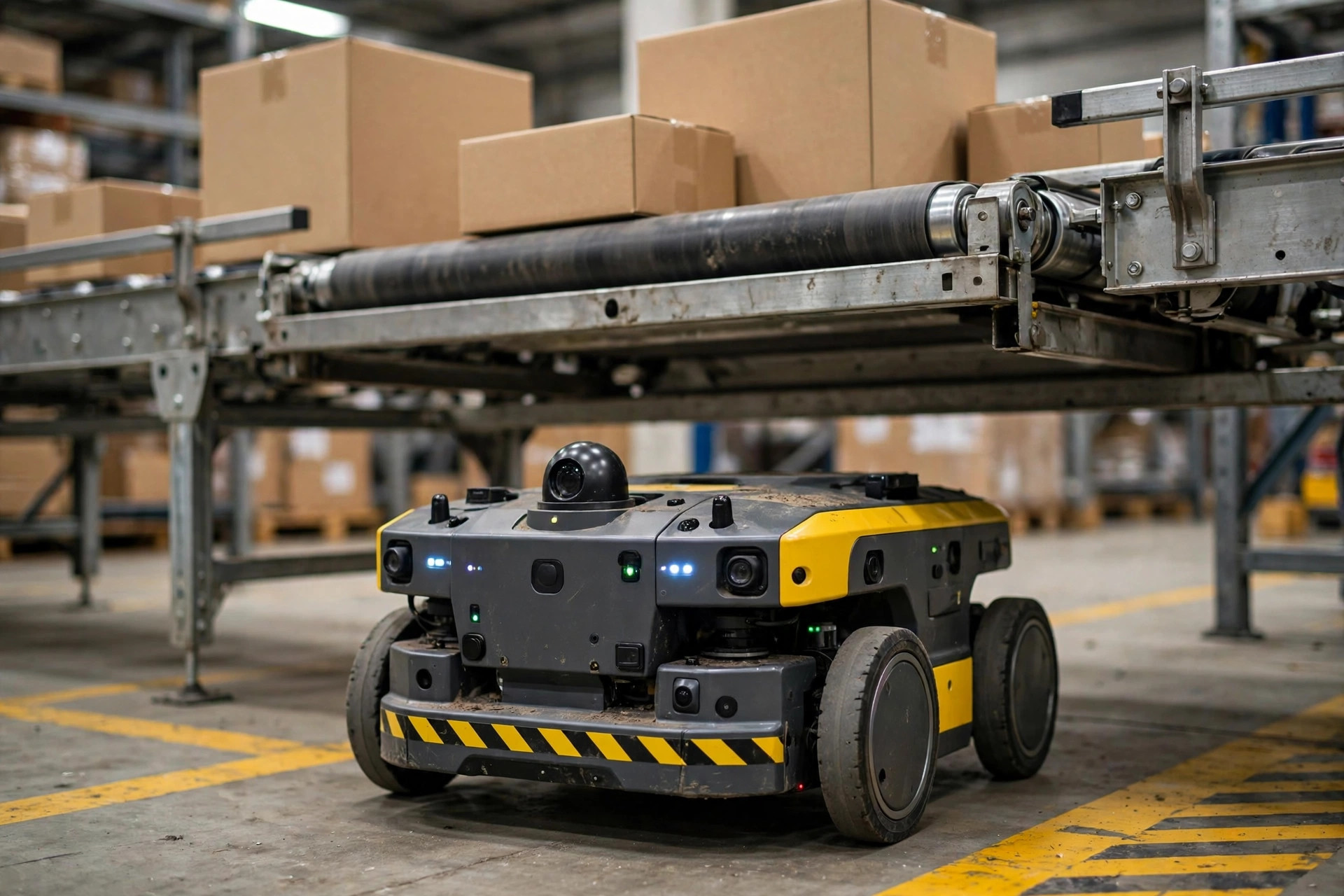
Our redneck fix: a "buffer conveyor" at the handoff, 6 meters long, holding 12 cartons. Plus one simple rule: over 8 cartons buffered, the conveyor drops to half speed; buffer full at 12, the conveyor stops until the AMR takes 4 away, then resumes. That logic went into the conveyor PLC in half a day. Result? The handoff never flooded again, and AMR utilization went from 40% to 75%.
The results: the math works
The spend: 3 AMRs at $180,000 (the big unavoidable chunk), handoff station retrofit $2,000, signal system $1,500, buffer conveyor $12,000 (bought used). Total integration spend: $15,500.
The return: before integration, one human transfer station ($45,000/year salary) plus a forklift shuttling totes two hours a day. After: the person is gone, the forklift hours are saved. About $60,000 a year in labor and equipment time. $15,500 in, paid back in three months.
Time for the anti-big-company rant: the corporate WES integration at $80k–150k does more — dynamic dispatch, pretty dashboards. But our little warehouse does 3,000 orders a day. What do we need a dashboard for? Relays and photo-eyes get the job done. Automation isn't "more expensive equals better." It's "good enough plus reliable" that wins.
The AMR buying traps we fell into
While the handoff is sorted, let me save you tuition on the AMR purchase itself.
One: the form factor. Lift-type (under-ride) vs. forklift-type. We went lift-type because all our goods ride in standard totes. But if your operation is mostly pallets, you need the forklift type — 40%-plus more expensive. Pick the wrong form factor and you'll fight it forever. Look at your freight first, then at the vehicle.
Two: inflated payload ratings. An AMR rated 500 kg starts alarming and derating at 400 kg in real operation. Before buying, pin down the difference between "rated payload" and "maximum payload" — and get it in the contract. Our first unit taught us this: fully loaded totes made it sulk, so we ran it derated at 80% utilization.
Three: charging. Three AMRs sharing one charger means queueing, and at peak one unit simply died mid-shift. We added a second charger for $8,000. Number of AMRs times charge time — run that math before you buy, not after a unit flatlines.
Three tips for fellow small warehouses
One: calculate takt before you buy. If the conveyor and the AMR don't match speeds, you're buying yourself a headache. Paper and pencil first — beats everything.
Two: physical integration before system integration. Mechanical stops, photoelectric switches — these "dumb" fixes are cheap, reliable, and repairable. System integration is the last option you consider, not the first.
Three: leave an upgrade path. Our relay cabinet has dry contacts pre-wired for a future WES. The day we grow up and actually buy one, we land the wires and go — no rip-and-replace. Small and scrappy today doesn't mean scrappy forever.
Small warehouses have their own way of surviving. Whether your AMRs and conveyor actually link up has nothing to do with how much you spent — it's about whether you filled in the three traps at the handoff, one by one. That's the small-warehouse version of conveyor amr handoff integration: not big and complete, but every step penciled out.
By Xiao Ma, Small Warehouse Owner