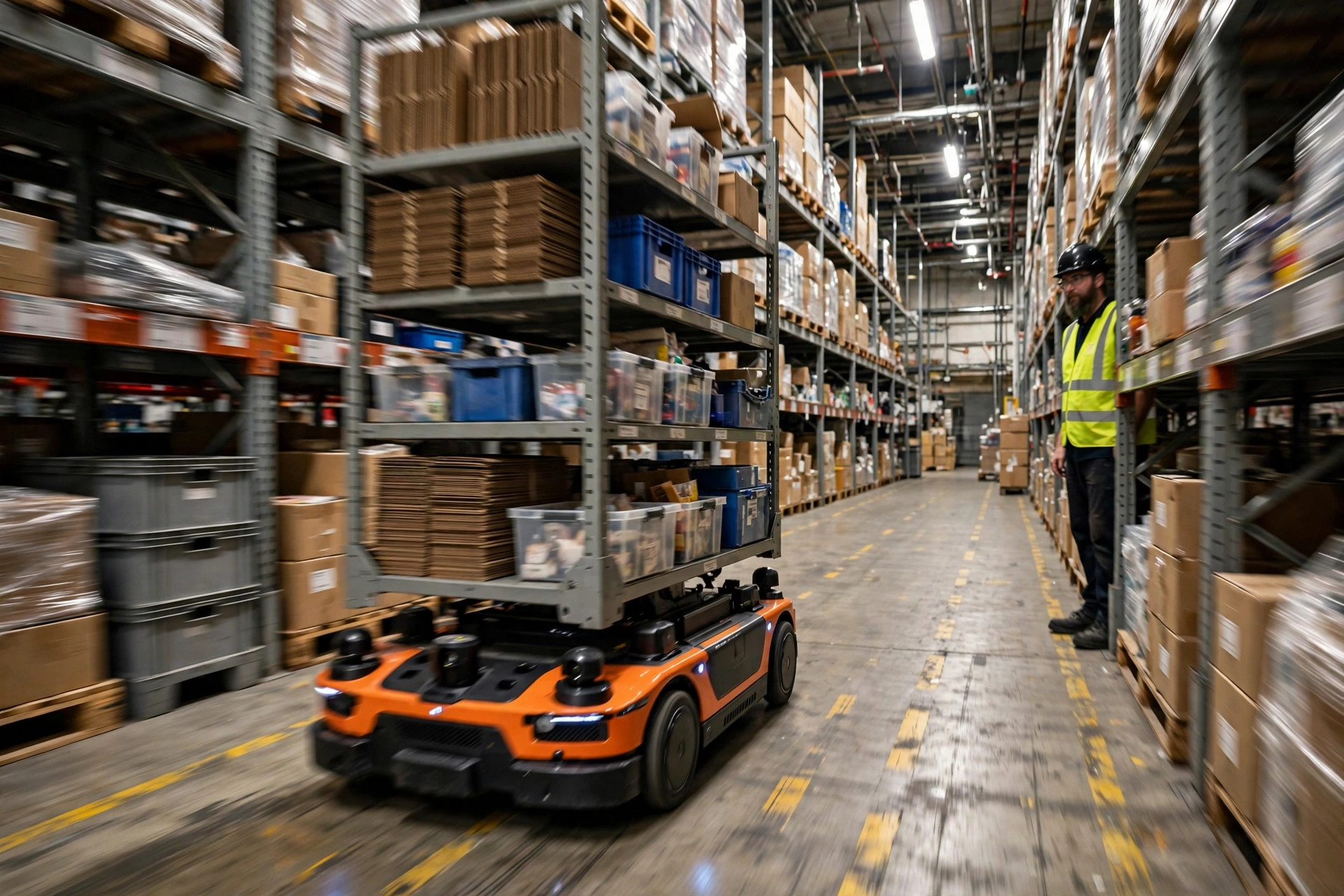
Here's my verdict up front: in nine out of ten AMR human mixed operation projects, the robots aren't the problem. The problem is guessed safety distances and traffic that was never separated. A robot enters the floor, emergency-stops every time it sees a person, stops dozens of times a day, uptime sags into the low 90s, and the boss looks at the report and concludes automation is worse than manual labor. It's not the robot's fault. You just let people and machines meet at the wrong distance.
In 2023 I worked on a 3PL e-commerce warehouse project in Suzhou: 40 under-ride AMRs hauling picked totes from workstations to the packing area. The main aisle was 3.2 meters wide, shared by people and robots. First week after go-live, the site manager called me, voice tight: each robot averaged 17 emergency stops a day, uptime at 91.3%, pickers were dodging robots like traffic, and someone nearly threw a pallet at one. Three months later, after our fixes: 3 stops a day, uptime 98.6%. Same aisle, same people. The difference wasn't the robots — it was safety distances and traffic design.
AMR Human Mixed Operation: How Safety Distance Actually Gets Set
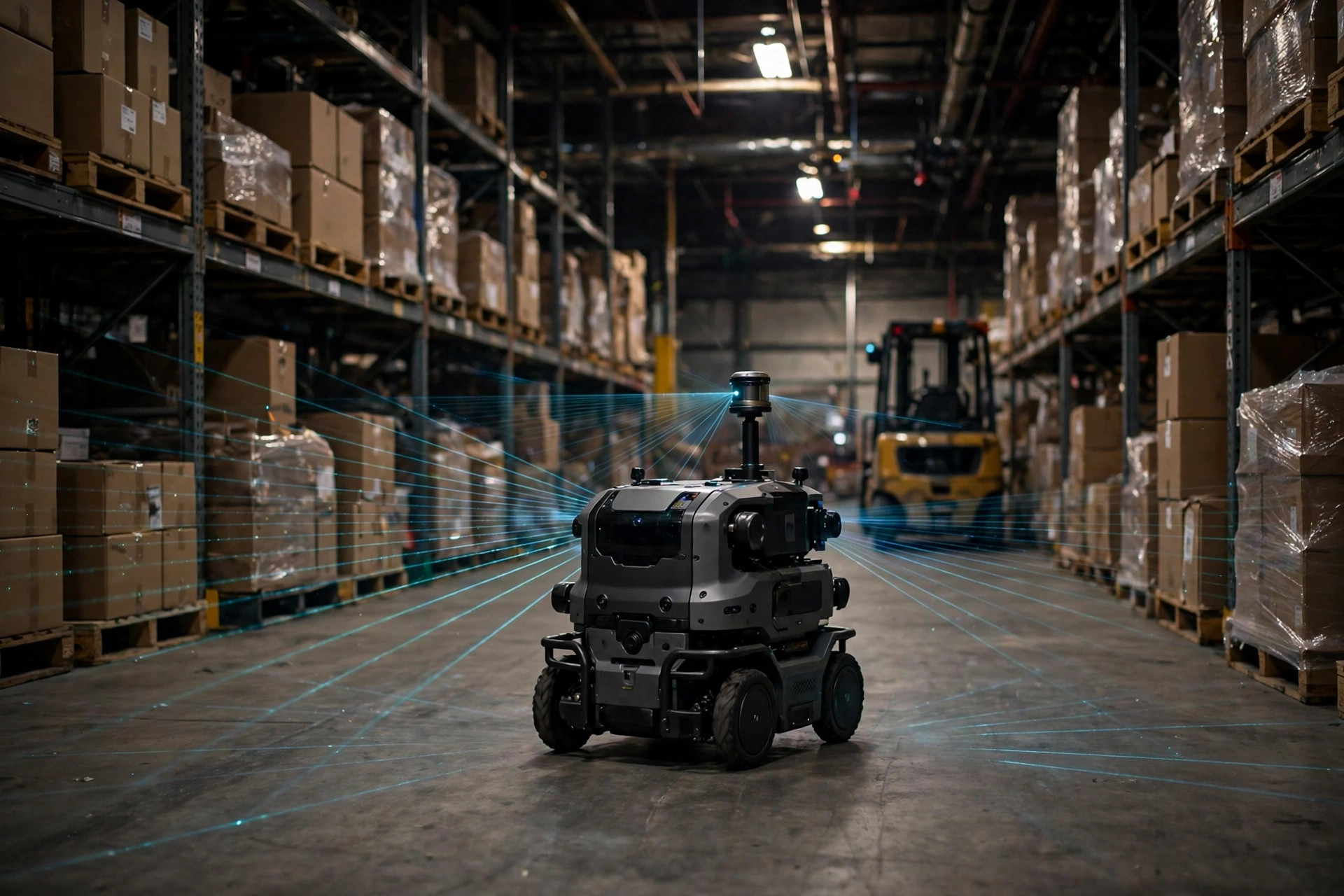
Robot safety works in three layers. Think of it like driving with three lines of defense. The outermost is the LiDAR "eyes": it sweeps constantly, and when a person or obstacle enters the warning zone the robot slows; entering the protective zone, it stops. The middle layer is the safety PLC — like an instructor in the passenger seat with their own brake pedal. LiDAR signals go through the safety PLC before any braking decision, on a chain independent of the motion controller. Even if the main controller crashes, the brakes still execute. The innermost layer is the mechanical bumper: touch it and power cuts. Last resort.
So what distances do you actually set? Here's the starting-point table we use at commissioning. Note: these are starting points — final values come from the equipment vendor's safety manual and a compliance assessment against ISO 3691-4 (the safety standard for driverless industrial trucks):
| Zone | Typical distance | Triggered action |
|---|---|---|
| Warning zone | 3–4 m | Slow to 50% |
| Protective zone | 1.5–2 m | Full stop |
| Contact buffer | 0.3–0.5 m (mechanical bumper) | Emergency power cut |
It's like following distance in traffic: the warning zone says "you're getting close, I'll lift off the throttle," the protective zone says "one step closer and I slam the brakes." One detail most people miss: protective distance scales with speed. A robot at 1.5 m/s needs more than twice the braking distance of one at 0.5 m/s. So the professional move is speed zoning: cap robots at 0.5 m/s in people-heavy areas so the protective zone can be small; open them up to 1.5 m/s on empty straightaways with a bigger zone. Safety and throughput aren't enemies — you trade between them with speed zones.
Now let me take a shot at a pet peeve: some projects buy robots with LiDAR and conclude "safety included," skipping the safety PLC and the risk assessment entirely. That's a fake requirement. LiDAR is a sensor, not a safety system. Without the safety PLC's independent monitoring chain, what proves the robot "should have" stopped when something goes wrong? You saved a little money and bought yourself a full payout plus a shutdown the first time someone gets clipped.
Fence It or Mix It? The Selection Line
"Fence everything or mix everything" is the first question of every project. My selection line is simple — one table:
| Setup | People allowed in? | Max robot speed | Relative cost | Fits where |
|---|---|---|---|---|
| Full safety fencing | No | 1.5 m/s, full speed | Low (fences are cheap) | High volume, fixed takt, 24/7 |
| LiDAR + safety PLC speed zones | Yes (zoned) | 0.3–1.5 m/s by zone | Medium | People must coexist: loading, exceptions, picking |
| No fences, full mixing | Yes | ~0.5 m/s site-wide | Looks low, hidden costs high | Low traffic, demos, transition phases |
Here's the counterintuitive call: "tearing down the fences = more efficiency" is wrong. In 2022 I worked with a warehouse in California whose owner thought fences "weren't smart enough" and tore them all down for fully fenceless collaboration. What happened? Every robot dropped to a 0.3 m/s crawl the moment it saw a person. Site-wide average speed fell from 1.2 m/s to 0.55 m/s; moves per robot per hour fell from 140 to 86. Why? Defensive slowdowns in mixed traffic are far more aggressive than people expect — with enough foot traffic, the robots spend nearly the whole shift decelerating. Fences came down, throughput dropped 30%. We went back to zoned fencing, kept mixed operation only at the manual loading bays, and the numbers recovered.
So my selection advice: fence wherever you can; only negotiate mixed operation where you must. Mixing isn't the goal — it's the compromise. Whenever someone tells me "we want the whole site fenceless," my first question is: did you calculate how much takt time defensive slowdowns eat? Nine out of ten haven't.
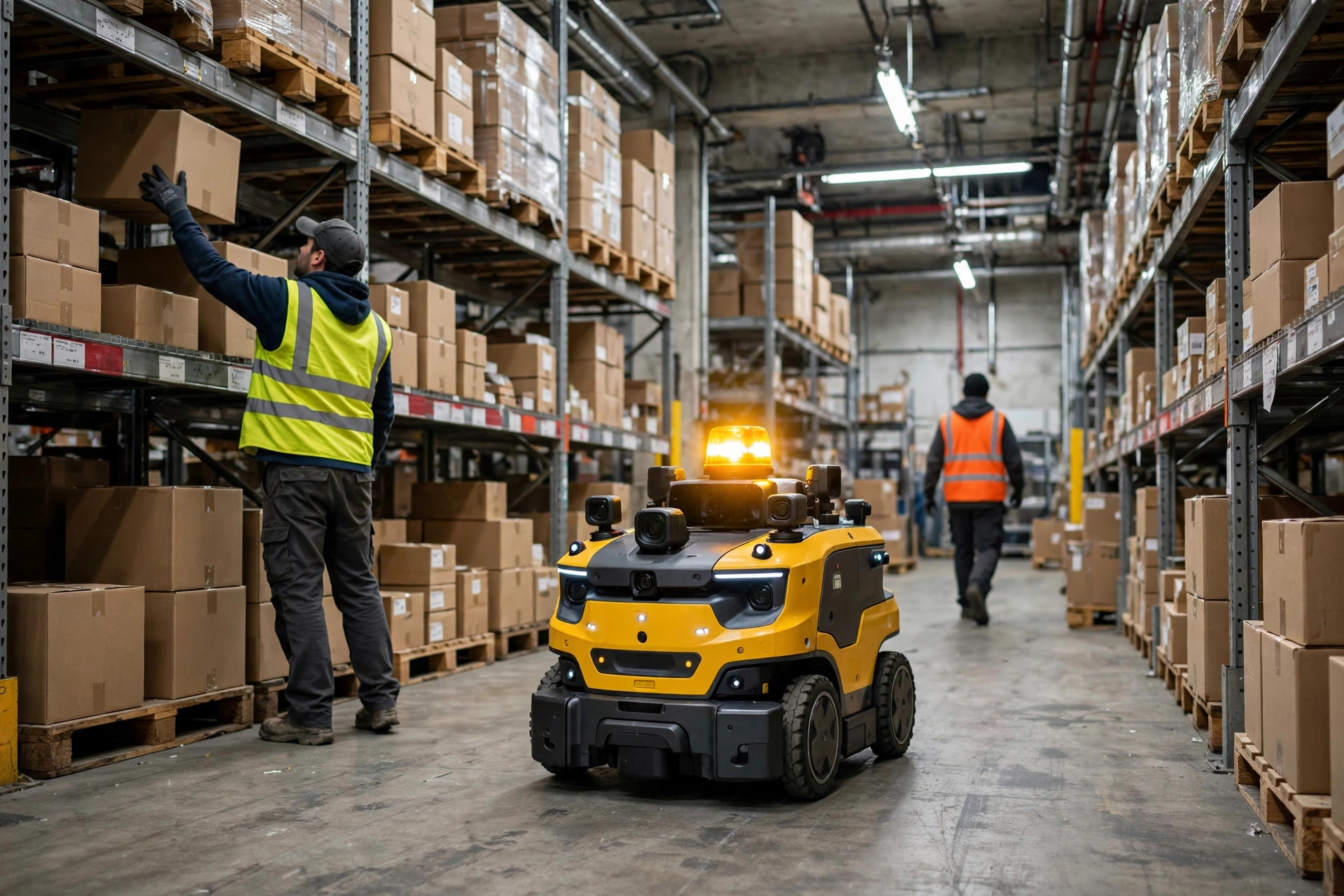
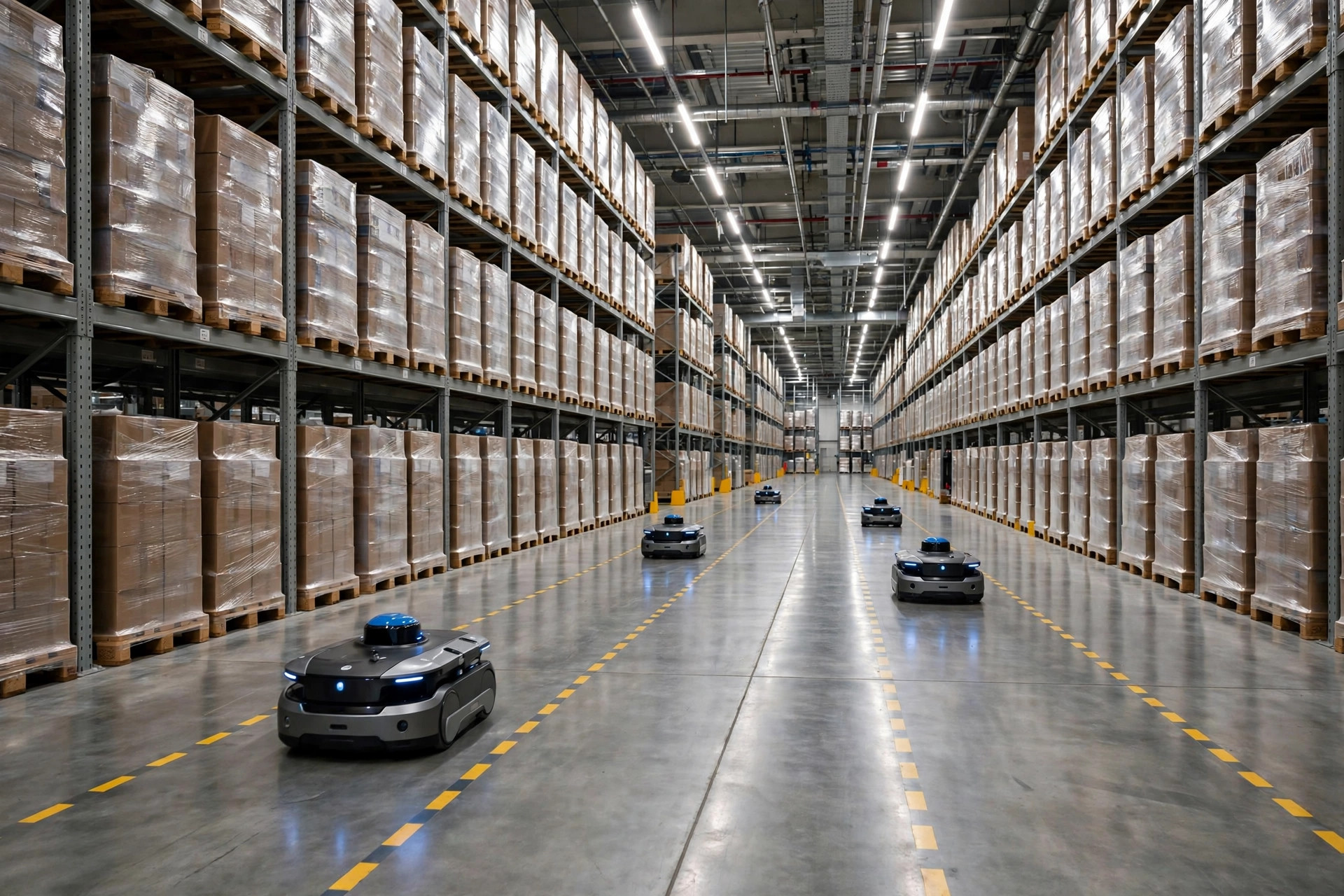
How do you actually separate traffic? Three moves. First, split people and robots: paint robot lanes and pedestrian lanes on the main aisle, put audible-visual alarms at crossings — the point isn't to make people fear robots, it's to make every encounter predictable. Second, one-way loops: robots run circuits, never backtrack, and crossing points get cut in half. Third, time separation: during peak picking, robots run only the outer trunk routes and stay out of picking zones; they get the full floor back during off-peak. That's how AMR human mixed operation gets tuned in practice: that Suzhou project went from 91.3% to 98.6% uptime on these three moves. We didn't replace a single robot.
Maintenance Pitfalls: Three Things That Break Six Months After Go-Live
Principles covered, selection covered — now the maintenance pitfalls. Commissioning parameters are always right. Projects die six months later.
Pitfall one: LiDAR gets "blinded." Warehouse dust is relentless; skip wiping the scanner windows for three months and sensitivity falls off a cliff. Worse is the floor — one warehouse re-waxed its epoxy floor, the mirror reflection made LiDAR see phantom obstacles, 200+ false stops a day, and it took a week to trace it to the floor. The fix is unglamorous: scanner windows go on the monthly inspection checklist, and you tell the facilities crew on day one — "AMRs run on this floor, no high-gloss wax."
Pitfall two: people. Workers will always cut corners; the prettiest pedestrian lane means nothing to someone in a hurry. Technology can't fix human nature. My approach: make the compliant path the shortest path — don't route the pedestrian lane on a detour nobody will walk — plus training and the occasional all-hands reminder. And don't expect one training session to last a year; "how to coexist with the robots" belongs in every new hire's onboarding for mixed zones.
Pitfall three: someone quietly changes the safety parameters. The site team "improves" throughput by shrinking the protective zone from 2 m to 1 m. Uptime goes up — until the first near-miss, when insurance and regulators both come knocking. Any change to safety parameters goes through a change process, a fresh risk assessment, and a written record. Put it in the SOP and tape it to the control cabinet door.
Is the Money Worth It? Watch This One Number
For AMR human mixed operation, don't listen to vendor decks. Watch one number: actual moves per robot per day. Measure a baseline week before go-live, measure again after mixed-traffic tuning and lane separation. If the number went up and the year stayed incident-free, the money was well spent. If it didn't move, your "mixed operation" was just theater — go back and look at safety distances and traffic separation.
By Da Liu, Automation Engineer