AMRs in the Freezer: How Sub-Zero Cold Tests Batteries, Navigation, and Tires
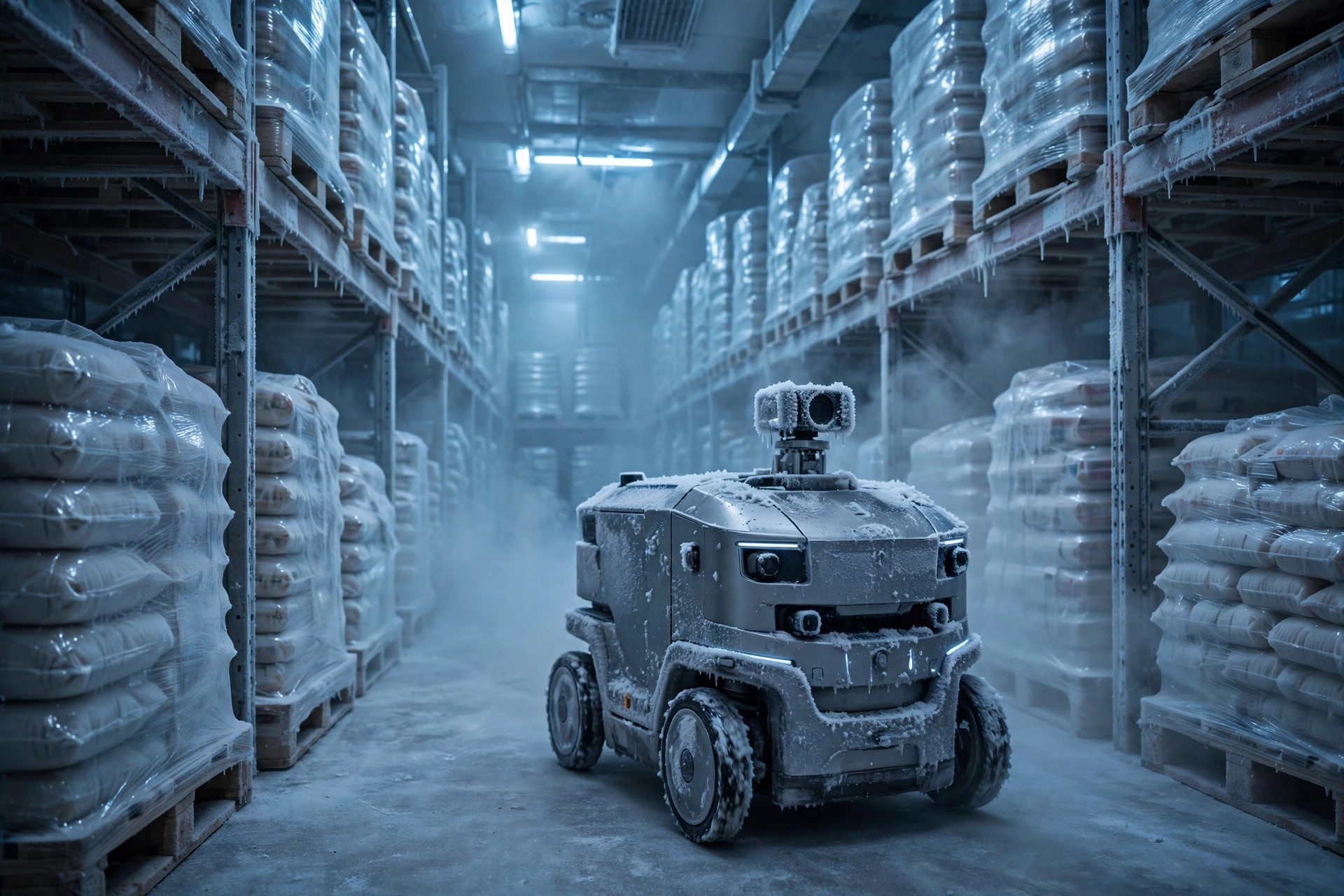
Rolling a standard AMR into a freezer is like sending someone in a T-shirt to watch the ice festival in Harbin — it goes down on night one. A freezer-rated AMR isn't just a "cold-resistant version" with a sticker on it. Sub-zero cold attacks three systems at once — battery, navigation, and tires — and the machine still has to run 24/7.
I followed a public deployment case in 2024: a frozen-food distributor in Australia running its cold store at -18 to -21°C year-round. Pickers used to work inside in heavy parkas for hours at a stretch, and turnover was brutal. They brought in cold-rated AMRs with a clever layout — people stay out, robots shuttle pallets between the deep-freeze zone and a buffer picking area at ambient temperature. From "impossible" to "runs every day," and the trick wasn't one machine. It was grinding through the cold problem one subsystem at a time.
First, understand how cold kills a freezer AMR
The battery falls first. Think of a lithium-ion cell as lithium ions running a marathon between the electrodes — the colder it gets, the slower they run. Below 0°C the electrolyte thickens and internal resistance multiplies; at -20°C the same pack delivers only about half its room-temperature capacity (that's from Battery University's published testing, not a vendor brochure). Charging is the nastier part: charge a lithium battery below freezing and the ions can't intercalate into the anode fast enough, so metallic lithium plates out on the surface instead. That's like pouring boiling water into a frozen glass — once it cracks, there's no going back. Permanent capacity loss, and in bad cases an internal short. That's why any legitimate freezer-rated AMR charges outside the freezer or in a buffer zone. Fast-charging at -20°C inside the chamber is simply off the table.
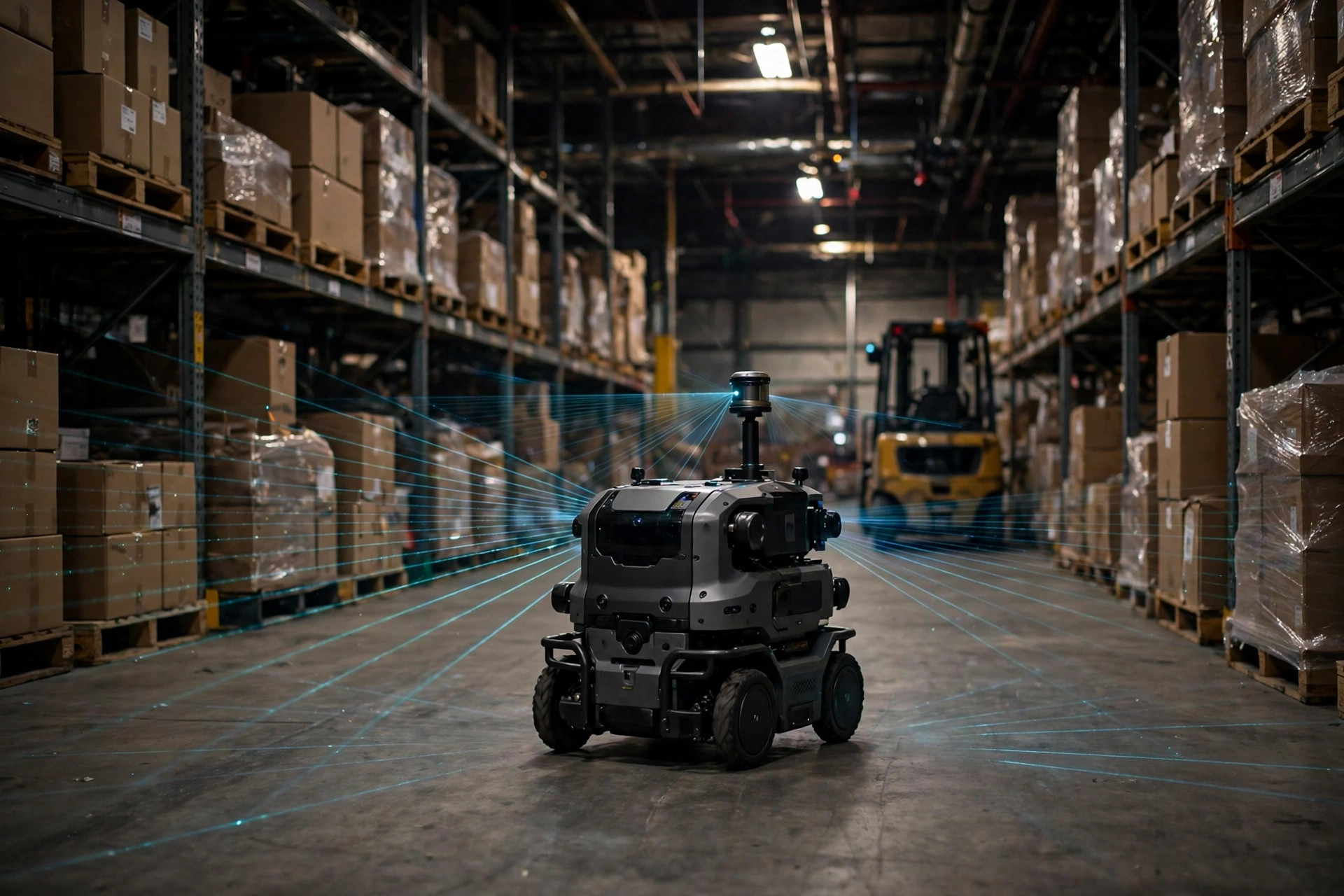
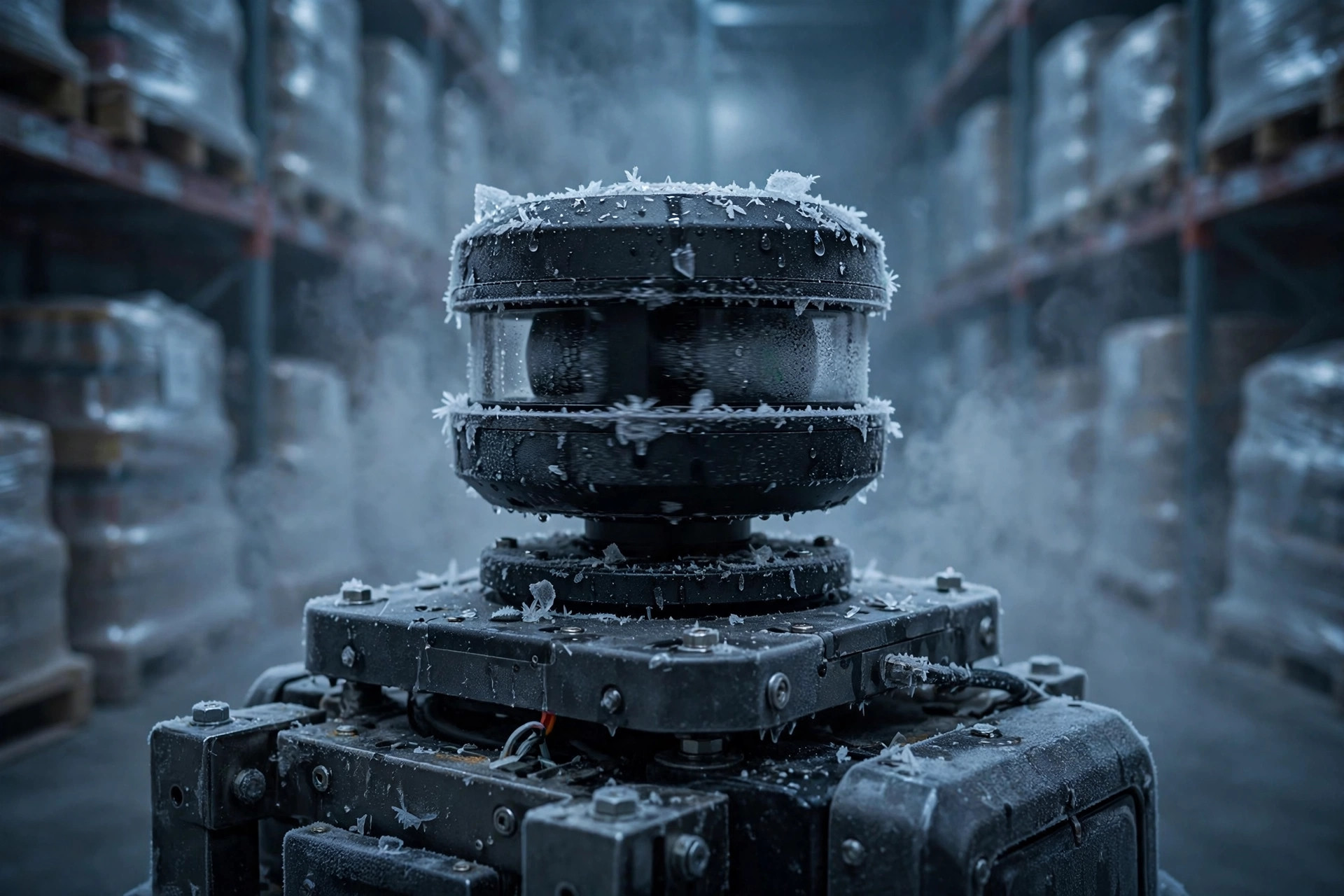
Navigation goes blind second. An AMR sees the world through its top-mounted lidar: fire lasers, read the returning point cloud, draw the map. In a freezer the real enemy isn't cold — it's frost. A frosted lidar window is a cataract; everything comes back foggy. The sneakier killer is crossing temperature zones: the robot drives out of a -25°C chamber into an ambient buffer area, condensation flash-forms on every cold metal surface, then refreezes into ice crust back inside. After a day of that, the sensors are effectively blindfolded. One cold-chain robotics vendor published their fix: a climate-controlled, dehumidified electronics bay with a servo temperature system that kills condensation before it forms, holding the machine stable at -25°C. The lesson? Frost protection is systems engineering, not a plastic cover over the sensor.
Tires lose grip third. Freezer floors carry a permanent film of ice and meltwater, and standard polyurethane wheels on that surface are like dress shoes on an ice rink. Slipping isn't just "slower" — an AMR's odometry estimates position by counting wheel revolutions. When wheels slip, the position estimate drifts, and that drift stacks on top of the lidar localization until the robot is, frankly, lost. So freezer-rated AMRs get purpose-designed tire compounds and tread patterns, plus low-temperature grease — standard grease turns to paste at -25°C and the bearings feel like they're wading through mud.
The selection threshold: a heater strip is not a freezer rating
There's a "fake freezer version" I call out every time I see one: take a standard AMR, stuff a heating strip into the battery compartment, and call it freezer-ready. The strip warms the battery while the lidar frosts over, the tires slip, and the grease congeals. That's treating a headache while the patient has pneumonia — it falls apart within days in a real chamber. A true freezer-rated machine is designed for low-temperature duty across the whole platform, and the dividing line is clear:
| Standard AMR | Freezer-rated AMR | |
|---|---|---|
| Operating temp | Above 0°C | Around -25°C (ask for figures measured at temperature) |
| Battery strategy | Charge anywhere | Charges outside the chamber; no fast charging below 0°C |
| Sensor protection | None | Heated, dehumidified electronics bay; heated lidar window |
| Running gear | Standard polyurethane wheels, standard grease | Cold-compound tread, low-temp lubricants |
| Right for | Ambient warehouses | Sub -18°C freezers, frequent cross-zone shuttling |
Remember one number: -18°C is the line. A chilled store (0–4°C) can usually get by with a standard AMR plus battery insulation. But once you're in a frozen chamber below -18°C, stop gambling and buy the freezer-rated machine. One vendor's published data is a useful reference point: at -25°C, a 2-hour charge delivers 12–18 hours of runtime — measured under cold conditions. Whatever the datasheet says at room temperature, halve it for the freezer before you do any math.
The maintenance trap: affording it is only half the battle
The biggest trap with freezer AMRs isn't the purchase price — it's the upkeep. First, tires are consumables. Cold plus ice plus heavy loads chew through tread far faster than ambient duty. Inspect tread depth on schedule; don't wait for the slip alarm — one slip event can mean a localization fault that needs a human to intervene, and the downtime costs more than the tire you "saved." Second, charging discipline. Operators love shortcuts: wheel the robot into a freezer corner and plug it in. A few months later the battery capacity falls off a cliff and nobody can explain why — the explanation is lithium plating from cold charging. The charge zone goes outside the chamber, written into the SOP, posted on the wall. Third, inspect the sensor heating film and seals on a schedule. When the heating film ages out, frost comes back; when a seal leaks, moisture gets into the electronics bay — ice in winter, water when it thaws, and a drowned control board dies faster than a cold one. Fourth, spares strategy: low-temp grease, heating films, and cold-compound tires are not off-the-shelf parts. Lead times are long. Keep at least one full set on the shelf; don't order after the line stops.
Here's the counterintuitive take: most people think freezer AMRs are about saving labor. The bigger line item is refrigeration. Every time a person walks into a freezer — every door opening, every warm body — cold air escapes and the refrigeration plant burns electricity to make it back. AMRs don't feel cold, don't open doors, don't take breaks. Running them around the clock with people picking in an ambient zone can save more on the power bill than on the payroll. That's the real reason freezer automation keeps accelerating: labor cost is the surface story, refrigeration cost is the substance.
So is the money worth it? Look at one number: fully loaded cost per pallet move — the freezer-rated premium, consumables like tires and heating films, the charging-zone retrofit, all amortized over the pallets the fleet moves per year, versus the old equation of labor plus refrigeration loss. If it beats the old number, the money is well spent. If you can't compute it, don't sign the PO yet.
By Da Liu, Automation Engineer