One of our clients, Linda — she sells kitchen gadgets out of Shenzhen and warehouses with us in Ontario, California — came to me last fall to talk about her 3PL contract. Her $9.99 silicone kitchen tool set was running an 11.7% refund rate, more than 400 refunds a month, and Amazon kept nudging her toward refund without return on the cheap SKUs. She asked me: "Susan, tell me straight — when these things come back, do I inspect them or not? Inspecting costs labor. Not inspecting feels like throwing money away."
I told her, Linda, stop mourning the product and run the numbers first. Most sellers lose here because they go on gut feel — it feels like taking the item back recovers some loss, when in reality every return is quietly eating your margin. That push isn't the platform being generous. They ran the math and it worked in their favor. Run it too — finer than they do, because the platform optimizes for the platform, and you need to optimize for yourself.
How I Run the Numbers for Clients: Take It Back, or Refund Without Return
Linda's $9.99 kitchen set cost her $2.80 landed. I made her break the return chain into line items.
| Cost item | Take the return back | Refund without return |
|---|---|---|
| Return shipping (buyer sends it back) | about $4.50 | $0 |
| Warehouse receiving + inspection labor | about $1.20 | $0 |
| Repackaging materials / restocking | about $0.50 | $0 |
| Value loss (returns rarely resell as new) | about $1.50 | $0 |
| Customer service time | about $0.80 | about $0.80 |
| Incremental cost per unit | about $8.50 | about $0.80 |
The $2.80 product cost is sunk either way — the item is either in the buyer's hands or rotting in a returns pile. It doesn't belong in the decision. What you're comparing is what the handling itself costs.
The formula:
Refund outright when: unit cost C < return shipping R + inspection labor I + packaging P + value loss D.
Plug in Linda's numbers: 2.80 < 4.50 + 1.20 + 0.50 + 1.50 = 7.70. Not even close. Every outright refund saves roughly $4.90 per unit versus processing the return. At 400+ refunds a month, that's nearly $2,000 a month she was setting on fire.
Flip it: if your unit cost is $25 and return processing still totals $7.70, you take the item back every time — the product is worth saving and reselling. The threshold differs for every seller since it depends on your product cost and your 3PL's rates, but the formula is universal. For SKUs below your threshold, stop agonizing over "should we take it back." Refund it, and spend the saved labor watching returns on your high-value SKUs.
One caveat: which situations Amazon actually applies it to, and where the dollar thresholds sit — always go by Amazon's official policy. Platform rules change; don't treat some random screenshot from the internet as gospel.
The Uncomfortable Truth About Refund Without Return
Plenty of sellers hear "refund without return" and assume the platform is pampering buyers at the seller's expense. Half right at best.
The truth is the platform ran the numbers. For a sub-$10 item, a full return cycle — reverse logistics plus customer service — can cost more than the item itself. Rather than bouncing a $7 product between warehouse and buyer three times, it's cheaper to just refund it: happy buyer, fewer bad reviews, fewer support tickets, lower total cost for the platform. It isn't a perk. It's the cost-optimal solution — optimal from the platform's point of view.
Your job is to rerun the math from your point of view. The platform's optimum is not yours: the platform doesn't care about your sunk $2.80, but it cares about its support costs; you care about your overall margin. Don't follow the platform's rhythm, and don't get emotional about "the buyer keeps the product and I lose everything" — pick up the calculator. Emotion is the most expensive cost there is.
Linda moved everything under $12 to a low-touch refund flow. Her refund rate didn't drop — what had to be refunded still got refunded — but her return-processing labor bill fell by over $3,000 a month, and net margin recovered 1.8 points. That's the difference between stopping the bleeding and curing the disease: the refund rate is the disease and takes time; the processing cost is the bleeding, and you stop it first.
What Refund Abusers Look Like: Four Signals the Warehouse Sees First
The moment no-return refunds become routine, the abusers smell it. Another client, David, sells phone accessories out of Dallas. In February 2026 he came to me because his $14.99 charging cable's refund rate had jumped from 6% to 13%. We pulled three months of data — obvious at a glance. Not a product problem. Systematic abuse.
Serial refunders show four signals. They're not hard to catch:
First, high-frequency refunds from the same address or payment method. David had one address with 14 refunds in three months, every one marked "never arrived." A normal buyer orders a charging cable 14 times in three months? Is he running an internet café?
Second, "never arrived" claims where tracking shows delivered. Pull the delivery evidence — drop-off photos, GPS pin. FBA sellers get this from Seller Central; if you self-fulfill, ask your carrier up front whether they provide proof of delivery.
Third, "wrong item" claims where the returned parcel's weight doesn't match. One of David's "best customers" claimed an empty box every time. Outbound weight records: 0.32 kg at ship-out, 0.08 kg on return. Not a mystery. Blacklisted and reported, evidence attached.
Fourth, brand-new accounts filing large or multi-item refunds on the first order. Legitimate new buyers test the waters with something small. The ones who swing big on day one are usually running throwaway accounts in batches.
Once you spot them — self-fulfilled sellers blacklist and appeal directly; FBA sellers package the evidence for a platform dispute. The key is evidence built in advance: outbound weighing, sealed packaging, inspection records. In normal times these look like overhead. The day you get hit, they're your lifeline.
Three Things the Warehouse Can Actually Do
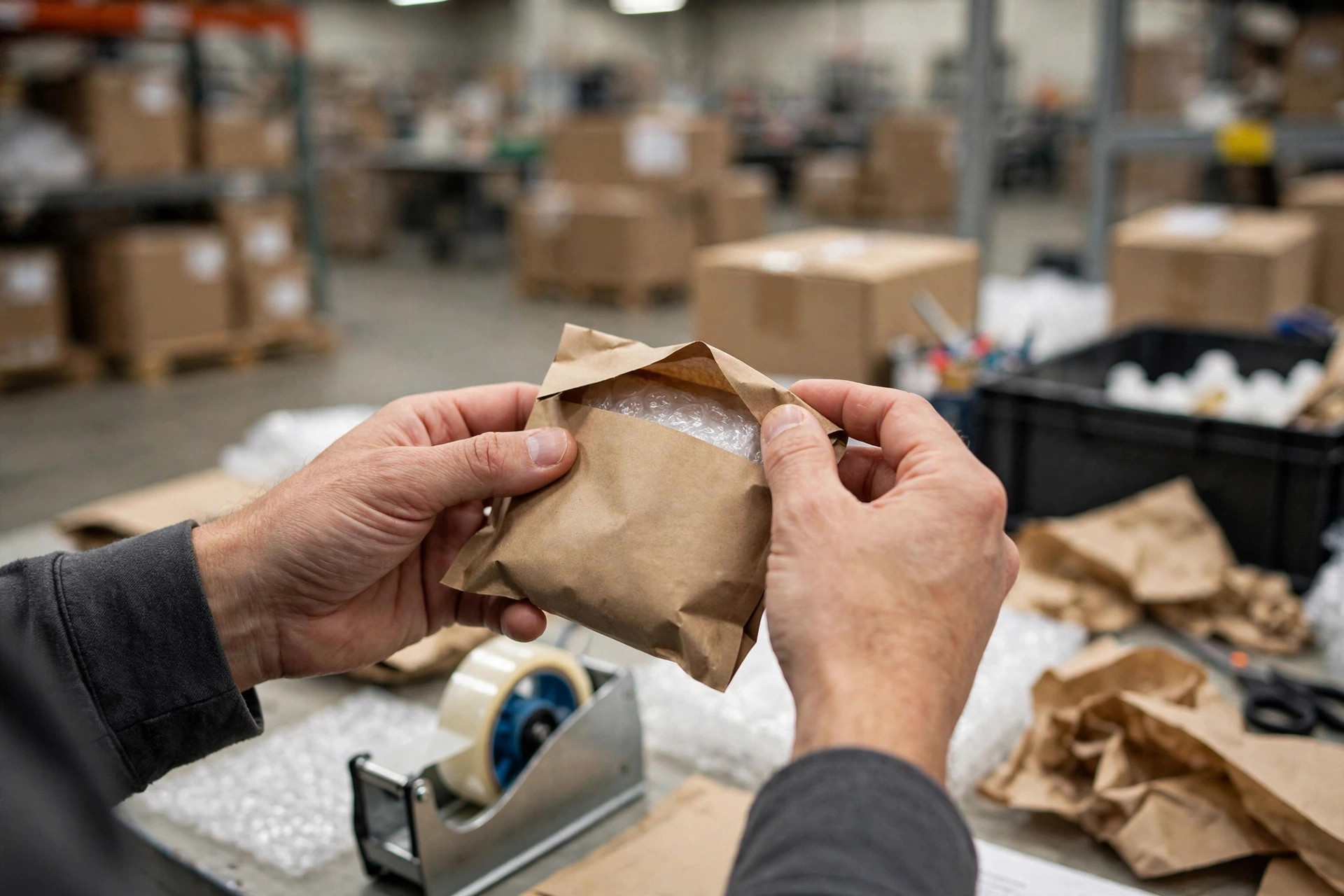
Plenty of sellers treat refunds as "customer service's problem" — nothing to do with the warehouse. Wrong. At least half of all "wrong item" and "missing parts" refunds start at the warehouse.
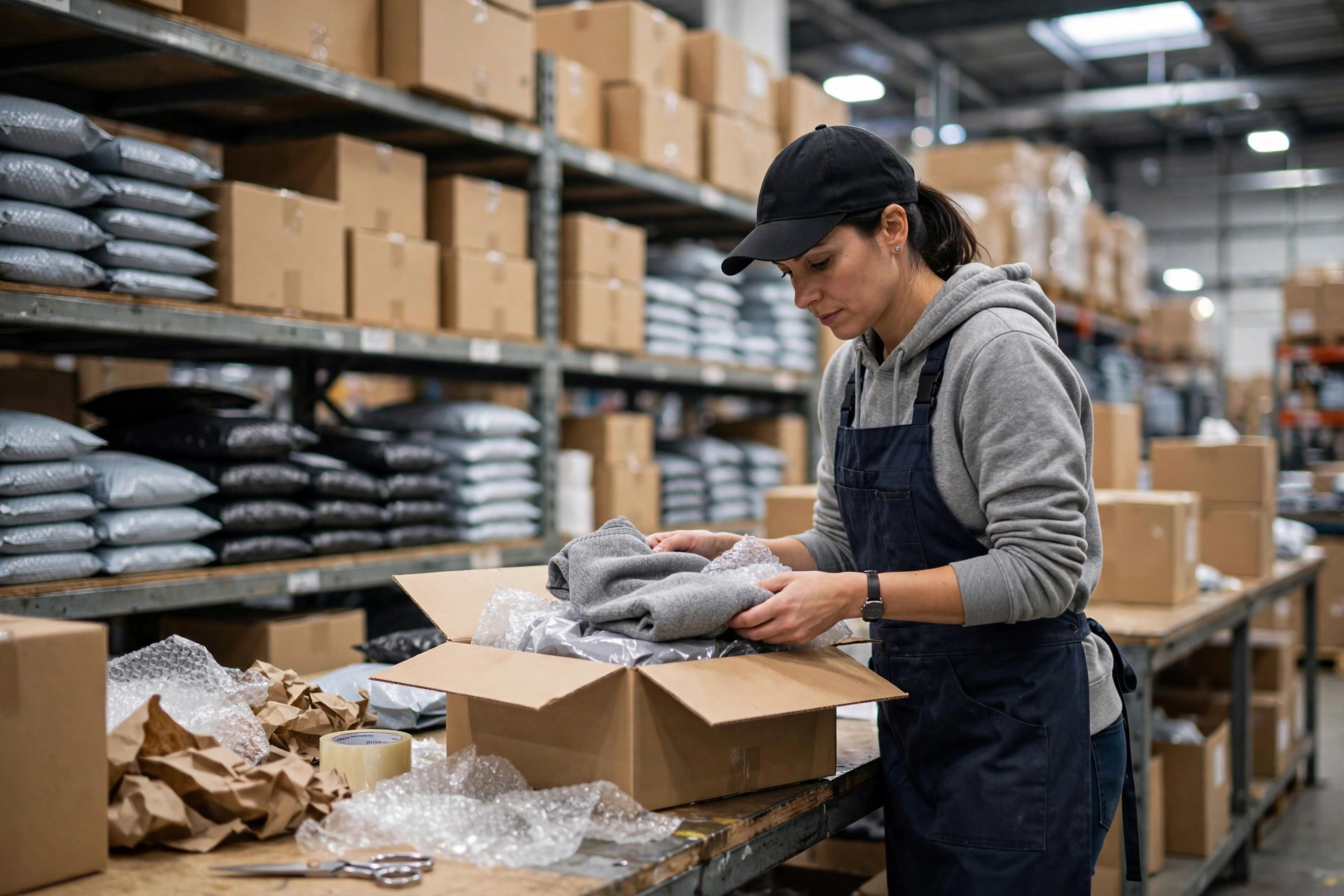
First: move inspection upstream and kill "not as described" before it ships. Linda added a pre-ship check for one thing: all parts in the box, manual included. Thirty percent of her refunds had cited "missing measuring cup" — really a packing miss. A $0.15 labor check eliminated nearly a third of her refunds. That ROI beats any ad spend.
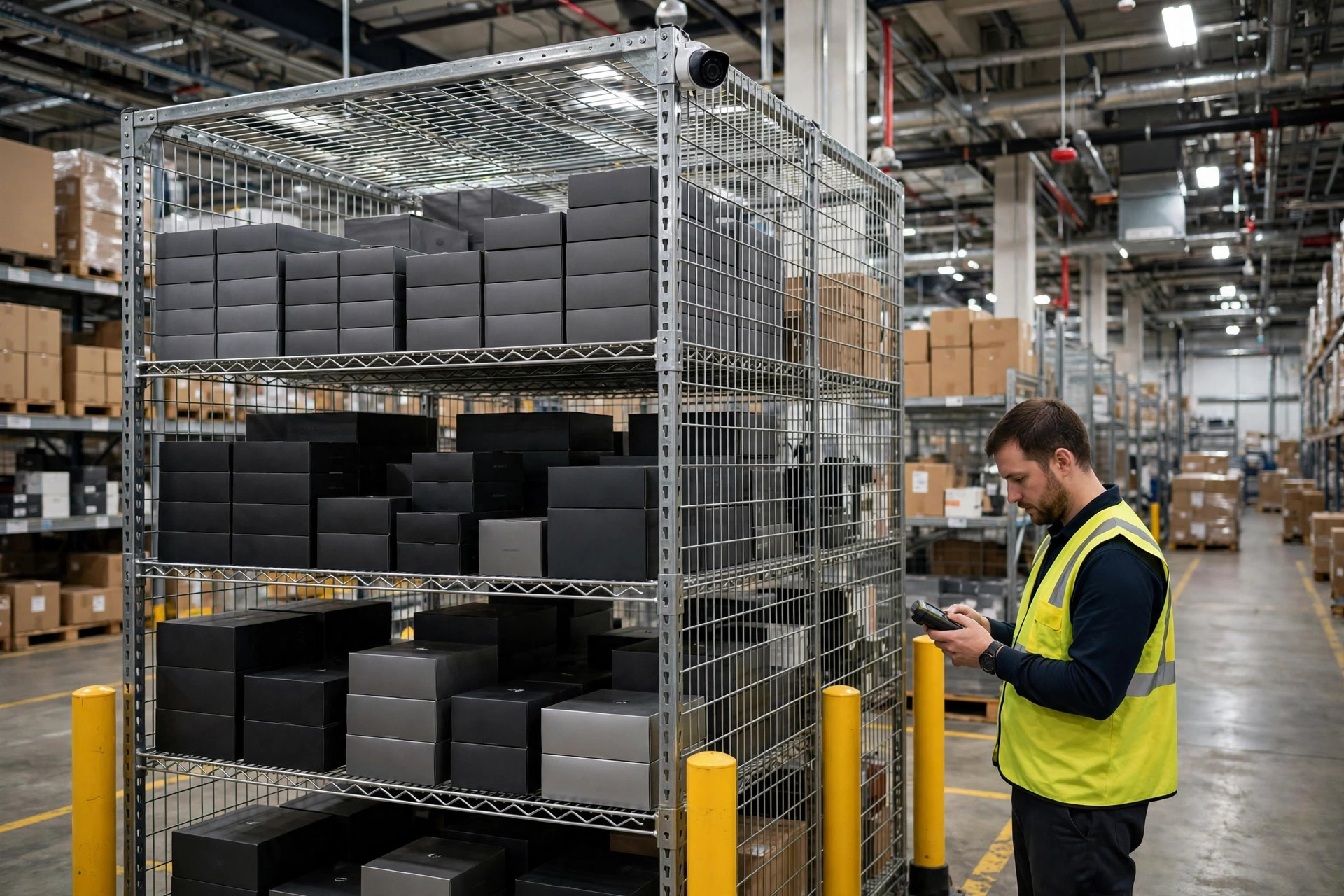
Second: outbound weighing plus tamper-evident seals, so you always have an evidence kit. Weigh and log every parcel at ship-out; use one-time seals. Negligible cost, but in a dispute it's your backbone. And when you negotiate with a 3PL, this belongs in the SOP — not as a "when we have time" favor.
Third: split your strategy between FBA and self-fulfilled. With FBA, Amazon owns the return flow — your levers are the reports, your thresholds, and the product itself. Self-fulfilled, you set your own refund rules: more flexible, but the support burden is yours. My rule of thumb: low-value SKUs go self-fulfilled with outright refunds and save on FBA storage fees; high-value, low-return SKUs go FBA and borrow the platform's traffic and trust.
Next Time You Negotiate a Contract, Ask These Three Questions
This whole debate is, at bottom, a cost-structure problem. And your cost structure is written half in your product pricing and half in your 3PL contract. Too many sellers negotiate warehouse contracts and never read the returns clause — then the refund wave hits and return processing costs more than outbound fulfillment.
So next time you're at the table, beyond the standard rate card, ask these three:
One: "How do you charge for return inspection — per unit or per hour, and is there tiered pricing?" Some 3PLs bill inspection in 15-minute blocks. A 10-minute inspection still bills a full block. Pin down the billing granularity and demand per-unit pricing.
Two: "For returned goods, what do restock, refurbish, and dispose each cost — and who decides the grade?" The grader decides whether your item gets a $0.50 restock or a $2.00 refurb. Get grading criteria into the contract appendix and keep audit rights for yourself.
Three: "When I dispute an abusive refund, can you provide an evidence package — unboxing video, weight records?" Some 3PLs' systems log weights and snap photos on exceptions, ready to export. Some have nothing, and when trouble comes you're empty-handed. Skip this question and you've handed away your ability to prove your case.
Linda now reconciles return data with us every quarter. With the numbers on the table, strategy actually moves. Remember — an outright refund isn't permission to lie down and take the loss. It's about making every dollar land where it counts: take back the returns worth taking back, and don't cry over the product value on the ones that aren't. Running the math is a seller's last dignity — and it's exactly the math your 3PL should help you get right.
By Susan, 3PL Sales Director