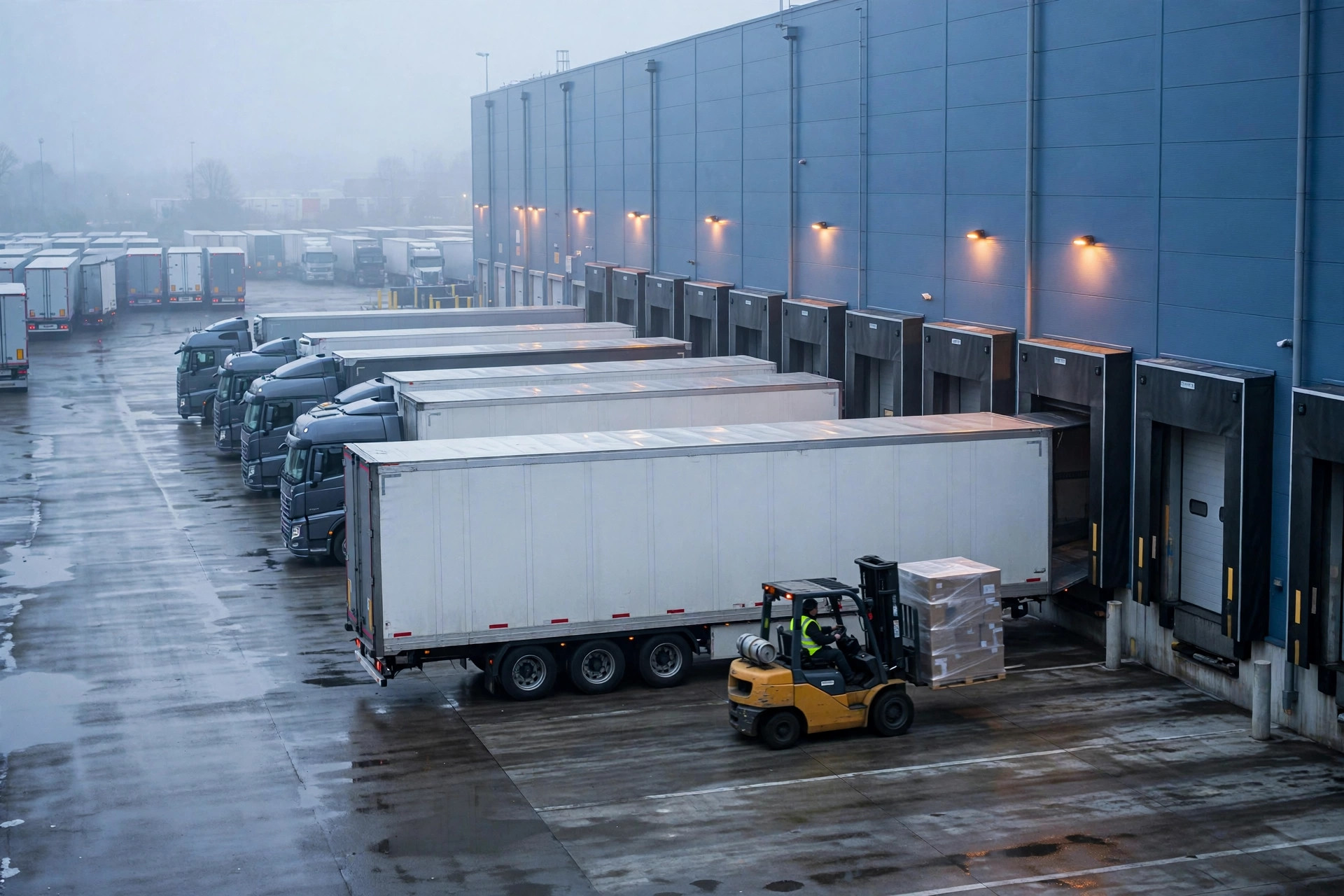
Let me be blunt: supplying Home Depot isn't a sales game, it's a compliance exam. Your product team worries about whether the SKU sells. You worry about whether it gets into the RDC without getting fined into oblivion. In my first year as an HD vendor, I paid four figures in chargebacks. Pure tuition. Here's the full playbook on routing, labeling, and chargeback survival.
First, a complaint: HD's rulebook is even more fragmented than Walmart's
People think Walmart's OTIF penalties are brutal. I'm telling you, Home Depot matches them on inbound compliance — and the pain is sneakier. Walmart fines you with a price list you can read. HD does death by a thousand cuts: one wrong carrier, one crooked label, one missed appointment window, and your month-end statement is quietly missing a few hundred bucks. The buyer won't save you. The compliance team only reads the system.
The flip side: once your process is dialed in, HD orders are rock solid. Home improvement has long repurchase cycles, and store plus online channels mean a winning SKU runs for years. Two weeks of grinding on compliance is worth it.
War story one: August 2024, Atlanta RDC, a $380 routing fine
My first prepaid shipment to HD. Twelve pallets of LED ceiling lights out of our 3PL in Ontario, California, about $28,000 in goods. My freight forwarder cheaped out and booked a non-approved LTL carrier — never checked HD's routing guide carrier list.
The RDC held the load for half a day, eventually received it, and then the chargeback showed up: "unauthorized carrier," $380. I argued with the forwarder. He said "it's always worked for other clients." I fired him.
Lesson, in one line: the routing guide is scripture, not a suggestion. If your freight terms are prepaid, you must pick from the approved carrier list. If they're collect, HD pays the freight and you submit a routing request through their system and wait for them to arrange pickup. Before every shipment, pull the latest routing guide from the HD Supplier Hub — it gets updated yearly, don't ship off last year's version.
War story two: March 2025, duplicate SSCC labels, six days stuck at the RDC
Bathroom shelving, eight pallets, forty cartons each. My warehouse guy got lazy and copy-pasted — all eight pallets carried the same SSCC-18 barcode. HD's receiving system scanned eight pallets with one identity and locked the whole shipment down.
The RDC called asking for a corrected SSCC mapping. I was traveling in China, twelve hours off, and the back-and-forth took six days before the goods were inducted. Six days my listing showed out of stock on HD.com, and my ranking slid two pages. The labeling chargeback itself was only a couple hundred bucks, but the lost sales were at least $5,000.
Since then, iron rule in my warehouse: every pallet gets a unique SSCC-18, verified non-duplicate before printing. HD requires GS1-128 pallet labels with the SSCC barcode, PO number, and ship-to info. No handwriting. No handwriting. No handwriting.
Routing in practice: three steps, don't improvise
Step one, confirm your freight terms. The PO states prepaid or collect clearly. Prepaid means you arrange the carrier (from the approved list in the routing guide). Collect means HD pays and you file a routing request through their system. The classic rookie mistake is shipping a prepaid load as collect, or vice versa — get the freight payer wrong and the chargeback is automatic.
Step two, book the appointment. HD RDCs don't take walk-ins. You schedule a delivery window in their system, and my rule is at least 3–5 business days ahead (confirm the exact window in the current official policy). Late, early, or no appointment at all each has its own chargeback. My forwarder now has a checklist: screenshot of the appointment confirmation to me before every dispatch.
Step three, send the ASN. HD requires EDI 856 (advance ship notice) before the truck arrives. The SSCCs, carton counts, and PO line items in the ASN must match the physical freight one-to-one. Mismatches get flagged as discrepancies at receiving — delayed induction at best, chargeback at worst. Small sellers without EDI can use a third-party EDI provider for a few dozen dollars a month. Way cheaper than the fines.

Chargeback cheat sheet: know where the landmines are
HD calls these "non-compliance deductions," and the amounts get revised periodically — treat the official policy as the source of truth on dollar figures. Below are the violation types I've personally run into, with my prevention playbook:
| Violation type | Typical scenario | How I avoid it |
|---|---|---|
| Unauthorized carrier | Prepaid load on a non-approved carrier | Check the routing guide list before every booking |
| No appointment / late arrival | Truck shows up at the RDC unannounced | Book the window 3–5 business days ahead |
| Non-compliant labeling | Duplicate SSCCs, unscannable barcodes | Unique SSCC per pallet, scan-verify after printing |
| Missing or wrong ASN | 856 never sent or data doesn't match | ASN goes out the same day the load ships |
| Missing carton markings | Cartons lack required HD labels | Walk the packaging guide line by line |
| Quantity discrepancy | Received count vs PO/ASN mismatch | Double-count before loading, photo the evidence |
| Early/late delivery | Outside the PO delivery window | Schedule production backward from the PO date |
One critical detail: chargebacks stack per violation, not per shipment. One load with a labeling error, a missed appointment, and a late ASN gets dinged three separate times. I've watched a fellow seller eat over a thousand dollars on a single fifteen-pallet load because his new warehouse hire hit all three.
The counterintuitive take: don't save on freight at the cost of compliance
Sellers — past me included — do the math wrong on HD. Save $200 on freight with a cheap off-list carrier, eat a $380 fine. Skip the $50/month EDI service, eat a $300 discrepancy deduction.
My trade-off rule now is simple: before any cost-saving move that could trigger a chargeback, ask whether the savings cover even one fine. If not, don't do it. HD compliance cost is a fixed investment — read the routing guide once, build the labeling workflow once, connect EDI once, and every shipment after that is near-zero marginal cost. The moment you think "this one time we'll wing it," the system will teach you a lesson.
Another counterintuitive one: the RDC receiving clerk is your best friend. Don't argue with them. Be decent, and when a label is slightly off they'll sometimes let you fix it on the spot instead of opening a chargeback. I keep one RDC contact on speed dial and send photos of questionable packaging before shipping. Cheaper than any fine.
Staying in stock: HD's rhythm is nothing like Amazon's
Finally, inventory planning. HD replenishes stores and online from one pool — your freight hits the RDC, then gets allocated out to stores, a process that takes one to two weeks. So your safety stock needs to run at least three weeks deeper than FBA.
My formula: take the trailing 8-week average weekly sales from the Supplier Hub reports and multiply by six weeks of safety stock. Bump it 30% for spring (March–May, remodeling season) and hurricane season (August–October, when building-material demand spikes). After the October 2024 Florida hurricane, my waterproof tape exploded online at HD. I'd stocked eight weeks ahead. Competitors went out of stock; my ranking jumped into the category top 20.
One more trap: HD's PO due date means "arrived at the RDC," not "shipped from your warehouse." LTL from California to an East Coast RDC runs five to seven days easy. Work backward: PO due date minus seven days transit minus two days buffer equals your latest ship date.
Bottom line
Supplying Home Depot is half product, half compliance execution. Read the routing guide, get the SSCC labels right, book appointments early, send the ASN on time — do those four things and chargebacks drop to near zero. Then mind the planning rhythm: carry three extra weeks, never go out of stock.
Two years in, I've gone from four-figure tuition in year one to basically zero fines. This playbook is battle-tested — follow it and you'll save yourself a year of tuition.
By Ah K, E-commerce Seller (5 yrs)