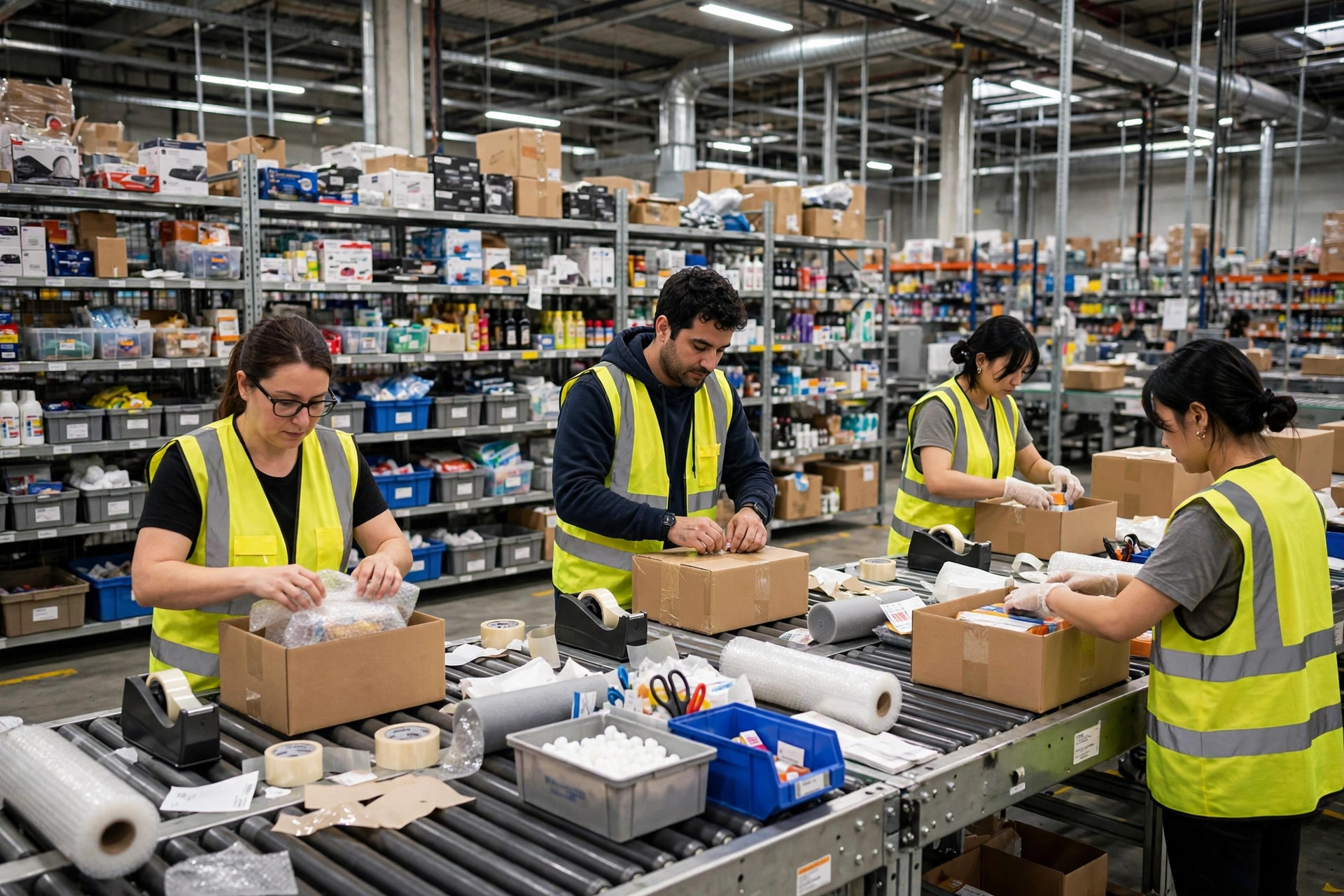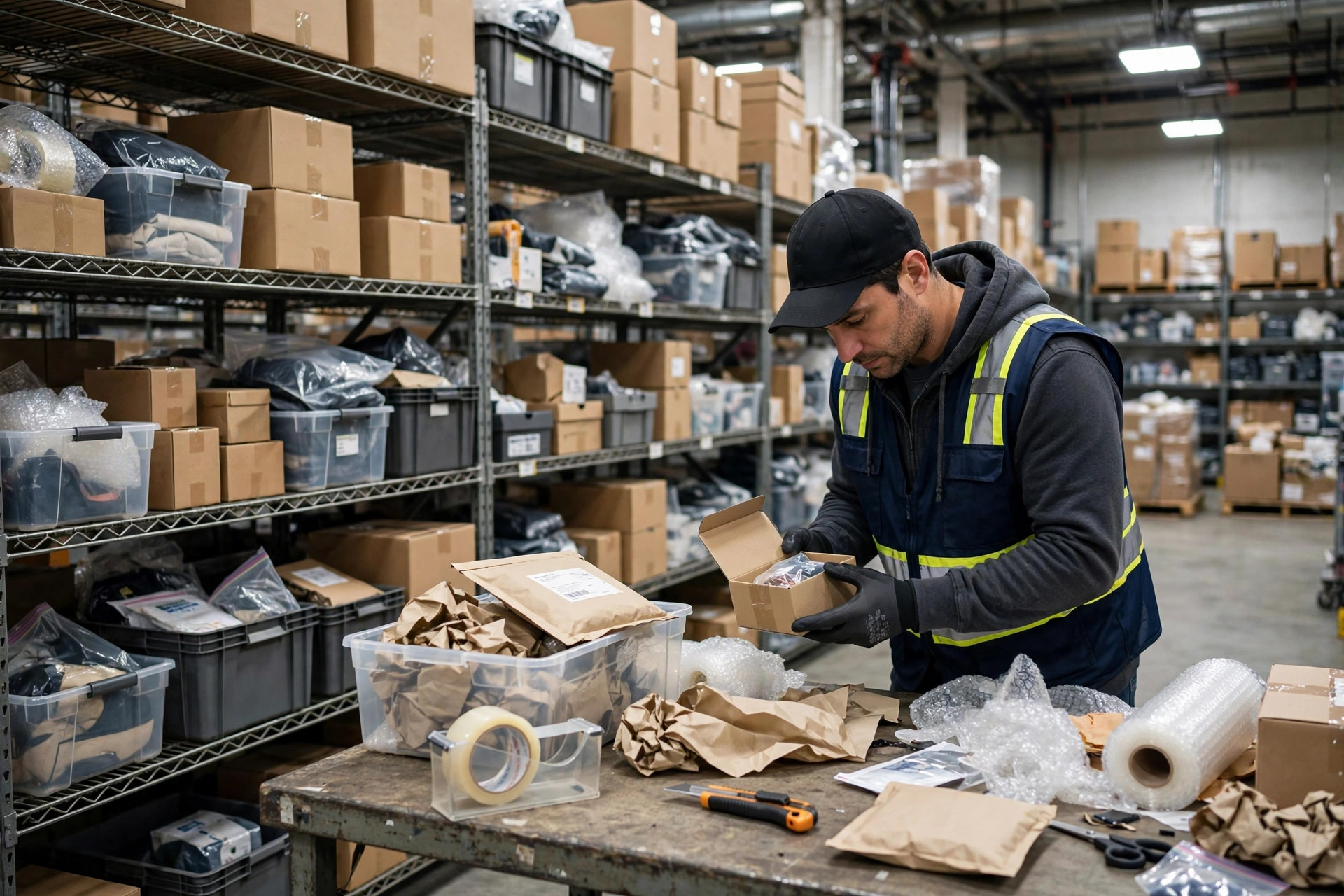
We had a client — a small scented-candle brand outside Los Angeles — who called me in the spring of 2024 and asked, "Susan, can Amazon MCF just ship my Shopify orders?" One unboxing video had blown up on TikTok overnight with 4 million views, and their daily orders jumped from 280 to over 1,900. Two people packing out of a 2,000-square-foot warehouse in Ontario lasted two days before the whole thing collapsed. Boxes stopped going out. The support inbox filled up with "where is my order."
So is Amazon MCF a good answer? It's solid. It's also expensive, and it has traps. I've signed over a hundred warehouse contracts, and I know the MCF playbook cold. It's a great tool — but only for a specific stage. Let me walk you through the real math, then the three traps only the sell side talks about.
What Amazon MCF Actually Is (Let's Get Aligned First)
MCF — Multi-Channel Fulfillment — lets you store inventory in Amazon's warehouses and have Amazon pick, pack, and ship orders from your non-Amazon channels: your DTC site, eBay, Walmart, wherever. You're essentially renting Amazon's fulfillment machine without running an Amazon storefront.
Three parts. Memorize this and no quote will ever confuse you again.
First, the fulfillment fee: charged per unit, tiered by product size and weight. Small and light is cheap; big and heavy hurts. Rates change yearly — check the current schedule in Seller Central. I won't quote numbers that'll be stale by the time you read this.
Second, monthly storage: charged per cubic foot, per month. Off-peak is one price; October through December is several times higher. That's Amazon's time-honored way of forcing you to clear inventory. There's also long-term storage surcharges for units sitting over a year.
Third, the nickel-and-dime fees: labeling, poly-bagging, removal orders, returns processing — each billed separately. Plenty of sellers stare at the fulfillment fee and ignore these. They can run 10%+ of your annual bill.
The Real Cost of MCF: Orders of Magnitude, Not Fake Precision
Here's the honest scale. For a parcel around one pound, the per-unit fulfillment fee sits roughly in the same ballpark as a mainstream 3PL's all-in pick-pack-ship price — sometimes a touch cheaper off-peak. But that's the wrong comparison:
| Cost item | Amazon MCF | Third-party 3PL | Shipping it yourself |
|---|---|---|---|
| Per-unit handling | Tiered by size/weight, published online | Per-order pick/pack, negotiable at volume | Your labor + materials |
| Storage | Per cubic foot/month, spikes in peak season | Per pallet or per unit/month, stable pricing | Your full rent and utilities |
| Parcel shipping | Deep Amazon carrier discounts | 3PL's aggregated carrier rates, negotiable | Retail rates, zero discount |
| Extra fees | Labeling/removal/returns, each itemized | Usually bundled into a negotiated rate | Hidden costs: mis-ships, delays |
| Speed | Amazon's fast-delivery network, 2-day common | Depends on 3PL warehouse locations | Depends on you |
| Returns | Back to Amazon's warehouse, slow processing | Handled per your rules, flexible | You unbox it yourself, crying |
See it? MCF's fulfillment fee isn't the villain. The villains are seasonal storage spikes and death by a thousand small fees. My candle client paid more than triple the off-peak storage rate in their first Q4, and it ate 6–8 margin points off every DTC order. Brand owners always read the first line of the quote. Sellers like me know the real money hides in lines two and three.
MCF Delivery Speed: Genuinely Fast — With One Big Caveat
Speed is its biggest selling point. Your inventory sits across dozens of Amazon fulfillment centers, and each order ships from the building closest to the buyer. Most US orders land in two days; remote areas take three to five. Ninety-nine percent of DTC brands can't touch that alone, and most small 3PLs can't either.
The caveat: your inventory has to be in the right places. Amazon's distributed inbound splits your stock across multiple warehouses. If goods end up concentrated in one or two buildings, orders to far-flung zip codes still crawl. And MCF orders don't get the Prime badge on your site (that's FBA's privilege) — promise "2-day delivery" on your product page and you own every late delivery; the one-star review has your name on it.

Three Traps the Contract Will Never Mention
Trap #1: Inventory ownership — one shared pool for FBA and MCF means they bleed each other dry
This one hurts the most. Lots of sellers commingle FBA and MCF inventory in a single pool because it's convenient. Fine in quiet months. Disastrous during peak.
In Q4 2025, a home-storage brand in Dallas ran a Black Friday blitz on their DTC site — 4,000+ orders in three days. MCF pulled automatically from the shared pool, and by the time the founder noticed, their Amazon listings were stocked out for eleven days. Rankings fell out of the category top 50, and organic traffic took three months to recover. His words to me: "Susan, what I made on DTC didn't cover what I lost in Amazon rankings."
It cuts both ways: an Amazon sales spike drains the inventory your DTC site thinks it has, and your support team gets screamed at for orders you can't ship.
The fix is one sentence: physically separate inventory by channel. Keep a dedicated MCF pool even if storage costs a bit more. Before signing, ask: can inventory be segregated by channel? A fuzzy answer means walk away.
Trap #2: Returns — easy to send back, brutal to get back
DTC returns go back to an Amazon warehouse. Sounds convenient, right? The reality: returns sit in Amazon's processing queue for three to six weeks routinely, longer in peak. During those weeks, that inventory is "in transit, unsellable" on your books — you can't resell it, and you can't get it back.
And the refund rules are Amazon's, not yours. In several categories buyers can return for "didn't like it," and the return shipping and processing fees come out of your pocket. Doesn't matter how strict your own DTC return policy is — once you route through MCF, you play by Amazon's rules.
My rule of thumb: categories with return rates above 15% — apparel, footwear, beauty — should think twice. The time cost and trapped working capital will eat every penny you saved on fulfillment fees.
Trap #3: Branded packaging — your brand goes invisible inside an Amazon box
MCF ships in Amazon's standard boxes with Amazon tape. Want to slip in a branded thank-you card? No. A custom printed mailer? No. Your logo on the box? No. The unboxing experience — one of DTC's most powerful repeat-purchase levers — drops to zero.
A premium skincare founder told me: "My DTC average order is eighty dollars, and the customer gets a beat-up Amazon box. The experience is worse than my forty-dollar product on Amazon itself." Crude, but fair. What does brand premium rest on? Half product, half those thirty seconds of unboxing.
The Counterintuitive Take
Here's the part that surprises people: the moment MCF looks cheapest on paper is exactly when you should leave it.
MCF's sweet spot is roughly 3,000–8,000 orders a month — enough volume to amortize inbound costs, not enough to justify your own warehouse or a hard-negotiated 3PL deal. But once your DTC volume holds steady above 10,000 orders a month, a good 3PL will quote you an all-in pick-pack-ship rate 15–25% below MCF (depending on category and warehouse location) — with no peak-season storage spikes and no packaging restrictions.
I've watched too many sellers treat it as a permanent home. It's a bridge, not a house. It carries you across the viral-spike period; once your volume earns you a seat at a 3PL's negotiating table, cross it. Every extra year, you're paying brand tax.
Three Questions to Ask Before You Sign Anything
Whether you're talking to Amazon or a 3PL, memorize these three:
One: "Can inventory be physically segregated by channel? If we share one pool, who gets priority during peak?" — If they can't answer, their inventory control is a mess.
Two: "How much does storage go up in peak season? Show me the October–December rate card separately." — If they only show you off-peak pricing, peak season has a surprise waiting.
Three: "From return receipt to resalable, how many days on average? Put it in the SLA — what's the penalty for missing it?" — If they won't commit on returns timing, their returns process is a black box.
That candle brand? They ended up running two legs: Amazon absorbed the viral peaks, and their own small warehouse covered everyday orders and branded packaging. Once DTC volume held at 12,000 orders a month in 2025, I negotiated them into a 3PL at 18% below their all-in MCF cost. The bridge did its job. Then they got off it.
By Susan, 3PL Sales Director