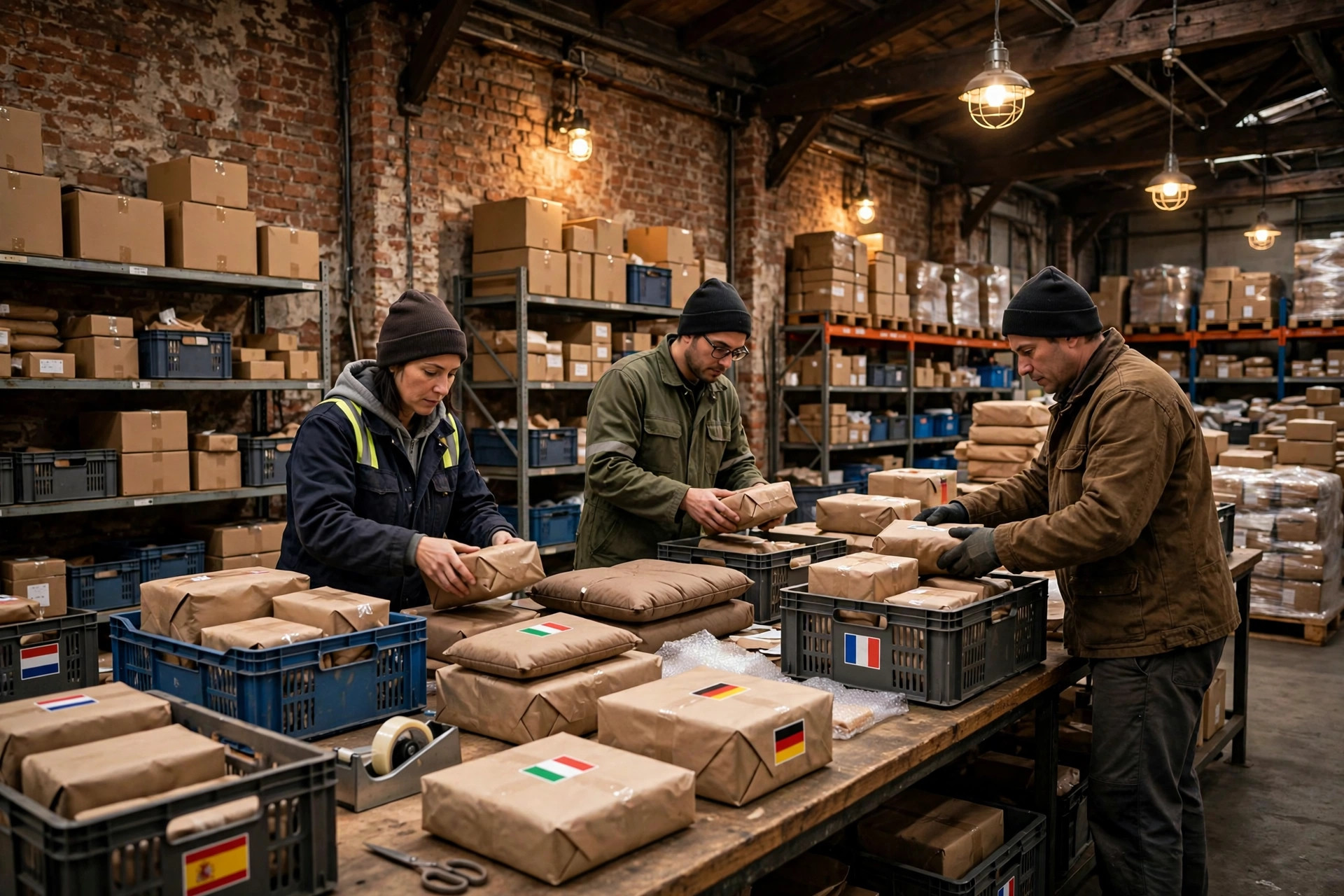
Amazon changed the rules again. On Amazon Europe, I've said that every year for five years — and every year the platform finds a new way to prove me right.
Let me put it bluntly: selling on Amazon Europe is NOT just the US marketplace with a translation layer. In the US, one tax ID covers the whole country. In Europe, every country you store inventory in wants its own VAT number, its own EPR registration, its own paperwork. VAT, EPR, and multi-country fulfillment — those are the three mountains. If you can't climb them, you're basically working for Amazon for free.
VAT Numbers: The Goods Arrived, the Tax Number Didn't
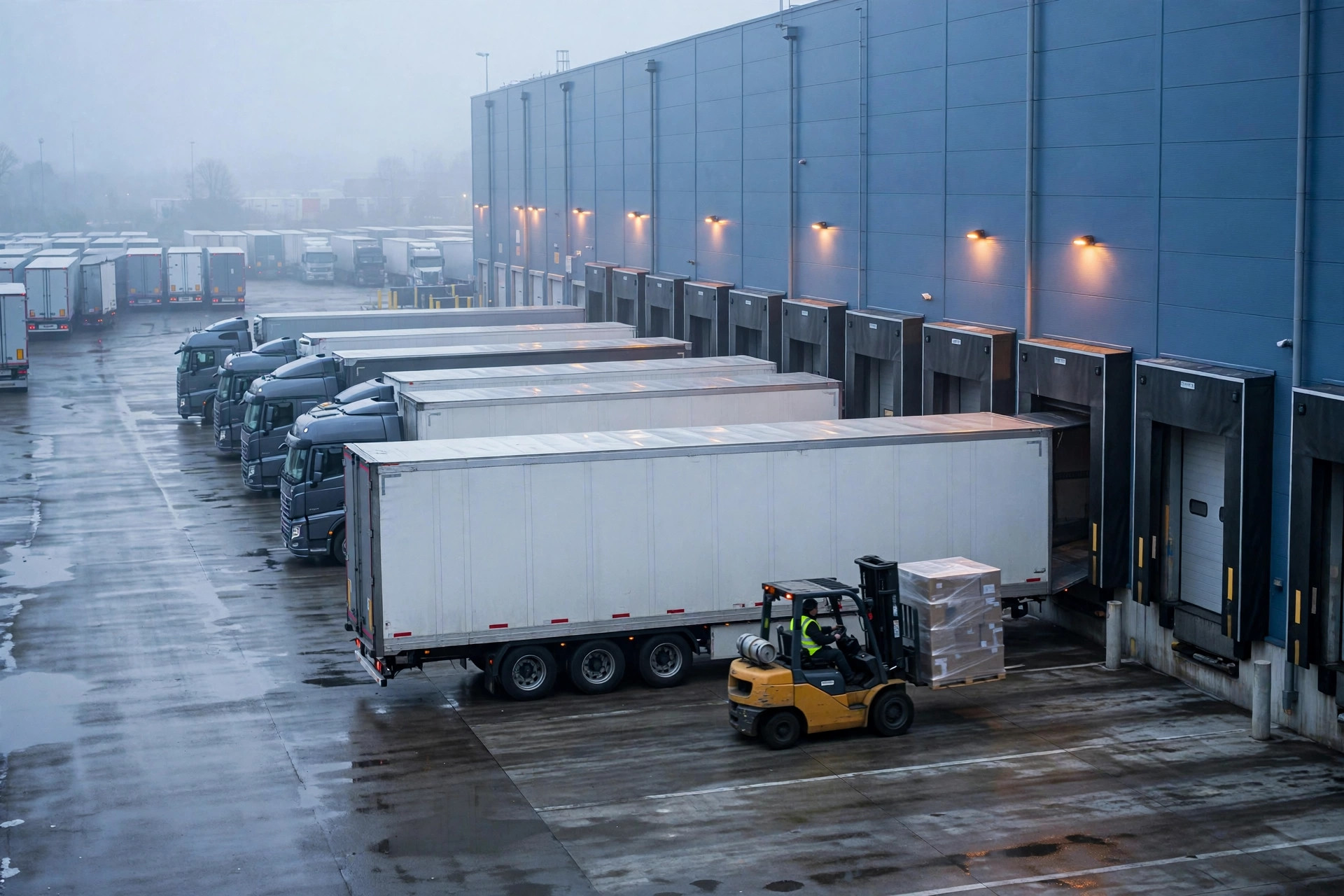
My first big crater was at the end of 2021. A bestseller was running low on the German store, so I rushed 2,000 units by sea freight. While the cargo was on the water, my tax agent kept saying the German VAT number was "almost there." Then the goods hit Hamburg — and Amazon refused the FBA shipment. No German VAT number, no shipment plan, no inbound. That batch sat outside the warehouse for over 40 days, racking up storage fees daily. Christmas season came and went. Peak season turned into dead season.
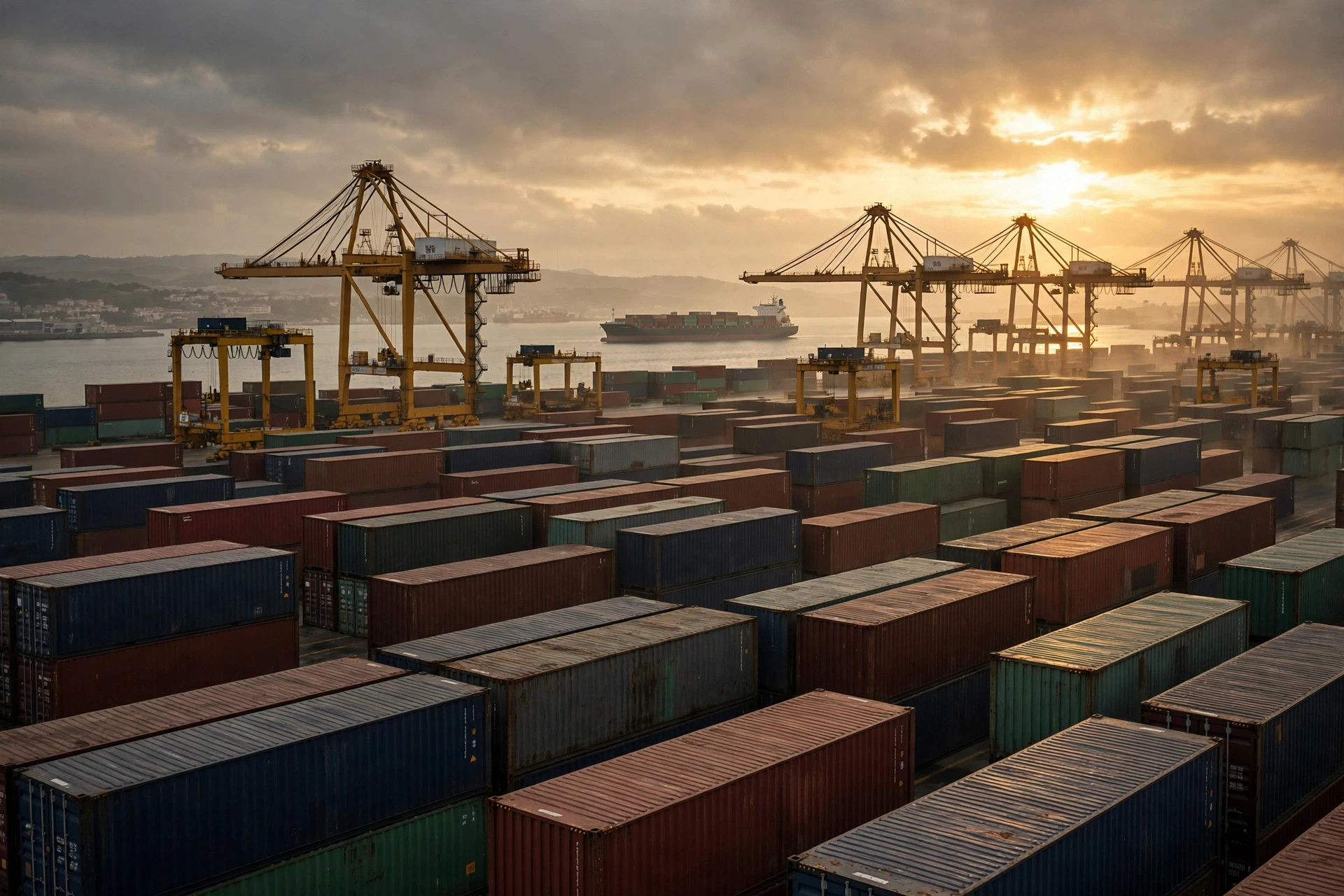
My iron rule for Europe now: tax numbers first, goods second. UK, Germany, France — three stores, three separate VAT registrations, each on its own timeline. Start the applications at least two months before you need them. The 35–40 days your sea freight spends on the water fits neatly inside the registration window — run both in parallel and you lose no time. And never believe an agent who promises "two weeks, guaranteed."
I learned this the hard way — refreshing the dashboard daily while my cargo floated at sea, watching my half-built plan freeze, then rebooking every inbound appointment from scratch. My SOP now: get written confirmation of the tax-number status from the agent every week, screenshot it, archive it. When there's a dispute, that paper trail is everything.
And since Brexit, the UK is its own thing. Moving stock from a UK warehouse to Germany means going through customs, VAT, and EPR all over again — the full cycle, twice. So I plan Europe country by country now, as separate projects, not one big "Europe" spreadsheet.
EPR: Germany's Packaging Law Is No Joke — Listings Get Killed Overnight
VAT is the visible threat. EPR is the silent one. Extended Producer Responsibility means: if you sell packaged goods in Germany, you register and pay into Germany's packaging recovery system first. Selling electronics? That's WEEE registration. Products with batteries? Add the battery law on top. France, Spain, and others each run their own EPR schemes — Germany and France enforce the hardest.
Spring 2023, one of my German listings suddenly went dark — Amazon took it down with a one-line email: missing EPR registration number. I was stunned. I HAD done the packaging registration. Turns out my agent only registered packaging and never mentioned WEEE. That listing was doing 80+ orders a day. It stayed down for 9 days. The ranking fell from the top 20 in the category to past 80, and the conversion rate dropped from 1.9% to 1.2% when it came back. It took two months of nursing to climb back.
Three lessons, paid for in blood:
- EPR stacks by product category. Packaging + electronics + batteries means three registrations, not one.
- Upload the registration numbers to Seller Central. Registering without uploading is the same as not registering.
- Don't wait for Amazon to remind you. The platform runs batch compliance checks now. By the time that email lands, your listing is already cold.
On costs: policies change every year. For exact registration and reporting fees, check each country's official site for the latest — don't trust a three-year-old forum post.
One Country Deep vs. Full Pan-EU: A Decision Framework for Small Sellers
This is THE core warehousing question on Amazon Europe. EFN (European Fulfilment Network) means you stock in one country and sell across Europe — slow delivery, high fees. Pan-European FBA means splitting inventory across multiple countries' FBA warehouses — local delivery, higher conversion, but you must sort out VAT and EPR in every country, plus pay Amazon's cross-border transfer fees, which it sets unilaterally.
Here's my comparison table — straight to the conclusion:
| One country deep (Germany recommended) | Full Pan-EU (multi-country) | |
|---|---|---|
| Upfront compliance cost | Low: one country's VAT + EPR | High: full VAT + EPR set per country |
| FBA delivery speed | 3–7 days outside home country | 1–2 days locally in each country |
| Conversion rate | Noticeably lower on cross-border orders | Local shipping = meaningfully higher |
| Amazon transfer fees | None | Yes, and you don't control them |
| Best for | New sellers, single-product testing | Established sellers with stable monthly volume |
My battle-tested path: go deep in one country first, expand to Pan-EU only after the product proves itself. In 2022 I launched a new product shipping only to the German warehouse, covering France and Italy via EFN. After three months — 4,000+ units a month in Germany, return rate holding under 6% — I switched on Pan-EU. It worked. France's conversion rate jumped nearly 40% almost immediately, recovering the orders we'd been losing to slow EFN delivery.
The reverse story: a friend selling home goods went full Pan-EU from day one — five countries' VAT numbers and EPR registrations, a pile of compliance spend before a single unit proved itself. Paying for heavy infrastructure before the product is validated is the most expensive tuition on Amazon Europe.
The Counterintuitive Bit: Bigger Pan-EU Isn't Better — Transfer Fees Eat Your Margin
Most people assume more Pan-EU countries = better. Cover all of Europe, right? I tested it. Wrong.
Pan-EU has a hidden cost: Amazon moves your inventory between countries' FBA warehouses on its own, and the transfer fees are whatever Amazon says they are. In Q4 2023, my review showed transfer fees in the Poland and Czech warehouses eating 12% of those two stores' gross margin — while those two stores combined contributed just 7% of my total European sales. I was using German profits to subsidize two stores that barely made money.
So I cut Pan-EU down to four core markets — Germany, France, Italy, Spain — and shut off two marginal countries. European overall margin went UP 5 points, and inventory turned faster. That's the biggest counterintuitive lesson of Amazon Europe: less is more. Coverage doesn't equal profit.
My inventory split is a rough rule of thumb: divide stock across the four core countries by historical sales at roughly 5 : 2.5 : 1.5 : 1, Germany always taking the lion's share. No equal splits — equal allocation means slow countries tie up your cash. Rebalance monthly: any country that beats expectations two months running gets 10% more stock next month. Dynamic, not static.
So my decision framework is three questions:
- Can this country's monthly sales cover its fixed compliance + storage costs? If not, don't open it.
- Does the conversion lift from local shipping outweigh the transfer fees? If you can't do the math, test with EFN first.
- Can your cash flow handle stocking multiple countries at once? Europe's replenishment cycle is 60–90 days — five countries means five sets of safety stock.
The Pitfall Checklist (Every Item Paid For)
- Plan replenishment on 90 days: 35–40 days at sea + customs + inbound check-in. Two to three months is normal. Don't plan on US timelines.
- Peak season starts a quarter early: for Q4 in Europe, goods should be moving in August, tax applications started in June.
- EPR renewals every year: registration isn't one-and-done. Annual reporting and renewal — lapse and you get delisted just the same.
- Treat the UK separately: post-Brexit, UK–EU is international trade. Customs, VAT, EPR — the full cycle again. Stop thinking of the UK as "one of the European warehouses."
- Pick a tax agent with one test: only hire one willing to put the issuance timeline in the contract with penalties for delays. Verbal promises get an instant pass.
Europe is a more complicated board than the US, but the way to play it is straightforward: tax numbers first, EPR complete, validate in one country before expanding, and do Pan-EU by subtraction. My European stores now run a higher overall margin than my US store — by 3 points. Not because Europeans are easier to sell to, but because I've finished paying for every pitfall.
This one I've personally tested. It works.
By Ah K, E-commerce Seller (5 yrs)