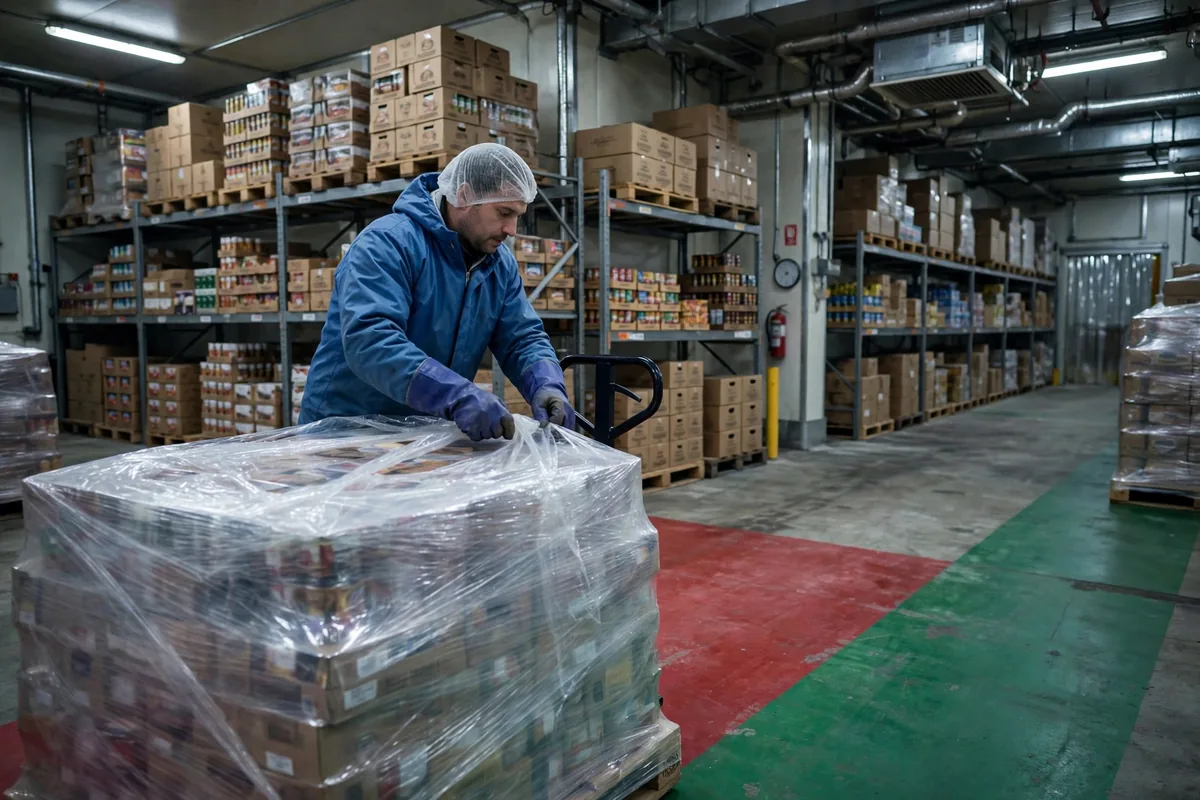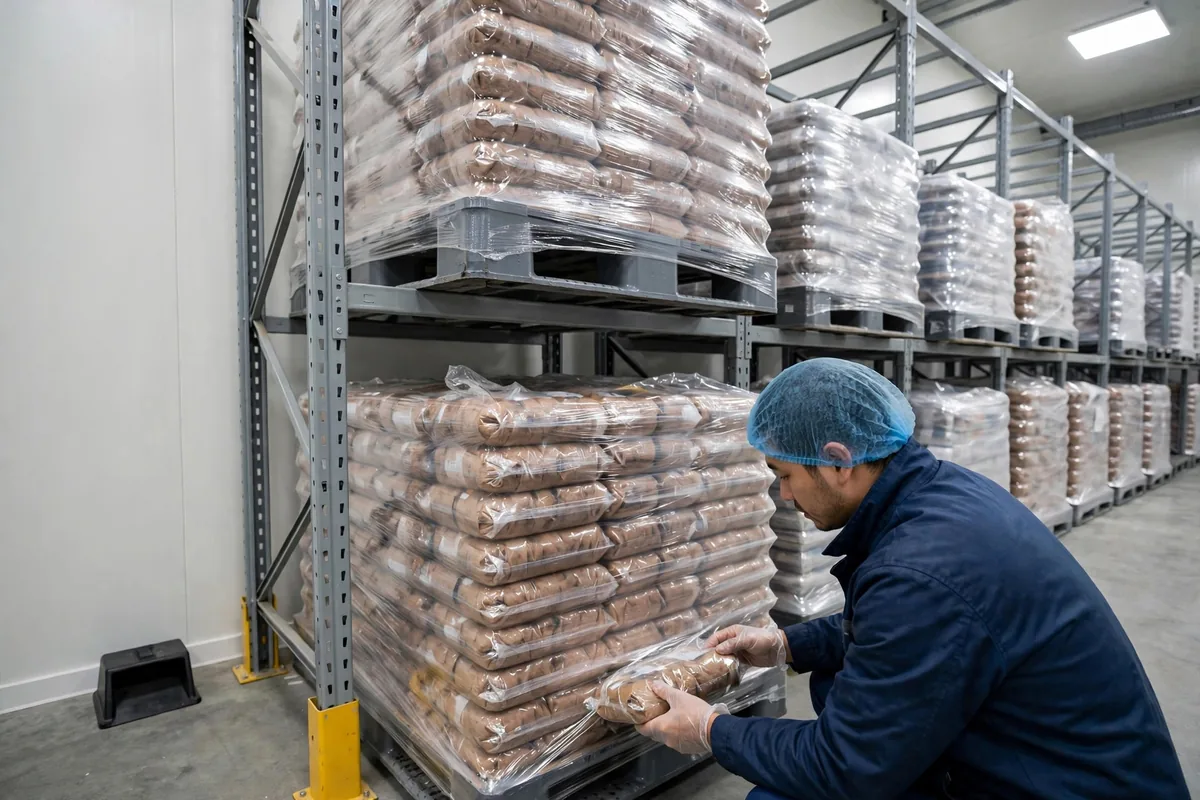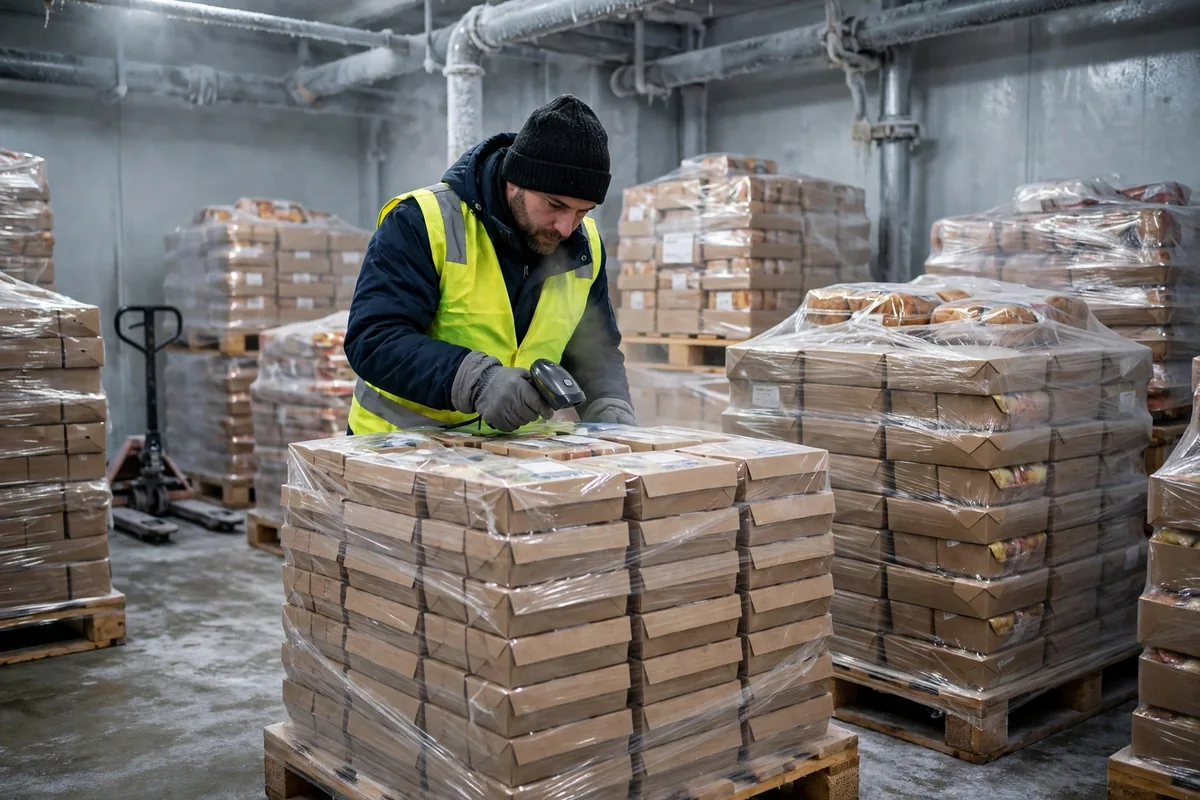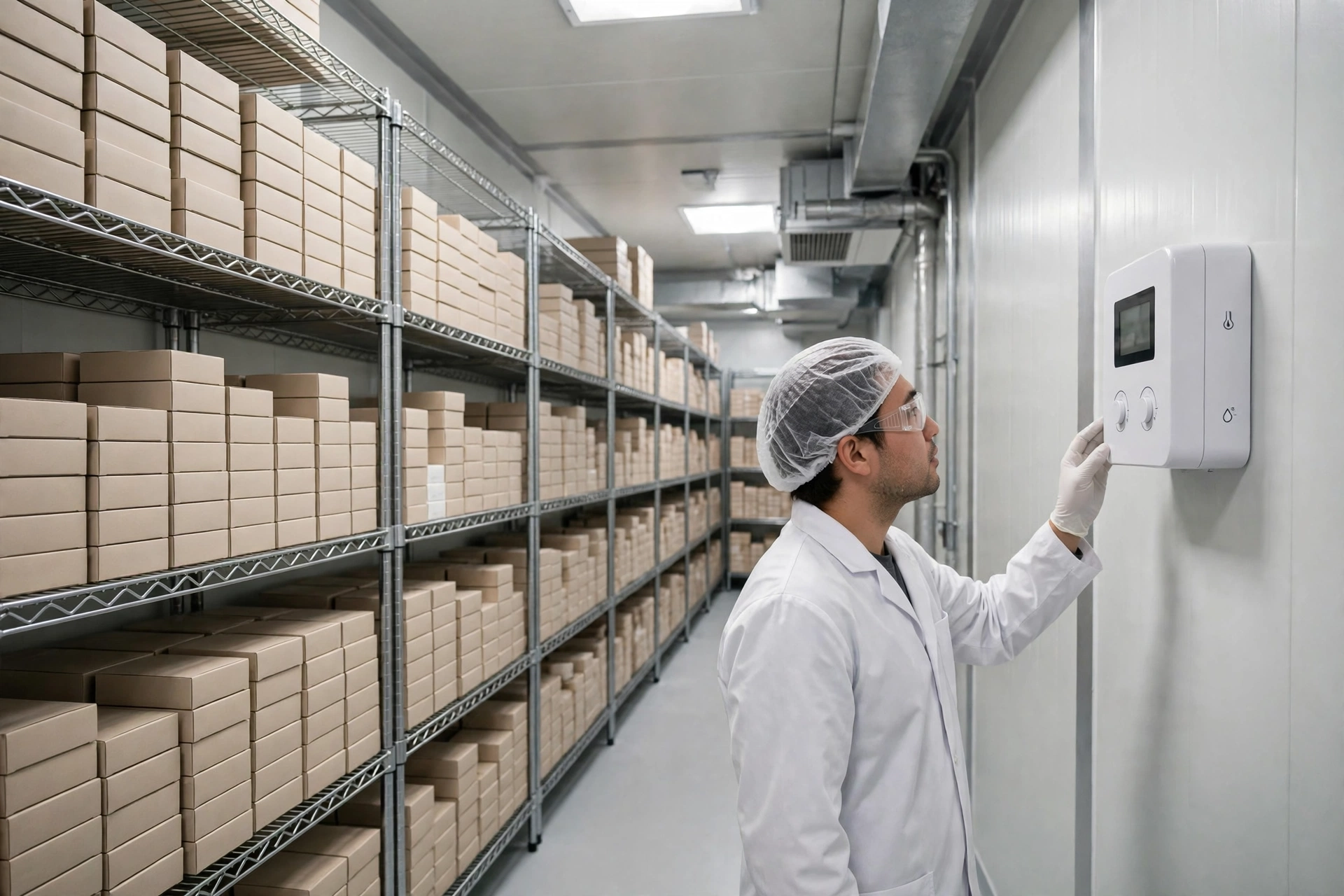
Allergen segregation warehouse work sounds like something that belongs in a food plant's laboratory. In practice, it is becoming everyday work for more and more shared warehouses. One building holds several food clients at once: peanut butter sits on a rack next to oat flakes, the same sortation line runs sesame seasoning in the morning and gluten-free crackers in the afternoon, and the risk of cross-contact hides in those ordinary details.
According to the U.S. Food and Drug Administration (FDA), the nine major food allergens under U.S. law are milk, eggs, fish, crustacean shellfish, tree nuts, peanuts, wheat, soybeans — and sesame, which was added in 2023. A third-party warehouse that takes on several food clients is effectively stacking nine risk lists under a single roof. More difficult still, the risk does not come only from the goods themselves. It comes from the contact surfaces the goods share: pallets, forklift forks, conveyors, workers' gloves, even dust drifting through the air.
Allergen Segregation Starts With a Risk Map
Before building any barrier, draw the risk. A risk map needs to answer three questions: which allergens does each client's product contain, which allergens coexist in the same zone, and which shared contact points does the product pass through inside the warehouse. Peanut butter stored beside oat flakes carries a different risk level from the same two products stored in separate zones; bulk powder and sealed cans do not belong in the same risk class either.
Here is an illustrative scenario: in the summer of 2024, a third-party warehouse on the U.S. East Coast serving six food clients drew a risk map before accepting a seventh — a nut-butter brand. The map showed the nut butter's planned location sitting between an oat brand and a bakery brand, sharing one outbound conveyor and one set of picking carts. Once the map was drawn, the segregation plan wrote itself: the nut butter moved to a dedicated zone, the conveyor gained a cleaning point, and the picking carts were split by allergen and colour-coded. That map later became the warehouse's standard routine — every new client gets mapped before it gets a location.
That is why any serious allergen segregation warehouse program starts with a map, not a wall. A risk map has a second purpose: it lets clients see your management. When food clients audit a warehouse, the most detailed questions are rarely about how high your walls are. They ask whether your risk list is complete and whether every point on it has a control measure attached. A carefully drawn map reassures a client more than a freshly built partition wall.
Zoning, Cleaning, and Changeover: Three Routines
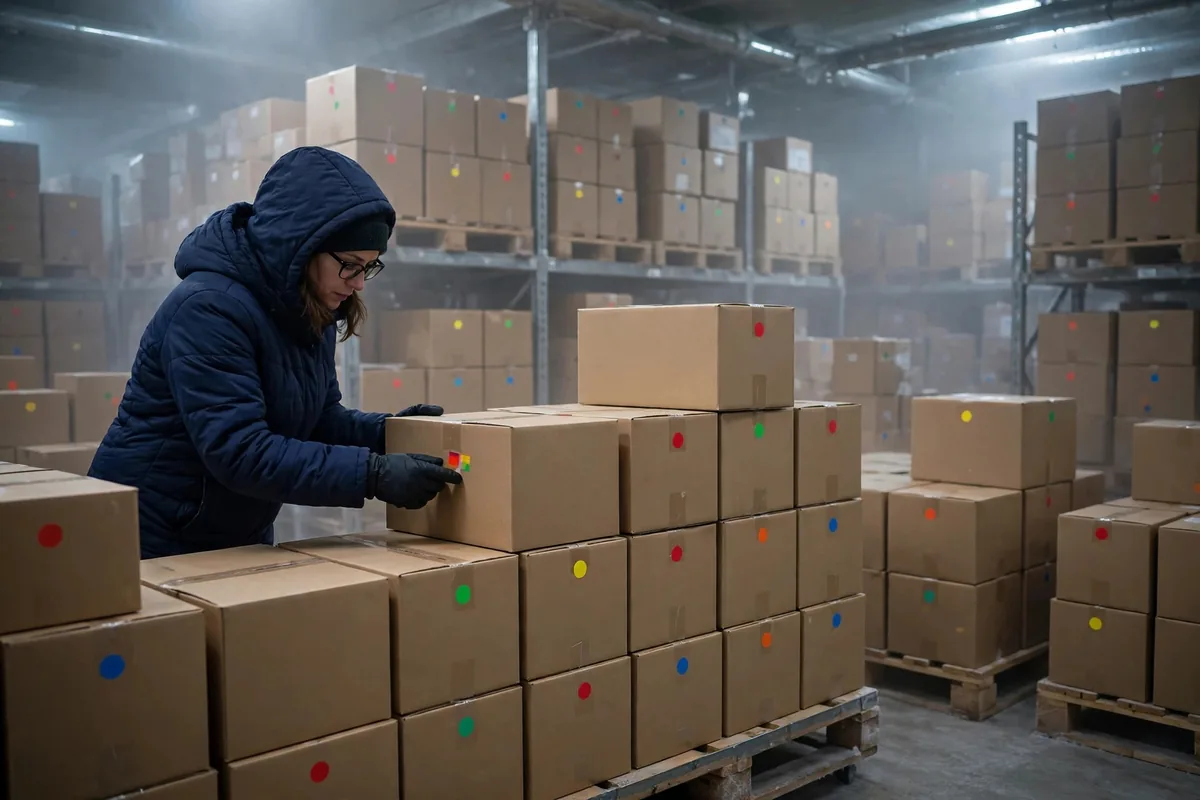
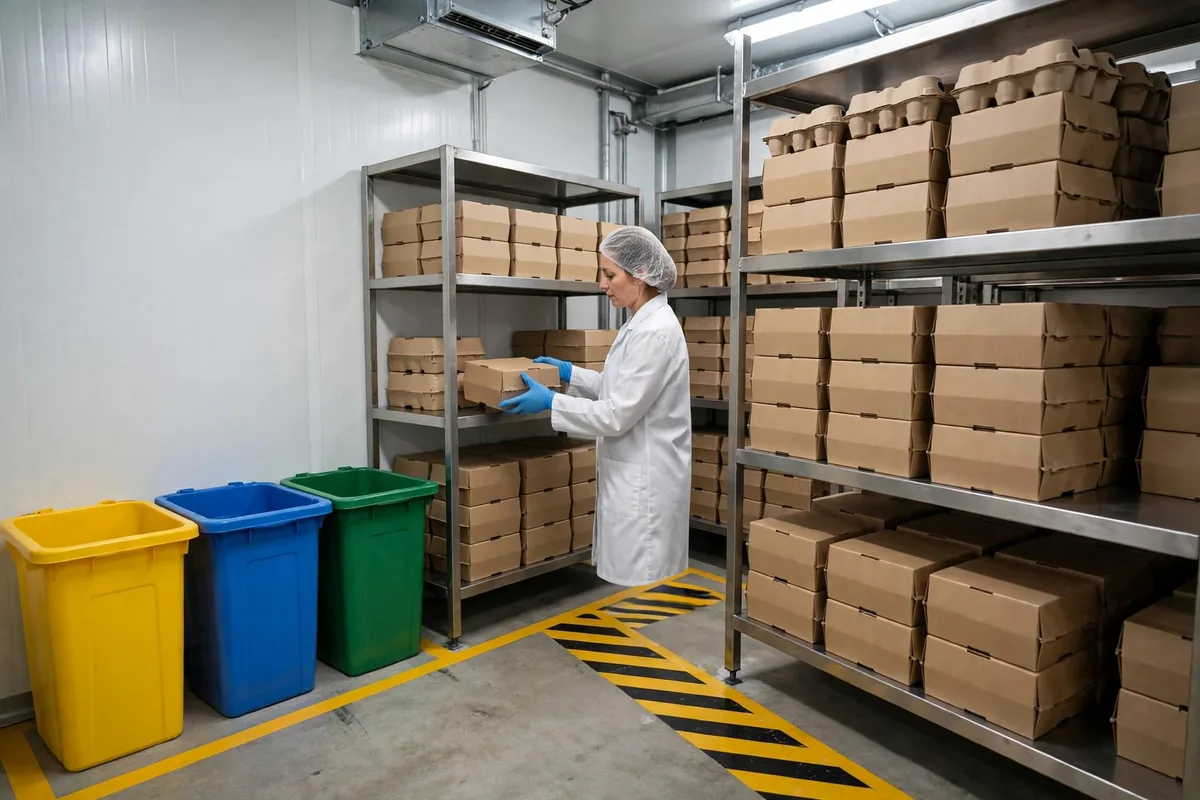
Zoning is the first routine, and the logic is to divide by allergen rather than by client. Products sharing the same allergen can sit side by side; different allergens need a clear physical separation or barrier between them. Bulk, powdered, and easily airborne products go into dedicated areas first; sealed cans can be treated more leniently. Equipment gets zoned too: pallets, picking totes, and hand carts are assigned by allergen and colour-coded, because shared equipment is cross-contact's favourite courier.
Cleaning is the second routine, and the most underestimated. The order and method of sweeping, wiping, and washing belong in a written standard operating procedure, not in a worker's memory or goodwill. Cleaning must also be verified: visual inspection is only the starting point, and warehouses with the capability test for residue, confirming allergen traces have fallen to an acceptable level before releasing the area. Verification records stay on file, so a problem can be traced back to a specific cleaning run and a specific shift.
Changeover is the third routine, and it governs separation across time. When the same sortation line or packing machine runs an allergen-containing product in the morning and an allergen-free product in the afternoon, a full cleaning and verification must sit between them, and the sequence should run from lower risk to higher risk, not the other way around. Here is an illustrative scenario: the same warehouse once ran a gluten-free cracker order after only a surface wipe-down, with no verification step, and the client's sampling found residue above the acceptable level. The whole batch came back. From that day on, the changeover process gained a verification signature — whoever signs, owns it.
For a closer look at how food warehouses put allergen segregation into practice, this guide to how food warehouses handle allergen segregation covers zoning logic and cleaning points that pair well with the three routines above.
The Compliance Math of Allergen Segregation: What a 3PL Should Count Before Taking Food Clients
Before signing a food client, count the compliance cost first. The table below is a hypothetical example, estimated for a mid-sized shared warehouse, meant to show the shape of the cost — not an official fee schedule or industry standard:
| Item | Hypothetical example |
|---|---|
| Physical partitions and a dedicated zone | About 300,000 yuan |
| Dedicated equipment and colour-coded zone marking | About 50,000 yuan |
| Cleaning verification equipment and consumables (annual) | About 80,000 yuan |
| Staff training and assessment (annual) | About 40,000 yuan |
| Extra labour from changeover cleaning (annual) | About 120,000 yuan |
The counterintuitive conclusion in this table is that the most expensive item is not the partition wall. It is the labour and time that changeover cleaning consumes. A wall gets built once; changeover cleaning happens every day, every shift. A warehouse that cannot see this cost clearly signs the food client and only later discovers its margin being eaten away, shift by shift, by changeover time — by which point it is too late to renegotiate.
There is one more cost that does not appear in the table: trust. When a food client suffers a cross-contact incident, what is lost is not a single order but that client's word of mouth across the industry. Turned around, a warehouse that can present allergen management as a visible, verifiable, traceable system gains bargaining power when it quotes. Compliance here is not a cost line. It is the ticket that gets a 3PL into the food business at all.
In a shared warehouse, allergen segregation warehouse discipline may ultimately be decided less by whose walls are highest than by whose records are most complete and whose changeovers are most verifiable. As multi-client warehousing keeps spreading, this question will only come up more often — and the answer will probably have to grow out of practice, one warehouse at a time.
By Dr. Chen, Supply Chain Researcher