Excerpt: In a shared 3PL warehouse, allergen segregation is not about drawing more lines on the floor — it is about four lines of defense: zoning, cleaning verification, changeover procedure, and people and equipment management. This is the go-live checklist I use on real projects.
Conclusion first: in a shared warehouse, allergen segregation is won or lost on process discipline, not on square footage. Put four shippers and four allergens under one roof, and if any one of the four lines of defense is decorative, cross-contact is a matter of time, not luck. This is the checklist I use on go-live night. Follow it, and an audit will not scare you.
I have seen this exact failure three times. The first time was fall 2023, at a 3PL warehouse in central California, during a WMS go-live. The building held a nut-butter brand and a gluten-free bakery brand at the same time. Their slots were separated by a single aisle. Pickers pushed the same cart to pick nut butter first and gluten-free cookies second, without changing the cart or their gloves. The client's quality manager walked the floor, looked around, and asked one question: how do you prove this cart is clean? Nobody in the room could answer. Go-live slipped three weeks while we retrofitted a cleaning and changeover process that should have been there from day one.
Why Allergen Segregation Is Hardest in a Shared Warehouse
A private warehouse manages segregation inside one shipper's own lines. A shared 3PL warehouse is harder, for three reasons. First, shippers do not know what the others store. Peanuts, soy, milk, and sesame can sit in the same building while the shippers involved have no idea the others exist. Second, equipment and people are shared. Forklifts, pallets, pick carts, and gloves all move around, so cross-contact has far more channels than the racking does. Third, responsibility is split. The 3PL says it follows shipper instructions; the shipper says in-warehouse handling belongs to the 3PL. When something goes wrong, the argument starts before the root cause is found.
Get the regulatory floor straight first. In the United States, FALCPA lists eight major food allergens — peanut, tree nuts, milk, egg, fish, crustacean shellfish, wheat, and soy — and the FASTER Act added sesame as the ninth major allergen, effective January 1, 2023. Check the FDA's official site for the latest labeling requirements and enforcement details. The law governs labels, but a correct label assumes no cross-contact happened in the warehouse.
Here is the counterintuitive judgment: in the projects I have worked on, cross-contact almost never starts at the rack. It starts at the forklift, the pallet, and the picker's gloves. Shippers love staring at the zoning map, convinced that clear lines mean safety. But product in a slot is stationary. What moves around the building is the handling equipment. A forklift that just unloaded peanut butter and then moves gluten-free product without being wiped makes the prettiest zoning map irrelevant. That is why these four lines of defense protect moving things first and stored things second.
If you want the general framework before going deeper, read the general guide to allergen segregation first. It covers the single-shipper basics. This article covers where those basics fall short when multiple food shippers share one building.
The Four Lines of Defense for Allergen Segregation: Step by Step
What follows is written as a go-live night checklist. Every step has an acceptance test. If a box cannot be checked, go-live does not happen.
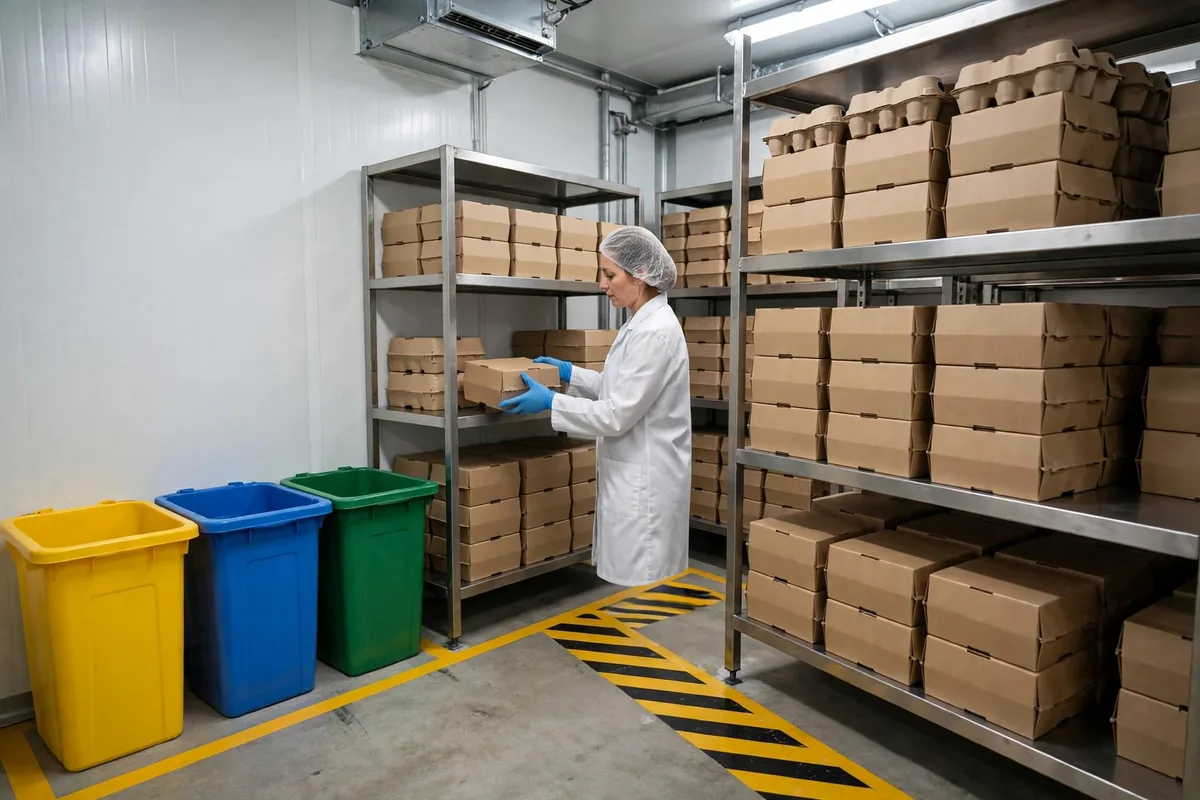
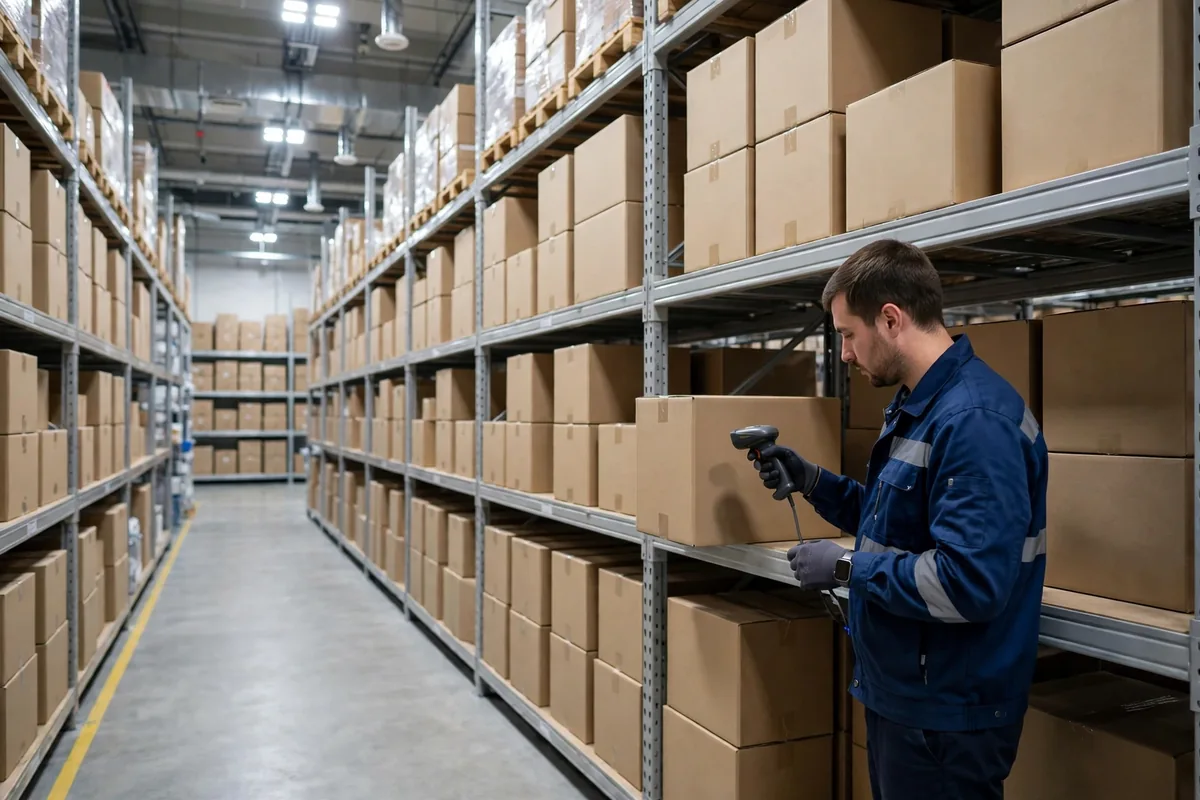
Line one: zoning. Store allergen-containing products by allergen type, separated by physical barriers or at least one empty slot between zones — never by floor tape alone. Keep peanut and tree-nut products on the lowest level or in a dedicated area, never above allergen-free products, so dust and debris from a damaged case cannot fall onto them. Encode the allergen attribute in the WMS slotting rules so the system automatically refuses to assign allergen-containing product into an allergen-free zone. The system blocks it; nobody has to remember it. The acceptance test: pull ten slots at random; the slot attribute must match the physical product every time. One miss fails the test.
Line two: cleaning verification. Cleaning is not "we wiped it." It is "we wiped it and tested it." After every high-risk changeover, take surface swab samples at four fixed points where residue hides best: forklift forks, pick-cart handles, pallet surfaces, and conveyor seams. Write the testing frequency into the work standard: once before shift start, once at every allergen changeover, and once extra before an audit. Keep a record of every test — date, sampling point, result, operator. Four fields, none optional. In an auditor's eyes, cleaning without a record is cleaning that never happened. I have seen this exact failure three times: the floor always looked clean until someone asked for the records.
Line three: changeover procedure. A changeover is not a slot change. It is a fixed sequence: clear the area first, removing all residual product, packaging, and labels from the previous item; clean second, to the standard in line two; verify third, and do not release the area until the test passes; swap tools last, bringing in the dedicated equipment for the new allergen category. Never reverse the order, and never start work on a failed verification. Build the changeover into the WMS as a forced task: until the previous item's changeover checklist is closed, the system will not release picking tasks for the next item. That forced checkpoint beats ten posters on the wall.
Line four: people and equipment. Manage tools by allergen category with color coding — red for peanut, blue for allergen-free, for example. Color is identity, and grabbing the wrong tool is visible at a glance. Gloves and aprons follow a one-category-one-change rule: after touching allergen-containing product, change gloves before touching the next category. Training cannot be a one-time event. New hires must pass allergen-specific training before their first shift, and existing staff repeat it every quarter, with records on file. Pick sequencing matters too: pick allergen-free orders first each day, and allergen-containing orders after. Do the clean work first and the dirty work last.
Running the Numbers: What the Four Lines of Defense Cost
The table below is a hypothetical example for a food zone of roughly 10,000 square feet. These are round planning figures, not a quote from any real warehouse. Get actual prices from your own suppliers.
| Investment | Hypothetical example (annualized) |
|---|---|
| Zone barriers and slotting rework | About $8,000 |
| Dedicated color-coded tools (pallets, carts, glove consumables) | About $5,000 |
| Cleaning verification swabs and third-party lab tests | About $6,000 |
| Staff training and WMS rule configuration | About $4,000 |
| Total | About $23,000 |
The other side of this trade-off is the exposure. One cross-contact incident can mean a quarantined batch, rework, customer claims, and in the worst case a recall, a lost shipper contract, and a regulatory investigation. Quarantine alone — idle inventory, rush testing, stopped outbound flow — can eat a full year of this defense budget in a few days. The trade-off is straightforward: the defense money is small and visible; the incident money is large and invisible, and its probability is set by your weakest line of defense, not your strongest.
There is also a benefit most warehouses never budget for: a warehouse with clear zones and fixed processes picks faster. In one project I ran, pickers walked noticeably less each day after the zoning rework, because allergen zones had fixed slots and nobody had to hunt for a location. Tighter segregation does not have to mean slower work. That is the line item most business cases miss.
Common Failures: The Go-Live Night Checklist, One Last Pass
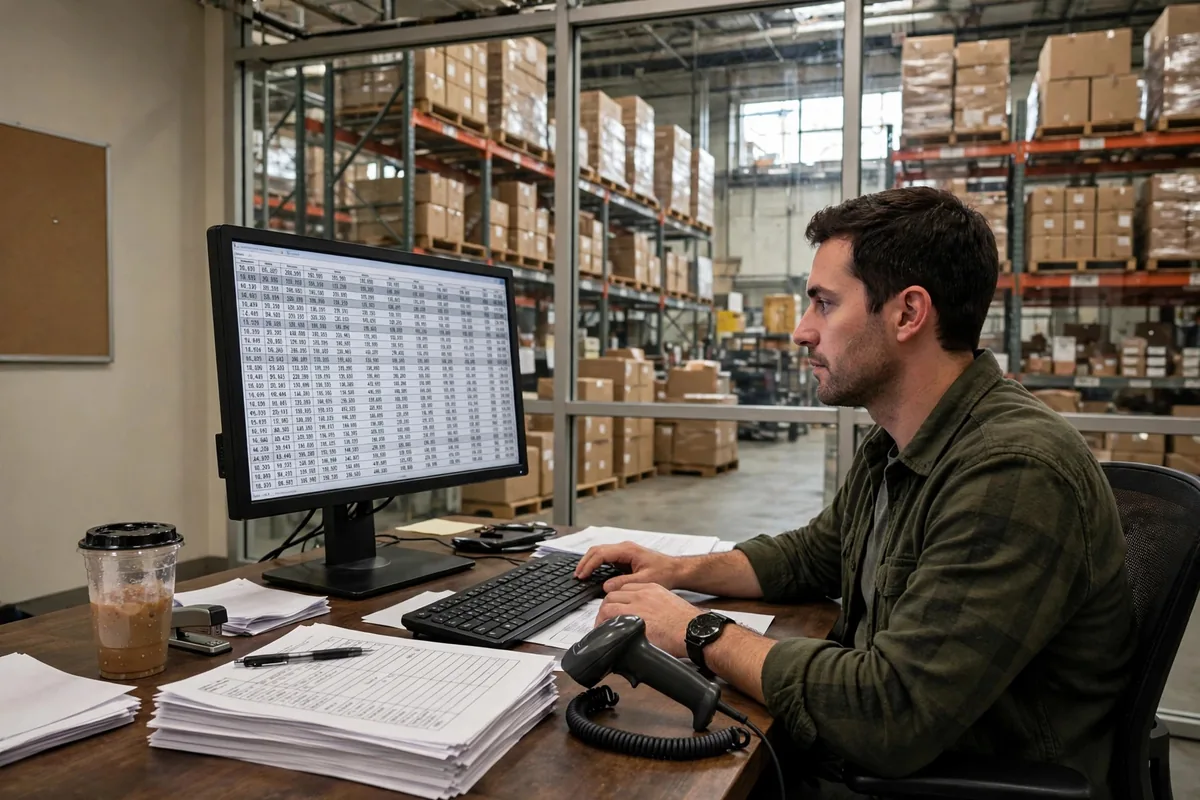
Failure one: the WMS has no allergen attribute. Item master data records the product name and specs but not the allergen field, so the slotting rules have nothing to block on. The first item on the go-live night checklist is a master-data spot check. Any item with a blank allergen field gets no slot.
Failure two: cleaning records that can be faked. Paper logs can be filled in after the fact. Move to system scan-and-photo capture: the cleaner scans the sampling-point code and uploads a photo, and the system generates the timestamp. That closes the backfill route.
Failure three: agency staff outside the training system. Temporary workers and peak-season support staff walk straight onto the floor without knowing what the allergen zones mean. The go-live night checklist must include one line: everyone on shift today, including temps, has a complete training record, or nobody enters the food zone.
Failure four: guarding inbound and ignoring returns. Returns, damaged goods, and broken cases get dropped in the nearest empty spot — exactly where cross-contact risk is highest. Give returns their own zone, put broken cases in a dedicated isolation cage, and run them through the same four lines of defense as normal stock.
One question to take with you: before you leave tonight, pick a forklift at random and ask its operator whether it moved allergen-containing product today, and whether it was wiped afterward. If the answer is "probably," one of your four lines of defense is decorative. Start with that forklift tomorrow morning.
By Lin Xiao, WMS Implementation Consultant