In 2022, a food importer I know got burned by something "small": raw materials containing peanuts shared a sealing machine with peanut-free finished goods, and the cleaning log missed two entries. One batch tested positive for peanut residue, and the whole lot was recalled. I won't quote the direct loss — I'll just say it equaled about three years of warehousing cost for that facility.
Allergens are the reddest of red lines in food warehousing. The FDA currently recognizes 9 major food allergens (milk, eggs, fish, shellfish, tree nuts, peanuts, wheat, soybeans — sesame joined the list in 2023), and cross-contact with any of them can trigger a recall. A recall never costs just the product value — reverse logistics, destruction, customer claims, brand damage, all added together, are astronomical.
The good news: preventing cross-contact doesn't need high tech. It needs an obsessive trio of basics: labeling, locations, and cleaning.
First: Labeling — Make Allergens Visible
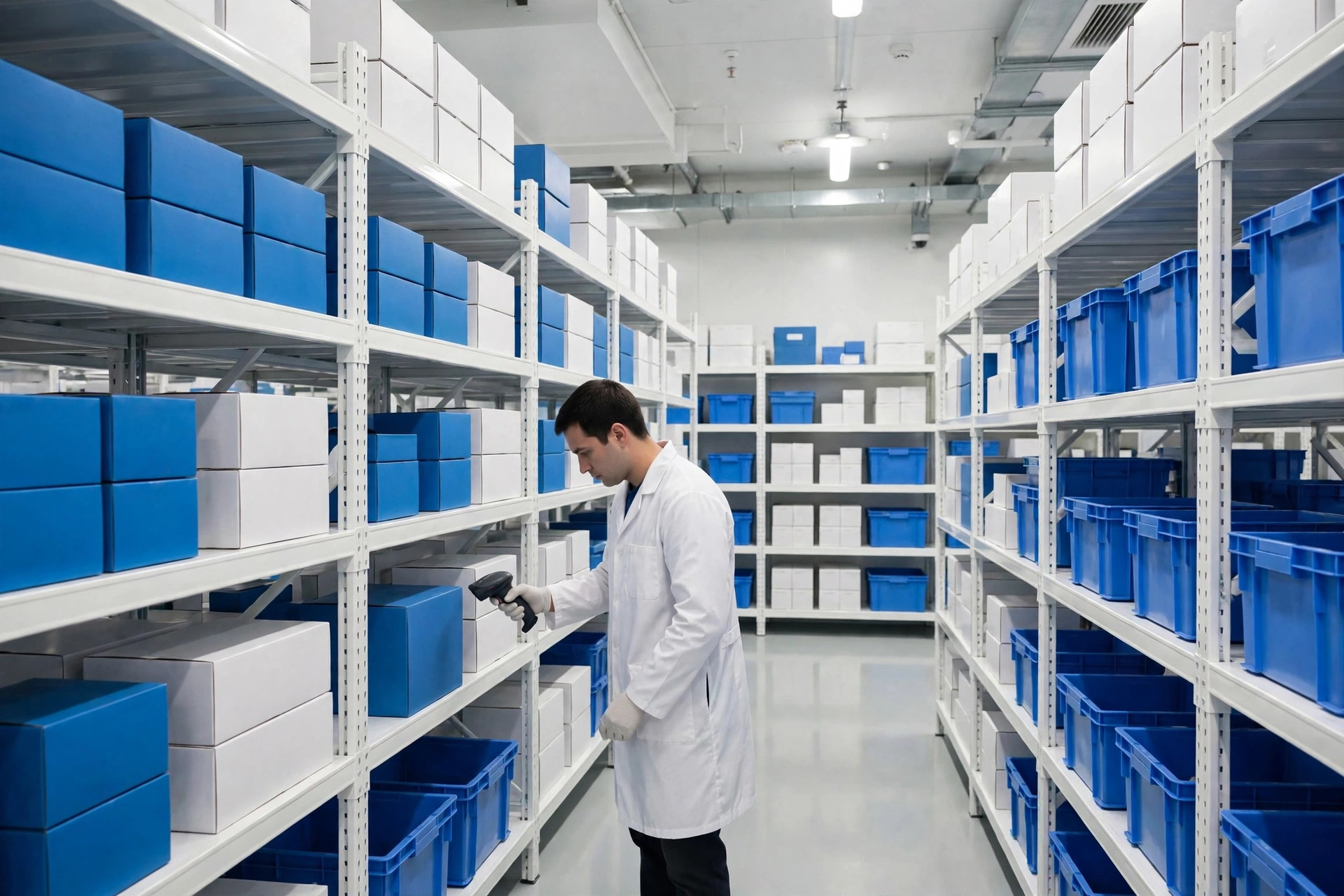
Every incoming raw material and finished product containing allergens gets an allergen label as step one. The label must meet three conditions: a striking color (red family works, clearly distinct from ordinary labels), a fixed position (same spot every time — top-right of the pallet or the same corner of each carton), and complete information (allergen type plus lot).
The worst practice I've seen is "everyone in the warehouse knows which SKUs contain peanuts, no need to label." People change shifts, quit, misremember — labels don't. After the 2023 FASTER Act added sesame as a major allergen, many warehouses' "from memory" lists became obsolete overnight — products that previously contained no "major allergen" suddenly did.
Labels have a second audience: inspectors. When the FDA walks in, the first thing they look at is your allergen identification system. Clear, uniform labeling sets a completely different first impression.
Second: Locations — Physical Separation, Not Wishful Thinking
Allergen and non-allergen products must be physically separated in storage. Note: physically — not the wishful thinking of "different racks." Dust travels, torn packaging leaks.
Three tiers of separation — pick yours by product risk:
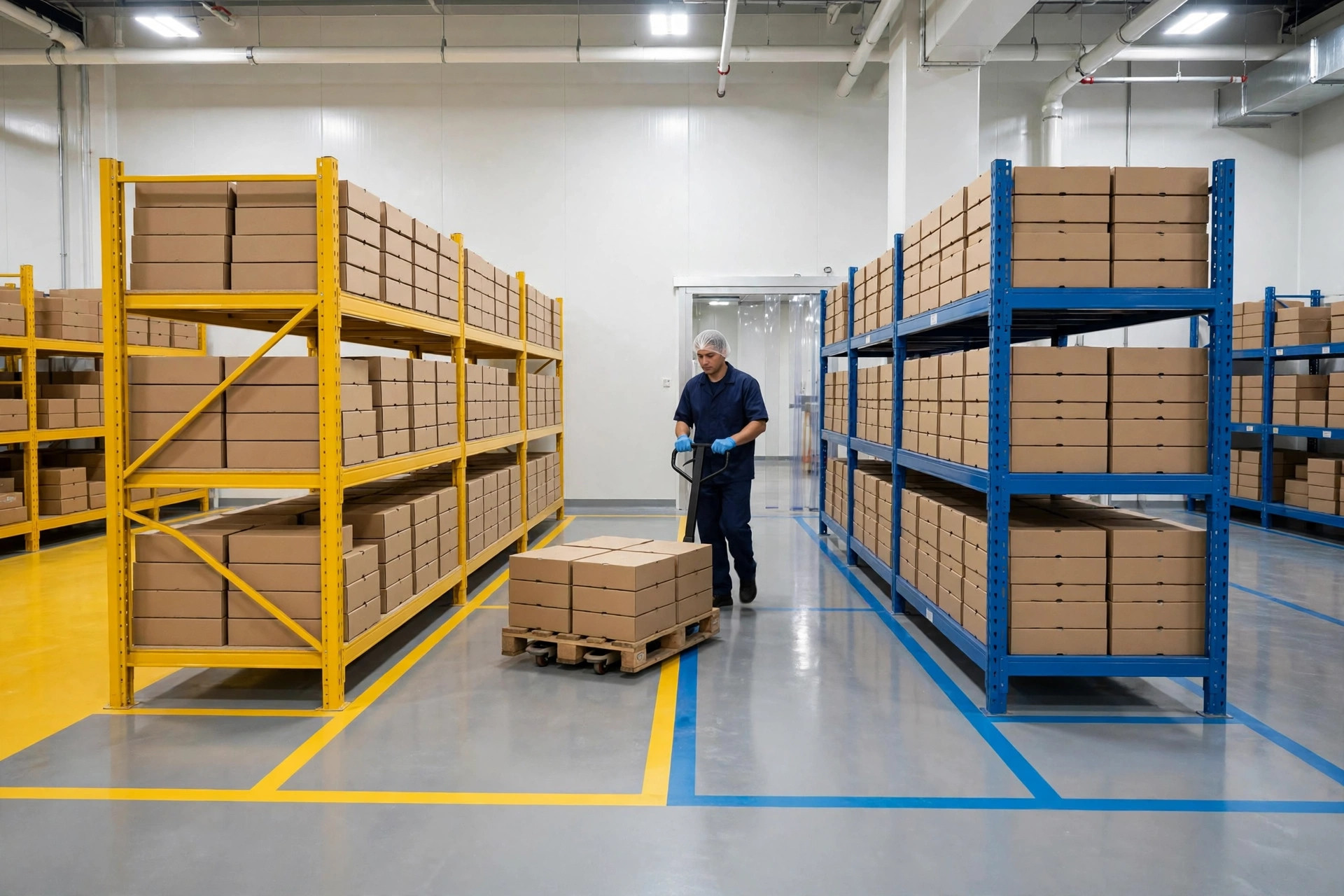
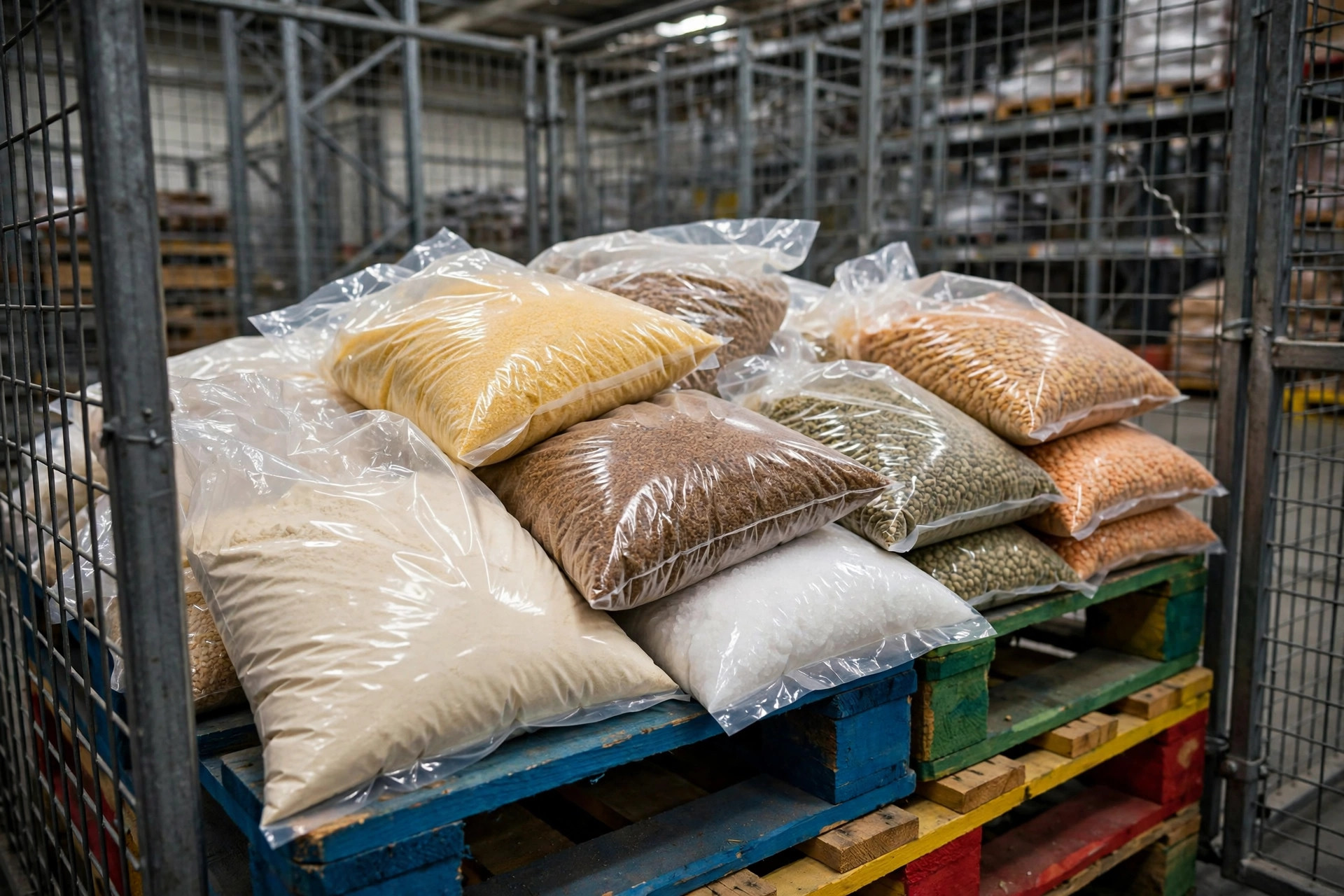
The minimum tier is zoned storage: a clearly partitioned allergen zone inside the same warehouse (mesh partitions, fencing), with its own inbound and outbound travel paths. Fits warehouses where allergen SKUs are a small share and everything is sealed packaging.
The middle tier is a dedicated room: allergen products in their own room with independent temperature and humidity logging. Right for dusty categories like bakery ingredients and seasonings.
The top tier is a dedicated building: allergen and non-allergen operations in fully separate warehouses. For zero-tolerance categories like infant food and special dietary products.
Which tier depends on who your customers are. Supplying regular supermarkets, zoned storage plus strict management is usually enough. Contract-manufacturing for an infant brand, and their facility audit will likely demand a dedicated room as the starting point. Don't wait for an audit finding to retrofit — that costs five times more than building it right.
Third: Cleaning — The Log Matters More Than the Cleaning
Shared equipment (sealers, conveyors, pallets, forklifts) is cross-contact's favorite ambush point. The cleaning itself isn't hard. What's hard is proving you did it.
A usable sanitation program has: an SOP for the cleaning steps (which agents, what sequence, what "clean" means), post-cleaning verification (visual inspection plus residue testing where needed), and — most important — a record of every cleaning: who, when, which equipment, what method.
Why does the record matter most? Because during a recall investigation, the FDA and your customers don't ask how beautifully your SOP is written — they ask to see six months of cleaning logs, complete. Two missing entries and your SOP is scrap paper. That importer I mentioned at the start? The logs are exactly where they fell.
One practical trick: make the cleaning log a checklist posted right on the equipment — clean it, check it off, sign it on the spot. Never do the "fill in all the records at month-end" routine. Backfilled logs are obvious to any inspector at a glance.
Three Things You Can Do Tonight
If you run a food warehouse, here are three things you can do tonight:
Pull your allergen-containing SKU list and check it against the FDA's 9 major allergens for gaps (focus on sesame — many legacy lists were never updated after 2023).
Walk the floor and look at whether allergen and non-allergen products have genuine physical separation between them. If not, fence it off temporarily today and plan the permanent fix later.
Spot-check last month's equipment cleaning logs for gaps. If there are gaps, start the process correctly from today — don't backfill. Backfilled records are worthless.
Surviving the Audit: The 5 Questions Customers Always Ask
With the trio in place, a customer audit is only a matter of time. Brand auditors — especially for infant food and grocery chains — keep circling the same 5 questions. Prepare for them and you'll pass the first time:
One: is your allergen list complete? The auditor will walk the FDA's 9 categories one by one, asking which SKUs map to each. Hesitate, or miss sesame on the list, and that's a non-conformance on the spot.
Two: where is allergen-containing product stored? The auditor wants to see the segregation zone in person and photograph it. For zoned storage: are the physical barriers solid, the markings clear? For dedicated rooms: show the temperature and humidity logs.
Three: how is shared equipment cleaned? The auditor picks a random shared machine and asks when it was last cleaned, by whom, with what method — then flips through the logs to check the story holds.
Four: how are employees trained? Do new hires get allergen training, and where are the training records? Many warehouses die on this question: the trio is all in place, but frontline staff can't explain why the peanut-containing pallets can't go in that row.
Five: if cross-contact happens, what's your emergency procedure? Quarantine, assess, report, recall decision — can you walk through all four steps? Without an emergency procedure, even a perfect setup looks like a system with a missing piece to the auditor.
Print these 5 questions and stick them on the office wall. Audit yourself quarterly — far more comfortable than waiting for the customer to do it.
Allergen management feels like invisible box-ticking on a normal day — until the one day it becomes existential. Labels, locations, cleaning: get the trio in place, and you'll sleep at night.