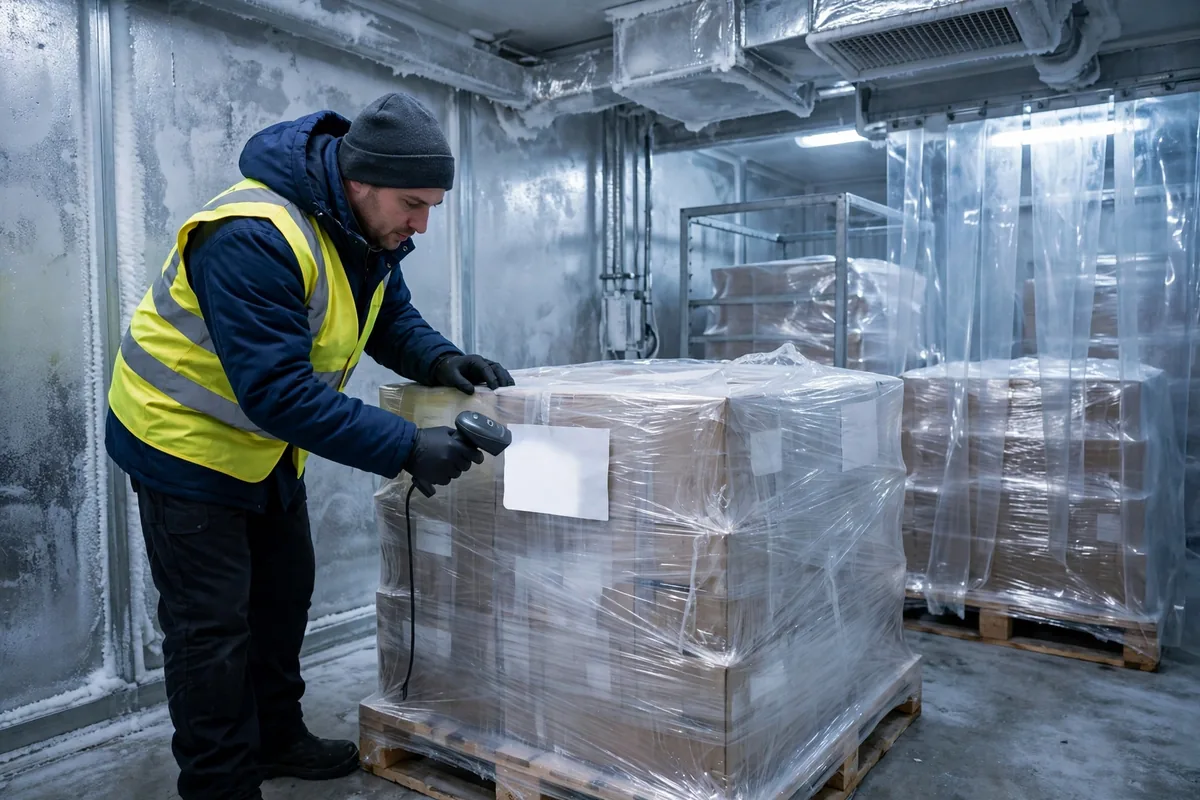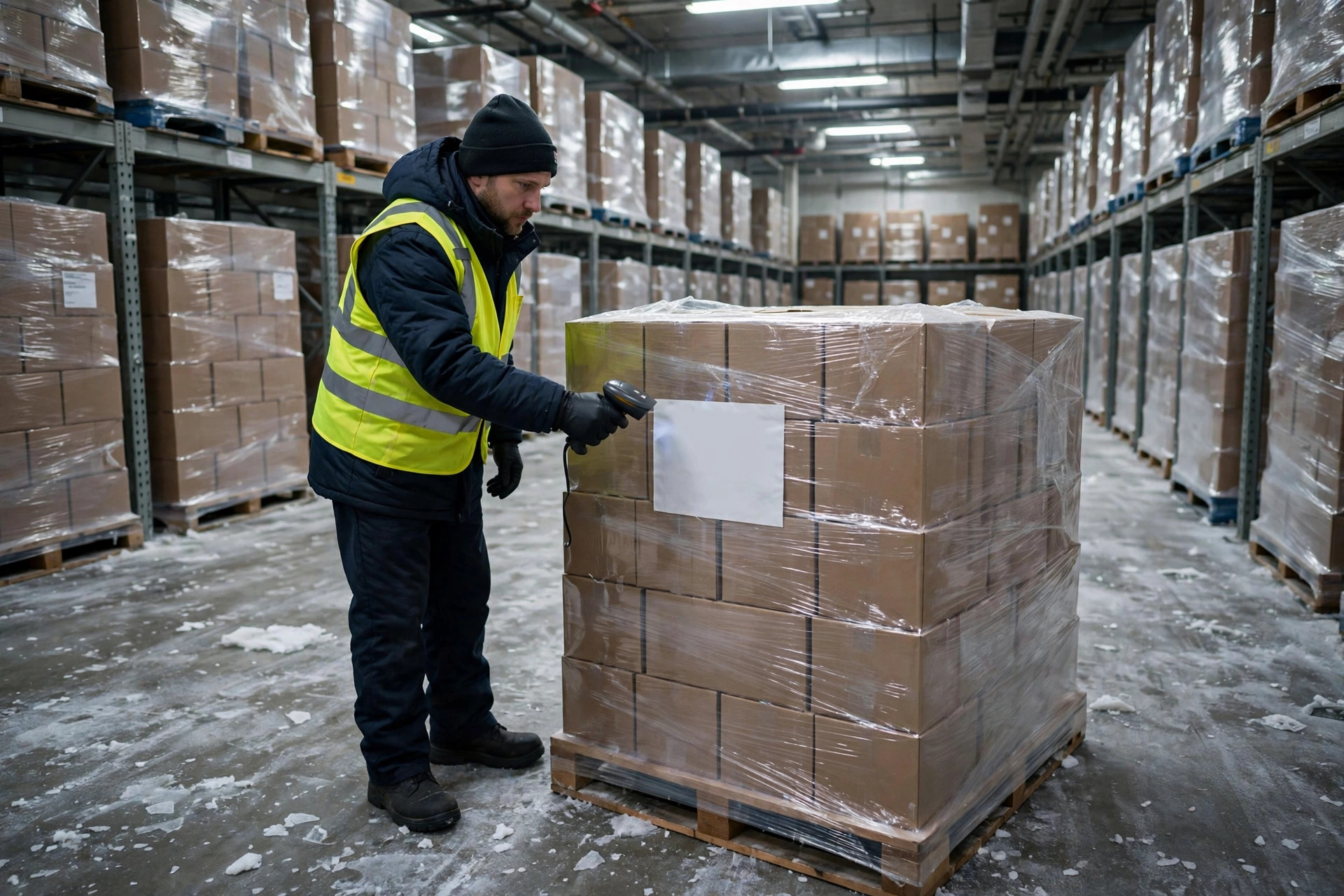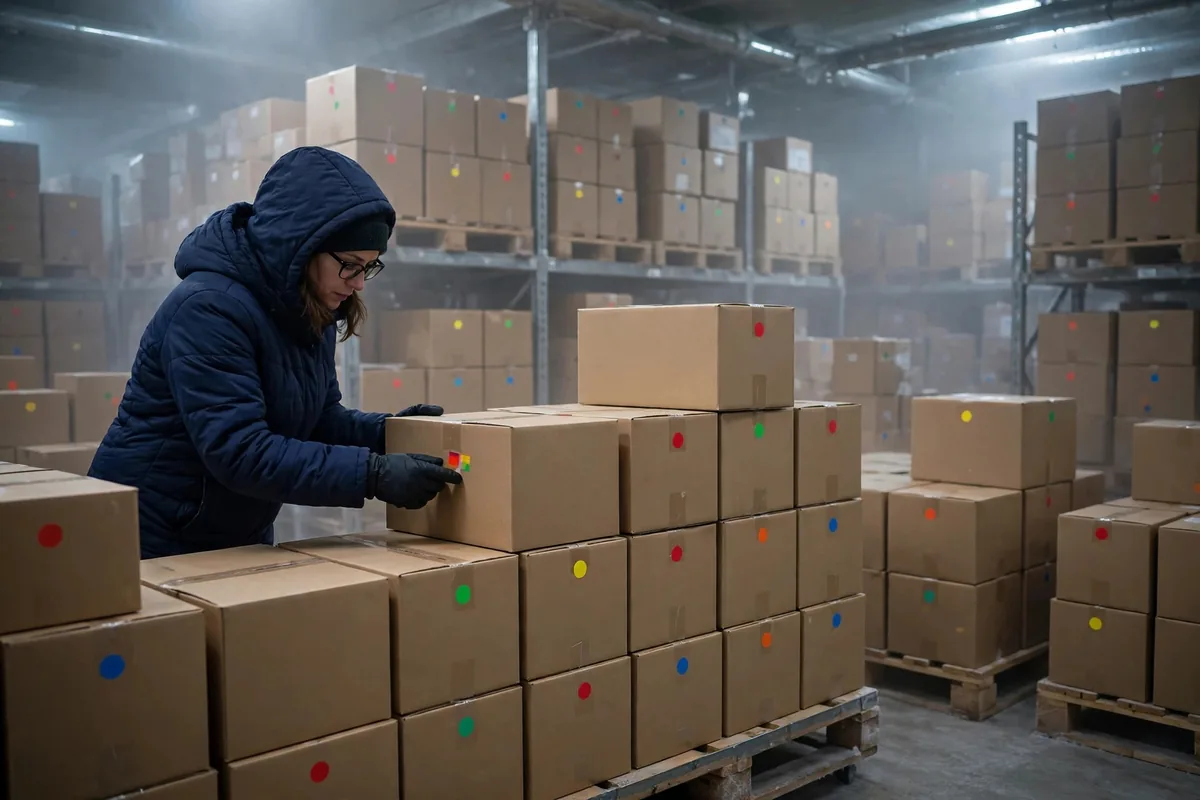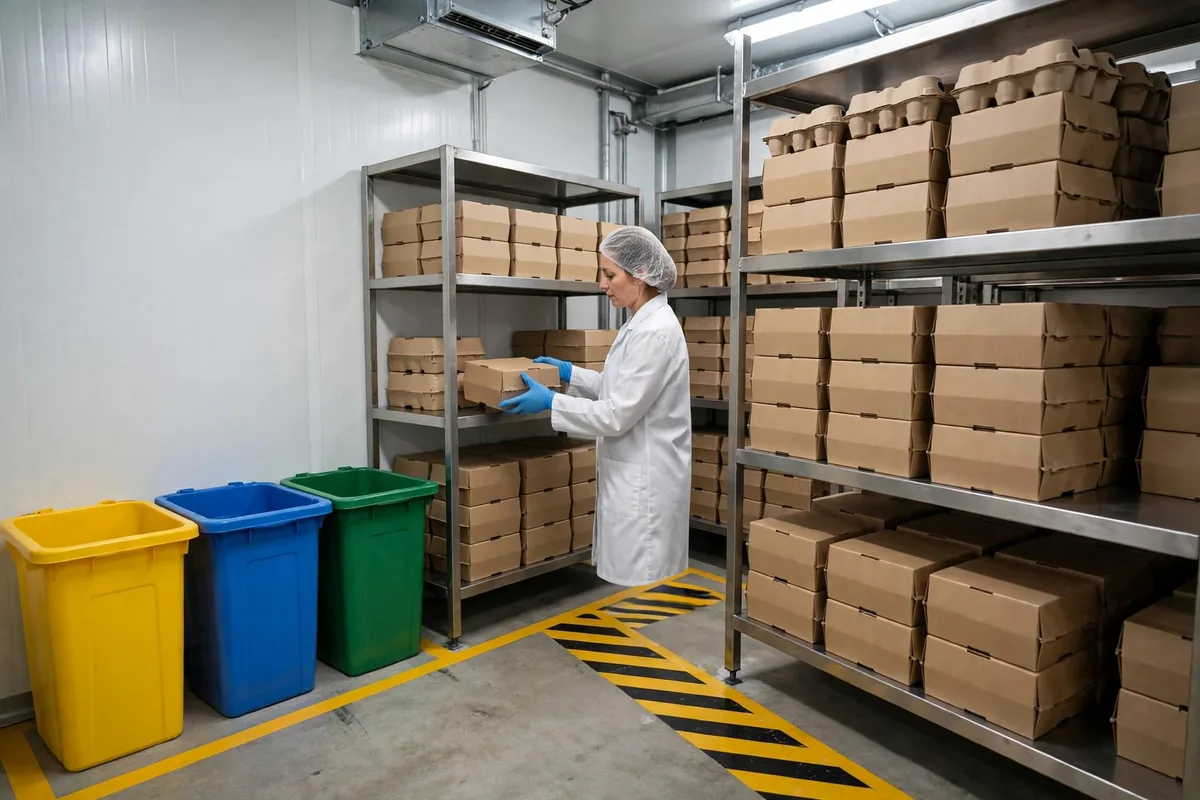
Last spring, a cold-chain food warehouse in the American Midwest ran a warehouse recall drill. The scenario was not elaborate: a supplier reported that a batch of imported nut butter might be contaminated, and the warehouse had to trace every affected lot before the end of the day. Forty minutes in, the traceability team stalled on a single outbound order. During a line change, the batch had been split into three smaller lots, and one of the three had no matching receiving record in the system. It took the team three hours and forty minutes to assemble a complete list, nearly double the two-hour target. The drill report was restrained in tone: the system worked, but the chain had breaks in it.
That case deserves close attention, because it captures a pattern that shows up across the industry. Most food warehouses do not lack a traceability system. What they lack is alignment between the system, the process, and the people using both. A warehouse recall drill does not test whether the written procedures look complete. It tests whether information can travel the full length of the chain, intact, under time pressure.
The chain itself is defined by regulation. The U.S. Food and Drug Administration's Food Traceability Rule, issued under Section 204 of the Food Safety Modernization Act (FSMA 204), requires companies handling foods on the Food Traceability List to keep enhanced traceability records and to produce them to the FDA within 24 hours of a request. The rule rests on two concepts: Critical Tracking Events (CTEs) and Key Data Elements (KDEs). The seven CTEs are harvesting, cooling, initial packing, first land-based receiving, shipping, receiving, and transformation. The KDEs are the specific fields recorded at each event, including the traceability lot code, product description, quantity and unit of measure, dates, location identifiers, and reference documents. On timing, the original compliance date of January 20, 2026 has been extended to July 20, 2028; the current position should be confirmed against the FDA's official website. What makes the timeline worth watching is that commercial requirements are moving faster than the federal one: at least one major retailer has required suppliers to transmit key data elements with shipments since August 2025, which means companies that wait until 2028 to prepare may feel the pressure in their commercial relationships well before the regulatory deadline arrives.
The Warehouse Recall Drill Target: Three Lines of Defense Behind Two Hours
The two-hour target breaks down into three lines of defense, and a weakness in any one of them slows the whole response. The first is the system layer: whether the traceability lot code follows the product from receiving through putaway, picking, and shipping, with every movement leaving a searchable record. The common failure is not the absence of a system but the absence of integration between systems. The lot code format in the receiving system does not match the format in the shipping system, and the gap is bridged by a manual spreadsheet. One transcription error and the chain breaks. The second is the process layer: whether line changes, commingling, repacking, and returns have explicit lot-handling rules. The Midwest drill broke at a line change, where three sub-lots shared one inbound lot and the system recorded only the parent lot's outbound movement, with no mapping to the split. The third is the practice layer: whether the team rehearses the full process unannounced, and whether each drill is timed by stage rather than reported as a single total.
There is a counterintuitive point here. The bottleneck in traceability speed is rarely the technology. It is the small shortcuts taken in daily operations. A scan skipped to save three seconds, a split-lot relationship recorded half a day late: every minute saved in routine work comes back as hours during a real recall. Vendors often describe their traceability modules as working out of the box, and that claim holds in a demonstration environment. In a real warehouse it usually does not, because real warehouses have commingled lots, returns, and rush orders, and those exception scenarios are the true test of the chain.
Batch Traceability: The Three Most Common Break Points
Across published drill reviews and industry reporting, traceability breaks concentrate in three places. The first is commingling: two lots of the same product stored in one location, picked first-in-first-out, while the system records a different lot than the one actually shipped. The remedy is straightforward, either one lot per location or a forced lot scan at pick, but both rules are the first to be bypassed during peak season. The second is line change and repacking: a raw-material lot becomes new lots during processing, and the system never records the mapping between the old and new codes. The third is returns: product sent back by a customer is received as a new lot, or with its lot information lost, severing the original chain. Warehouses with low return volumes tend to overlook this one, yet in a drill the returned lots are often the hardest to locate.
One reported data point frames the scale of the problem. According to industry reporting on the FDA's own tabletop exercises, only about 40% of participants captured the traceability lot code correctly across every critical tracking event. That figure suggests that chain completeness is a widespread difficulty even in a prepared exercise setting. It also suggests that the purpose of a drill is not to prove readiness but to surface the breaks that daily operations hide.
How a Warehouse Recall Drill Should Be Run
An effective drill has four parts. First, the scenario should be concrete and commercially meaningful, a specific supplier and a specific lot, not an abstract tabletop discussion. Second, the timing should be staged: clock the locate, isolate, and notify-customer phases separately rather than recording only a total. Third, the review should attribute each break to system, process, or people, and assign a named owner and a deadline for each fix. Fourth, the retest should repeat the same scenario after the fixes, to verify that the breaks are genuinely closed rather than merely documented.
Frequency deserves the same attention. An annual drill proves that a procedure exists; it does not prove that the capability exists. A more defensible rhythm is a small drill each quarter and one full-chain drill each year, with an additional targeted drill after any system go-live, process change, or new supplier onboarding. The cost is modest, typically half a day of staff time for a small drill. The cost of a day's delay in a real recall, measured in wider product withdrawals, customer claims, and brand damage, is larger by orders of magnitude. That gap is the most direct justification for the investment.
Returning to the Midwest warehouse: after the drill it made three changes. It aligned lot code formats between receiving and shipping, added parent-child lot mapping at repack, and wrote lot registration for returned goods into the standard operating procedure. Three months later, the same scenario took one hour and twenty-five minutes, down from three hours and forty minutes. That result does not mean the traceability system is now perfect. It means that once a break is visible, it can be fixed quickly. Building traceability capability is, in essence, a process of finding breaks and closing them. A drill simply moves that process forward, so it happens before a real recall rather than during one.
Whether the 2028 compliance date will shift again, or whether further flexibilities will be introduced, remains to be seen, and the FDA's official website is the authority to watch. What is already clear is that customers and partners will keep raising their expectations for traceability, whatever the federal timetable does. The real purpose of a drill is to make sure that on the day the company is asked to prove itself, the answer is already in hand.
By Dr. Chen, Supply Chain Researcher