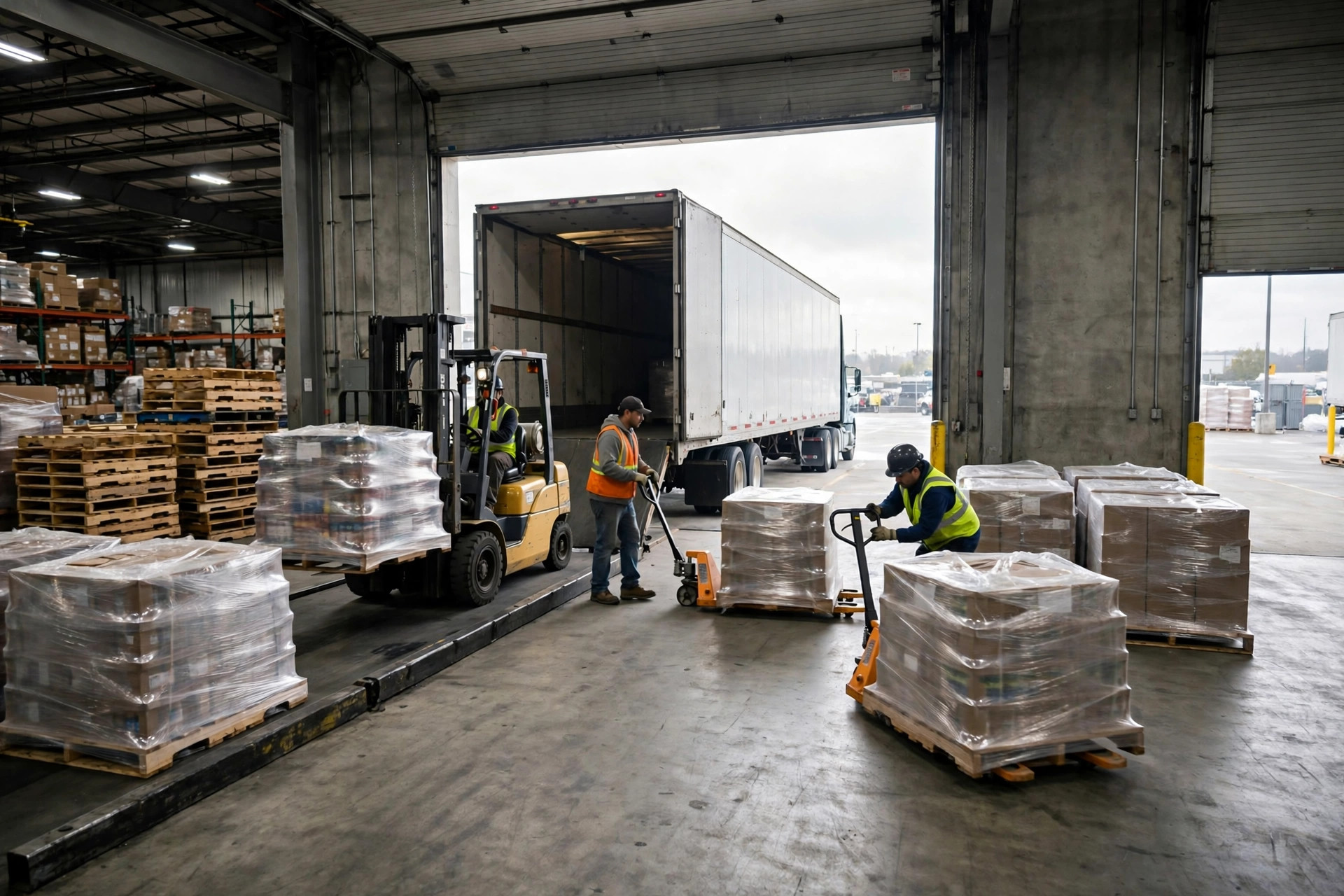
Here's my verdict up front: AI inbound volume forecasting warehouse is worth doing — not because the forecast is accurate, but because it turns receiving from reactive to proactive. Put plainly, the thing receiving teams fear most isn't heavy volume. It's volume that shows up with no warning.
I've seen too many warehouses lose to the same trap.
In 2023, I walked into a 3PL warehouse in the Inland Empire on a Monday morning. Eight trucks were already lined up at the dock. The receiving team had six people on shift, three dock doors open, and the rest of the trucks waiting in the yard, drivers asking when they could unload. The ASNs had said four trucks Friday and three Monday. Three of Friday's trucks ran late, and Monday's four showed up early. Everything collided on Monday morning. Halfway through breaking down pallets, the staging area filled up. There was nowhere to put the next pallets. Pickers got pulled in to help, and picking fell behind for half a day. The crew worked extra hours, drivers were furious, and the client asked why putaway was slow. This thing cuts two ways: one side is suppliers who don't deliver on time; the other is a warehouse that never bothered to calculate, ahead of time, how much freight is actually coming tomorrow.
Volatility punishes receiving teams every day, because every schedule is built on a guess. Schedule too many people and you're paying folks to stand around. Schedule too few and trucks queue up, overtime piles on, and error rates climb. Receiving is physical work mixed with coordination, and last-minute extra hands are the worst deal of all — new people can't break down pallets or check freight properly, and the veterans spend half their time teaching instead of working.
What Data Feeds AI Inbound Volume Forecasting
Forecasting sounds fancy. It isn't. It eats four kinds of data.
First, ASN history: for each supplier, when freight shipped, when it actually arrived, and how many days it slipped. That's the foundation. Without history, any model is running on empty.
Second, supplier on-time behavior. Some suppliers say Wednesday and mean Wednesday. Others say Wednesday and you should plan for Friday. That's not prejudice, that's what the record shows.
Third, seasonality and promotions. Peak season, holiday windows, a client running a promotion — inbound volume jumps. Every warehouse knows this in its gut, but few write it into the labor schedule.
Fourth, in-transit and open-order status. Freight already on the road, orders placed but not yet shipped — that's future inbound volume already decided, not guessed.
Most warehouses already have all four. They just sit scattered across the WMS, a few spreadsheets, and a couple of people's heads. Nobody has stitched them into one picture of coming inbound volume.
Three Tiers: From Spreadsheet Rules to AI Models
There are three tiers here, and the right tier depends on the size of the warehouse. Don't skip ahead.
Tier one is spreadsheet rules. Take historical arrivals by day of week and by supplier, average them, then manually add known promotions and peak periods. Good enough for a small warehouse, and the cost is somebody spending a little time each week. The weakness is that averages lie — an average of five trucks a day can mean nine on Monday and two on Thursday.
Tier two is statistical models plus human adjustment. Run a simple trend-and-seasonality model on history, get a daily inbound range for the next two weeks, and let the receiving supervisor adjust it from experience. This is where it starts to look real: experience goes into correcting the forecast instead of guessing from zero.
Tier three is AI models. Feed in all four data types and let the model learn the patterns: under what conditions inbound freight runs late, under what conditions it bunches up. The value here isn't greater accuracy. It's handling combinations no human can hold in their head — a dozen suppliers, dozens of in-transit orders, seasonal factors stacked together. People can't compute that. Models can.
Put plainly, the difference between the tiers isn't accuracy, it's investment and fit. A small warehouse using spreadsheet rules has nothing to be ashamed of; forcing AI onto it is a waste. And here's the counterintuitive part: in a forecasting project, the model is half the work. Data and process are the other half. If your ASN data is a mess and suppliers don't send advance notice at all, no model will save you.
Putting the Inbound Volume Forecast to Work
A forecast nobody uses is the same as no forecast. It gets used in three places.
Scheduling. Knowing two days ahead how much freight is coming the day after tomorrow, the receiving supervisor can decide: how many people to schedule, whether to call in temporary labor, whether to push cycle counting back a day. That two-day window matters — temp labor booked a day ahead is doable; booked an hour ahead, it's already working elsewhere.
Dock appointments. If the forecast says Tuesday morning will be heavy, split the dock time slots and ask suppliers to stagger arrivals. Suppliers are usually happy to cooperate. Nobody wants their driver sitting in the yard.
Staging space. Knowing a big delivery is coming tomorrow, clear out part of the staging area today, and stage empty pallets and carts in advance. The worst situation on delivery day is "the freight is here and there's nowhere to put it."
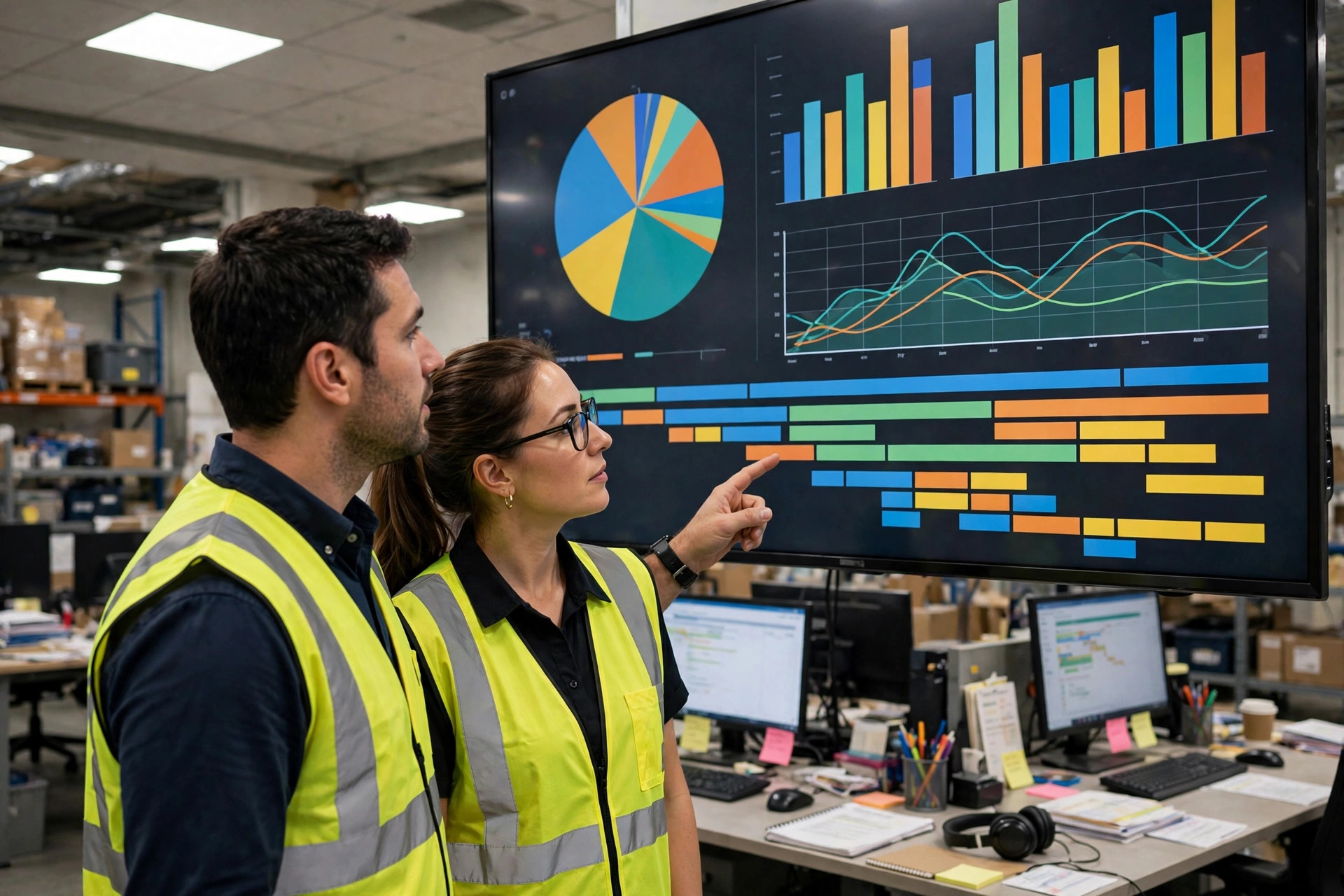
Forecasting vs. Guessing: The Receiving Labor Math
| No forecast, schedule by gut feel | Forecast two days ahead | |
|---|---|---|
| Labor planning | Fixed schedule: overstaffed on slow days, short on heavy days | Staffing flexes with inbound volume |
| Temporary labor | Searched for same-day: hard to find, unfamiliar with the work | Booked two days ahead, time to prepare |
| Docks and staging | Coordinated after trucks arrive; queues are normal | Appointments staggered in advance; staging cleared ahead |
| Errors and rework | Checking and labeling errors spike in the chaos | Heavy days come with enough hands |
| Supervisor's day | Firefighting all day | Review the forecast, adjust the plan once |
No dollar figure in that table, because every warehouse's labor mix, temp rates, and overtime rules are different — check against your own numbers. But the direction is clear: what forecasting saves isn't total headcount. It's the waste from misallocated labor — hours paid on idle days, and the price of scrambling on heavy ones.
One more judgment call: think of forecast accuracy in three bands. When the forecast is on target, run the plan. When it's roughly right, run the plan with a little slack. When it's wrong, fall back on the backup. None of the three bands depends on "the forecast must be accurate" to survive.
When the Forecast Is Wrong, What Saves You
In 2024, a warehouse I worked with got it wrong. The forecast said five trucks on Wednesday. A supplier shipped a batch early and nine trucks showed up. By all rights that should have been a disaster, and it wasn't. Why? Because they had a flexible labor pool: two pickers who also knew receiving, scheduled on light work that Wednesday morning, who came over within half an hour of a phone call. They kept one dock slot unbooked as a flex slot, never filled to the brim. And they kept a corner of the staging area as flex space, never stacked full.
This thing cuts two ways. How accurate the forecast is, that's one side. Whether you have a backup when it's wrong, that's the other side. The second side matters more. A forecast with no backup can be right nine times and wrong once, and that one miss can cost you a week of credibility. With a backup, even a forecast that's often a little off leaves the receiving team steady.
The backup is three things: a flexible labor pool — people trained ahead of time who can jump in; a flex dock slot, never booked solid; and flex staging space, never stacked full. None of that is expensive. What's expensive is discovering you have nowhere to flex when you're already full.
So my advice is this: don't ask whether AI inbound volume forecasting is accurate. Ask who in your warehouse is guessing how much freight arrives tomorrow. Turn the guess into a calculation, turn the calculation into a schedule made two days ahead, and half the receiving team's pain goes away. The other half comes from the backup.
By Lao Mi, Supply Chain Veteran (20 yrs)