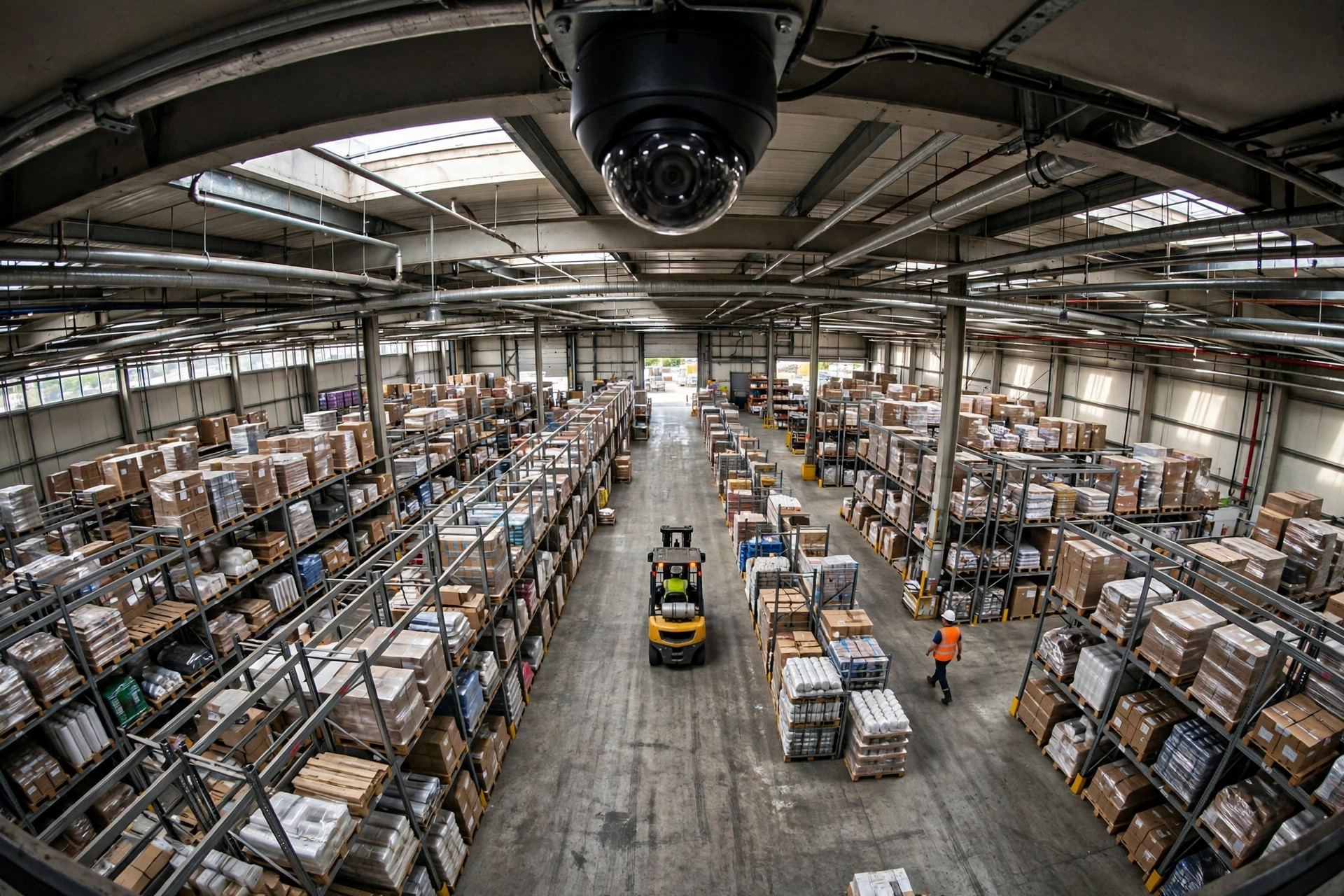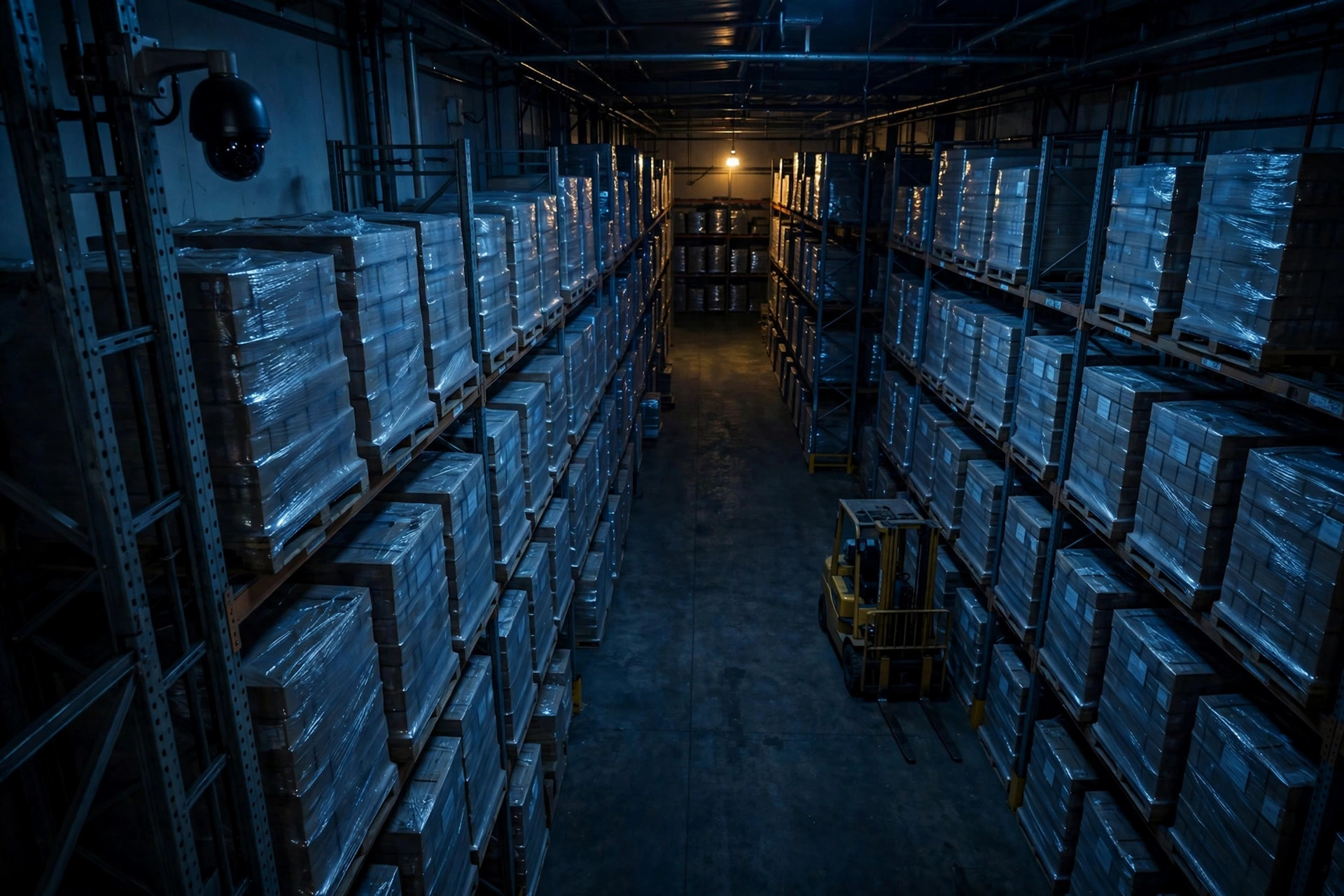
My 3,000-square-meter warehouse gave up on hiring a night-shift guard years ago. These days six AI cameras and one old phone hold the fort, for under $500 a year. It works — mostly.
But hold on before you hit "buy." There's a trap in this setup I nearly fell into: the biggest problem with AI patrol isn't that it can't see. It's that it sees everything clearly, and you're asleep.
A guard we can't afford, patrols we can't justify — so AI cameras get a try
I've run the numbers three times. Each round made me sadder.
The U.S. Bureau of Labor Statistics put the 2024 median wage for security guards at $18.46 an hour. Eight hours a night, 365 nights a year — about $54,000 per person, before insurance and overtime. Our annual profit? Hiring a night guard would mean paying someone to nap in front of a monitor. And nap they do — I've seen it at a buddy's warehouse. At 2 a.m., the snoring in the monitor room was louder than a forklift.
Patrol services? I called two companies. They were very friendly; I was very calm — calm enough to quietly delete the sales rep's number. The quote would've covered half a year of rent.
And the enterprise AI surveillance suites? Public pricing runs several hundred to over a thousand dollars per camera, plus tens of dollars per camera per month in cloud fees — and a dozen cameras is the typical starting point. That's big-company money: their surveillance budget is bigger than our entire annual profit. We can't burn cash like that.
Our budget DIY fix: six cameras and one old phone
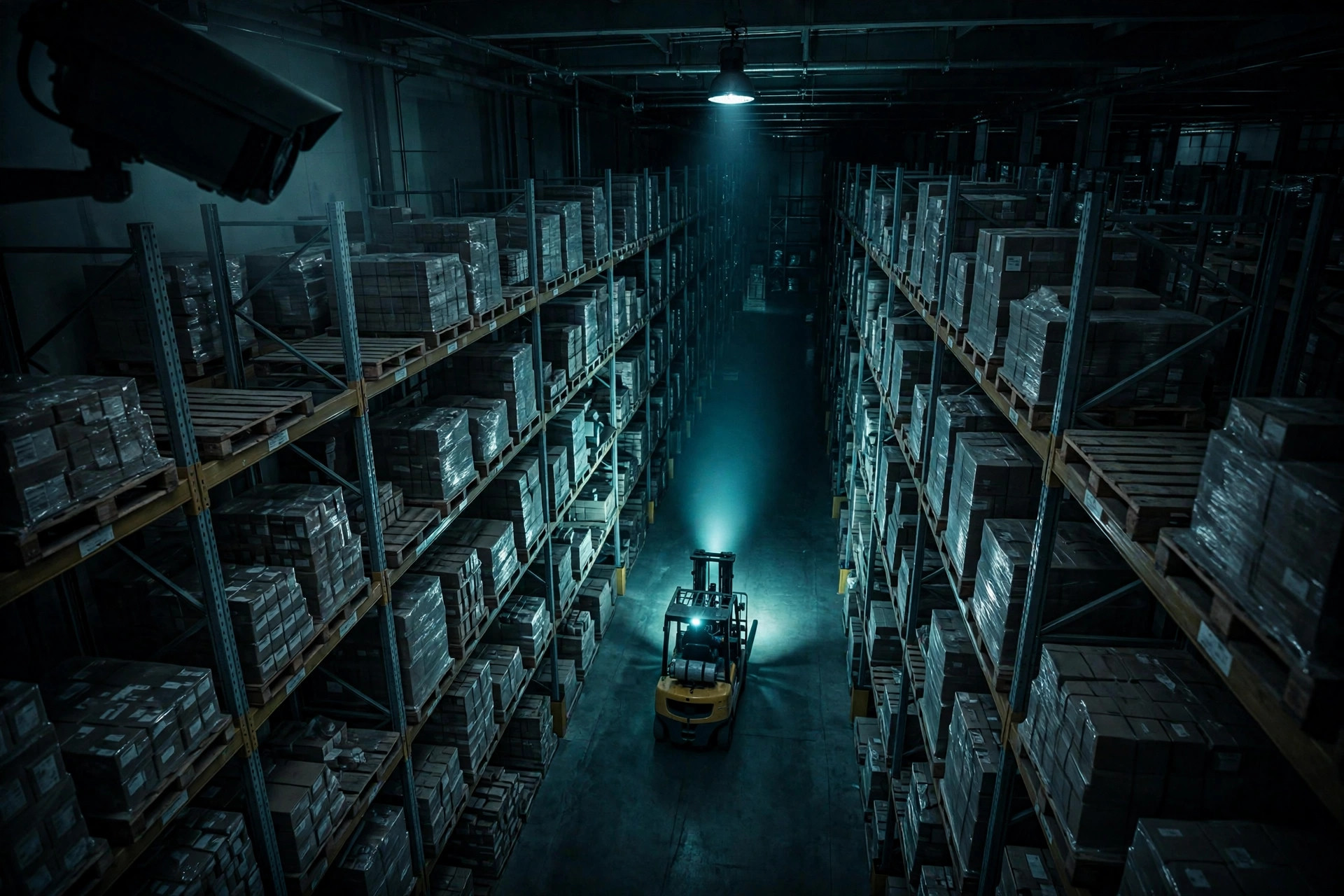
At the end of 2024, I gritted my teeth and spent under $400 on six consumer smart cameras — gate, loading dock (two), main aisle, office door, back door. My requirements were dead simple: night vision, person detection, phone alerts. I signed up for the cheapest cloud plan — consumer AI features have gotten dirt cheap, with public plans going for around $5 per camera per month.
The first week, I questioned my life choices.
The real trap of AI patrol: it sees, but you're asleep
One night in March 2025, 2:47 a.m., my phone buzzed: "person detected." I shot out of bed, opened the clip — and watched the wind tumble an empty cardboard box across the dock. The camera had confidently identified a flying box as an intruder.
That month brought twenty-some alerts: nineteen were wind, stray cats, and moths dive-bombing the lens; one was the neighbor's stray dog. I nearly turned alerts off — and that $400 would've gone down the drain.
That's the first truth about AI patrol: false alarms are the norm, not the exception. That "99% accuracy" on the brochure is lab data. In a real warehouse — boxes stacked by the door, stray cats at midnight — false alarms grind your trust to dust. And once your trust is gone, when a real alert comes through, you'll swipe it away without thinking. The industry calls it alarm fatigue — big companies hit it with million-dollar systems, and we hit it harder.
The second truth stings more, and it's the counterintuitive one I most want to share: the biggest flaw in AI patrol isn't bad vision — it's that nobody acts on what it sees.
It's 3 a.m. Your phone buzzes. You drag yourself up, confirm on screen that someone is prying at the door. Then what?
Call 911? By the time anyone shows up, the thief is long gone. Drive over myself? Fifteen minutes from my house, in the middle of the night, and who knows what the guy is carrying. I'm not built for heroics.
A camera is just eyes; you still need hands. The sharpest eyes are decorative without hands behind them. Big companies have control rooms and on-duty staff. We have two phones — mine and my partner's.
So the real work was never buying cameras. It was building a response chain:
- Alerts set to person detection only. Vehicles, pets, packages — all off. False alarms dropped by more than half overnight.
- My partner and I alternate as the "night phone," one week each — phone by the pillow, volume maxed, with an "on duty tonight" text before bed.
- Confirmed break-in: 911 first, then a shout in our street's warehouse-owner group chat — the guy across the street can be there in five minutes. Neighbors beat heroes.
- A quarterly drill: I sneak to our own warehouse door at midnight to test my partner's reaction time. Last time he called back in four minutes. Pass.
That response chain cost zero dollars, and it's worth ten times the cameras.
A buddy in Rancho Cucamonga learned this the expensive way. His 8,000-square-meter warehouse got hit last fall — roll-up door pried open, two pallets gone. Eight cameras recorded everything in crystal clarity, and nobody watched. He found out at morning inventory, pulled the footage, got the thief's face. So what? The goods were gone. His cameras had been demoted from "theft prevention" to "evidence collection." A camera was never valuable because it sees — it's valuable because someone moves when it sees.
Fire, smoke, and forklifts: an honest accounting of what AI can actually do
AI is hot right now, so let me pour three buckets of cold water. All honest.
First: fire and smoke detection. Consumer cameras alert on visible flame or thick smoke — but the real warehouse fire risks are aging wiring and smoldering, and by the time a camera can "see" it, it's usually too late. Fire prevention is smoke detectors, sprinklers, and code compliance. A camera is garnish at best. Anyone who says "AI cameras mean you don't have to worry about fire" is selling you cameras.
Second: forklift violations. Some enterprise systems flag forklift speeding or pedestrian proximity. Sounds great — but nobody drives a forklift on the night shift. Forklift accidents happen in daylight. OSHA's numbers — roughly 85 deaths and 34,900 serious injuries a year in the U.S. — describe a training and floor-management problem, not a camera problem. Cameras can only replay the accident. They can't prevent it. Don't let a salesperson claim cameras cut forklift accidents in half; if that were true, insurers would already discount your premium for it.
Third: the big-company stack — behavior analytics, heat maps, digital twins. We genuinely don't need any of it. Our requirement is four words: don't get robbed. Catch break-ins, fence-jumpers, midnight dock loiterers, and doors left open — that alone pays for the system. More features mean more false alarms and more money. We're here to save money, not do research.
Does the math actually work?
Math time. My religion: AI that can't show ROI is a scam.
| Option | Upfront | Annual cost (ballpark) | What you get | The catch |
|---|---|---|---|---|
| Full-time night guard | $0 | about $54,000 (BLS 2024 median $18.46/hr × 8 hrs × 365 days) | A real human who can intervene and call it in | Expensive — and human, i.e., naps |
| Patrol service | $0 | I called two companies and quietly hung up on both | Someone swings by on schedule | Thieves don't wait for the schedule |
| Enterprise AI surveillance | Several thousand+ | Several thousand a year | 24/7 unblinking eyes, full feature set | Small-warehouse budgets need not apply |
| Budget DIY: consumer smart cameras | Under $400 | A few hundred a year | 24/7 alerts with person detection | It sees but can't act — you build the response chain yourself |
The verdict: for a 3,000-square-meter warehouse with mid-value goods, in a quiet area, empty at night — the budget DIY route wins on value. A few hundred dollars a year buys you "know the minute something happens," not "someone handles it for you." That difference is worth $54,000.
But two kinds of warehouses should not copy me:
High-value goods — expensive electronics, luxury items: hire the guard, buy the insurance, don't gamble millions in inventory on a few hundred dollars of cameras. One bad night erases a decade.
Already running 24/7? You've got people on nights anyway — cameras are a nice supplement, no need for my whole circus.
One last honest word: in this setup the cameras are 30 points out of 100; the other 70 is "who picks up the phone at 3 a.m." Don't spend the few hundred dollars until you've answered that question. Once you have, there's no cheaper peace of mind on the market.
Small warehouses have their own way to survive: big companies spend hundreds of thousands on AI patrol command centers, while we guard the same night with a few hundred dollars and one old phone. The machines can watch — but the night watch was always human. It's just that now, the human can do it from under the covers.
By Xiao Ma, Small Warehouse Owner