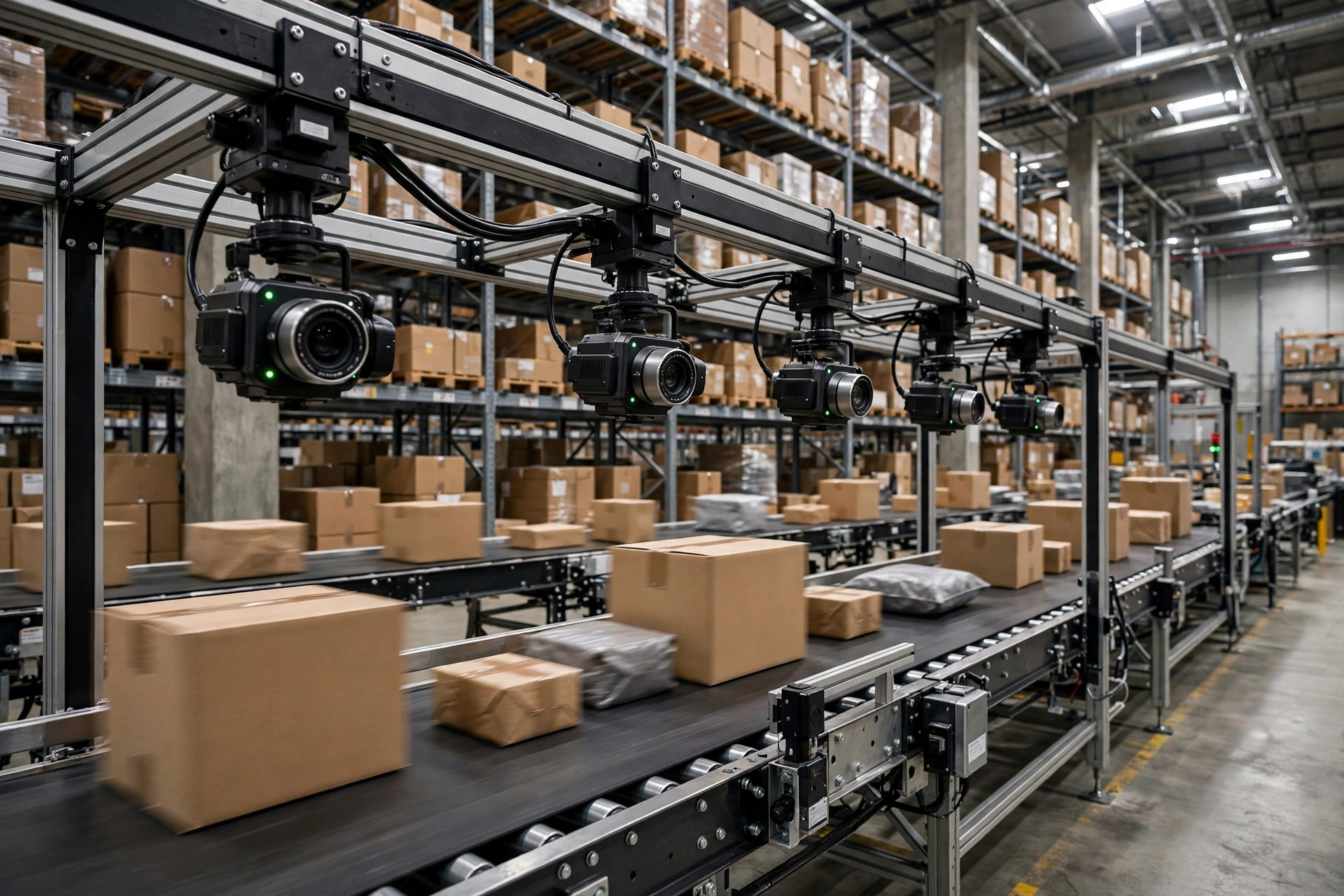
Here's my verdict on demand forecasting for small warehouses: forget AI for now. Get one spreadsheet working first. Get it running smoothly, and it will solve most of your stockouts and overstock. Get it wrong, and no AI on earth will save you.
Two sides to this, as always. AI forecasting has been hyped to the moon — "intelligent replenishment," "machine-learning predictions." The SaaS sales pitch sounds like fortune-telling. But here's the plain truth: forecasting is 70% data and 30% algorithm. If you don't have clean historical sales data, the fanciest algorithm is a brilliant chef with no ingredients. And I've seen too many small warehouses in exactly this state: sales scattered across three spreadsheets, returns never deducted, promotions never flagged. Feed that mess to an AI and you'll get predictions worse than the warehouse foreman's gut feel.
A Hole I Watched Someone Fall Into: "Intelligence" for Tens of Thousands of Dollars
In 2023, a small 3PL outside Ontario, California — about 20,000 square feet — got sold on an AI demand-forecasting module by a SaaS rep. Tens of thousands of dollars. The implementation consultant walked in week one and nearly walked back out: 18 months of sales history lived in three Excel files and the owner's wife's paper notebook, with different definitions everywhere. Some sheets recorded outbound shipments, others recorded orders, and nobody had ever deducted returns.
Two months of data cleanup later, the system limped to life. The warehouse supervisor, a veteran everyone called Old Wang, glanced at its replenishment recommendations and shook his head: "These numbers are wrong. Next month is our big customer's promo season — sales doubled this time last year, and the system has no idea." Three months later, nobody opened the software anymore. Tens of thousands of dollars, gone. The owner told me over drinks: "I should've just had Old Wang send me a spreadsheet every week."
That sentence is the whole answer.
How to Start Demand Forecasting in a Small Warehouse: The Spreadsheet
Don't let the words "demand forecasting" intimidate you. For a small warehouse, it answers three questions: roughly how much will we sell next month? What will stock out? What's overstocked? One spreadsheet answers all three.
The layout (SKU × month):
| SKU | Avg monthly sales (trailing 12 mo) | Seasonality factor | Next-month forecast | On hand | In transit | Suggested order |
|---|---|---|---|---|---|---|
| … | … | … | … | … | … | … |
Four steps:
- Pull the data: export 12 months of outbound records, summarized by SKU by month. Deduct returns — undeducted returns inflate every forecast. This is the single most common dirty-data problem in small warehouses.
- ABC it: rank SKUs by sales. Class A (roughly the top 20% of SKUs, usually driving around 80% of sales) gets a weekly look; Class B monthly; Class C a quarterly glance. A small warehouse typically carries a few hundred SKUs — Class A might be a few dozen. Your attention only stretches to Class A, and that's fine. Don't be greedy.
- Forecast: next-month forecast = trailing 3-month average × seasonality factor. The seasonality factor is DIY: last year's same-month sales ÷ last year's monthly average. No regression models needed — arithmetic is enough.
- Order: suggested order = next-month forecast + safety stock − on hand − in transit. Safety stock = daily average sales × lead time (days) × 1.5. That 1.5 is a rule of thumb: raise it toward 2 if stockouts are expensive, lower it toward 1.2 if you can live with a miss.
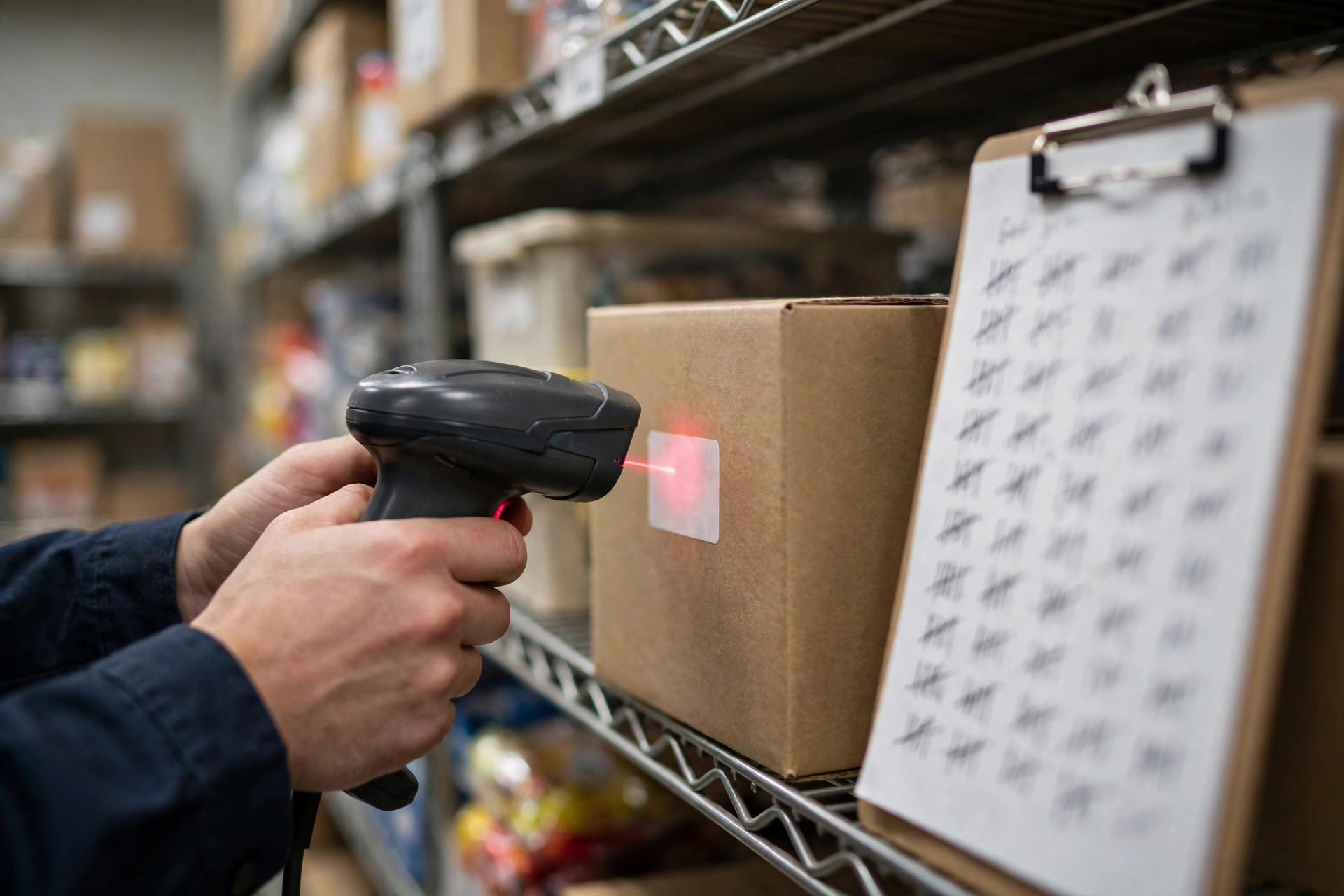
The cadence: half a day at the start of each month to refresh the data, 15 minutes a week scanning Class A. Who owns it? The owner, or the warehouse supervisor — someone who understands the business, not a clerk who just types numbers. Because seasonality factors and promo calendars, the stuff that's "not in the data," only live in a business person's head.
In 2022, a small auto-parts warehouse outside Dallas did exactly this. The owner maintained the sheet himself: 300-odd SKUs, 40 in Class A. Three months in, the stockout rate fell from double digits to single digits, and dead stock cleared by roughly a third. Cost: zero. Time: half a day a month. For a small warehouse, this is how forecasting should start. No AI required.
Two Sides: What AI Forecasting Costs vs. What It Returns
I'm not saying AI forecasting is useless. I'm saying it has an admission ticket, and if you can't afford it, don't force your way in. Run the numbers:
| Spreadsheet method | AI forecasting software | |
|---|---|---|
| Software cost | Zero (you already own Excel) | Annual subscription, thousands to tens of thousands of dollars |
| Implementation | Half a day to build the sheet | Data cleanup plus implementation, weeks to months |
| Data required | 12 months of outbound records, returns deducted | Clean, continuous, annotated history (promos, returns, stockouts) |
| Upkeep | Half a day a month, owner or supervisor part-time | Someone must keep feeding data and tuning parameters, or the model drifts |
| Fits | A few hundred SKUs, dozens in Class A | Thousands of SKUs, multiple warehouses, volatile demand |
Here's the counterintuitive part: the fewer SKUs a small warehouse has, the worse AI forecasting's ROI gets. With few SKUs, the business owner's brain is the best model available — he knows the big customer is running a promo next month, knows which supplier's lead times wobble. An AI can't see any of that and can't learn it. AI earns its keep at scales humans can't compute: thousands of SKUs, where no brain can track everything.
The trade-off in one sentence: AI buys you scale; the spreadsheet buys you "good enough." A small warehouse's problem was never "forecasts not smart enough" — it's "no forecast at all." Solve "existence" first, then argue about "accuracy."
When Does a Small Warehouse Actually Need AI?
Three signals. When they show up, then consider AI:
- Your spreadsheet has run steadily for six-plus months — clean data, fixed process. Only then do you have rice to feed the AI.
- SKUs balloon past what a human can track (over a thousand, say), or you open a second warehouse, and the spreadsheet starts groaning.
- Your forecast errors come from "can't compute it all" rather than "missing information" — you know about the promos and the seasons, but combining everything exceeds mental arithmetic.
The order is non-negotiable. Skip step one and the other two are castles in the air. I've seen too many small warehouses jump straight from nothing to AI and end up with "expensive system, terrible forecasts, worse than before." The technology wasn't wrong. The timing was.
So: how should a small warehouse start demand forecasting? Get the spreadsheet working. Once it hums, you'll know for yourself whether you need AI, and when. Until then, any salesperson pitching "AI empowerment for small warehouses" owes you an answer to one question first: is my data clean? If they can't answer, show them the door.
By Lao Mi, Supply Chain Veteran (20 yrs)